
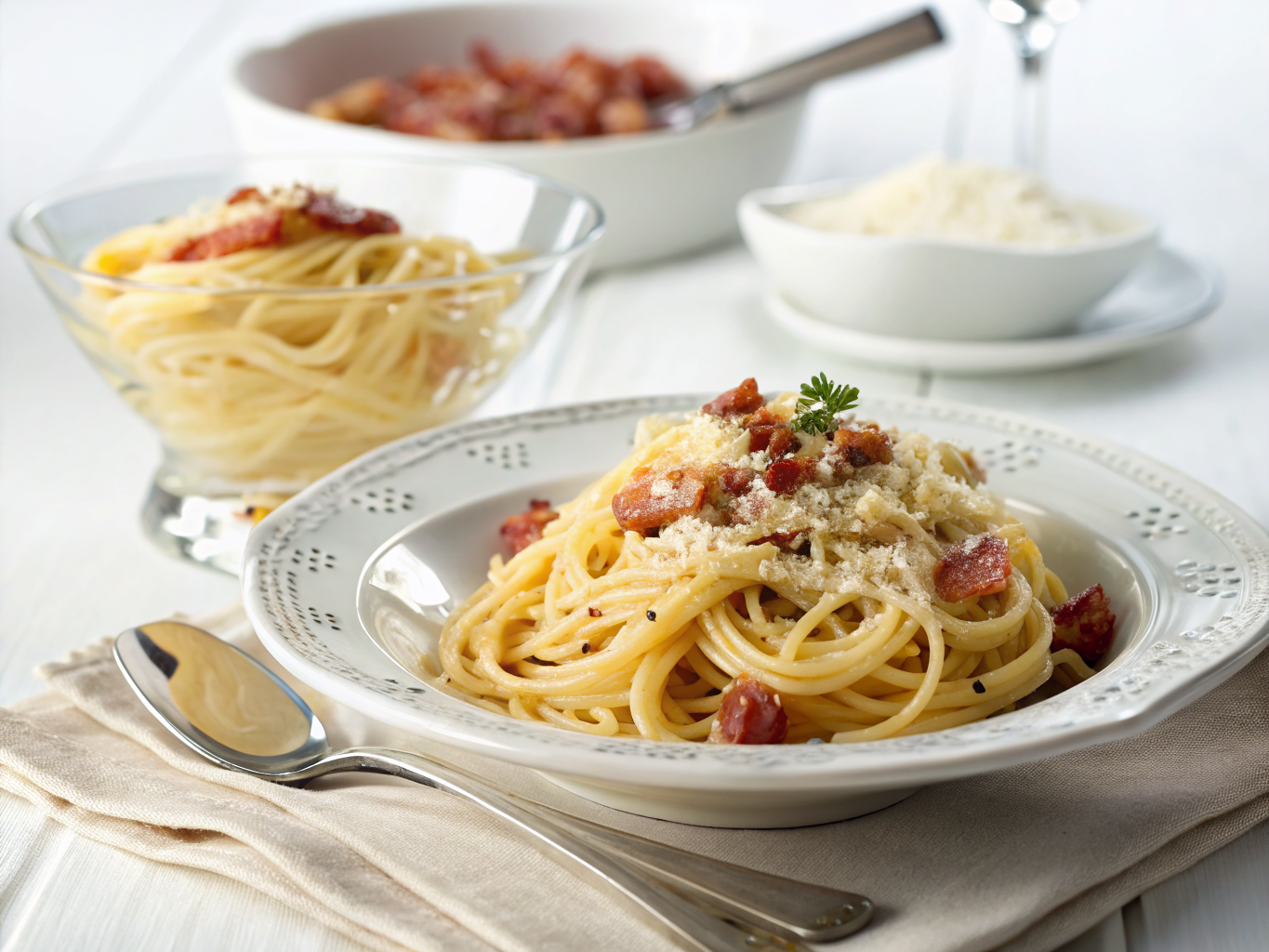
Pasta Carbonara
Ingredients
Method
- Bring a large pot of salted water to a boil. Add the spaghetti and cook according to package directions until al dente. While the pasta cooks, heat a large skillet over medium heat and add the guanciale. Cook until crispy and the fat has rendered. Remove the guanciale from the pan and set aside, leaving the rendered fat in the skillet.
- In a medium bowl, whisk together the whole eggs, egg yolks, Pecorino Romano cheese, and freshly ground black pepper until smooth. If using, add the Parmigiano Reggiano as well.
- Before draining the pasta, reserve about 1 cup of the starchy pasta water. Drain the pasta and immediately add it to the skillet with the rendered guanciale fat. Toss to coat the pasta.
- Remove the skillet from the heat. Slowly pour the egg and cheese mixture over the hot pasta, tossing constantly and vigorously with tongs. The residual heat from the pasta will cook the eggs into a creamy sauce without scrambling them. Add a tablespoon or two of the reserved pasta water as needed to create a smooth, emulsified sauce.
- Add the crispy guanciale back to the pasta and toss to combine. Serve immediately, garnished with extra Pecorino Romano cheese and freshly ground black pepper.
Nutrition
Notes
Tried this recipe?
Let us know how it was!Ah, Pasta Carbonara. The very name conjures images of creamy, silken pasta, rich with the savory essence of cured pork, pungent cheese, and the unmistakable embrace of egg. It’s a dish shrouded in mystique, often misinterpreted, yet utterly captivating in its simplicity and profound depth of flavor. Today, we embark on a culinary journey to demystify this Roman masterpiece, guiding you through every step to create an authentic Pasta Carbonara recipe that will transport your taste buds straight to the heart of Italy.
Forget the cream-laden versions and the pea-studded imposters. True Carbonara is a testament to the magic that happens when a few humble, high-quality ingredients are treated with respect and precision. This isn’t just a recipe; it’s an education, a celebration, and an ode to one of the world’s most beloved pasta dishes. So, tie on your apron, sharpen your senses, and prepare to master the art of Pasta Carbonara.
The Soul of Carbonara: Understanding its Origins and Core Philosophy
Before we dive into the nitty-gritty of preparation, it’s crucial to understand what makes Carbonara, well, Carbonara. Its origins are debated, with theories ranging from humble charcoal miners’ meals to a post-World War II American influence. Regardless of its exact birthplace, the core principle remains: a celebration of a few key ingredients working in perfect harmony.
The beauty lies in the emulsion formed by egg yolks, Pecorino Romano, and the rendered fat from guanciale, combined with a touch of the starchy pasta water. This creates a luxurious, glossy sauce that clings to every strand of pasta, enveloping it in a symphony of savory, salty, and utterly satisfying flavors. Deviations from these core components often lead to a dish that, while perhaps tasty, is not truly Carbonara.
Deconstructing the Essentials: Core Ingredients for an Authentic Pasta Carbonara
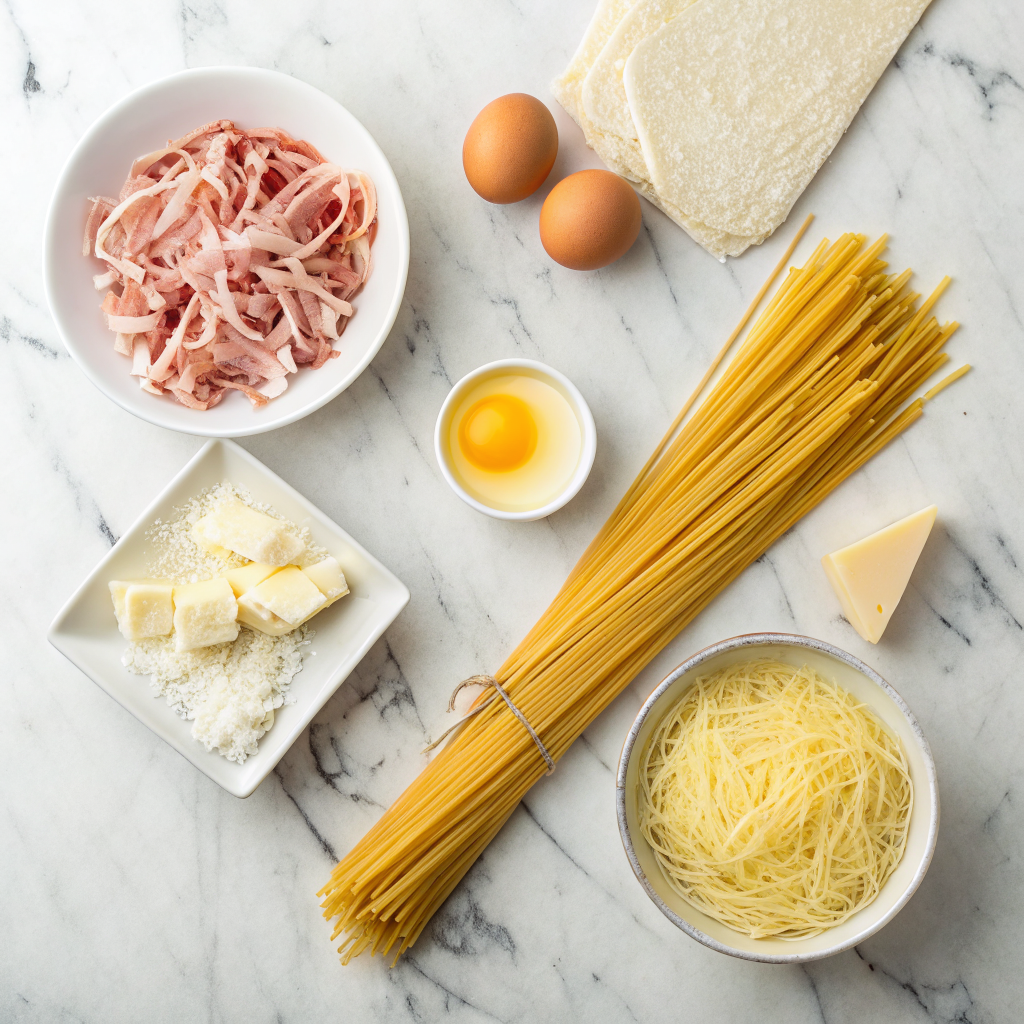
To achieve Carbonara perfection, the quality of your ingredients is paramount. Skimping here will undoubtedly compromise the final result. Each component plays a vital role, contributing a unique flavor and texture to the dish.
- Guanciale: This is non-negotiable. Guanciale, cured pork jowl, provides a distinct, rich, and deeply savory flavor that simply cannot be replicated by bacon or pancetta. Its fat renders beautifully, contributing a silky mouthfeel to the sauce. Look for it at Italian delis or specialty food stores.
- Pecorino Romano: A hard, salty sheep’s milk cheese from Rome, Pecorino Romano is the traditional choice. Its sharp, pungent flavor is essential for balancing the richness of the guanciale and egg yolks. Grate it fresh for the best results.
- Eggs: Specifically, a combination of whole eggs and egg yolks. The yolks contribute richness and emulsifying power, while a whole egg adds a touch of lightness and body. Fresh, high-quality eggs with golden yolks are ideal.
- Black Pepper: Freshly cracked black pepper, and plenty of it, adds a crucial aromatic spice and a subtle bite that cuts through the richness. Do not pre-ground pepper; invest in a pepper mill.
- Spaghetti or Rigatoni: While spaghetti is often considered the classic choice, other sturdy pasta shapes like rigatoni or bucatini also work wonderfully. The key is a pasta that can hold the sauce well and offers a good bite (al dente).
- Salt: For seasoning the pasta water, which is a crucial step for flavoring the pasta from within.
Preparing for Greatness: Essential Tools and Mise en Place
Before you even think about cooking, ensure your kitchen is prepped. Having all your ingredients measured, chopped, and ready (mise en place) will make the cooking process smooth and stress-free. Carbonara cooks quickly, so you won’t have time to scramble for ingredients mid-way.
- Large pot for boiling pasta
- Large, deep skillet or pan (preferably non-stick)
- Whisk
- Tongs or pasta spoon
- Grater for cheese
- Measuring cups and spoons
- Sharp knife and cutting board
The Definitive Pasta Carbonara Recipe: Step-by-Step Mastery
This recipe is designed to guide you to Carbonara perfection. Pay close attention to each step, especially the timing and temperatures, as these are critical for achieving the ideal creamy, non-scrambled sauce.
Yields: 4 servings | Prep time: 15 minutes | Cook time: 20 minutes
Ingredients:
- 200g (about 7 oz) guanciale, cut into ½-inch cubes or thick lardons
- 400g (about 14 oz) spaghetti or rigatoni
- 3 large egg yolks
- 1 large whole egg
- 100g (about 3.5 oz) Pecorino Romano, freshly grated, plus more for serving
- Freshly cracked black pepper, to taste (at least 1-2 teaspoons)
- Salt for pasta water
- Reserved pasta water
Instructions:
- Prepare the Guanciale: Place the cubed guanciale in a large, deep skillet over medium-low heat. Slowly render the fat, stirring occasionally, until the guanciale is crispy and golden brown. This should take about 10-15 minutes. Do not rush this step; slow rendering extracts maximum flavor.
- Drain and Reserve Fat: Once crispy, remove the guanciale from the pan using a slotted spoon and set aside. Reserve about 2-3 tablespoons of the rendered guanciale fat in the skillet. If there’s significantly more, you can spoon some out.
- Boil the Pasta Water: While the guanciale is rendering, bring a large pot of heavily salted water to a rolling boil. It should taste “like the sea.”
- Create the Egg and Cheese Mixture: In a medium bowl, whisk together the 3 egg yolks and 1 whole egg until well combined and slightly pale. Stir in the freshly grated Pecorino Romano and a generous amount of freshly cracked black pepper. The mixture should be thick, almost paste-like.
- Cook the Pasta: Add the spaghetti to the boiling water and cook according to package directions until al dente. Reserve at least 1-2 cups of the starchy pasta water before draining. Do not rinse the pasta.
- Combine Pasta and Guanciale Fat: Immediately transfer the hot, drained pasta into the skillet with the reserved guanciale fat. Toss vigorously for about 30 seconds to coat the pasta evenly and cool the pan slightly. This step is crucial for preventing the eggs from scrambling.
- Form the Carbonara Sauce: Remove the skillet from the heat. Add the egg and cheese mixture to the pasta, tossing rapidly and repeatedly with tongs. The residual heat from the pasta and pan, combined with the hot pasta water, will gently cook the eggs and form a creamy emulsion.
- Adjust Consistency with Pasta Water: Gradually add reserved hot pasta water, about 1-2 tablespoons at a time, continuing to toss until the sauce reaches a smooth, creamy, and glossy consistency that beautifully coats the pasta. You might not need all the water. The sauce should not be runny or clumpy.
- Add Crispy Guanciale: Stir in most of the crispy guanciale, reserving a little for garnish.
- Serve Immediately: Portion the Carbonara into warm bowls. Garnish with the reserved crispy guanciale, extra freshly cracked black pepper, and additional grated Pecorino Romano. Serve and enjoy your authentic Pasta Carbonara! For more detailed pasta recipes, visit Home Cook Legacy’s Dinner Recipes.
Pro-Tip for Perfect Carbonara: Temperature Control is Key!
The biggest challenge in making Carbonara is preventing the eggs from scrambling. The trick is to ensure the skillet is off the heat when you add the egg mixture, and the pasta is still hot but not scorching. The starchy pasta water is your emulsifying magic wand, slowly bringing the sauce to the perfect consistency without overcooking the eggs. Never add the egg mixture to a pan directly on the heat.
Troubleshooting Common Carbonara Conundrums
Even seasoned home cooks can face challenges with Carbonara. Here are some common issues and how to resolve them:
- Scrambled Eggs: This usually means the pan or pasta was too hot when the egg mixture was added. Ensure the pan is off the heat and that you’re tossing vigorously. Adding cold water to the egg mixture can also help temper it slightly if you’re worried.
- Sauce Too Thick: Add more reserved hot pasta water, 1 tablespoon at a time, while tossing constantly until the desired consistency is reached.
- Sauce Too Thin: This is less common but can happen if too much pasta water is added. You can try adding a bit more Pecorino Romano to thicken it slightly, but prevention is best by adding water slowly.
- Guanciale Not Crispy: You need to render it slowly over medium-low heat for long enough. Don’t rush this step. It’s where much of the flavor infusion begins.
- Lack of Flavor: Ensure you are using high-quality guanciale and freshly grated Pecorino Romano. Don’t skimp on freshly cracked black pepper either. The saltiness from the guanciale and Pecorino is crucial.
Beyond the Plate: Health and Nutritional Aspects of Carbonara
While Carbonara is undeniably rich and indulgent, understanding its nutritional components can help you enjoy it mindfully. It’s a dish high in protein and fat, providing substantial energy. The eggs offer essential vitamins and minerals, while Pecorino Romano contributes calcium. For a broader perspective on healthy eating, consider resources like Healthline’s guide to healthy eating.
However, due to the high fat and sodium content from guanciale and Pecorino, it’s best enjoyed as an occasional treat rather than a daily staple. Portion control is key. Understanding ingredient sourcing and quality can also impact the health profile. For insights on dietary fats, Harvard Health Publishing offers valuable information.
Variations and Personalizations (with a nod to authenticity)
While the authentic Carbonara recipe is simple and perfect as is, some subtle tweaks can be made, assuming you respect the core philosophy:
- Pasta Shape: As mentioned, bucatini (thick, hollow spaghetti) or rigatoni are excellent alternatives to spaghetti, providing a different textural experience while still holding the sauce beautifully.
- Pecorino Romano Blend: Some purists will use 100% Pecorino, but a blend of 80% Pecorino and 20% Parmigiano-Reggiano can offer a slightly milder, nuttier flavor if you find Pecorino too pungent. However, the true essence of Carbonara lies in that sharp Pecorino bite.
- A Hint of Heat: A tiny pinch of red pepper flakes added to the guanciale as it renders can provide a subtle warmth without overpowering the dish. This is not traditional but can be a pleasant addition for those who enjoy a little spice.
- Garnish: While not traditional, a sprinkle of fresh parsley is sometimes seen. Ensure it’s a very light touch to avoid detracting from the central flavors.
Pairing Your Pasta Carbonara: Wines and Sides
A rich dish like Carbonara calls for a complementary beverage and perhaps a simple side to balance the meal.
- Wine Pairings:
- White Wine: A crisp, dry white wine like a Frascati or a Vermentino cuts through the richness of the Carbonara beautifully. A light-bodied Pinot Grigio can also work.
- Red Wine: If you prefer red, opt for something light to medium-bodied with good acidity and soft tannins, such as a Dolcetto, a young Chianti, or a Nero d’Avola. Avoid heavy, tannic reds that would clash with the creamy sauce.
- Side Dishes: Keep it simple!
- A light green salad with a simple vinaigrette dressing is perfect for freshness.
- Steamed or blanched green vegetables like asparagus or green beans can offer a lovely contrast in texture and flavor.
- Crusty bread for soaking up any remaining sauce is always a welcome addition.
Mastering Italian Cooking at Home
Making a perfect Pasta Carbonara is a fantastic stepping stone to mastering other classic Italian dishes. The principles of using high-quality ingredients, precise technique, and understanding flavor profiles are universal. Explore more traditional Italian recipes and cooking tips at Home Cook Legacy’s Italian Food section. For further culinary skill development, articles such as Medical News Today’s guide on culinary arts can be inspiring.
The journey to becoming a confident home cook is filled with experimentation and learning. Don’t be afraid to try new recipes and techniques. Each successful dish, especially one with a storied history like Carbonara, builds your culinary repertoire and confidence. Practice makes perfect, and with each attempt, your Carbonara will undoubtedly improve.
Why this Carbonara Recipe Will Become Your Go-To
This Pasta Carbonara recipe is more than just a list of ingredients and steps; it’s a guide to understanding the heart of Italian cooking. By focusing on authentic ingredients and time-honored techniques, you’ll achieve a dish that is:
- Authentically Delicious: No cream, no peas, just pure, unadulterated Carbonara goodness.
- Luxuriously Creamy: The perfect emulsion from egg yolks, cheese, and pasta water creates an incredibly smooth sauce.
- Deeply Flavorful: The savory guanciale, pungent Pecorino, and fresh black pepper create a symphony of tastes.
- Surprisingly Simple: Once you understand the technique, it’s a quick and rewarding meal to prepare.
Embrace the challenge, savor the process, and delight in the incredible outcome. This is more than just dinner; it’s an experience, a connection to a rich culinary tradition. Share this exquisite dish with friends and family, and relish in the joy of creating something truly special in your own kitchen. For more beloved family recipes, check out Home Cook Legacy’s Legacy Collection.
Frequently Asked Questions about Pasta Carbonara
We’ve compiled answers to common questions to help you master this classic dish.
Q: Can I use bacon or pancetta instead of guanciale?
A: While you can substitute bacon or pancetta, the flavor profile will be significantly different. Guanciale (cured pork jowl) renders a unique, richer, and more complex fat that is crucial to authentic Carbonara. Bacon and pancetta tend to be smokier and less fatty, which alters the traditional taste and creaminess. For the best result, always opt for guanciale.
Q: Why do I need to reserve pasta water?
A: Reserved pasta water is a secret weapon in Italian cooking. It’s starchy, salty, and hot, making it perfect for emulsifying the egg and cheese mixture into a silky, glossy sauce. The starch helps bind everything together, creating that luscious texture without the need for cream, while the heat helps cook the eggs gently without scrambling them.
Q: How do I prevent the eggs from scrambling in my Carbonara?
A: The key is temperature control. Ensure the pan you’re using is off the heat when you add the egg and cheese mixture to the hot pasta. The residual heat from the pasta and a little hot pasta water is enough to gently cook the eggs into a creamy sauce. Tossing constantly and vigorously is also crucial to distribute the heat evenly.
Q: What’s the best cheese for Carbonara?
A: Pecorino Romano is the traditional and best choice for authentic Carbonara. Its sharp, salty, and pungent sheep’s milk flavor is essential for balancing the richness of the guanciale and egg. While some recipes suggest Parmigiano-Reggiano, it has a mellower, nuttier flavor and won’t give you the true Carbonara taste. Always use freshly grated cheese.
Q: Can I make Carbonara ahead of time?
A: Pasta Carbonara is best enjoyed immediately after preparation. The sauce relies on the heat of the freshly cooked pasta and the specific emulsion created at that moment. If left to sit, the sauce can become clumpy, dry, or even separate. It’s a dish meant to be cooked and served right away for the optimal experience.
Q: My sauce is too dry/clumpy. What went wrong?
A: This often happens if the pasta wasn’t hot enough, not enough pasta water was added, or it sat too long before serving. To fix a dry sauce, quickly add a splash more hot reserved pasta water, toss vigorously, and serve immediately. If it’s clumpy, it might be due to the eggs overcooking or not enough rapid tossing during the emulsification stage.
