

Lemon Poppy Seed Loaf
Ingredients
Method
- Preheat oven to 350°F (175°C). Grease and line a 9x5 inch loaf pan with parchment paper.
- In a medium bowl, whisk together flour, poppy seeds, baking powder, baking soda, and salt. Set aside.
- In a large bowl, whisk together sugar, Greek yogurt, oil, eggs, lemon zest, lemon juice, and vanilla extract until smooth and well combined.
- Add the dry ingredients to the wet ingredients and gently fold together with a spatula until just combined. Do not overmix.
- Pour batter into prepared loaf pan and smooth the top. Bake for 50-55 minutes, or until a toothpick inserted in the center comes out clean. Cool in pan for 10 minutes, then transfer to a wire rack.
- While the loaf cools, whisk together powdered sugar and 2 tablespoons lemon juice until smooth. Add more lemon juice if needed for desired consistency.
- Once loaf is completely cooled, drizzle the lemon glaze over the top. Let glaze set for 15 minutes before slicing and serving.
Nutrition
Notes
Tried this recipe?
Let us know how it was!There’s something truly magical about a perfectly baked Lemon Poppy Seed Loaf that brings joy to any occasion. The bright citrus notes combined with the delicate crunch of poppy seeds create a harmonious balance that delights the senses. This moist, tender loaf topped with a sweet-tart lemon glaze has been a beloved classic for generations, and today we’re diving deep into what makes this recipe absolutely irresistible.
Whether you’re looking for a wholesome breakfast treat, an afternoon snack with tea, or a lighter dessert option, this Lemon Poppy Seed Loaf checks all the boxes. The natural brightness of fresh lemon juice and zest elevates this simple quick bread into something extraordinary. Best of all, this recipe uses thoughtful ingredient swaps that make it a healthier choice without sacrificing any of that classic flavor you crave.
Why This Lemon Poppy Seed Loaf Recipe Stands Out
What sets this particular Lemon Poppy Seed Loaf apart from countless other recipes is its perfect balance between indulgence and nutrition. Unlike traditional versions loaded with refined sugar and heavy fats, this recipe incorporates Greek yogurt for added protein and moisture. The result is a loaf that stays incredibly moist for days while providing nutritional benefits that make you feel good about every slice.
The texture of this loaf is simply divine—tender crumb, slightly dense but never heavy, with just the right amount of lemon intensity. The poppy seeds add a subtle nutty flavor and delightful texture that makes each bite interesting. According to research from Harvard School of Public Health, making smart substitutions in baking can significantly improve the nutritional profile of baked goods without compromising taste.
Another reason this recipe shines is its foolproof nature—even beginner bakers consistently achieve bakery-quality results. The simple mixing method means you won’t need any special equipment beyond basic mixing bowls and a loaf pan. Within just over an hour from start to finish, you’ll have a stunning homemade loaf that looks and tastes like it came from an artisan bakery.
Core Ingredients That Make the Magic Happen
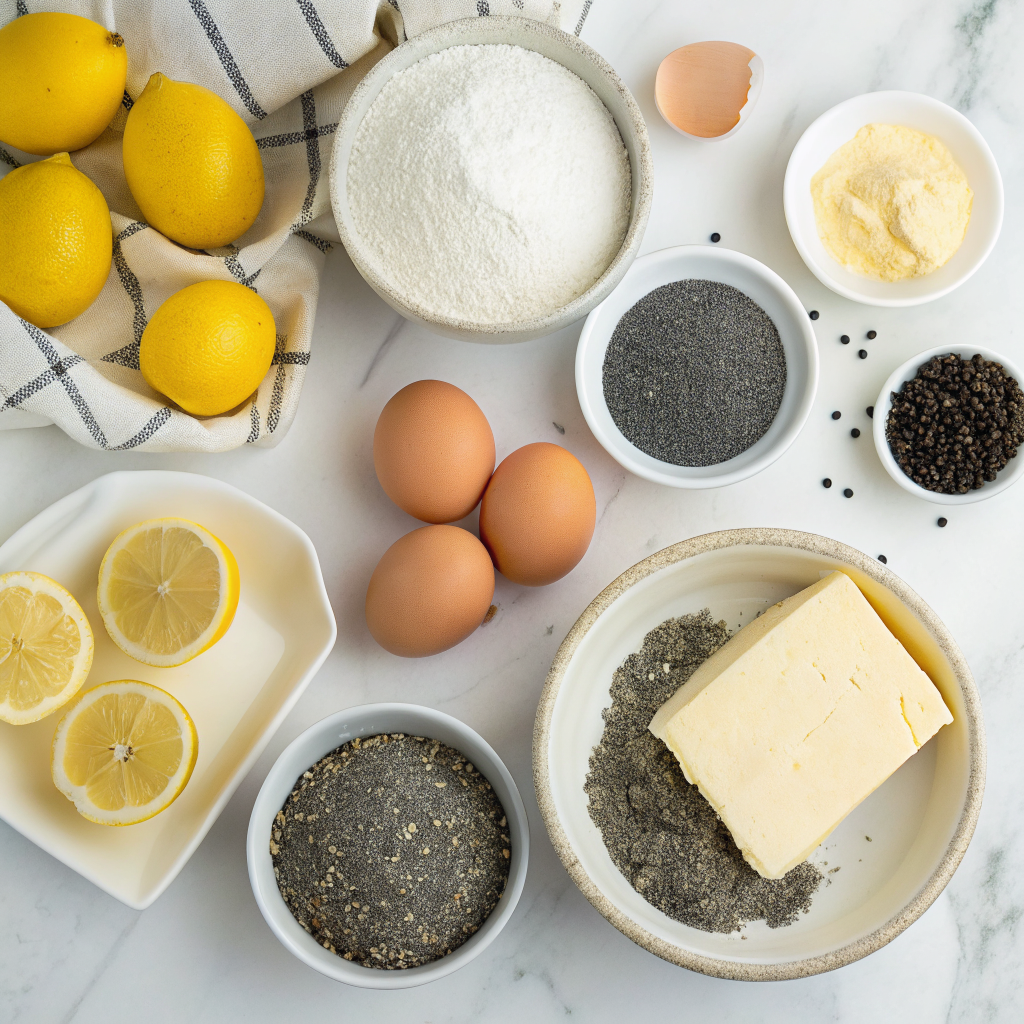
The foundation of an outstanding Lemon Poppy Seed Loaf begins with selecting the right ingredients. Fresh, quality ingredients make all the difference between a good loaf and an exceptional one. Let’s break down each component and understand why it matters for achieving that perfect balance of flavor, texture, and nutrition.
The Flour Base
All-purpose flour forms the structure of this loaf, providing just enough gluten development for a tender crumb. You can substitute up to half the all-purpose flour with whole wheat pastry flour for added fiber and nutrients. Some bakers even use a combination that includes almond flour for extra moisture and a subtle nutty undertone that complements the lemon beautifully.
Natural Sweeteners
This recipe uses a combination of coconut sugar and a touch of honey to reduce the glycemic impact compared to traditional white sugar. Coconut sugar provides minerals like iron, zinc, and calcium while offering a gentle caramel note that doesn’t overpower the lemon. The honey adds moisture and helps keep the loaf fresh longer, while also providing natural antioxidants and beneficial compounds.
Citrus Powerhouse
Fresh lemon juice and zest are absolutely non-negotiable for an authentic Lemon Poppy Seed Loaf experience. The zest contains aromatic oils that pack an intense citrus punch, while the juice provides the tangy brightness. Always use fresh lemons rather than bottled juice—the difference in flavor is dramatic and immediately noticeable in the finished product.
Greek Yogurt for Moisture and Protein
Plain Greek yogurt replaces much of the butter or oil found in traditional recipes, significantly reducing calories while boosting protein content. The yogurt’s acidity also activates the leavening agents more effectively, resulting in a better rise. Additionally, it contributes to that signature moist, tender crumb that makes this loaf so addictive.
Poppy Seeds
These tiny blue-grey seeds aren’t just for show—they add a delicate crunch and subtle nutty flavor that perfectly complements the bright lemon. Poppy seeds also contain beneficial minerals including calcium, iron, and magnesium. Two to three tablespoons is the sweet spot for visible poppy seed distribution without overwhelming the loaf.
Eggs and Binding
Eggs provide structure, richness, and help bind all the ingredients together into a cohesive batter. They also contribute to the golden color of the crumb. For the best results, use room temperature eggs as they incorporate more easily into the batter and create better emulsion with the other wet ingredients.
Step-by-Step Instructions for Perfect Results
Creating the perfect Lemon Poppy Seed Loaf is a straightforward process that rewards attention to detail. Follow these steps carefully, and you’ll achieve professional-quality results every single time. The key is not to rush the process and to measure your ingredients accurately for consistency.
Preparation Phase
Begin by preheating your oven to 350°F (175°C) and positioning the rack in the center position for even heat distribution. Grease a 9×5-inch loaf pan thoroughly with butter or coconut oil, then line it with parchment paper for easy removal. This double preparation ensures your beautiful loaf won’t stick and will release cleanly after cooling.
Zest two large lemons directly into a small bowl, being careful to avoid the bitter white pith beneath the yellow skin. Then juice the lemons to extract about 1/3 cup of fresh lemon juice. Room temperature ingredients mix together more uniformly, so take your eggs and Greek yogurt out of the refrigerator about 30 minutes before beginning.
Mixing the Dry Ingredients
In a large mixing bowl, whisk together 2 cups of all-purpose flour, 1 teaspoon of baking powder, 1/2 teaspoon of baking soda, and 1/4 teaspoon of salt. Add 3 tablespoons of poppy seeds and whisk again to distribute them evenly throughout the flour mixture. This dry ingredient preparation ensures even distribution of leavening agents and prevents pockets of baking soda or powder in your finished loaf.
Combining Wet Ingredients
In a separate bowl, whisk together 3/4 cup of coconut sugar until any lumps are broken up. Add 2 large eggs and whisk vigorously until the mixture becomes pale and slightly fluffy. This process incorporates air into the batter, contributing to a lighter texture in the final loaf.
Next, add 1 cup of plain Greek yogurt, 1/3 cup of melted coconut oil, 1/4 cup of fresh lemon juice, 2 tablespoons of honey, and all of your lemon zest. Whisk until the mixture is completely smooth and uniform in color. The combination should look slightly thick and creamy with visible flecks of yellow lemon zest throughout.
The Critical Mixing Stage
Pour the wet ingredients into the bowl with the dry ingredients. Using a rubber spatula, gently fold the mixture together using broad strokes from the bottom of the bowl upward. Mix only until no dry flour streaks remain visible—this should take no more than 30-40 gentle strokes. Overmixing develops too much gluten, resulting in a tough, dense loaf rather than the tender texture we’re aiming for.
Baking to Perfection
Pour the batter into your prepared loaf pan, using the spatula to spread it evenly into the corners. Give the pan a gentle tap on the counter to release any air bubbles. Place the pan in the center of your preheated oven and bake for 50-60 minutes, rotating the pan halfway through for even browning.
The loaf is done when a toothpick inserted into the center comes out with just a few moist crumbs attached, not wet batter. The top should be golden brown and spring back lightly when touched. If the top is browning too quickly before the center is done, tent it loosely with aluminum foil for the remaining baking time.
Cooling and Glazing
Allow the Lemon Poppy Seed Loaf to cool in the pan for 15 minutes before removing it to a wire rack. This resting period allows the structure to set properly. While the loaf cools, prepare the lemon glaze by whisking together 1 cup of powdered sugar with 2-3 tablespoons of fresh lemon juice until smooth and pourable.
Once the loaf has cooled to room temperature, drizzle the glaze generously over the top, allowing it to cascade down the sides naturally. The glaze will set within 15-20 minutes, creating that signature glossy finish. For an extra burst of lemon flavor, you can poke small holes in the warm loaf and brush it with a simple lemon syrup before applying the final glaze.
Nutritional Benefits and Healthier Baking
This Lemon Poppy Seed Loaf recipe demonstrates that healthier baking doesn’t mean sacrificing flavor or satisfaction. By making strategic ingredient substitutions, we’ve created a dessert that provides actual nutritional value alongside its delicious taste. Understanding these benefits helps you feel good about enjoying this treat regularly.
Each slice contains approximately 180 calories, significantly less than traditional lemon loaf recipes that can exceed 300 calories per serving. The Greek yogurt contributes about 5-6 grams of protein per slice, helping to stabilize blood sugar and keep you satisfied longer. According to Medical News Today, protein in baked goods can help moderate the glycemic response and provide sustained energy.
The fresh lemon juice and zest provide an excellent source of vitamin C, a powerful antioxidant that supports immune function and skin health. Poppy seeds contribute calcium for bone health, along with small amounts of iron and magnesium. The use of coconut sugar instead of refined white sugar means you’re getting trace minerals that are stripped away during conventional sugar processing.
By using coconut oil instead of butter, this recipe provides medium-chain triglycerides (MCTs) which are more easily metabolized by the body for quick energy. The reduced overall fat content—about 7 grams per slice compared to 15-20 grams in traditional recipes—makes this a lighter option that still delivers on richness and moisture. These modifications align with modern nutritional guidelines without compromising the classic taste you expect from a quality Lemon Poppy Seed Loaf.
Creative Variations to Try
Once you’ve mastered the basic Lemon Poppy Seed Loaf recipe, experimenting with variations keeps things exciting and allows you to customize the loaf to your preferences. These adaptations maintain the fundamental character of the original while introducing new flavor dimensions. Each variation has been tested to ensure it works harmoniously with the base recipe.
Lemon Blueberry Poppy Seed
Fold 1 cup of fresh or frozen blueberries into the batter just before transferring it to the loaf pan. Toss the berries in a tablespoon of flour first to prevent them from sinking to the bottom during baking. The tartness of blueberries complements the lemon beautifully while adding antioxidant-rich anthocyanins and creating gorgeous purple streaks throughout the loaf.
Orange Poppy Seed Version
Swap the lemon juice and zest for equal amounts of fresh orange juice and zest for a sweeter, mellower citrus flavor. Orange pairs wonderfully with poppy seeds and creates a loaf that’s slightly less tart but equally aromatic. You might also try a combination of half lemon and half orange for a complex citrus profile that’s truly special.
Lemon Lavender Poppy Seed
Add 1-2 teaspoons of culinary lavender buds to the dry ingredients for an elegant, floral note that transforms this loaf into something truly gourmet. Lavender and lemon are a classic French pairing that creates sophisticated depth. Be careful not to overdo the lavender as too much can taste soapy—less is definitely more with this potent herb.
Gluten-Free Adaptation
Replace the all-purpose flour with a high-quality gluten-free flour blend that contains xanthan gum for structure. Bob’s Red Mill 1-to-1 Baking Flour works excellently in this recipe without requiring any other modifications. The texture will be slightly denser but still wonderfully moist and delicious for those avoiding gluten.
Vegan Lemon Poppy Seed Loaf
Substitute the eggs with flax eggs (2 tablespoons ground flaxseed mixed with 6 tablespoons water, left to gel for 5 minutes). Replace the Greek yogurt with coconut yogurt or unsweetened applesauce. Use maple syrup instead of honey to keep the recipe completely plant-based while maintaining that wonderful moisture and tender crumb.
Serving Suggestions and Pairings
A beautifully baked Lemon Poppy Seed Loaf deserves thoughtful presentation and complementary accompaniments. The versatility of this loaf means it shines in various serving contexts, from casual breakfast to elegant afternoon tea. Consider these serving ideas to make the most of your homemade creation.
For a classic breakfast or brunch presentation, slice the loaf into 3/4-inch thick pieces and serve alongside fresh berries and a dollop of Greek yogurt. The additional yogurt echoes the ingredient in the loaf while adding protein and creaminess. A hot cup of Earl Grey tea or a light roast coffee provides the perfect beverage pairing, with the tea’s bergamot notes especially complementing the lemon.
Transform slices into an elegant dessert by toasting them lightly and serving with a scoop of vanilla bean ice cream or lemon sorbet. The contrast between warm toasted loaf and cold frozen dessert creates a delightful sensory experience. Garnish with fresh mint leaves and additional lemon zest for a restaurant-worthy presentation that’s sure to impress dinner guests.
For afternoon tea service, cut the loaf into thinner slices and arrange them on a tiered serving platter alongside other finger foods. The Lemon Poppy Seed Loaf pairs wonderfully with cucumber sandwiches, scones, and petit fours in a traditional tea spread. You might also enjoy a slice with homemade healthy desserts from our collection.
This loaf also makes an exceptional gift when wrapped in parchment paper and tied with baker’s twine or ribbon. Include a handwritten recipe card with serving suggestions and storage instructions. The thoughtfulness of homemade baked goods always touches hearts, and this particular loaf travels well without becoming damaged or stale too quickly.
Common Mistakes to Avoid

specializes in comfort food made healthy, from pancakes to protein bowls.