
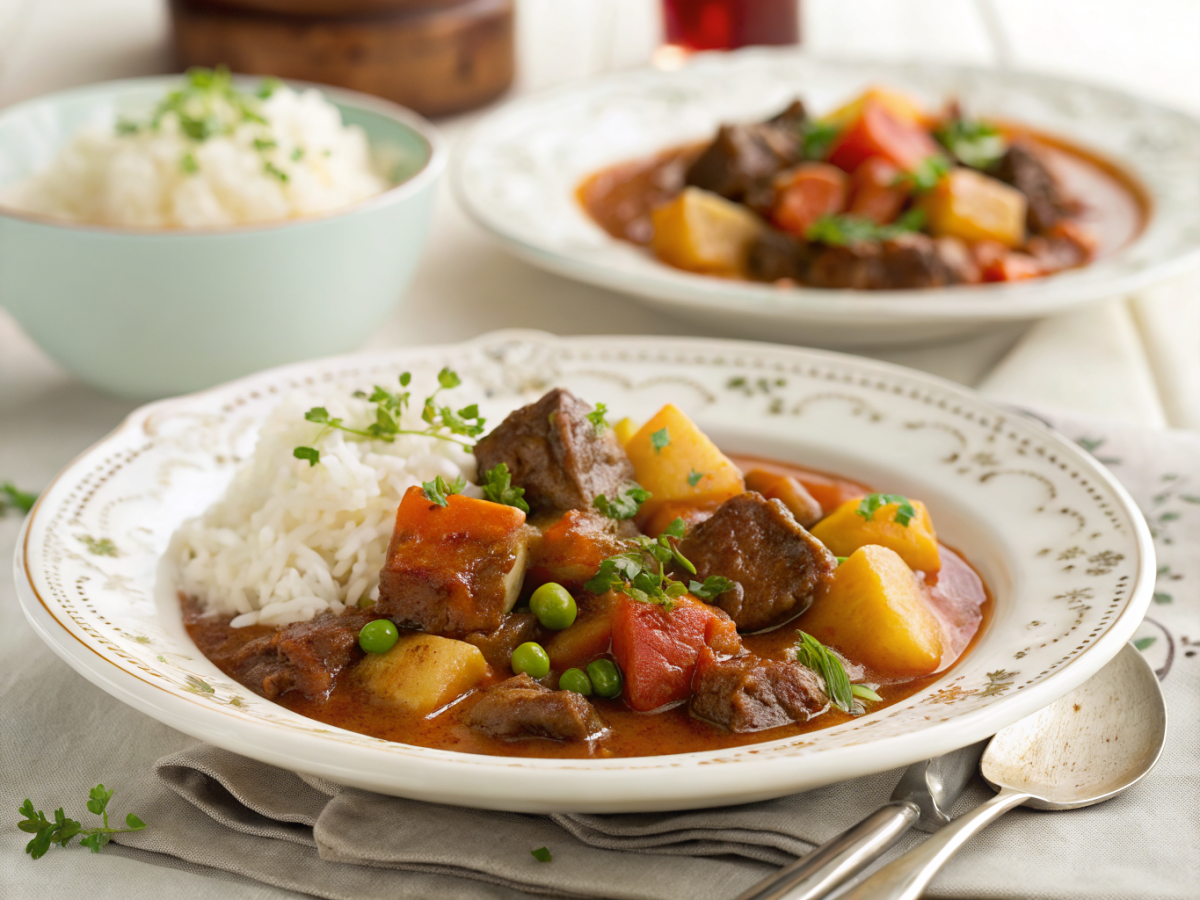
Hawaiian-Style Beef Stew Recipe: 5 Easy Tips for the Best Results

Amazing hawaiian-style beef stew for busy nights

Amazing Hawaiian-Style Beef Stew for Busy Nights

A hearty and comforting Hawaiian-style beef stew with tender chunks of beef, potatoes, and carrots in a rich tomato-ginger broth.
Prep Time 20 minutes
Cook Time 2 hours
Total Time 2 hours 20 minutes
Servings: 6 servings
Course: Dinner Recipes
Cuisine: American
Calories: 485

Ingredients
  

  • 2.5 pounds beef chuck roast cut into 1.5-inch cubes
  • 3 tablespoons vegetable oil
  • 1 large yellow onion diced
  • 4 cloves garlic minced
  • 2 tablespoons fresh ginger grated
  • 3 cups beef broth
  • 1 can tomato sauce 15 ounces
  • 3 tablespoons soy sauce
  • 2 tablespoons brown sugar
  • 4 medium russet potatoes peeled and cut into chunks
  • 3 large carrots peeled and cut into 1-inch pieces
  • 2 tablespoons cornstarch mixed with 2 tablespoons water
  • 1 teaspoon salt
  • 0.5 teaspoon black pepper

Method
 

  1. Heat 2 tablespoons of vegetable oil in a large Dutch oven or heavy pot over medium-high heat. Season beef cubes with salt and pepper, then brown them in batches for 3-4 minutes per side. Remove and set aside.
  2. Add remaining tablespoon of oil to the pot. Add diced onion and cook for 3-4 minutes until softened. Add minced garlic and grated ginger, cooking for another minute until fragrant.
  3. Return the browned beef to the pot. Add beef broth, tomato sauce, soy sauce, and brown sugar. Stir well to combine all ingredients. Bring the mixture to a boil.
  4. Reduce heat to low, cover the pot, and simmer for 1 hour, stirring occasionally. The beef should become tender during this time.
  5. Add the potato chunks and carrot pieces to the stew. Cover and continue simmering for another 30-40 minutes until the vegetables are fork-tender and the beef is very tender.
  6. Mix cornstarch with water to create a slurry. Stir the slurry into the stew and cook uncovered for 5-10 minutes until the sauce thickens to your desired consistency.
  7. Taste and adjust seasoning with additional salt and pepper if needed. Serve hot over steamed white rice or with crusty bread.

Nutrition

Calories: 485kcalCarbohydrates: 42gProtein: 38gFat: 18gSodium: 1240mgFiber: 5g

Notes

For even more tender beef, you can cook this stew in a slow cooker on low for 6-8 hours instead. The ginger is essential for authentic Hawaiian flavor, so do not skip it. This stew tastes even better the next day as the flavors meld together, making it perfect for meal prep.

Tried this recipe?

Let us know how it was!
\n\nThis Hawaiian-Style Beef Stew brings the comforting flavors of the islands straight to your dinner table with tender beef chunks simmered in a rich, savory broth. Perfect for busy weeknights, this hearty dish combines simple ingredients with bold flavors that will transport your taste buds to Hawaii. Whether you’re feeding a hungry family or meal prepping for the week, this recipe delivers restaurant-quality results with minimal effort.

Hawaiian-Style Beef Stew: 5 Amazing Tips for Perfect Results

Creating an authentic Hawaiian-Style Beef Stew requires understanding the unique balance of flavors that makes this dish so special. The key lies in browning the meat properly, building layers of flavor, and allowing sufficient simmering time for the beef to become fork-tender. These five essential tips will ensure your stew turns out perfectly every single time.

First, always brown your beef in batches to avoid overcrowding the pot, which causes steaming instead of searing. Second, don’t skip the step of deglazing the pot with liquid to capture all those flavorful brown bits. Third, cut your vegetables into uniform sizes so they cook evenly throughout the stewing process.

Fourth, resist the urge to rush the cooking time—low and slow is the secret to melt-in-your-mouth tender beef. Finally, taste and adjust your seasonings at the end of cooking, as flavors concentrate during the simmering process. These techniques transform ordinary ingredients into an extraordinary meal that rivals any Hawaiian restaurant.

Why You’ll Love This Hawaiian-Style Beef Stew

This recipe stands out from traditional beef stews because of its distinctive Hawaiian flavor profile that balances sweet, savory, and umami notes. The addition of ginger, garlic, and soy sauce creates depth while the natural sweetness from vegetables adds complexity. It’s comfort food that feels both familiar and excitingly different from what you might expect.

The one-pot cooking method makes cleanup incredibly easy, which is perfect for those hectic weeknight dinners when time is precious. You can prepare everything in a single Dutch oven or large pot, minimizing dishes while maximizing flavor. This makes it an ideal choice for dinner recipes that don’t sacrifice taste for convenience.

Another reason to love this stew is its incredible versatility and ability to feed a crowd without breaking the budget. Beef chuck becomes incredibly tender and flavorful when slow-cooked, making an affordable cut taste luxurious. The recipe easily doubles or triples, making it perfect for potlucks, family gatherings, or batch cooking for meal prep.

The nutritional benefits are impressive too, with protein-rich beef, fiber-packed vegetables, and antioxidant-rich herbs all in one bowl. This hearty meal provides sustained energy and keeps you feeling satisfied for hours after eating. It’s wholesome comfort food that nourishes both body and soul with every spoonful.

Core Ingredients for Hawaiian-Style Beef Stew

Hawaiian-style beef stew ingredients

The foundation of this stew starts with high-quality beef chuck roast, cut into generous two-inch cubes for optimal tenderness. Chuck roast contains just enough marbling to stay moist during long cooking while developing incredible flavor. Look for well-marbled pieces with good color and avoid pre-cut stew meat, which often comes from tougher cuts.

Aromatic vegetables form the flavor base, including onions, carrots, celery, and potatoes that become sweet and tender as they simmer. Fresh ginger and garlic are absolutely essential for that authentic Hawaiian taste that sets this stew apart. Don’t substitute dried versions—the fresh aromatics make all the difference in achieving the proper flavor profile.

The liquid components include beef broth for richness, soy sauce for umami depth, and a touch of Worcestershire sauce for complexity. Some recipes add tomato paste for body and a subtle sweetness that balances the savory elements. These liquids combine to create a luscious gravy that coats every ingredient perfectly.

Seasoning elements include bay leaves, black pepper, and a pinch of sugar to balance the flavors harmoniously. Cornstarch or flour serves as a thickening agent to achieve that perfect stew consistency. Fresh herbs like thyme or parsley add brightness when stirred in just before serving.

Complete Ingredient List

  • 3 pounds beef chuck roast, cut into 2-inch cubes
  • 3 tablespoons vegetable oil, divided
  • 1 large onion, diced
  • 4 cloves garlic, minced
  • 2 tablespoons fresh ginger, minced
  • 4 large carrots, cut into 1-inch pieces
  • 3 celery stalks, cut into 1-inch pieces
  • 4 medium potatoes, cut into chunks
  • 4 cups beef broth
  • 1/4 cup soy sauce
  • 2 tablespoons Worcestershire sauce
  • 2 tablespoons tomato paste
  • 2 bay leaves
  • 1 teaspoon black pepper
  • 1 teaspoon sugar
  • 3 tablespoons cornstarch mixed with 3 tablespoons water
  • Salt to taste
  • Fresh parsley for garnish

How to Make Hawaiian-Style Beef Stew: Step-by-Step

Begin by patting your beef cubes completely dry with paper towels, as moisture prevents proper browning and caramelization. Season the beef generously with salt and pepper on all sides before cooking. Heat a large Dutch oven or heavy-bottomed pot over medium-high heat with two tablespoons of oil.

Working in batches to avoid overcrowding, brown the beef cubes on all sides until deeply caramelized, about 3-4 minutes per side. Transfer browned beef to a plate and repeat with remaining meat, adding more oil if needed. This crucial step develops the rich, complex flavors that make the stew so delicious.

Reduce heat to medium and add the remaining oil to the pot along with diced onions. Sauté until the onions become translucent and start to caramelize, about 5 minutes, scraping up any browned bits. Add minced garlic and ginger, cooking for another minute until fragrant but not burned.

Stir in the tomato paste and cook for 2 minutes to remove the raw taste and deepen its flavor. Pour in the beef broth, soy sauce, and Worcestershire sauce, stirring to combine everything thoroughly. Add the bay leaves, black pepper, and sugar, then return the browned beef and any accumulated juices to the pot.

Bring the mixture to a boil, then reduce heat to low, cover, and simmer for 90 minutes, stirring occasionally. The beef should be getting tender but not quite falling apart at this point. Add the carrots, celery, and potatoes, then continue simmering covered for another 45-60 minutes until vegetables are tender.

Test the beef for tenderness—it should easily break apart with a fork when fully cooked. Remove the bay leaves and stir in the cornstarch slurry, cooking for 5 minutes until the stew thickens beautifully. Taste and adjust seasoning with additional salt, pepper, or soy sauce as needed before serving hot.

Pro Tip: For even more depth of flavor, prepare this stew a day ahead and refrigerate overnight. The flavors meld together beautifully, and you can easily remove any solidified fat from the surface before reheating. This also makes it an excellent option for quick easy meals when you reheat portions throughout the week.

Nutrition & Health Benefits

This hearty stew packs an impressive nutritional punch with approximately 380 calories per serving, along with 35 grams of protein. The beef provides essential nutrients including iron, zinc, and B vitamins that support energy production and immune function. These nutrients are particularly important for maintaining healthy blood cells and supporting overall vitality.

The vegetable content contributes significant amounts of dietary fiber, vitamin A from carrots, and vitamin C from potatoes. Fiber aids digestion and helps maintain stable blood sugar levels throughout the day. The combination of protein and fiber creates a satisfying meal that keeps hunger at bay for hours.

Ginger and garlic offer powerful anti-inflammatory and immune-boosting properties that have been valued in traditional medicine for centuries. These aromatic ingredients contain compounds that may help reduce inflammation and support cardiovascular health. For more information about the health benefits of slow-cooked meals, check out this resource on braised beef dishes.

While this stew is relatively high in sodium due to the soy sauce and broth, you can easily reduce it by using low-sodium alternatives. The dish is naturally gluten-free if you use gluten-free soy sauce and thicken with cornstarch instead of flour. This makes it accessible for various dietary needs while maintaining its delicious flavor profile.

Nutritional Information Per Serving

  • Calories: 380
  • Protein: 35g
  • Carbohydrates: 28g
  • Fat: 14g
  • Fiber: 4g
  • Sodium: 890mg
  • Iron: 25% DV
  • Vitamin A: 120% DV

Variations & Substitutions

Transform this classic recipe by swapping beef for other proteins like pork shoulder or lamb shank for equally delicious results. Pork creates a slightly sweeter flavor profile while lamb adds a more robust, earthy taste. Both proteins become wonderfully tender when slow-cooked using the same method and timing.

For a lighter version, try using chicken thighs instead of beef, reducing the cooking time to about 45 minutes total. You can also incorporate different vegetables like sweet potatoes, parsnips, or turnips for variety and additional nutrients. Mushrooms add wonderful umami depth and meaty texture for those wanting to increase the vegetable content.

Create a spicier version by adding red pepper flakes, fresh chilies, or a splash of hot sauce to the broth. Some cooks like to include pineapple chunks during the last 15 minutes of cooking for authentic Hawaiian sweetness. This addition creates a sweet-savory balance that’s incredibly popular in island cuisine.

Make it Instant Pot-friendly by pressure cooking on high for 35 minutes with natural release for tender beef in less time. Slow cooker enthusiasts can brown the meat first, then transfer everything to a slow cooker for 6-8 hours on low. Both methods produce excellent results while accommodating different cooking schedules and preferences.

Serving Suggestions

Serve this comforting stew over a bed of steamed white rice, which is the traditional Hawaiian way to enjoy it. The fluffy rice soaks up the flavorful gravy perfectly, creating a complete and satisfying meal. Brown rice or jasmine rice also work beautifully if you prefer different textures or nutritional profiles.

For a low-carb option, serve the stew over cauliflower rice or zucchini noodles to keep it light yet filling. You can also enjoy it on its own as a hearty soup, perhaps with a side of crusty bread for dipping. The versatility makes it suitable for various dietary preferences and occasions.

Garnish each bowl with fresh chopped parsley, green onions, or cilantro for a pop of color and freshness. A squeeze of fresh lime juice just before serving brightens all the flavors and adds a pleasant tang. These simple finishing touches elevate the presentation and taste significantly.

Pair this stew with a simple green salad dressed with a light vinaigrette to balance the richness of the dish. Steamed or roasted vegetables like green beans or broccoli make excellent side dishes as well. For a complete Hawaiian-themed meal, serve with macaroni salad and poi for an authentic island experience.

Common Mistakes to Avoid

The most frequent error is cutting the beef pieces too small, which causes them to dry out and become tough. Two-inch cubes are ideal because they shrink during cooking and remain juicy throughout the process. Smaller pieces also tend to fall apart completely, creating a less appealing texture in the final dish.

Another common mistake is skipping the browning step to save time, which results in a less flavorful stew overall. Those caramelized bits on the bottom of the pot contribute enormous depth and complexity to the sauce. Taking the extra 15 minutes to brown properly makes a dramatic difference in the final taste.

Adding all the vegetables at the beginning leads to mushy, overcooked produce that loses its texture and nutritional value. Timing vegetable additions based on their cooking requirements ensures everything finishes perfectly tender but not disintegrated. Root vegetables can withstand longer cooking, while delicate vegetables should be added near the end.

Using too high heat during simmering causes the liquid to evaporate too quickly and the meat to toughen. Low and slow is the golden rule for stews—gentle simmering breaks down connective tissue properly. Rushing this process by increasing heat will never produce the tender, melt-in-your-mouth results you’re seeking.

Important: Avoid lifting the lid frequently during cooking, as this releases heat and extends cooking time significantly. Each time you peek, you add approximately 15 minutes to the total cooking time. Trust the process and resist the temptation to check too often.

Storage & Meal Prep Tips

This stew stores exceptionally well in the refrigerator for up to 4 days in an airtight container, making it perfect for meal prep. The flavors actually improve after a day or two as they continue to meld together in the fridge. Always cool the stew to room temperature before refrigerating to prevent bacterial growth and maintain food safety.

For longer storage, freeze portions in freezer-safe containers or heavy-duty freezer bags for up to 3 months. Leave about an inch of headspace in containers to allow for expansion during freezing. Label each container with the date and contents so you can easily track what you have stored.

When reheating, thaw frozen stew overnight in the refrigerator for best results, then warm gently on the stovetop over medium-low heat. You can also microwave individual portions, stirring every minute to ensure even heating throughout. Add a splash of broth or water if the stew has thickened too much during storage.

Consider portioning the stew into individual serving sizes before freezing for convenient grab-and-go lunches throughout the month. Mason jars work wonderfully for this purpose and stack neatly in the freezer. This approach makes it easy to enjoy homemade comfort food even on your busiest days, similar to other high protein recipes that meal prep well.

Meal Prep Strategy

  1. Prepare a double batch on Sunday for meals throughout the week
  2. Portion into individual containers with rice on the side
  3. Freeze half for future quick dinners
  4. Reheat portions as needed for lunches or dinners
  5. Store rice separately to prevent it from absorbing too much liquid

Final Thoughts on Hawaiian-Style Beef Stew

This Hawaiian-Style Beef Stew represents the perfect marriage of comfort food and exotic island flavors that everyone will love. The recipe proves that you don’t need complicated techniques or hard-to-find ingredients to create restaurant-quality meals at home. With just a few simple steps and patience, you’ll have a dish that impresses family and friends alike.

The beauty of this recipe lies in its flexibility and forgiving nature, making it ideal for both novice and experienced cooks. You can adjust vegetables, spices, and cooking methods to suit your preferences and available equipment. This adaptability ensures you’ll want to make it again and again with slight variations each time.

Whether you’re seeking a cozy dinner for a cold evening or planning ahead for busy weeknights, this stew delivers every time. The combination of tender beef, flavorful vegetables, and rich gravy creates a meal that satisfies on every level. It’s the kind of recipe that becomes a family favorite and gets passed down through generations.

Don’t hesitate to make this Hawaiian-Style Beef Stew your own by experimenting with different ingredients and techniques over time. Cooking should be enjoyable and creative, not stressful or rigid in its requirements. Start with this solid foundation and let your culinary instincts guide you toward your perfect version.

Frequently Asked Questions

Can I make Hawaiian-Style Beef Stew in a slow cooker?

Absolutely! Brown the beef and sauté the aromatics first, then transfer everything to your slow cooker with the liquids and seasonings. Cook on low for 7-8 hours or high for 4-5 hours until the beef is fork-tender. Add the vegetables during the last 2 hours of cooking so they don’t become mushy. This method is perfect for busy days when you want dinner ready when you arrive home.

What cut of beef works best for this stew?

Chuck roast is the ideal cut for Hawaiian-Style Beef Stew because it has excellent marbling and becomes incredibly tender when slow-cooked. The connective tissue breaks down during the long simmering process, creating that melt-in-your-mouth texture. Avoid lean cuts like sirloin or round, as they tend to dry out and become tough. For variety, you can also try short ribs or brisket using similar cooking methods.

How can I thicken my stew if it’s too watery?

Mix equal parts cornstarch and cold water to create a slurry, then stir it into the simmering stew gradually. Cook for 5-10 minutes after adding the slurry to allow it to thicken properly and remove any starchy taste. Alternatively, you can mash some of the cooked potatoes against the side of the pot to naturally thicken the liquid. For additional tips on cooking techniques, explore this guide to perfecting braised dishes.

Can I prepare this stew ahead of time for entertaining?

This stew is actually better when made a day ahead, as the flavors have more time to develop and meld together beautifully. Prepare the complete recipe, let it cool, then refrigerate overnight in an airtight container. The next day, simply reheat gently on the stovetop, adding a splash of broth if needed to adjust consistency. This makes entertaining stress-free since you can focus on other dishes or spending time with guests.

Leave a Comment

Recipe Rating