
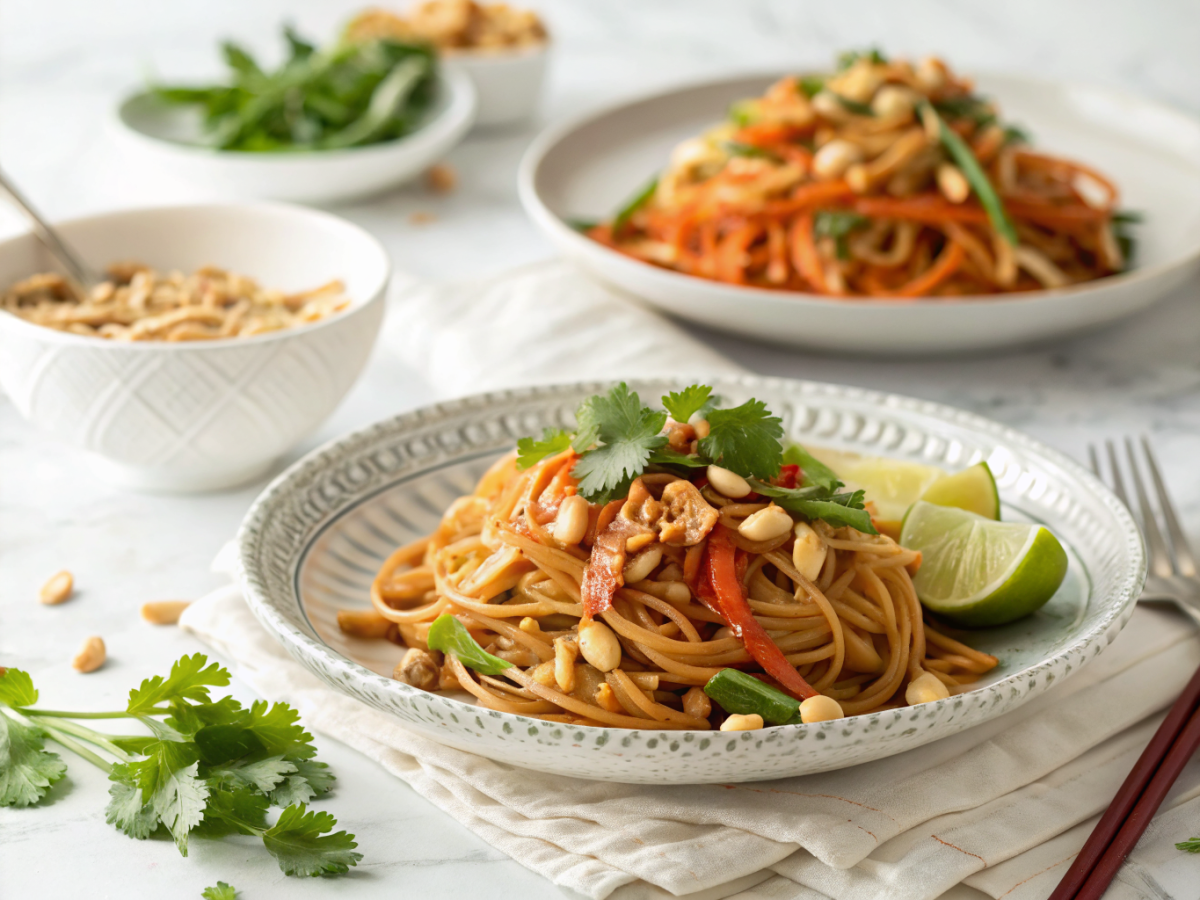
Delicious Peanut Noodles
Ingredients
Method
- Bring a large pot of salted water to a boil. Cook the noodles according to package directions until al dente. Drain and rinse with cold water to stop cooking.
- In a medium bowl, whisk together peanut butter, soy sauce, rice vinegar, honey, sesame oil, and minced garlic until smooth.
- Add warm water gradually to the peanut sauce, whisking constantly, until you reach a creamy, pourable consistency.
- Place the cooked noodles in a large bowl and pour the peanut sauce over them. Toss well to ensure all noodles are evenly coated.
- Transfer the peanut noodles to serving plates and garnish with sliced green onions. Serve immediately or chill for a cold noodle dish.
Notes
nnThese Peanut Noodles are a game-changer for busy weeknights, combining creamy peanut sauce with perfectly cooked noodles in under 30 minutes. This recipe delivers restaurant-quality flavor with minimal effort, making it ideal for anyone craving a satisfying Asian-inspired meal. Whether you’re cooking for family or meal prepping for the week, this dish never disappoints.
Peanut Noodles: 5 Easy Tips for Perfect Results
Mastering the art of peanut noodles starts with understanding a few key techniques that elevate this simple dish. The secret lies in balancing the creamy peanut butter with the right amount of acidity and sweetness. Temperature control and proper noodle preparation make all the difference between mediocre and exceptional results.
First, always use room temperature peanut butter to ensure smooth sauce consistency without lumps. Cold peanut butter straight from the refrigerator creates clumps that won’t blend properly with other ingredients. Letting it sit at room temperature for 20 minutes before starting transforms your sauce into silky perfection.
Second, reserve at least one cup of pasta cooking water before draining your noodles. This starchy liquid is gold for adjusting sauce consistency and helping it cling to every strand. The pasta water contains starches that act as a natural emulsifier, creating that glossy, restaurant-quality finish.
Third, toast your sesame seeds and any nuts you’re adding as garnish. This simple step takes just two minutes in a dry skillet but amplifies the nutty flavors exponentially. The aromatic oils released during toasting add depth that raw nuts simply cannot provide.
Fourth, don’t overcook your noodles—aim for al dente texture since they’ll continue softening slightly when tossed with warm sauce. Overcooked noodles become mushy and won’t hold the sauce properly. Check them one minute before the package instructions suggest for optimal texture.
Fifth, prepare all your ingredients before you start cooking, as this dish comes together quickly once you begin. Having everything measured and chopped prevents rushing and ensures even distribution of flavors. This mise en place approach is especially important for quick and easy meals that require precise timing.
Why You’ll Love This Peanut Noodles Recipe
This recipe checks every box for modern home cooks seeking convenience without sacrificing flavor. It’s ready in 25 minutes from start to finish, making it perfect for those hectic evenings when takeout seems like the only option. The ingredient list is straightforward, with most items already sitting in your pantry.
The versatility of this dish means you can customize it endlessly to suit dietary preferences and taste preferences. Add protein like chicken, tofu, or shrimp to make it a complete meal. Toss in whatever vegetables you have on hand—bell peppers, snap peas, carrots, or broccoli all work beautifully.
Budget-friendly ingredients make this an economical choice compared to restaurant alternatives. A single batch costs a fraction of takeout prices while serving four to six people generously. You’ll save money while controlling exactly what goes into your food, avoiding excess sodium and preservatives.
The leftovers taste incredible, even better than the first serving as flavors meld overnight in the refrigerator. This makes it an excellent candidate for meal prep or packed lunches throughout the week. Simply reheat with a splash of water or enjoy it cold as a refreshing noodle salad.
Kids and adults alike devour these noodles, making family dinners stress-free and enjoyable. The creamy peanut sauce appeals to even picky eaters who typically avoid adventurous flavors. It’s become a requested favorite in countless households for good reason.
Core Ingredients for Peanut Noodles
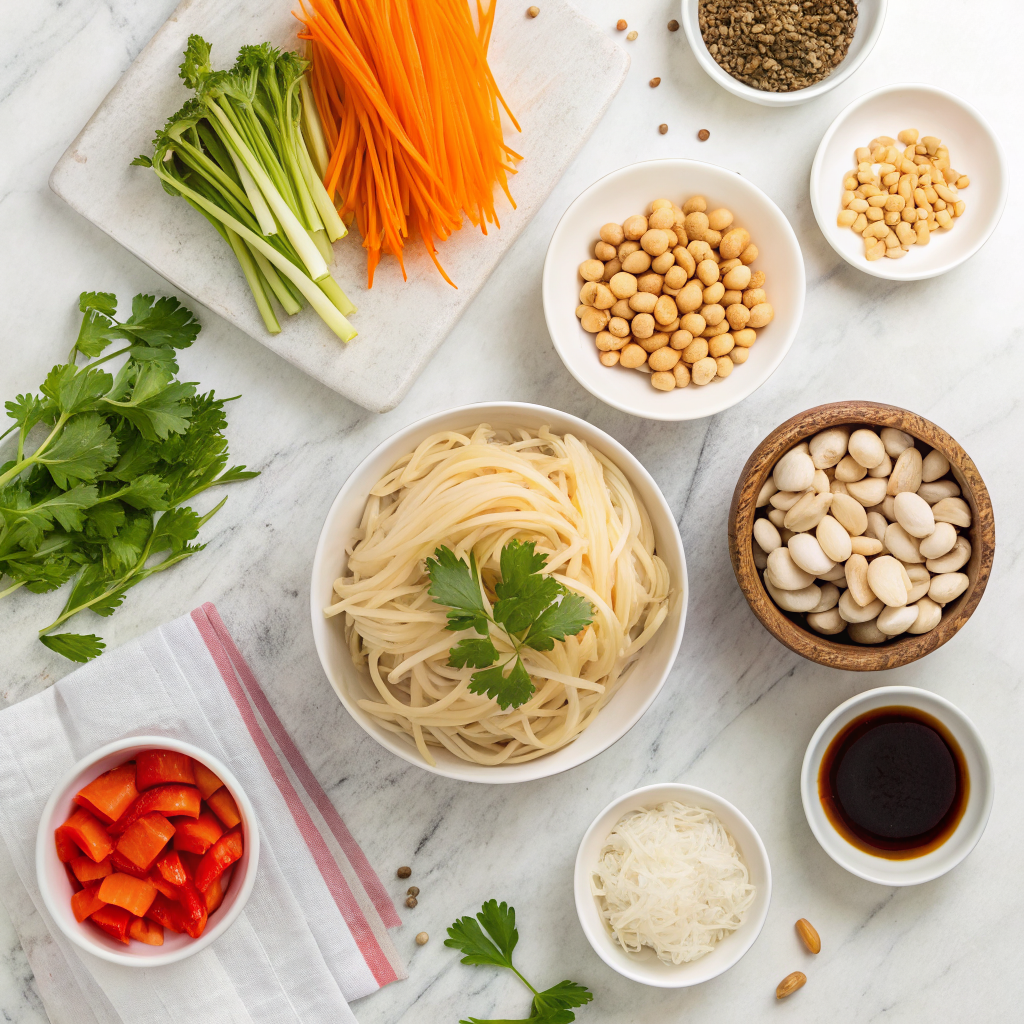
The foundation of exceptional peanut noodles begins with selecting quality ingredients that work in harmony. For the noodles themselves, choose spaghetti, linguine, or traditional Asian noodles like udon or soba. Each variety offers a unique texture, though any long noodle works wonderfully with the creamy sauce.
For the sauce, you’ll need creamy peanut butter as the star ingredient—natural or conventional both work fine. Avoid chunky varieties for the smoothest consistency, though some prefer the added texture. Choose a brand without added sugar if you want more control over sweetness levels.
Soy sauce provides the essential umami depth and saltiness that balances the rich peanut flavor. Low-sodium versions give you better control over the final salt content. Tamari works perfectly as a gluten-free alternative without compromising taste.
Rice vinegar adds the crucial acidic component that brightens the entire dish and cuts through the richness. Apple cider vinegar can substitute in a pinch, though rice vinegar offers a milder, more authentic flavor. This ingredient prevents the sauce from tasting one-dimensional or heavy.
Fresh garlic and ginger bring aromatic complexity that transforms simple ingredients into something extraordinary. Use fresh rather than powdered versions whenever possible for maximum impact. These aromatics provide the authentic Asian flavor profile that makes this dish so craveable.
Sesame oil delivers a distinctive nutty aroma that’s irreplaceable in Asian cuisine. A little goes a long way—just one tablespoon perfumes the entire dish. Toasted sesame oil offers more intense flavor than regular varieties.
Honey or maple syrup balances the salty and tangy elements with subtle sweetness. Adjust the amount based on your preference for sweeter or more savory profiles. Brown sugar also works well if that’s what you have available.
Red pepper flakes add optional heat for those who enjoy a spicy kick. Start conservatively and add more to taste, as heat levels vary significantly between brands. Sriracha or chili garlic sauce makes excellent alternatives for different heat profiles.
Green onions, cilantro, and sesame seeds serve as garnishes that add freshness and visual appeal. These finishing touches aren’t merely decorative—they contribute important textural contrast and bright flavors. Crushed peanuts also make an excellent crunchy topping.
How to Make Peanut Noodles: Step-by-Step
Begin by bringing a large pot of salted water to a rolling boil for your noodles. Use approximately one tablespoon of salt per gallon of water to properly season the pasta. This is your only opportunity to season the noodles themselves from within.
While the water heats, prepare your peanut sauce in a medium bowl or large measuring cup. Combine half a cup of creamy peanut butter, three tablespoons of soy sauce, two tablespoons of rice vinegar, and one tablespoon of sesame oil. Whisk these ingredients together until relatively smooth, though some separation is normal at this stage.
Add two cloves of minced garlic, one tablespoon of freshly grated ginger, and two tablespoons of honey to your sauce mixture. Include a quarter teaspoon of red pepper flakes if you want heat. Whisk again until all ingredients are incorporated, creating a thick paste.
Once your water reaches a full boil, add 12 ounces of noodles and cook according to package directions minus one minute. Stir occasionally to prevent sticking, especially during the first two minutes. Set a timer to avoid overcooking, which is the most common mistake with this recipe.
Before draining the noodles, scoop out one full cup of the starchy pasta cooking water and set it aside. This liquid is essential for creating the perfect sauce consistency. Don’t skip this step—tap water won’t provide the same emulsifying properties.
Drain the noodles thoroughly in a colander, shaking off excess water but don’t rinse them. Rinsing removes the surface starch that helps sauce adhere to the noodles. Return the drained noodles immediately to the still-warm pot off the heat.
Pour your prepared peanut sauce over the hot noodles in the pot. Add approximately half a cup of the reserved pasta water initially. Toss everything together vigorously using tongs or two forks, lifting and turning to coat every strand evenly.
Continue adding pasta water a few tablespoons at a time until you achieve your desired consistency. The sauce should coat the noodles glossily without pooling at the bottom of the pot. Remember that the sauce will thicken slightly as it cools, so err on the side of slightly looser.
Taste and adjust seasonings at this point, adding more soy sauce for saltiness, vinegar for tang, or honey for sweetness. This is your opportunity to customize the flavor profile to your preferences. Don’t be afraid to make it your own.
Transfer the noodles to a serving platter or individual bowls immediately. Garnish generously with sliced green onions, chopped cilantro, toasted sesame seeds, and crushed peanuts. These final touches add essential freshness and textural variety that complete the dish.
For added nutrition and substance, consider incorporating vegetables or protein at this stage. Shredded carrots, cucumber ribbons, or blanched snap peas add crunch and color. Grilled chicken, pan-seared tofu, or perfectly cooked shrimp transform this into a complete meal.
Nutrition & Health Benefits
Peanut noodles offer surprising nutritional benefits when prepared with wholesome ingredients and mindful portions. Peanut butter provides plant-based protein and healthy monounsaturated fats that promote heart health. Each serving delivers approximately 15-20 grams of protein, depending on the noodle type and any additions.
The healthy fats in peanut butter help with nutrient absorption and provide sustained energy throughout the day. These fats also contribute to satiety, keeping you fuller longer than simple carbohydrates alone. This makes the dish more satisfying and helps prevent overeating later.
Whole grain or alternative noodles boost the fiber content significantly compared to refined white pasta. Soba noodles made from buckwheat offer complete protein and additional minerals. Whole wheat varieties provide B vitamins and more complex carbohydrates for steady blood sugar levels.
Garlic and ginger aren’t just flavor enhancers—they provide anti-inflammatory and immune-boosting properties. These aromatics have been used medicinally for centuries in traditional Asian medicine. Regular consumption may support digestive health and overall wellness.
Adding vegetables increases the vitamin, mineral, and fiber content while reducing the calorie density of the meal. Bell peppers contribute vitamin C, carrots provide beta-carotene, and leafy greens add iron and calcium. The more colorful your additions, the broader the nutritional spectrum.
One serving typically contains between 400-500 calories, making it reasonable for most meal plans. The macronutrient balance leans toward carbohydrates with substantial protein and moderate fat. This combination provides energy for active lifestyles while supporting muscle maintenance.
Sodium content can be significant depending on the soy sauce used, so opt for low-sodium versions if monitoring salt intake. You can reduce sodium by up to 40% without sacrificing flavor by choosing reduced-sodium products. Coconut aminos offer an even lower-sodium alternative with a slightly sweeter profile.
For those following high-protein diets, adding extra protein sources makes this dish even more aligned with nutritional goals. Edamame, chicken breast, or extra-firm tofu can boost protein content to 30-35 grams per serving. This transforms it from a side dish into a muscle-building meal.
Variations & Substitutions
The beauty of this recipe lies in its adaptability to various dietary needs and taste preferences. For a gluten-free version, use rice noodles or gluten-free pasta with tamari instead of soy sauce. Ensure your peanut butter doesn’t contain gluten-containing additives, though most pure peanut butters are naturally gluten-free.
Almond butter or cashew butter creates delicious variations for those with peanut allergies or seeking different flavor profiles. Sunflower seed butter works wonderfully as a nut-free alternative that’s safe for school lunches. Each substitution brings its own unique taste while maintaining the creamy texture.
Coconut aminos replace soy sauce for those avoiding soy products or seeking a paleo-friendly option. This substitution adds a subtle sweetness and reduces sodium content. The flavor differs slightly but remains delicious and complementary to the other ingredients.
For a Thai-inspired twist, add a tablespoon of red curry paste to the sauce for complex spice and depth. Lime juice can replace rice vinegar for a brighter, more citrusy profile. Fresh basil instead of cilantro shifts the flavor toward Thai cuisine authentically.
Increase the vegetable content dramatically by spiralizing zucchini or using kelp noodles for a low-carb version. This drastically reduces calories and carbohydrates while increasing nutrient density. Mix half regular noodles with half vegetable noodles as a compromise approach.
Make it spicier by adding sriracha, sambal oelek, or fresh sliced Thai chilies to the sauce. Adjust heat levels gradually, tasting as you go to find your perfect balance. Remember that heat intensifies slightly as the dish sits, so start conservatively.
For a cold noodle salad version perfect for summer, chill the dressed noodles completely before serving. Add extra vegetables like cucumber, shredded cabbage, and bell peppers for crunch. This refreshing variation works wonderfully for picnics and potlucks.
Protein variations are endless—try ground turkey, beef, tempeh, or even hard-boiled eggs sliced on top. Each protein source changes the character of the dish while maintaining the essential peanut noodle foundation. Leftover rotisserie chicken makes this even quicker to prepare.
Serving Suggestions
These noodles shine as a standalone meal but also work beautifully as part of a larger Asian-inspired spread. Serve alongside spring rolls, dumplings, or lettuce wraps for a complete dinner party menu. The combination offers varied textures and flavors that keep guests engaged throughout the meal.
For a complete weeknight dinner, pair with a simple cucumber salad dressed in rice vinegar and sesame oil. The cool, crisp vegetables provide refreshing contrast to the rich, creamy noodles. This combination takes minimal extra effort while rounding out the meal nutritionally.
Consider serving the noodles as a side dish with grilled meats or fish for a fusion approach. They complement teriyaki salmon, miso-glazed chicken, or Korean-style short ribs exceptionally well. This approach works perfectly when entertaining guests with diverse tastes.
Pack them in mason jars or bento boxes for Instagram-worthy packed lunches that taste amazing cold. Layer the noodles, vegetables, and protein in separate sections for the best presentation. Add garnishes in a small separate container to maintain their freshness and crunch.
Top with a fried egg for a breakfast-for-dinner twist that adds richness and additional protein. The runny yolk mixes with the peanut sauce to create an even more luxurious coating. This unexpected combination has become a favorite among brunch enthusiasts.
Serve in lettuce cups for a low-carb appetizer or light meal option at parties. Butter lettuce or romaine leaves work perfectly as edible vessels for the noodles. Guests can customize their portions and enjoy the interactive eating experience.
Pair with a light soup like refreshing gazpacho for a complete meal with contrasting temperatures and textures. The combination satisfies multiple cravings simultaneously. This pairing works especially well during transitional seasons when you want both warm and cool elements.
Common Mistakes to Avoid
The most frequent error is using peanut butter straight from the refrigerator, resulting in lumpy, uneven sauce. Always allow it to reach room temperature for at least 20 minutes before mixing. If you’re in a rush, microwave it for 15-20 seconds to soften slightly.
Overcooking the noodles creates a mushy texture that won’t hold the sauce properly or provide satisfying bite. Set a timer and check the noodles one minute before the package suggests. Remember they’ll continue softening slightly from residual heat after draining.
Forgetting to reserve pasta water before draining is a mistake that limits your ability to adjust consistency. This starchy liquid is irreplaceable for creating the perfect sauce texture. Keep a heat-safe measuring cup near the sink as a reminder.
Adding all the pasta water at once can make the sauce too thin and watery. Add it gradually, a few tablespoons at a time, while tossing the noodles constantly. You can always add more but can’t remove excess liquid easily.
Skipping the taste-and-adjust step means missing the opportunity to perfect the flavor balance. Every brand of peanut butter and soy sauce varies in saltiness and sweetness. Take 30 seconds to taste and tweak before serving for dramatically better results.
Using old or rancid peanut butter ruins the entire dish with off-flavors that no amount of seasoning can mask. Check the expiration date and smell the peanut butter before using. Natural peanut butters especially can turn rancid if stored improperly or too long.
Rinsing the noodles after cooking removes the surface starch that helps sauce adhere properly. Unless you’re making a cold salad and need to stop the cooking process, skip the rinse. The starch is your friend in creating that glossy, well-coated finish.
Not preparing all ingredients before starting leads to rushed, uneven results and potential burning. This dish comes together quickly once you begin, leaving no time for mid-recipe chopping. Spend five minutes on prep work for much better outcomes.
Storage & Meal Prep Tips
Store leftover peanut noodles in an airtight container in the refrigerator for up to five days. The flavors actually improve overnight as they meld together beautifully. Glass containers work better than plastic for preventing odor absorption and staining.
The sauce will thicken considerably in the refrigerator, which is completely normal and expected. When reheating, add a tablespoon or two of water, broth, or additional sesame oil to restore the original consistency. Toss well to redistribute the loosened sauce evenly.
For meal prep, consider storing the sauce separately from the noodles to maintain optimal texture throughout the week. Combine them just before eating for the freshest taste and best consistency. This method works especially well if you’re preparing multiple servings at once.
Freeze portions in individual containers for up to three months for ultimate convenience. Thaw overnight in the refrigerator before reheating gently on the stovetop or in the microwave. Add fresh garnishes after reheating to restore color and crunch.
Reheat gently in the microwave in 30-second intervals, stirring between each, to prevent hot spots. Alternatively, warm in a skillet over medium-low heat with a splash of water, tossing constantly. Avoid high heat, which can cause the peanut butter to separate or become oily.
Add fresh vegetables and herbs just before serving rather than storing them with the noodles. This prevents wilting and maintains the vibrant colors and crisp textures. Keep garnishes in separate small containers for easy assembly.
If packing for lunch, store any crunchy toppings like peanuts or sesame seeds separately until eating time. This prevents them from becoming soggy and maintains their textural contribution. Small reusable containers or silicone bags work perfectly for this purpose.
The noodles taste delicious cold, making them perfect for no-reheat lunch situations. Simply remove from the refrigerator 10-15 minutes before eating to take the chill off. Many people actually prefer them cold as a refreshing noodle salad.
Label containers with the date prepared to track freshness and ensure food safety. While the dish keeps well for five days, it’s best consumed within three for optimal flavor and texture. This practice becomes especially important when meal prepping multiple dishes simultaneously.
Final Thoughts on Peanut Noodles
This Peanut Noodles recipe deserves a permanent spot in your weeknight dinner rotation for countless reasons. The combination of simplicity, versatility, and incredible flavor makes it a true kitchen workhorse. Once you master the basic technique, endless variations keep the dish exciting meal after meal.
The recipe scales beautifully whether you’re cooking for one or feeding a crowd at a potluck. Double or triple the ingredients without any adjustments to technique or timing. Leftovers are never a problem since they taste phenomenal and store so well.
Budget-conscious cooks appreciate how affordable ingredients create such impressive results that rival expensive restaurant versions. You’ll save money while controlling exactly what goes into your food, avoiding excess sodium and mystery ingredients. The cost per serving typically runs under three dollars, even with quality ingredients.
The dish accommodates virtually every dietary preference with simple substitutions that don’t compromise flavor. Whether you’re cooking for vegans, gluten-free eaters, or nut-free requirements, adaptations are straightforward. This flexibility makes it perfect for diverse households and entertaining guests with various needs.
Beyond the practical benefits, these noodles simply taste incredible and satisfy multiple cravings simultaneously. The creamy, nutty, slightly sweet, and savory flavor profile hits all the right notes. Textural variety from tender noodles, crunchy vegetables, and crispy garnishes keeps every bite interesting.
Don’t hesitate to make this recipe your own by experimenting with different additions and adjustments. The foundation is forgiving and welcomes creativity in the kitchen. Keep notes on your favorite variations to recreate them consistently, or explore similar recipes in our collection of satisfying dinner recipes.
Frequently Asked Questions
Can I make Peanut Noodles ahead of time?
Absolutely! Peanut Noodles actually taste better when made ahead, as the flavors have time to meld together beautifully. Prepare the entire dish up to three days in advance and store it in an airtight container in the refrigerator. When ready to serve, add a splash of water or broth to loosen the sauce, which thickens when chilled, and reheat gently or enjoy cold as a refreshing noodle salad.
What type of noodles work best for this recipe?
Any long noodle variety works wonderfully for this versatile dish. Spaghetti, linguine, fettuccine, or angel hair pasta are convenient options most people have on hand. For a more authentic Asian experience, try udon, soba, rice noodles, or ramen noodles. Each type offers a slightly different texture, so experiment to find your personal favorite.
How can I make this recipe spicier?
Increase the heat level by adding more red pepper flakes, sriracha, sambal oelek, or fresh sliced Thai chilies to the sauce. Start with small amounts and taste as you go, since you can always add more but can’t remove heat once added. For maximum spice impact, let the dish sit for 10-15 minutes after adding hot ingredients, as the heat intensifies slightly over time.
Is this recipe suitable for meal prep?

HomeCook Legacy Kitchen is the editorial name of homecooklegacy.com. Recipes on this site are drafted with the help of AI tools and published by the HomeCook Legacy team. Please check ingredients, cooking times and food-safety guidance for your own situation.