
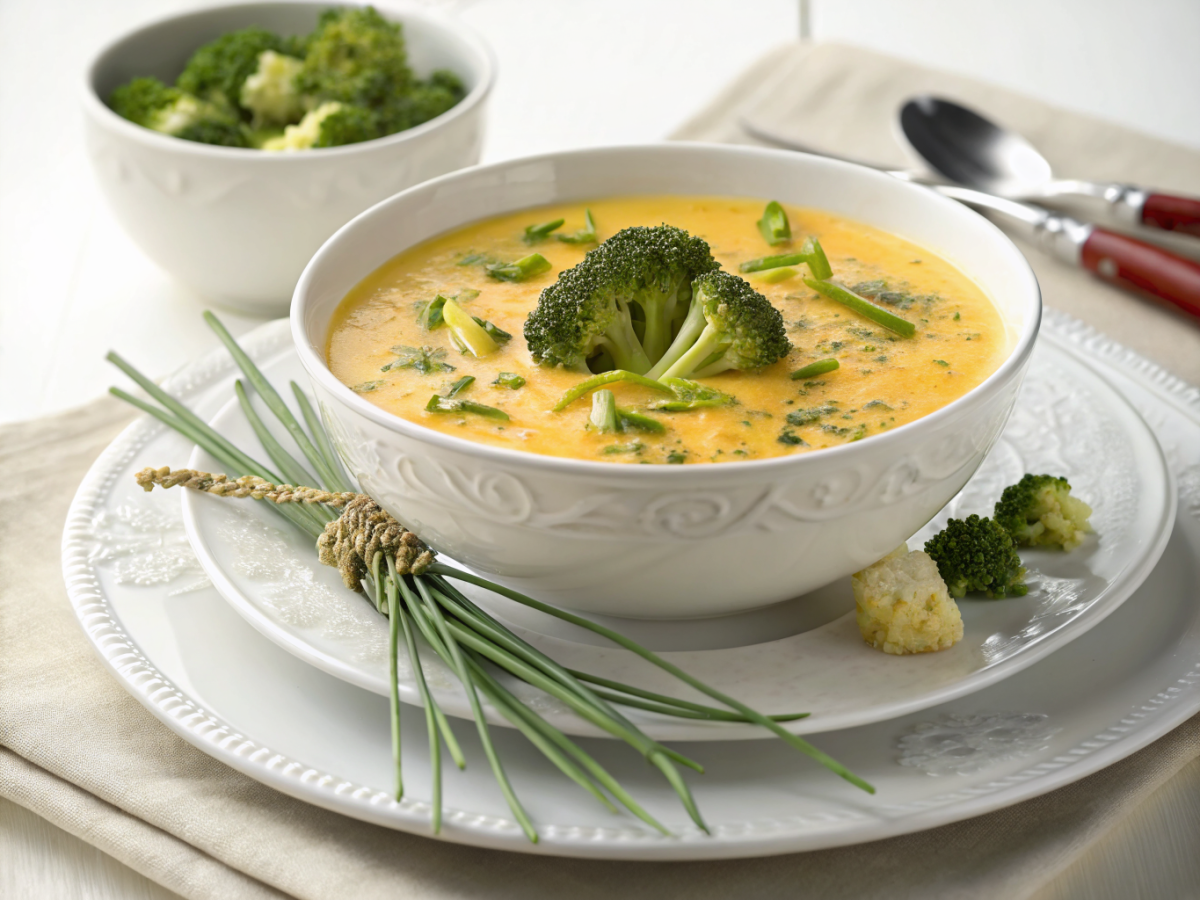
Best Broccoli Cheddar Soup You'll Ever Have
Ingredients
Method
- Steam or blanch the broccoli florets in boiling water for 3-4 minutes until tender but still bright green. Drain and set aside.
- In a large pot or Dutch oven, melt butter over medium heat. Add diced onion and cook for 5 minutes until softened. Add minced garlic and cook for 1 minute until fragrant.
- Sprinkle flour over the onion mixture and stir constantly for 2 minutes to create a roux. This will thicken the soup and remove the raw flour taste.
- Gradually whisk in chicken broth, followed by milk and heavy cream. Continue whisking to prevent lumps. Bring the mixture to a gentle simmer, stirring frequently.
- Add the cooked broccoli florets to the pot along with salt, pepper, and nutmeg if using. Simmer for 5-7 minutes, stirring occasionally.
- Reduce heat to low. Gradually add 2.5 cups of shredded cheddar cheese, stirring constantly until completely melted and smooth. Do not boil after adding cheese to prevent separation.
- Taste and adjust seasonings as needed. Ladle soup into bowls and garnish with remaining cheddar cheese. Serve hot with crusty bread or crackers.
Notes
nnThis Broccoli Cheddar Soup is the ultimate comfort food that combines creamy, cheesy goodness with nutritious vegetables in every spoonful. Whether you’re looking for a cozy weeknight dinner or meal prep option, this recipe delivers restaurant-quality results at home. The velvety texture and rich flavor will make this your go-to soup recipe all year round.
Broccoli Cheddar Soup: 5 Easy Tips for Perfect Results
Creating the perfect bowl of creamy, dreamy soup starts with understanding a few key techniques. The balance between vegetables, cheese, and cream creates that signature restaurant-style taste everyone craves. These five essential tips will transform your soup from good to absolutely unforgettable.
First, always use freshly grated sharp cheddar cheese rather than pre-shredded varieties. Pre-shredded cheese contains anti-caking agents that prevent smooth melting and can make your soup grainy. Fresh cheese melts beautifully and creates that luxurious, silky texture you’re looking for.
Second, don’t overcook your broccoli florets during the initial sauté stage. You want them tender but still vibrant green, as they’ll continue cooking in the hot soup base. Overcooked broccoli turns mushy and loses its appealing color and nutritional value.
Third, add your cheese gradually while stirring constantly over low heat. High temperatures cause cheese proteins to separate, resulting in a greasy, broken sauce. Patience during this step ensures a perfectly smooth and creamy consistency throughout.
Fourth, use a combination of chicken or vegetable broth with heavy cream for optimal richness. The broth provides savory depth while the cream adds luxurious body. This pairing creates a well-rounded flavor profile that’s neither too heavy nor too thin.
Fifth, season progressively throughout the cooking process rather than all at once at the end. Building layers of flavor by seasoning at different stages creates a more complex and satisfying taste. Always taste before serving and adjust seasoning as needed for your preference.
Why You’ll Love This Broccoli Cheddar Soup
This recipe stands out because it achieves that perfect balance between indulgent comfort food and wholesome nutrition. Unlike many soup recipes that sacrifice flavor for health or vice versa, this one delivers both. The creamy texture satisfies cravings while the broccoli provides essential vitamins and fiber.
The preparation time is remarkably efficient, making this ideal for busy weeknights when you need something satisfying quickly. From start to finish, you’ll have a pot of steaming, delicious soup ready in about 35 minutes. It’s faster than ordering takeout and infinitely more rewarding.
Budget-friendly ingredients make this recipe accessible for any household without compromising on taste. You likely have most ingredients in your pantry already, and broccoli remains affordable year-round. This makes it perfect for feeding a family without breaking the bank.
The versatility of this soup allows for countless adaptations based on dietary needs or preferences. Whether you want to add extra vegetables, adjust the cheese ratio, or modify the thickness, the base recipe accommodates changes beautifully. It’s a forgiving recipe that encourages experimentation and personalization.
Leftovers actually improve in flavor as the ingredients meld together overnight in the refrigerator. This makes it an excellent meal prep option for lunches throughout the week. Simply reheat gently on the stovetop, adding a splash of broth if needed to adjust consistency.
Core Ingredients for Broccoli Cheddar Soup
The foundation of exceptional soup begins with selecting quality ingredients that work harmoniously together. Each component plays a specific role in creating the final flavor profile and texture. Understanding these ingredients helps you make informed substitutions when necessary.

Fresh broccoli serves as the star vegetable, providing both nutrition and substance. You’ll need about 4 cups of broccoli florets, which equals roughly two medium heads. Choose broccoli with tight, dark green florets and firm stalks for the best flavor and texture.
Sharp cheddar cheese delivers that distinctive tangy, rich flavor that defines this classic soup. Plan on using 3 cups of freshly grated sharp or extra-sharp cheddar for maximum impact. The sharper the cheese, the more pronounced the flavor will be in your finished soup.
Heavy cream creates the luxurious, velvety texture that makes this soup so satisfying and indulgent. One cup of heavy cream provides the right amount of richness without making the soup overly heavy. You can substitute half-and-half for a lighter version, though the texture will be slightly thinner.
Chicken or vegetable broth forms the flavorful liquid base that carries all the other ingredients. Use 4 cups of good-quality broth for the best results. Low-sodium options work best since you’ll be adding cheese, which contains salt naturally.
Aromatics including onions, garlic, and carrots build the flavor foundation that elevates this soup beyond basic. One medium onion, three cloves of garlic, and two medium carrots diced small provide aromatic depth. These vegetables cook down and blend into the soup, adding complexity without overwhelming the broccoli and cheese.
Butter and flour create a roux that thickens the soup to the perfect consistency. Three tablespoons of butter and a quarter cup of all-purpose flour work together to prevent a thin, watery texture. This classic thickening technique also adds a subtle richness that enhances the overall mouthfeel.
Seasonings including salt, pepper, nutmeg, and mustard powder round out the flavor profile with subtle complexity. A pinch of nutmeg enhances the cheese flavor, while mustard powder adds depth. These background flavors make the soup taste more sophisticated and restaurant-quality.
How to Make Broccoli Cheddar Soup: Step-by-Step
Following a systematic approach ensures consistent, delicious results every time you make this recipe. Each step builds upon the previous one to develop layers of flavor and perfect texture. Take your time and don’t rush the process for the best outcome.
Step 1: Prepare your ingredients. Wash and cut the broccoli into small, bite-sized florets, keeping some stems if desired. Dice the onion and carrots into small, uniform pieces so they cook evenly. Mince the garlic finely and grate your cheese fresh from the block.
Step 2: Sauté the aromatics. In a large, heavy-bottomed pot or Dutch oven, melt the butter over medium heat. Add the diced onions and carrots, cooking for about 5 minutes until they begin to soften. Stir in the minced garlic and cook for another minute until fragrant but not browned.
Step 3: Create the roux. Sprinkle the flour over the sautéed vegetables and stir constantly for 2-3 minutes. This cooking time removes the raw flour taste and creates a base for thickening. The mixture should look slightly golden and smell nutty.
Step 4: Add the broth gradually. Pour in the broth slowly while whisking constantly to prevent lumps from forming. Start with one cup, whisking until smooth, then add the remaining broth. Bring the mixture to a gentle simmer, stirring occasionally to prevent sticking on the bottom.
Step 5: Cook the broccoli. Add the broccoli florets to the simmering broth and cook for 10-12 minutes until tender but still bright green. You should be able to pierce them easily with a fork but they shouldn’t be mushy. This is when you can check out other dinner recipes for meal planning inspiration.
Step 6: Blend partially (optional). For a creamier texture with some chunks remaining, use an immersion blender to puree about half the soup. Alternatively, transfer 2 cups to a regular blender, puree, and return to the pot. Leave some broccoli pieces whole for better texture and visual appeal.
Step 7: Add the cream. Reduce heat to low and stir in the heavy cream, mixing thoroughly to combine. Allow the soup to heat through for 2-3 minutes without boiling. Boiling at this stage can cause the cream to separate or curdle.
Step 8: Incorporate the cheese. Remove the pot from direct heat and add the grated cheddar in three batches, stirring until completely melted between additions. The residual heat will melt the cheese smoothly without causing it to become stringy or grainy. Patience here is crucial for that silky texture.
Step 9: Season to perfection. Add salt, black pepper, a pinch of nutmeg, and mustard powder to taste. Start conservatively since you can always add more but can’t remove seasonings. Taste and adjust until the flavor balance feels right to your palate.
Step 10: Serve immediately. Ladle the hot soup into bowls and garnish with extra shredded cheddar, crispy bacon bits, or fresh chives if desired. Serve alongside crusty bread or crackers for a complete, satisfying meal. The soup is best enjoyed fresh but stores well for later enjoyment.
Nutrition & Health Benefits
Despite its creamy, indulgent nature, this soup provides substantial nutritional value from its vegetable base. Broccoli ranks among the most nutrient-dense vegetables available, packed with vitamins, minerals, and beneficial plant compounds. One serving delivers a significant portion of your daily vitamin C and K requirements.
Broccoli contains powerful antioxidants including sulforaphane, which research suggests may have cancer-fighting properties. These compounds support your body’s natural detoxification processes and help reduce inflammation. The fiber content also promotes digestive health and helps maintain stable blood sugar levels.
The calcium from cheddar cheese contributes to bone health and provides high-quality protein for muscle maintenance. One serving of this soup delivers approximately 15-20 grams of protein, making it surprisingly filling. The combination of protein and fiber keeps you satisfied longer than many other soup varieties.
While this recipe does contain cream and cheese, you can modify it for lighter nutritional profiles without sacrificing too much flavor. Substituting milk for cream and reducing cheese by one-third still yields delicious results with fewer calories. For more nutritious meal ideas, explore high protein recipes that complement this soup perfectly.
Each serving contains approximately 350-400 calories depending on portion size and modifications. The soup provides healthy fats that help your body absorb the fat-soluble vitamins present in broccoli. According to nutritional guidelines from trusted cooking resources, balanced meals should include vegetables, protein, and healthy fats.
The vitamin A from carrots supports eye health and immune function, while the B vitamins aid energy metabolism. Garlic and onions contain compounds that may support cardiovascular health and have antimicrobial properties. This soup truly offers more than just comfort—it nourishes your body comprehensively.
Variations & Substitutions
The beauty of this recipe lies in its adaptability to different dietary needs and flavor preferences. You can easily customize it while maintaining the core appeal that makes it so beloved. Experimentation often leads to discovering your perfect personal version.
Vegetarian adaptation: Simply swap chicken broth for vegetable broth to make this completely vegetarian. The flavor profile remains robust and satisfying without any meat-based ingredients. Ensure your vegetable broth is well-seasoned for the best results.
Lighter version: Replace heavy cream with whole milk or half-and-half and reduce the cheese to 2 cups instead of 3. You can also use reduced-fat cheddar, though the flavor will be slightly less intense. Adding extra broccoli compensates for the reduced richness while boosting nutrition.
Gluten-free option: Substitute the all-purpose flour with cornstarch, rice flour, or a gluten-free flour blend. Use 2 tablespoons of cornstarch mixed with cold water as a slurry instead of making a traditional roux. Add it to the simmering soup and cook until thickened.
Extra vegetables: Incorporate cauliflower florets alongside the broccoli for added nutrition and a milder flavor. Diced celery, bell peppers, or even spinach can be added during the cooking process. These additions increase the vegetable content without overwhelming the classic flavor profile.
Protein boost: Add diced cooked chicken breast, crispy bacon pieces, or ham during the final stages of cooking. These proteins transform the soup into an even more substantial meal that satisfies heartier appetites. Rotisserie chicken works perfectly for a time-saving shortcut.
Cheese variations: Experiment with different cheese combinations like Gruyère, fontina, or white cheddar for unique flavor profiles. A mixture of sharp cheddar and Gruyère creates an especially sophisticated taste. Smoked cheddar adds an interesting depth that some people absolutely love.
Spicy version: Add red pepper flakes, diced jalapeños, or a dash of cayenne pepper for those who enjoy heat. The spiciness contrasts beautifully with the creamy richness of the soup. Start with small amounts and adjust to your preferred spice level.
Serving Suggestions
Presenting this soup thoughtfully elevates it from simple weeknight dinner to impressive meal worthy of guests. The right accompaniments complement the creamy texture and rich flavors without competing. Consider these serving ideas to create a complete, memorable dining experience.
Bread pairings: Serve with crusty sourdough bread, garlic bread, or warm dinner rolls for dipping and soaking up every drop. A bread bowl presentation makes this soup feel extra special and eliminates the need for separate bread. Homemade breads and baked goods pair exceptionally well with creamy soups.
Salad combinations: A crisp green salad with vinaigrette provides refreshing contrast to the soup’s richness. Consider arugula with lemon dressing or a classic Caesar salad for complementary flavors. The acidity in the dressing cuts through the creaminess beautifully.
Garnish options: Top individual servings with extra shredded cheddar, crispy bacon bits, fresh chives, or croutons for added texture. A drizzle of truffle oil or a sprinkle of smoked paprika adds gourmet flair. These finishing touches make the presentation restaurant-quality.
Sandwich pairing: Serve alongside grilled cheese sandwiches for the ultimate comfort food combination. A turkey and avocado sandwich also complements the soup’s flavors nicely. This pairing creates a satisfying, complete meal that appeals to all ages.
Wine pairing: A crisp white wine like Chardonnay or Sauvignon Blanc balances the soup’s richness perfectly. For red wine lovers, a light Pinot Noir won’t overwhelm the delicate flavors. Non-alcoholic options include sparkling water with lemon or iced tea.
Portion considerations: Serve as an appetizer in smaller portions before a main course, or as the main event in larger bowls. For appetizer servings, plan on 1 cup per person; for main course servings, 1.5 to 2 cups works well. Consider your menu context when determining portion sizes.
Common Mistakes to Avoid
Understanding potential pitfalls helps you achieve perfect results consistently without frustration or wasted ingredients. Many home cooks make the same errors that compromise texture and flavor. Learning from these common mistakes saves time and ensures success every time.
Adding cheese at too high temperature: This is the most frequent error that results in grainy, separated soup. Always reduce heat to low or remove from heat entirely before incorporating cheese. The residual heat is sufficient to melt cheese smoothly without breaking the emulsion.
Using pre-shredded cheese: The convenience isn’t worth the compromised texture that anti-caking agents create. Pre-shredded cheese simply doesn’t melt as smoothly as freshly grated cheese from a block. Take the extra few minutes to grate your own for dramatically better results.
Overcooking the broccoli: Mushy, gray-green broccoli looks unappetizing and loses nutritional value. Cook just until tender while maintaining that vibrant green color. Remember that broccoli continues cooking slightly even after you remove it from heat.
Not seasoning progressively: Adding all seasonings at the end results in flat, one-dimensional flavor. Season lightly at multiple stages throughout cooking to build complexity. Always taste before serving and adjust final seasoning as needed.
Making the soup too thick or too thin: The consistency should be creamy but still pourable, coating a spoon without being gloppy. If too thick, add more broth; if too thin, simmer longer or add a cornstarch slurry. Achieving the right consistency makes the eating experience much more enjoyable.
Rushing the roux: Not cooking the flour long enough leaves a raw, pasty taste in your finished soup. Cook the roux for at least 2-3 minutes while stirring constantly until it smells nutty. This crucial step ensures proper thickening and better flavor development.
Boiling after adding dairy: High heat causes cream and cheese to separate, creating an unpleasant texture. Keep the heat low once dairy is added, warming gently without boiling. Patience during this final stage protects all your hard work.
Storage & Meal Prep Tips
Proper storage techniques preserve the soup’s quality and flavor for maximum enjoyment throughout the week. This recipe makes excellent leftovers that some people actually prefer after the flavors meld overnight. Following these guidelines ensures food safety while maintaining the best possible taste and texture.
Refrigerator storage: Allow the soup to cool to room temperature before transferring to airtight containers. Store in the refrigerator for up to 4-5 days, keeping it in the coldest part. Glass containers work better than plastic for preventing odor absorption and maintaining freshness.
Freezer storage: This soup freezes reasonably well for up to 3 months, though the texture may change slightly upon thawing. Leave some headspace in containers since liquids expand when frozen. Label containers with the date to track freshness and use oldest batches first.
Reheating instructions: Reheat gently on the stovetop over low-medium heat, stirring frequently to prevent scorching. Add a splash of broth or milk if the soup has thickened too much during storage. Avoid microwaving at high power, which can cause separation; use 50% power in short intervals instead.
Meal prep strategy: Prepare a double batch on weekends for easy weekday lunches or dinners. Portion into individual containers for grab-and-go convenience throughout the week. Pair with different sides each day to prevent meal fatigue while maximizing efficiency.
Texture preservation: Slightly undercook the broccoli if you’re making this specifically for meal prep. The additional reheating will finish cooking the vegetables to perfect tenderness. This prevents the mushy texture that can result from cooking twice.
Separation solutions: If the soup separates after storage, whisk vigorously while reheating to re-emulsify. A splash of fresh cream and some additional grated cheese can help restore the original creamy texture. Gentle heat and patient stirring usually resolve most separation issues.
Final Thoughts on Broccoli Cheddar Soup
This Broccoli Cheddar Soup recipe represents the perfect intersection of comfort, nutrition, and practical home cooking. The combination of creamy texture, sharp cheese flavor, and tender vegetables creates a bowl of pure satisfaction. Whether you’re cooking for family, meal prepping for the week, or impressing dinner guests, this recipe delivers consistent, crowd-pleasing results.
The versatility of this soup makes it valuable in any home cook’s repertoire throughout the year. It works equally well as a light summer lunch or hearty winter dinner, adapting to seasons and occasions. The straightforward technique and accessible ingredients mean you’ll return to this recipe again and again.
Mastering this classic soup builds fundamental cooking skills that transfer to countless other recipes. The techniques of making a roux, properly melting cheese, and balancing flavors apply broadly across cuisines. Consider this recipe an investment in your overall cooking confidence and competence.
Don’t hesitate to make this recipe your own through experimentation and personalization based on your preferences. The best recipes evolve with the cook, adapting to available ingredients and individual tastes. Your perfect version might include extra garlic, different cheese blends, or additional vegetables—embrace the creative process.
For more comforting meal ideas, check out quick and easy meals that complement this soup perfectly in your weekly rotation. Building a collection of reliable, delicious recipes makes meal planning effortless and enjoyable. This soup deserves a permanent place in that collection.
Frequently Asked Questions
Can I make Broccoli Cheddar Soup ahead of time?
Yes, this soup actually benefits from being made ahead as the flavors develop and deepen overnight. Prepare the complete recipe, cool it properly, and store it in the refrigerator for up to 4 days. When ready to serve, reheat gently on the stovetop over low heat, adding a splash of broth if needed to adjust consistency. The cheese and cream hold up well, though you may need to whisk while reheating to restore the silky texture.
Why did my soup turn out grainy instead of smooth?
Grainy texture typically results from adding cheese at too high a temperature or using pre-shredded cheese with anti-caking agents. Always remove the pot from direct heat before incorporating cheese, and use freshly grated cheese from a block. Add cheese gradually in batches, stirring until each addition melts completely before adding more. If your soup does become grainy, try blending it with an immersion blender, which can sometimes restore smoothness.
Can I use frozen broccoli instead of fresh?
Absolutely, frozen broccoli works well and actually saves preparation time since it’s already cut. Use about 4 cups of frozen florets, adding them directly to the simmering broth without thawing first. Frozen broccoli may cook slightly faster than fresh, so check for tenderness after 8-10 minutes. The flavor and nutrition remain comparable, making frozen broccoli a practical alternative, especially for quick weeknight cooking.
How can I make this soup thicker or thinner?

HomeCook Legacy Kitchen is the editorial name of homecooklegacy.com. Recipes on this site are drafted with the help of AI tools and published by the HomeCook Legacy team. Please check ingredients, cooking times and food-safety guidance for your own situation.