
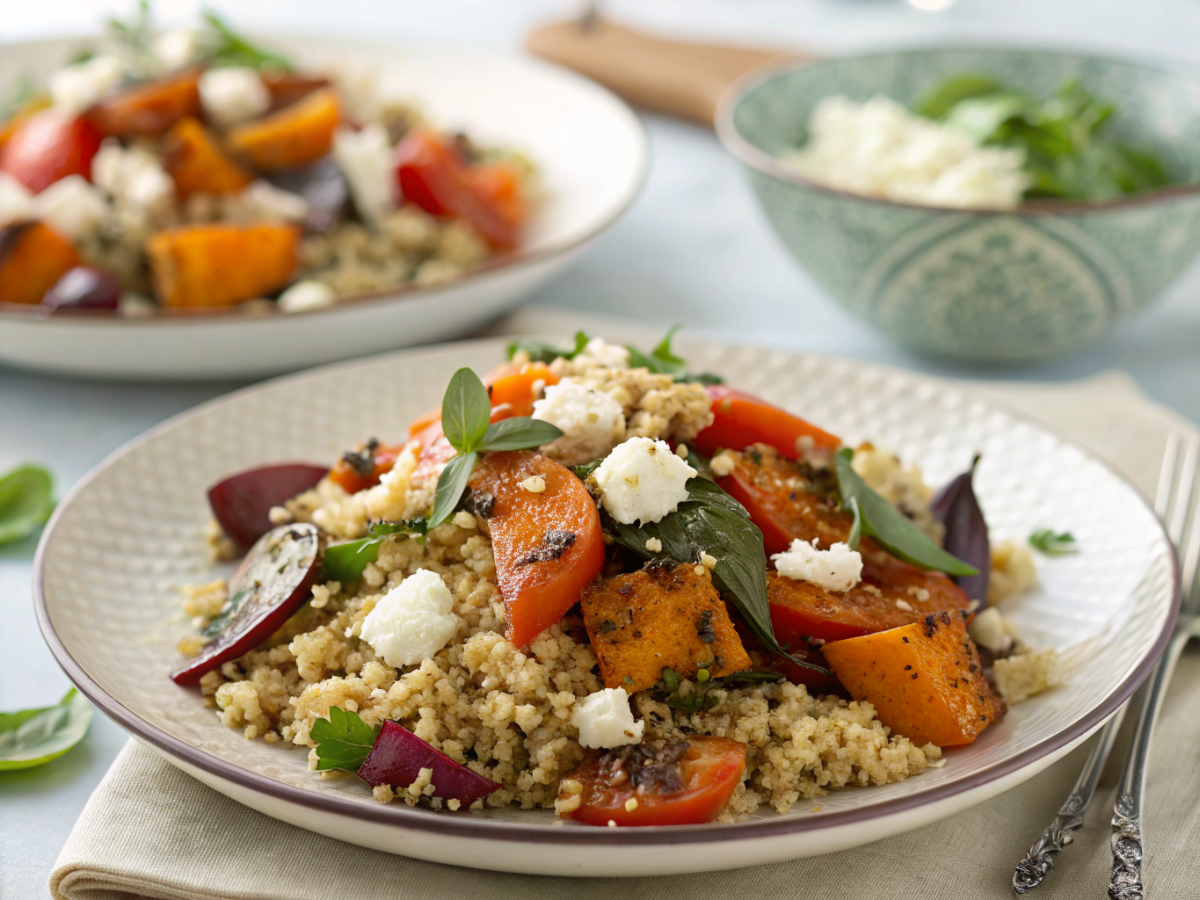
Quinoa With Roasted Vegetables And Feta Everyone Will Ask You To Make Again
Ingredients
Method
- Preheat oven to 425 degrees Fahrenheit. Line a large baking sheet with parchment paper.
- In a medium saucepan, combine quinoa and vegetable broth. Bring to a boil, then reduce heat to low, cover, and simmer for 15 minutes until liquid is absorbed. Remove from heat and let stand covered for 5 minutes, then fluff with a fork.
- Toss the red bell pepper, zucchini, red onion, and cherry tomatoes with 2 tablespoons olive oil, oregano, salt, and pepper on the prepared baking sheet. Spread in a single layer.
- Roast vegetables in preheated oven for 25-30 minutes, stirring halfway through, until vegetables are tender and lightly caramelized at the edges.
- Transfer cooked quinoa to a large serving bowl. Add roasted vegetables and gently toss to combine.
- Drizzle with remaining 1 tablespoon olive oil and lemon juice. Add crumbled feta cheese and fresh parsley. Toss gently to combine.
- Taste and adjust seasoning with additional salt and pepper if needed. Serve warm or at room temperature.
Nutrition
Notes
Tried this recipe?
Let us know how it was!Quinoa With Roasted Vegetables And Feta: 5 Easy Tips for Perfect Results
Getting this dish just right requires attention to a few key details. First, rinse your quinoa thoroughly to remove the bitter saponin coating that can affect taste. Second, roast your vegetables at high heat (425°F) to achieve proper caramelization without steaming.
Third, cut all vegetables to similar sizes for even cooking. Fourth, don’t overdress the quinoa—let the natural flavors shine through with just enough olive oil and lemon juice. Fifth, add the feta at the end to preserve its creamy texture and prevent it from melting completely.
These simple adjustments transform a basic grain bowl into a restaurant-quality dish. The contrast between warm roasted vegetables and cool, tangy feta creates layers of flavor and temperature. This technique ensures every component maintains its distinct character while harmonizing beautifully on the plate.
Why You’ll Love This Quinoa With Roasted Vegetables And Feta
This recipe delivers complete nutrition in one bowl without sacrificing flavor. Quinoa provides all nine essential amino acids, making it a complete protein source that keeps you satisfied for hours. The roasted vegetables add fiber, vitamins, and minerals while creating delicious caramelized edges.
The preparation is remarkably flexible and forgiving for home cooks. You can swap vegetables based on what’s in season or hiding in your refrigerator. The dish works equally well served warm, at room temperature, or cold from the fridge the next day.
This meal appeals to various dietary preferences simultaneously. It’s naturally vegetarian, can easily become vegan by omitting the feta, and is gluten-free for those with sensitivities. The colorful presentation makes it Instagram-worthy while being substantial enough to satisfy hearty appetites.
Meal preppers appreciate how well this dish holds up throughout the week. The flavors actually improve after a day as the ingredients meld together. You can prepare components separately and assemble portions as needed, making it ideal for quick easy meals during busy weeks.
Core Ingredients for Quinoa With Roasted Vegetables And Feta
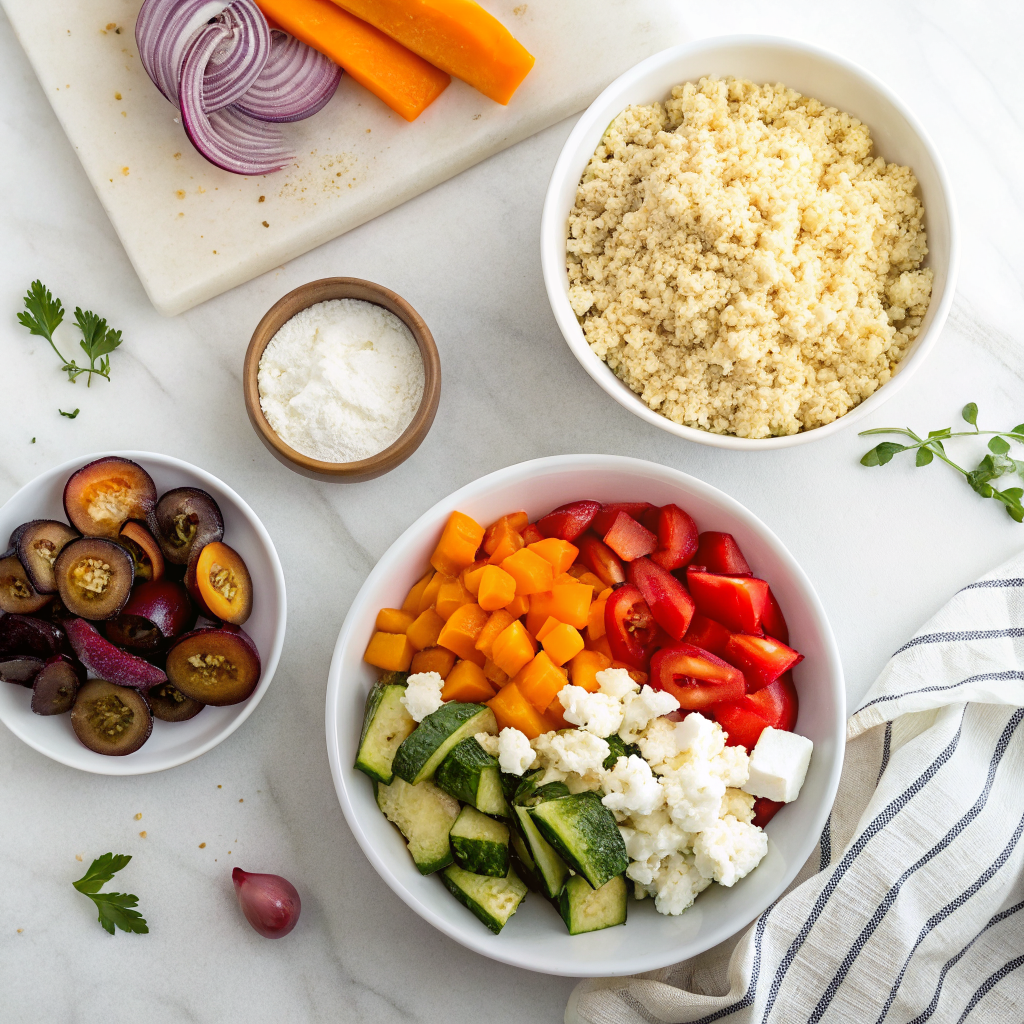
The foundation starts with one cup of dry quinoa, which yields about three cups cooked. Choose white, red, or tri-color quinoa based on your preference—white cooks fastest while red holds its shape better. Rinse it under cold water for at least 30 seconds to remove bitterness.
For the roasted vegetables, you’ll need a colorful mix totaling about four cups. Bell peppers (red and yellow), zucchini, red onion, and cherry tomatoes create visual appeal and flavor diversity. Cut bell peppers and zucchini into 1-inch pieces, slice onions into wedges, and leave cherry tomatoes whole.
The seasoning components include three tablespoons of olive oil, divided between cooking and dressing. Fresh garlic (three cloves, minced), dried oregano, salt, and black pepper enhance the vegetables. Fresh lemon juice (two tablespoons) brightens the finished dish with acidity.
Feta cheese (one cup, crumbled) provides the signature tangy creaminess. Choose block feta packed in brine rather than pre-crumbled for better texture and flavor. Fresh herbs like parsley or basil (half cup, chopped) add freshness and color to the final presentation.
Pro Tip: Buy feta in blocks and crumble it yourself for superior texture and moisture. Pre-crumbled versions often contain anti-caking agents that affect creaminess.
How to Make Quinoa With Roasted Vegetables And Feta: Step-by-Step
Start by preheating your oven to 425°F and positioning a rack in the center. Line a large baking sheet with parchment paper or lightly oil it to prevent sticking. This high temperature is crucial for achieving caramelized edges on the vegetables rather than steaming them.
Rinse the quinoa in a fine-mesh strainer under cold running water for 30 seconds. Combine rinsed quinoa with two cups of water or vegetable broth in a medium saucepan. Bring to a boil, then reduce heat to low, cover, and simmer for 15 minutes until liquid is absorbed.
While the quinoa cooks, prepare your vegetables. Toss the chopped bell peppers, zucchini, and red onion with two tablespoons of olive oil, minced garlic, oregano, salt, and pepper in a large bowl. Spread vegetables in a single layer on the prepared baking sheet, ensuring they don’t overlap.
Roast the vegetables for 20 minutes, then add the cherry tomatoes to the pan. Continue roasting for another 10 minutes until vegetables are tender with caramelized edges. The tomatoes should be blistered but still holding their shape, releasing some of their juices.
Once the quinoa finishes cooking, remove it from heat and let it sit covered for five minutes. Fluff with a fork to separate the grains and create a light, fluffy texture. Transfer to a large serving bowl and drizzle with remaining olive oil and fresh lemon juice.
Add the roasted vegetables to the quinoa and gently toss to combine. The residual heat will warm everything together while the lemon juice adds brightness. Fold in the crumbled feta cheese and fresh herbs just before serving, reserving some for garnish on top.
Timing Your Components
Start the quinoa first since it takes 15 minutes plus resting time. While it cooks, prep and start roasting your vegetables. This timing allows both components to finish around the same time for optimal temperature when combining.
If you need to work ahead, cook the quinoa up to three days in advance. Store it refrigerated and bring to room temperature before assembling, or warm it gently in the microwave. The vegetables are best roasted fresh but can be prepared a day ahead and reheated.
Nutrition & Health Benefits
Quinoa stands out as one of the few plant-based complete proteins, containing all nine essential amino acids. A single cup of cooked quinoa provides about 8 grams of protein and 5 grams of fiber. It’s also rich in manganese, magnesium, phosphorus, and folate, supporting bone health and energy metabolism.
The variety of roasted vegetables contributes different phytonutrients and antioxidants. Bell peppers provide vitamin C and carotenoids that support immune function and eye health. Zucchini offers potassium and B vitamins, while tomatoes contain lycopene, a powerful antioxidant linked to heart health.
Feta cheese adds calcium and protein while being lower in calories than many other cheeses. It contains probiotics that support gut health and provides vitamin B12, essential for nerve function. The combination of protein from quinoa and feta makes this dish particularly satisfying and blood-sugar stabilizing.
This meal provides a balanced macronutrient profile with complex carbohydrates, quality protein, and healthy fats. One serving contains approximately 350-400 calories, 12-15 grams of protein, and 8-10 grams of fiber. It’s an excellent choice for those following high protein recipes for sustained energy.
The olive oil contributes heart-healthy monounsaturated fats and anti-inflammatory compounds. Research shows that Mediterranean-style eating patterns, which include olive oil, whole grains, and vegetables, support cardiovascular health and longevity. The lemon juice enhances iron absorption from the quinoa and vegetables.
Variations & Substitutions
Transform this base recipe by swapping vegetables seasonally. In autumn, try butternut squash, Brussels sprouts, and red onions for an earthier flavor profile. Winter calls for roasted cauliflower, carrots, and beets that bring sweetness and color to the bowl.
Spring variations might include asparagus, snap peas, and radishes for a lighter, fresher take. Summer versions can showcase eggplant, corn kernels, and heirloom tomatoes. Always maintain the 4-cup total vegetable volume for proper proportions with the quinoa.
For protein variations, add chickpeas or white beans to make it more filling. Grilled chicken, shrimp, or salmon transforms it into a heartier main course. Tofu or tempeh work beautifully for plant-based protein boosts that complement the existing flavors.
Cheese substitutions change the flavor profile significantly. Goat cheese offers similar tanginess with a creamier texture, while aged parmesan adds nutty, umami notes. For dairy-free versions, use nutritional yeast for cheesy flavor or skip the cheese entirely and add more herbs and lemon.
Grain alternatives work if you want to vary the base. Farro provides a chewier texture with a nutty flavor, while couscous cooks even faster than quinoa. Brown rice offers familiarity, and bulgur wheat brings a pleasant, hearty texture to the dish.
Vegan Adaptation: Simply omit the feta and add extra lemon juice, nutritional yeast, and a handful of toasted pine nuts for richness and texture contrast.
Serving Suggestions
Serve this dish warm as a main course for lunch or dinner, portioned into shallow bowls. Garnish with extra feta crumbles, fresh herbs, and a lemon wedge on the side. A drizzle of high-quality olive oil or balsamic glaze adds restaurant-style finishing touches.
As a side dish, this pairs beautifully with grilled proteins like lamb chops, chicken thighs, or fish fillets. The Mediterranean flavors complement grilled meats particularly well. It also works alongside other mezze-style dishes for a tapas-inspired spread.
For entertaining, serve it family-style in a large, shallow platter. Arrange the quinoa as a base, top with roasted vegetables, then scatter feta and herbs over everything. This presentation allows guests to serve themselves while showcasing the colorful ingredients.
Transform leftovers into stuffed bell peppers or tomatoes by filling hollowed vegetables with the mixture. Wrap it in large lettuce leaves for low-carb wraps, or stuff it into pita pockets with extra tzatziki sauce. It also makes an excellent base for grain bowls topped with a fried egg.
Temperature versatility makes this recipe perfect for various occasions. Serve it warm for cozy dinners, at room temperature for potlucks and picnics, or chilled as a refreshing summer salad. Each temperature brings out different flavor aspects of the dish.
Common Mistakes to Avoid
The most frequent error is overcrowding the baking sheet with vegetables. When vegetables touch too much, they steam rather than roast, resulting in soggy, pale pieces instead of caramelized edges. Use two baking sheets if necessary to maintain proper spacing.
Not rinsing quinoa thoroughly leaves a bitter coating that affects the entire dish. Even pre-rinsed quinoa benefits from additional rinsing under cold water. This simple step takes 30 seconds but dramatically improves the final flavor.
Adding feta while the quinoa and vegetables are too hot causes it to melt completely and lose its creamy texture. Let the mixture cool for 3-5 minutes before folding in the cheese. This preserves the textural contrast that makes the dish interesting.
Underseasoning is another common pitfall, especially with quinoa which absorbs a lot of salt. Season the quinoa cooking water, season the vegetables before roasting, and taste the final dish before serving. Don’t be afraid to add more lemon juice, salt, or fresh herbs at the end.
Using too little olive oil on the vegetables prevents proper browning and caramelization. The vegetables should be lightly coated but not dripping. About two tablespoons for four cups of vegetables provides the right amount for roasting without greasiness.
Storage & Meal Prep Tips
Store the assembled dish in an airtight container in the refrigerator for up to five days. The flavors meld and improve after a day, making it ideal for meal prep. Portion into individual containers for grab-and-go lunches throughout the week.
For best results when meal prepping, store components separately if possible. Keep cooked quinoa, roasted vegetables, and feta in separate containers, then assemble portions as needed. This prevents the quinoa from absorbing too much moisture and becoming mushy.
Freezing works for the quinoa and roasted vegetables but not for the feta. Freeze in portions for up to three months, then thaw overnight in the refrigerator. Add fresh feta, herbs, and lemon juice after reheating for the best texture and flavor.
To reheat, use the microwave for 1-2 minutes or warm gently in a skillet over medium heat. Add a splash of water or broth if the quinoa seems dry. You can also enjoy it cold straight from the refrigerator, which works particularly well for dinner recipes during hot weather.
Pack it for lunch by keeping a lemon wedge separate and squeezing it over just before eating. This refreshes the flavors and adds brightness. Include extra feta and herbs in a small container to sprinkle on top for maximum freshness.
Final Thoughts on Quinoa With Roasted Vegetables And Feta
This Quinoa With Roasted Vegetables And Feta delivers on every level—nutrition, flavor, versatility, and visual appeal. It’s the type of recipe that becomes a weekly staple because it checks so many boxes. Whether you’re cooking for yourself, family, or guests, this dish impresses without requiring advanced skills.
The beauty lies in its adaptability to your preferences and what’s available. Once you master the basic technique, you’ll find yourself creating endless variations based on seasons and cravings. The combination of textures and temperatures keeps every bite interesting from first to last.
Home cooks appreciate recipes that work hard for them, and this one certainly does. It serves as a main dish, side dish, meal prep foundation, or party contribution. The Mediterranean flavors appeal to a wide range of palates while accommodating various dietary needs effortlessly.
Don’t be surprised when this Quinoa With Roasted Vegetables And Feta becomes your go-to recipe for everything from weeknight dinners to potluck contributions. The compliments you’ll receive make it worth adding to your regular rotation. Once people taste it, they’ll understand why everyone asks you to make it again.
Frequently Asked Questions
Can I make Quinoa With Roasted Vegetables And Feta ahead of time?
Yes, this dish is excellent for making ahead and actually improves in flavor after sitting for a day. You can prepare the entire Quinoa With Roasted Vegetables And Feta up to three days in advance and store it in the refrigerator. For best results, store the feta separately and add it just before serving to maintain its creamy texture. The quinoa and roasted vegetables can be reheated together or enjoyed cold.
What’s the best way to prevent quinoa from becoming mushy?
The key to fluffy quinoa is using the correct water-to-quinoa ratio (2:1) and not overcooking it. After the liquid is absorbed and the quinoa has cooked for 15 minutes, remove it from heat immediately and let it rest covered for five minutes. Fluff with a fork rather than stirring to separate the grains without crushing them. Rinsing before cooking also helps achieve better texture in your final dish.
Can I use frozen vegetables instead of fresh for this recipe?
While fresh vegetables provide the best texture and caramelization, you can use frozen vegetables in a pinch. Thaw and pat them completely dry before roasting, as excess moisture prevents proper browning. You may need to increase roasting time by 5-10 minutes. Fresh vegetables are recommended for Quinoa With Roasted Vegetables And Feta to achieve the signature caramelized edges that make this dish special.
How do I make this recipe vegan while keeping it flavorful?
To make vegan Quinoa With Roasted Vegetables And Feta, simply omit the feta cheese and compensate with additional flavor boosters. Add nutritional yeast for a cheesy flavor, increase the lemon juice slightly, and include toasted pine nuts or pumpkin seeds for richness and texture. Extra fresh herbs, a splash of balsamic vinegar, and a drizzle of tahini sauce also add depth and creaminess without dairy.
