
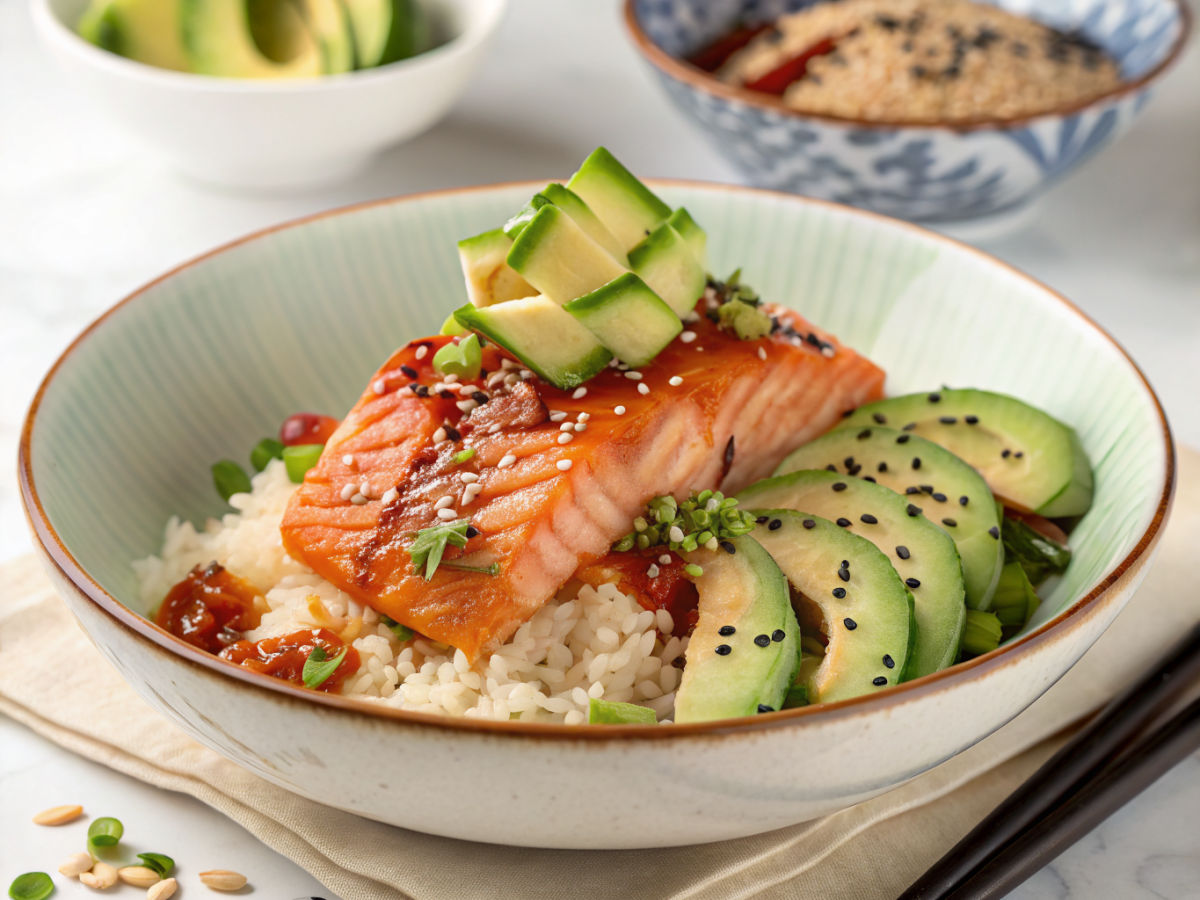
Spicy Salmon Crispy Rice Bowl Everyone Will Ask You To Make Again
Ingredients
Method
- In a medium bowl, combine diced salmon with 2 tablespoons sriracha, 1 tablespoon soy sauce, and 1 tablespoon mayonnaise. Mix well and set aside to marinate for 10 minutes.
- Heat 2 tablespoons vegetable oil in a large non-stick skillet over medium-high heat. Press cooked rice into the pan in an even layer about half-inch thick. Cook without stirring for 5-7 minutes until the bottom is golden and crispy.
- Carefully flip the rice in sections using a spatula. Add remaining 2 tablespoons oil around the edges and cook for another 5 minutes until crispy on both sides. Remove and break into bite-sized pieces.
- In the same skillet, add the marinated salmon and cook over medium heat for 3-4 minutes, stirring occasionally, until the salmon is cooked through and slightly caramelized.
- In a small bowl, mix together remaining 1 tablespoon mayonnaise, 1 tablespoon sriracha, and 1 tablespoon soy sauce to create a spicy mayo drizzle.
- Divide crispy rice among four bowls. Top each with cooked spicy salmon, sliced avocado, and drizzle with spicy mayo sauce.
- Sprinkle each bowl with sesame seeds and sliced green onions. Serve immediately while the rice is still crispy.
Nutrition
Notes
Tried this recipe?
Let us know how it was!Spicy Salmon Crispy Rice Bowl: 5 Easy Tips for Perfect Results
Creating the perfect crispy rice bowl starts with understanding the key techniques that elevate this dish from good to extraordinary. The secret lies in achieving that golden, crunchy bottom layer of rice while keeping the salmon tender and flavorful. These five essential tips will ensure your bowl turns out restaurant-quality every single time.
First, always use day-old rice for the crispiest results. Freshly cooked rice contains too much moisture, which prevents proper crisping. Second, don’t move the rice around too much once it hits the hot pan—patience is key to developing that golden crust.
Third, ensure your salmon is at room temperature before cooking to promote even cooking throughout. Fourth, use high-quality sushi-grade salmon for the best flavor and texture. Fifth, balance your spicy sauce carefully—you want heat that enhances, not overwhelms, the delicate salmon flavor.
Why You’ll Love This Spicy Salmon Crispy Rice Bowl
The textural contrast in this dish is absolutely addictive. You get the satisfying crunch of crispy rice paired with buttery, melt-in-your-mouth salmon and fresh, crisp vegetables. Each bite delivers multiple layers of flavor and texture that keep you coming back for more.
This recipe is incredibly versatile and customizable to your preferences. Whether you prefer extra spice, more vegetables, or different protein options, the foundation remains foolproof. It’s also a fantastic way to use leftover rice, transforming it into something spectacular rather than just reheating it.
The presentation factor cannot be overstated—this bowl looks like it came from a trendy restaurant. Your family and guests will be genuinely impressed by the professional appearance and complex flavors. Plus, it’s actually much simpler to make than it looks, giving you maximum impact with minimal stress.
From a nutritional standpoint, this bowl checks all the boxes. You’re getting omega-3 fatty acids from the salmon, complex carbohydrates from the rice, and vitamins from fresh vegetables. It’s a complete, balanced meal in one beautiful bowl that satisfies both your taste buds and nutritional needs.
Core Ingredients for Spicy Salmon Crispy Rice Bowl
The foundation of this recipe starts with sushi rice or short-grain rice, preferably day-old and refrigerated. This type of rice has the perfect starch content to create that coveted crispy bottom layer. You’ll need about 2 cups of cooked rice, which should be broken up gently before cooking.
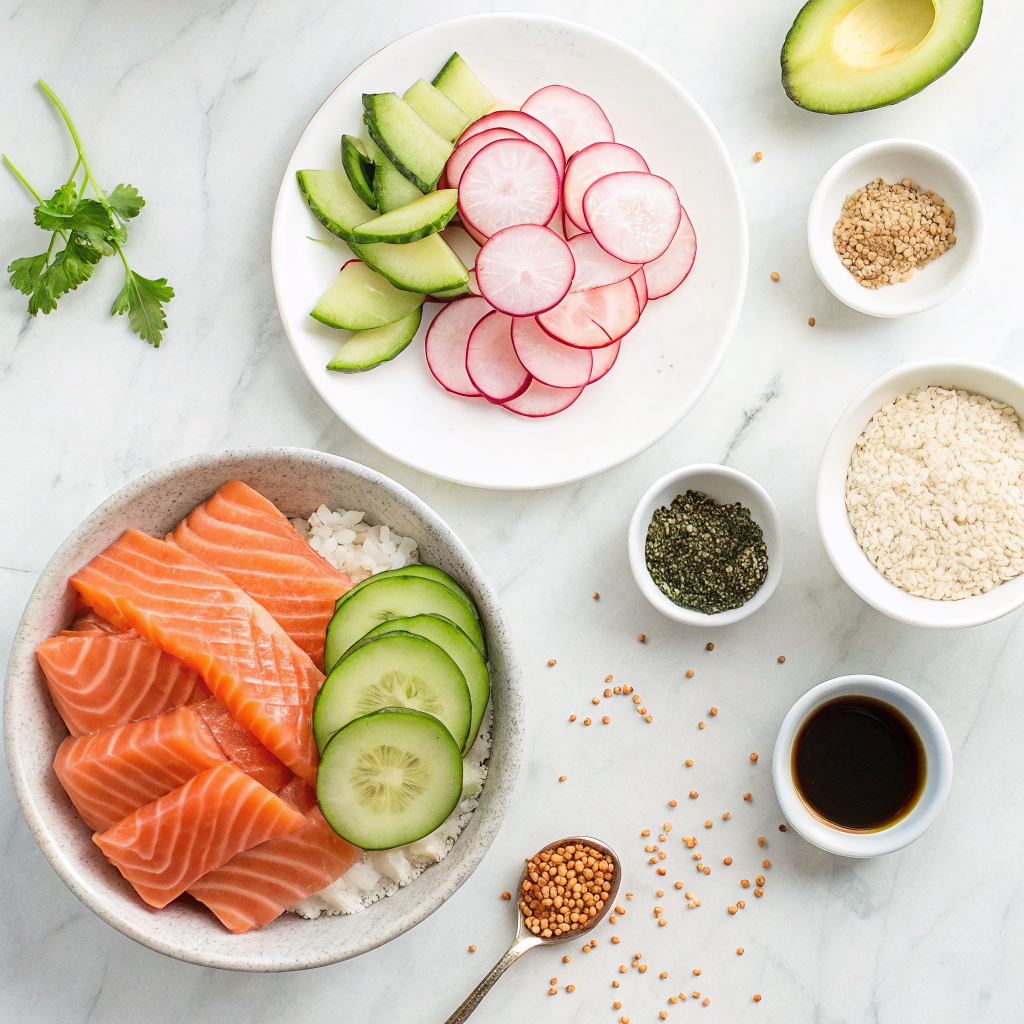
For the protein, you’ll need 1 pound of fresh salmon fillet, preferably sushi-grade if you want any parts slightly rare. Remove the skin and cut into bite-sized cubes for even cooking. Wild-caught salmon offers superior flavor and nutritional benefits, though farm-raised works perfectly fine too.
The spicy sauce requires sriracha, mayonnaise, soy sauce, and sesame oil. This combination creates that signature creamy-spicy coating that makes the dish so crave-worthy. You can adjust the sriracha quantity based on your heat tolerance, starting with 2 tablespoons and adding more to taste.
For toppings and garnishes, gather cucumber, avocado, edamame, nori sheets, sesame seeds, and scallions. These fresh elements provide cooling contrast to the spicy salmon and add visual appeal. The cucumber and avocado especially help balance the heat while adding healthy fats and hydration.
Additional pantry staples include neutral cooking oil with a high smoke point like avocado or vegetable oil, rice vinegar for seasoning the rice, and optional additions like pickled ginger or wasabi. Having everything prepped and ready before you start cooking ensures smooth execution and prevents overcooking any component.
How to Make Spicy Salmon Crispy Rice Bowl: Step-by-Step
Preparing the Crispy Rice Base
Start by spreading your day-old rice on a plate and breaking up any large clumps with your fingers. The rice should be cold from the refrigerator, as this helps create better texture. Mix in a tablespoon of rice vinegar and a pinch of salt to season the rice before cooking.
Heat 2-3 tablespoons of oil in a large non-stick skillet or cast-iron pan over medium-high heat. Once the oil is shimmering, add the rice in an even layer, pressing it down gently with a spatula. Resist the urge to stir or move it around for at least 5-6 minutes.
Listen for the sizzling sound and watch for steam to escape from the edges. When the bottom is golden brown and crispy, you can either flip sections with a spatula or simply serve it crispy-side up. The goal is a texture similar to Korean nurungji or Spanish socarrat—deeply golden and crunchy.
Cooking the Spicy Salmon
While the rice crisps, prepare your salmon by patting it completely dry with paper towels. Season the cubes lightly with salt and pepper on all sides. In a separate bowl, mix together 3 tablespoons mayonnaise, 2 tablespoons sriracha, 1 tablespoon soy sauce, and 1 teaspoon sesame oil.
Heat a separate pan with a tablespoon of oil over medium-high heat. Add the salmon cubes in a single layer, being careful not to overcrowd the pan. Sear for 2-3 minutes on the first side until a golden crust forms, then flip and cook for another 1-2 minutes.
Remove the pan from heat and add the spicy sauce directly to the salmon, tossing gently to coat. The residual heat will warm the sauce without cooking it completely, maintaining that creamy texture. If you prefer your salmon more well-done, cook for an additional minute before adding the sauce.
Assembling Your Bowl
Place a generous portion of crispy rice in the bottom of your serving bowl, crispy side facing up if possible. Arrange the spicy salmon pieces on top of or beside the rice, allowing the sauce to drip down slightly. This creates visual appeal and ensures every bite has some of that delicious sauce.
Add your fresh toppings in separate sections for a beautiful presentation. Slice the cucumber into thin half-moons, dice the avocado, and scatter edamame around the bowl. Tear or cut nori sheets into strips and place them artfully on top.
Finish with a generous sprinkle of sesame seeds, sliced scallions, and any additional garnishes you prefer. A drizzle of extra sriracha mayo on top adds visual interest and allows diners to customize their heat level. Serve immediately while the rice is still crispy and the salmon is warm.
Nutrition & Health Benefits
Salmon is one of the most nutritious proteins available, packed with omega-3 fatty acids that support heart health, brain function, and reduce inflammation. A typical serving provides about 25-30 grams of high-quality protein along with essential B vitamins. These omega-3s, particularly EPA and DHA, are crucial for cardiovascular health and cognitive function.
The rice component provides complex carbohydrates that fuel your body with sustained energy. While crispy rice is slightly higher in calories due to the cooking oil, it offers satisfaction that helps with portion control. Brown rice can be substituted for additional fiber and nutrients if preferred.
Avocado contributes healthy monounsaturated fats, fiber, and nearly 20 vitamins and minerals. The cucumber adds hydration and vitamin K, while edamame provides plant-based protein and fiber. Together, these vegetables create a nutrient-dense meal that covers multiple food groups in one bowl.
Each serving contains approximately 550-650 calories, depending on portion sizes and oil used. The macronutrient breakdown is well-balanced with roughly 30g protein, 25g fat, and 45g carbohydrates. This makes it suitable for various dietary approaches, from balanced eating to higher-protein diets for those looking to explore high-protein recipes for their meal rotation.
Variations & Substitutions
Protein Alternatives
If salmon isn’t available or preferred, tuna, yellowtail, or cooked shrimp work beautifully with the same spicy sauce. For a cooked option, try crispy tofu cubes marinated in the spicy sauce for a vegetarian version. Chicken thigh meat, diced and cooked until crispy, also pairs wonderfully with these flavor profiles.
Canned salmon can work in a pinch for a budget-friendly version. Drain it well, flake it gently, and mix with the spicy sauce before warming briefly. While the texture differs from fresh salmon, the flavors still shine through beautifully.
Rice and Base Options
Beyond traditional white rice, brown rice, forbidden black rice, or cauliflower rice offer different nutritional profiles and textures. Brown rice takes longer to crisp but provides more fiber and nutrients. Cauliflower rice creates a low-carb version, though it won’t achieve the same crispy texture as grain-based options.
Quinoa can replace rice entirely for a protein boost and different texture. It crisps up nicely and adds a nutty flavor that complements the spicy salmon. For those following specific diets, these alternatives make the dish more accessible while maintaining the core flavor concept.
Sauce Modifications
The spicy sauce is highly customizable to your heat preference and dietary needs. Replace mayonnaise with Greek yogurt or avocado-based mayo for different nutritional profiles. Add ginger paste, garlic, or lime juice for additional flavor dimensions that complement the salmon.
For extra heat, incorporate gochugaru (Korean chili flakes), fresh chili peppers, or a dash of cayenne. If you prefer less spice, reduce the sriracha and add more sesame oil or a touch of honey for sweetness. The sauce should enhance, not mask, the quality salmon flavor.
Serving Suggestions
This bowl works beautifully as a complete meal on its own, but can be enhanced with traditional Japanese sides. Miso soup, seaweed salad, or pickled vegetables make excellent accompaniments that complement the flavors without competing. A simple cucumber sunomono (vinegar salad) adds refreshing contrast to the rich, spicy salmon.
For a more substantial meal, consider adding a soft-boiled egg with a jammy yolk on top. The runny yolk adds another layer of richness and helps mellow the heat from the spicy sauce. Marinated eggs (ajitsuke tamago) take this concept even further with their soy-seasoned flavor.
Beverage pairings should balance the richness and spice of the dish. Green tea, sake, or light beer work wonderfully to cleanse the palate between bites. For non-alcoholic options, sparkling water with citrus or iced barley tea provides refreshing contrast. These dishes pair perfectly with other dinner recipes when planning a complete Asian-inspired menu.
When entertaining, consider setting up a DIY bowl bar where guests can customize their toppings. Offer various vegetables, different spice levels of sauce, and multiple garnishes. This interactive approach makes dinner more engaging and ensures everyone gets exactly what they want.
Common Mistakes to Avoid
Rice Texture Issues
The most common mistake is using freshly cooked, warm rice for the crispy rice base. This rice contains too much moisture and will steam rather than crisp, resulting in a soggy bottom layer. Always use refrigerated day-old rice that has dried out slightly for the best texture.
Another error is constantly stirring or moving the rice while it cooks. This prevents proper crust formation and results in unevenly cooked rice. Let it sit undisturbed for at least 5-6 minutes to develop that golden, crispy bottom layer everyone loves.
Salmon Cooking Errors
Overcooking salmon is perhaps the biggest culinary crime with this dish. Salmon should remain slightly translucent in the center for optimal texture and moisture. Remember that it continues cooking after removal from heat, especially when the hot sauce is added.
Cooking salmon straight from the refrigerator leads to uneven cooking—cold center with overcooked exterior. Always let salmon sit at room temperature for 15-20 minutes before cooking. Pat it thoroughly dry to ensure proper searing and crust formation.
Sauce and Seasoning Problems
Making the sauce too far in advance can cause separation and texture issues. Mix the spicy sauce just before using for the best consistency and flavor. If it does separate, a quick whisk brings it back together perfectly.
Under-seasoning the rice is another common oversight. The rice itself should have flavor beyond just the toppings and sauce. Season it lightly with rice vinegar and salt before crisping to ensure every component contributes to the overall taste profile.
Storage & Meal Prep Tips
Advance Preparation
This dish is excellent for meal prep when you store components separately. Cook a large batch of rice and refrigerate it in portions—it actually improves for crispy rice purposes after a day or two. Prep all vegetables by washing, cutting, and storing them in airtight containers with paper towels to absorb excess moisture.
The spicy sauce can be made up to 3 days in advance and stored in an airtight container in the refrigerator. Give it a good stir before using as some separation is natural. Having these components ready makes weeknight assembly quick and stress-free, similar to other quick and easy meals perfect for busy schedules.
Storing Leftovers
Store leftover components separately for best results. Cooked salmon keeps for 2-3 days in an airtight container in the refrigerator. The crispy rice loses its texture when stored, so it’s best to make it fresh, though you can store cooked rice and re-crisp it when needed.
Fresh toppings like cucumber and avocado should be cut fresh when serving, as they don’t store well once sliced. However, edamame can be pre-cooked and refrigerated for up to 5 days. Keep nori sheets in their original package in a cool, dry place as they become chewy when exposed to moisture.
Reheating Guidelines
To reheat salmon, use gentle methods to avoid drying it out. Microwave on 50% power in 30-second intervals or warm gently in a covered pan with a splash of water. The goal is to warm it through without cooking it further.
For the rice, re-crisping in a hot pan with a little oil brings back much of the original texture. Spread it in an even layer and leave it undisturbed for several minutes until the bottom crisps up again. This method works surprisingly well and makes leftovers nearly as good as the original dish.
Final Thoughts on Spicy Salmon Crispy Rice Bowl
The Spicy Salmon Crispy Rice Bowl represents the perfect intersection of flavor, texture, and visual appeal that makes it a standout dish. Once you master the basic technique, you’ll find yourself making it regularly because it’s both impressive and approachable. The combination of crispy, creamy, spicy, and fresh elements creates a memorable eating experience that satisfies on every level.
This recipe also demonstrates how simple ingredients, when prepared with attention to technique, can create restaurant-quality results at home. You don’t need exotic ingredients or complicated processes—just good quality salmon, properly crisped rice, and a well-balanced spicy sauce. The flexibility to customize based on preferences or dietary needs makes it a versatile addition to your cooking repertoire.
Whether you’re cooking for yourself, family, or guests, this Spicy Salmon Crispy Rice Bowl delivers every time. The visual presentation alone will earn you compliments, but the taste is what will have people requesting it again and again. Don’t be surprised when this becomes your signature dish that everyone associates with your cooking.
Frequently Asked Questions
Can I use frozen salmon for this Spicy Salmon Crispy Rice Bowl?
Yes, frozen salmon works well as long as you thaw it properly. Thaw it overnight in the refrigerator or use the cold water method by sealing it in a bag and submerging in cold water for 30-60 minutes. Pat it thoroughly dry before cooking to ensure proper searing. Never cook salmon directly from frozen for this recipe as it won’t develop the right texture.
What’s the best way to achieve perfectly crispy rice?
The secret to crispy rice is using day-old refrigerated rice and high heat with adequate oil. Spread the rice in an even layer in a hot pan and resist touching it for 5-6 minutes until a golden crust forms. Using a non-stick or well-seasoned cast-iron pan prevents sticking. The rice should sizzle immediately when it hits the pan—if it doesn’t, your pan isn’t hot enough.
How can I make this bowl less spicy while keeping the flavor?
Reduce the sriracha to 1 tablespoon or less and increase the mayonnaise slightly to maintain the sauce’s creamy consistency. Add a teaspoon of honey or maple syrup for sweetness that balances any remaining heat. You can also serve the spicy sauce on the side, allowing each person to control their heat level. The Spicy Salmon Crispy Rice Bowl is easily adaptable to different spice preferences.
Is it safe to eat the salmon slightly rare in the center?
If you’re using sushi-grade salmon that’s been properly handled and stored, eating it slightly rare is safe and actually preferred for the best texture. Sushi-grade means the fish has been frozen to specific temperatures that kill parasites. However, if you’re unsure about your salmon’s grade or have a compromised immune system, cook it through completely. When making a Spicy Salmon Crispy Rice Bowl, the choice depends on your comfort level and the quality of your fish.
For more culinary inspiration, visit AllRecipes.
