Spring Pea Risotto With Parmesan Recipe: 5 Easy Tips for the Best Results

Spring pea risotto with parmesan everyone will ask you to make again

Spring Pea Risotto With Parmesan Everyone Will Ask You To Make Again

A creamy, flavorful spring risotto featuring fresh peas and Parmesan cheese that's surprisingly easy to make at home.
Prep Time 15 minutes
Cook Time 30 minutes
Total Time 45 minutes
Servings: 4 servings
Course: Dinner Recipes
Cuisine: Italian
Calories: 425

Ingredients
  

  • 1.5 cups Arborio rice
  • 4 cups chicken or vegetable broth kept warm
  • 2 cups fresh or frozen peas
  • 1 cup freshly grated Parmesan cheese plus more for serving
  • 1 medium yellow onion finely diced
  • 3 tablespoons butter divided
  • 2 tablespoons olive oil
  • 1/2 cup dry white wine
  • 2 cloves garlic minced
  • 1/4 cup fresh mint or basil chopped, optional
  • salt and black pepper to taste

Method
 

  1. Heat the chicken or vegetable broth in a medium saucepan and keep it warm over low heat throughout the cooking process.
  2. In a large, heavy-bottomed pan or Dutch oven, heat 2 tablespoons of butter and the olive oil over medium heat. Add the diced onion and cook for 4-5 minutes until softened and translucent. Add the minced garlic and cook for another minute until fragrant.
  3. Add the Arborio rice to the pan and stir constantly for 2-3 minutes until the grains are well-coated and slightly translucent around the edges. Pour in the white wine and stir until it's almost completely absorbed.
  4. Begin adding the warm broth one ladle at a time, stirring frequently. Wait until each addition is almost completely absorbed before adding the next ladle. Continue this process for about 18-20 minutes until the rice is creamy and tender but still has a slight bite.
  5. When the rice is almost done, stir in the peas and cook for 3-4 minutes until they're tender and bright green. If using frozen peas, they'll need just 2-3 minutes to heat through.
  6. Remove the pan from heat and stir in the remaining tablespoon of butter and the grated Parmesan cheese. Stir vigorously until the risotto is creamy and well combined. Season with salt and pepper to taste.
  7. Serve immediately in warm bowls, garnished with additional Parmesan cheese and fresh herbs if desired. The risotto should be creamy and flow slightly when plated.

Nutrition

Calories: 425kcalCarbohydrates: 58gProtein: 15gFat: 14gSodium: 680mgFiber: 4g

Notes

For the creamiest risotto, use freshly grated Parmesan cheese rather than pre-grated. The rice should be stirred frequently but not constantly - every 30 seconds or so is perfect. If you run out of broth before the rice is tender, you can add hot water. For extra spring flavor, blanch half the peas separately and puree them, then stir the puree into the finished risotto for a beautiful green color.

Tried this recipe?

Let us know how it was!
\n\nThis Spring Pea Risotto With Parmesan is a creamy, vibrant dish that captures the essence of spring in every bite. The combination of tender Arborio rice, sweet peas, and nutty Parmesan creates a restaurant-quality meal you can easily make at home. Whether you’re hosting a dinner party or looking for a comforting weeknight meal, this risotto delivers impressive flavor with surprisingly simple techniques.

Spring Pea Risotto With Parmesan: 5 Easy Tips for Perfect Results

Making risotto might seem intimidating, but with the right approach, you’ll achieve creamy perfection every time. The key lies in understanding the proper rice-to-liquid ratio and maintaining consistent stirring. This classic Italian technique transforms simple ingredients into an elegant dish that tastes like it came straight from a Michelin-starred kitchen.

The beauty of this recipe is its versatility and forgiving nature once you master the basics. Fresh spring peas add a pop of color and sweetness that balances the rich, savory Parmesan. The starch released from Arborio rice creates that signature creamy texture without needing heavy cream.

Here are five essential tips to ensure your risotto turns out perfect: use warm broth to maintain cooking temperature, stir frequently but not constantly, add liquid gradually, toast the rice before adding liquid, and finish with cold butter for extra creaminess. These simple techniques will elevate your cooking and impress everyone at your table.

Why You’ll Love This Spring Pea Risotto With Parmesan

This dish combines elegance with comfort in a way few recipes can match. The fresh peas provide a burst of spring flavor that feels light yet satisfying. Unlike heavy pasta dishes, risotto offers richness without leaving you feeling overly full.

The cooking process itself is surprisingly meditative and rewarding. Watching the rice slowly absorb the broth while releasing its starches creates a therapeutic rhythm in the kitchen. You’ll find yourself looking forward to making this dish as much as eating it.

From a practical standpoint, this recipe uses accessible ingredients you can find at any grocery store. The total cooking time is under 40 minutes, making it perfect for weeknight dinner recipes when you want something special. Plus, it’s naturally vegetarian and can easily be adapted to suit various dietary preferences.

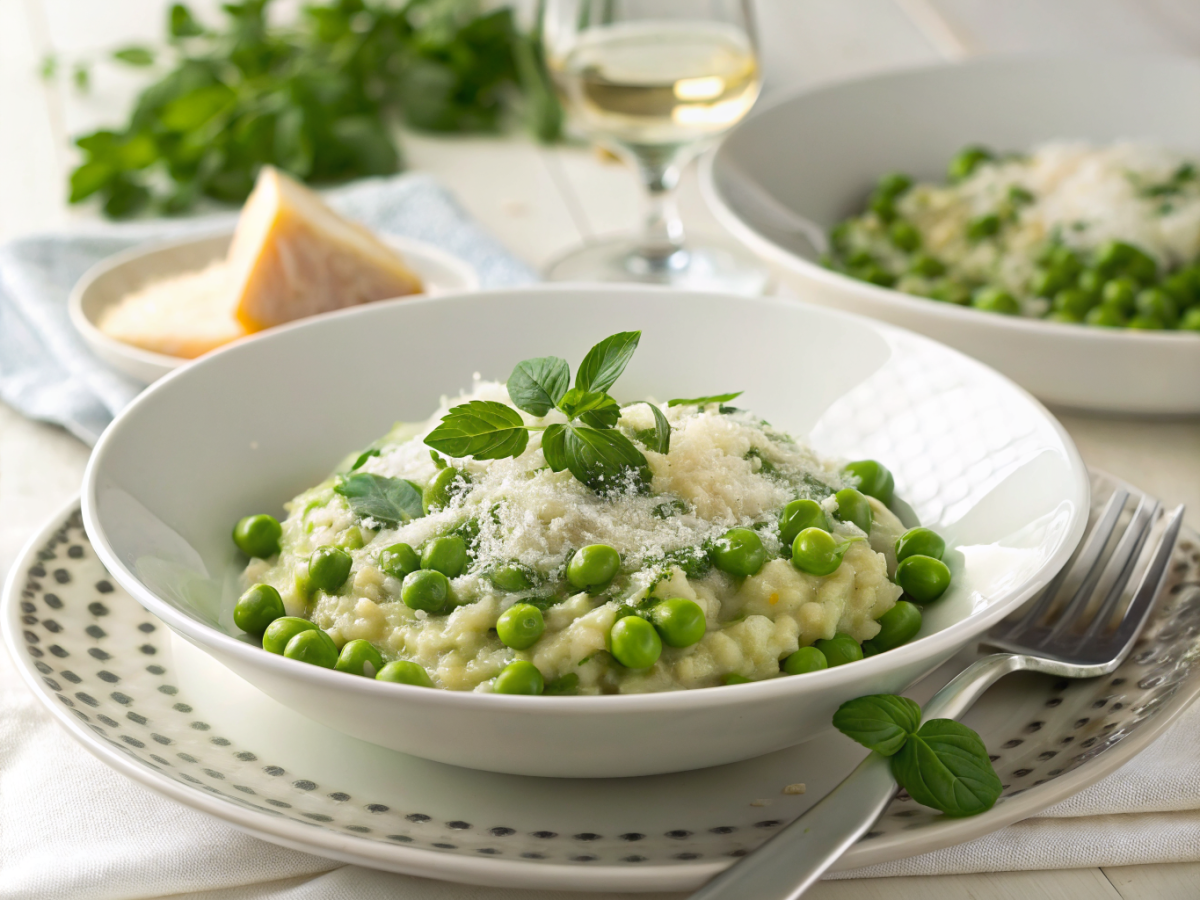
The visual appeal of this dish cannot be overstated. The bright green peas against the creamy white risotto create an Instagram-worthy presentation. Your guests will be impressed before they even take their first bite.

Core Ingredients for Spring Pea Risotto With Parmesan

Quality ingredients make all the difference in this simple yet sophisticated dish. Start with Arborio rice, the short-grain Italian variety that contains high starch content essential for creamy texture. Don’t substitute with long-grain rice, as it won’t release the necessary starch.

Spring pea risotto with parmesan ingredients

Fresh or frozen peas work beautifully in this recipe, though fresh spring peas offer superior sweetness when in season. You’ll need about 2 cups of peas, which will be divided between cooking in the risotto and pureeing for extra color. Frozen peas are a convenient year-round option that maintains excellent flavor and nutrition.

Authentic Parmigiano-Reggiano cheese is non-negotiable for the best results. This aged Italian cheese provides complex, nutty flavors that pre-grated alternatives simply cannot match. Buy a wedge and grate it fresh just before adding to preserve maximum flavor and proper melting qualities.

Essential Ingredients List

  • 1½ cups Arborio rice
  • 2 cups fresh or frozen peas, divided
  • 6 cups vegetable or chicken broth, warmed
  • 1 cup freshly grated Parmigiano-Reggiano cheese
  • 1 medium onion or 2 shallots, finely diced
  • 3 cloves garlic, minced
  • ½ cup dry white wine
  • 3 tablespoons unsalted butter, divided
  • 2 tablespoons extra virgin olive oil
  • Salt and freshly ground black pepper to taste
  • Fresh mint or basil for garnish (optional)
  • Zest of 1 lemon for brightness (optional)

Keep your broth warm in a separate pot throughout the cooking process. Cold broth will shock the rice and interrupt the cooking process, resulting in uneven texture. A consistent temperature ensures each grain cooks evenly and releases starch properly.

How to Make Spring Pea Risotto With Parmesan: Step-by-Step

Begin by preparing all your ingredients before you start cooking, as risotto requires constant attention once begun. Dice your onions finely, mince the garlic, grate the cheese, and have your warm broth ready. This mise en place approach ensures smooth cooking without scrambling for ingredients mid-process.

Heat 2 tablespoons of olive oil and 1 tablespoon of butter in a large, heavy-bottomed pan over medium heat. Add the diced onions and sauté for 3-4 minutes until translucent but not browned. Add the minced garlic and cook for another minute until fragrant.

Add the Arborio rice to the pan and toast it for 2-3 minutes, stirring constantly. The grains should become slightly translucent around the edges and smell nutty. This toasting step is crucial for developing depth of flavor and helps the rice maintain some texture.

The Cooking Process

Pour in the white wine and stir until it’s almost completely absorbed by the rice. The wine adds acidity that balances the richness of the cheese and butter. Once absorbed, begin adding the warm broth one ladle at a time.

Stir frequently and wait until each addition of broth is mostly absorbed before adding the next ladle. This gradual process, which takes about 18-20 minutes, allows the rice to release its starch slowly. You’ll notice the mixture becoming increasingly creamy as you continue.

After about 15 minutes, taste the rice to check for doneness. It should be tender but still have a slight bite in the center (al dente). At this point, stir in 1½ cups of peas and continue cooking for another 3-4 minutes.

Finishing Touches

While the risotto finishes cooking, puree the remaining ½ cup of peas with a few tablespoons of broth until smooth. This vibrant green puree will add extra pea flavor and beautiful color. You can use a blender or immersion blender for this step.

Remove the risotto from heat and stir in the remaining 2 tablespoons of cold butter, the grated Parmesan, and the pea puree. This final step, called “mantecatura” in Italian, creates the signature creamy consistency. The cold butter emulsifies with the starchy liquid to create luxurious texture.

Season with salt and freshly ground black pepper to taste. Remember that Parmesan is salty, so taste before adding additional salt. If desired, add lemon zest for brightness and fresh herbs for aromatic complexity.

Let the risotto rest for 2 minutes before serving. This brief resting period allows the flavors to meld and the texture to settle to perfect creaminess. Serve immediately in warmed bowls with extra Parmesan on the side.

Nutrition & Health Benefits

This risotto provides a balanced combination of carbohydrates, protein, and essential nutrients. Spring peas are nutritional powerhouses packed with vitamins A, C, and K, plus fiber and plant-based protein. One serving delivers approximately 8 grams of protein and 6 grams of fiber.

Parmesan cheese contributes calcium, phosphorus, and high-quality protein while being naturally lactose-free due to the aging process. The fermentation involved in cheese-making also provides beneficial probiotics for gut health. Each serving contains about 15% of your daily calcium needs.

Arborio rice offers easily digestible carbohydrates that provide sustained energy without blood sugar spikes. While white rice is less nutritious than brown varieties, it’s gentler on the digestive system. The resistant starch formed when risotto cools slightly can actually benefit gut bacteria.

Using vegetable broth instead of chicken broth keeps this dish vegetarian and reduces sodium content. Olive oil provides heart-healthy monounsaturated fats and anti-inflammatory compounds. For more nutritious meal ideas, explore these high-protein recipes that complement this dish perfectly.

Approximate Nutrition Per Serving

  • Calories: 420
  • Protein: 16g
  • Carbohydrates: 58g
  • Fat: 14g
  • Fiber: 6g
  • Sugar: 4g
  • Sodium: 680mg

Variations & Substitutions

Transform this basic recipe into countless variations by adjusting ingredients and add-ins. Add crispy pancetta or prosciutto for a non-vegetarian version with smoky, salty depth. Sauté the meat until crispy before starting the risotto, then crumble it on top as garnish.

Incorporate other spring vegetables like asparagus, fava beans, or leeks for additional texture and flavor layers. Blanch harder vegetables before adding them to ensure proper cooking times. Roasted vegetables can be stirred in at the end for a different flavor profile.

For a lighter version, reduce the butter and cheese by half and add more fresh herbs. Nutritional yeast can partially replace Parmesan for a vegan adaptation, though the flavor will differ. Cashew cream stirred in at the end mimics the richness of dairy.

Ingredient Substitutions

Can’t find Arborio rice? Carnaroli or Vialone Nano are excellent Italian alternatives with similar starch content. In a pinch, short-grain sushi rice works reasonably well, though the texture won’t be identical. Avoid long-grain varieties entirely as they won’t create proper creaminess.

Replace white wine with additional broth plus a tablespoon of lemon juice for acidity. This substitution works well for those avoiding alcohol or cooking for children. The lemon provides the necessary brightness without wine’s complexity.

Swap Parmesan for Pecorino Romano for a sharper, saltier flavor profile. Grana Padano offers similar characteristics to Parmesan at a lower price point. For dairy-free versions, experiment with aged vegan cheeses, though results vary significantly by brand.

Frozen peas are actually preferable to out-of-season fresh peas, which can be starchy and less sweet. If using fresh peas, choose the smallest, youngest pods for maximum sweetness. Sugar snap peas or snow peas can add interesting textural variation when sliced thin.

Serving Suggestions

Serve this risotto as an elegant main course for vegetarian diners or as a sophisticated side dish alongside proteins. Grilled chicken, pan-seared fish, or roasted lamb pair beautifully with the creamy, delicate flavors. The risotto’s richness complements lighter proteins without overwhelming them.

Garnish each serving with fresh herbs like mint, basil, or chives for aromatic contrast. A drizzle of high-quality extra virgin olive oil adds luxurious finish and fruity notes. Microgreens or pea shoots provide visual appeal and fresh, crisp texture.

Accompany with a simple arugula salad dressed with lemon vinaigrette to cut through the richness. The peppery greens and acidic dressing refresh the palate between bites. Crusty bread is perfect for soaking up any remaining creamy sauce.

Wine Pairing Recommendations

A crisp white wine complements this dish perfectly without overwhelming its delicate flavors. Pinot Grigio, Sauvignon Blanc, or Vermentino offer refreshing acidity that balances the creamy texture. Choose wines with citrus and herbal notes that echo the spring pea flavors.

For those preferring red wine, select a light-bodied option like Pinot Noir. Avoid heavy, tannic reds that will clash with the dish’s subtle flavors. Sparkling wines like Prosecco also work wonderfully, with bubbles cutting through the richness.

Non-alcoholic options include sparkling water with lemon, herbal iced tea, or a crisp apple juice. These beverages cleanse the palate without competing with the food’s flavors. The key is choosing something refreshing rather than sweet or heavy.

Common Mistakes to Avoid

The most frequent error is adding all the broth at once instead of gradually. This floods the rice and prevents proper starch release, resulting in soupy, separated risotto. Patience is essential—add liquid slowly and wait for absorption before adding more.

Over-stirring is another common mistake that breaks down the rice grains excessively. Stir frequently but gently, allowing brief rests between stirring sessions. Constant aggressive stirring creates mushy texture rather than creamy consistency with distinct grains.

Using cold broth disrupts the cooking temperature and extends cooking time unnecessarily. Keep your broth simmering in a separate pot throughout the process. Consistent heat ensures even cooking and proper starch gelatinization.

Temperature and Timing Issues

Cooking over too high heat causes the liquid to evaporate before the rice absorbs it properly. Medium to medium-low heat provides the ideal gentle simmer. The surface should show gentle bubbling, not a rolling boil.

Undercooking leaves the rice crunchy and unpleasant, while overcooking creates mush. Start testing for doneness around 18 minutes, looking for grains that are tender with just a slight firmness in the center. Remember that risotto continues cooking slightly after removing from heat.

Adding cheese and butter while the pan is still on the heat can cause the cheese to become stringy and separated. Always remove from heat before the final enrichment step. This ensures smooth incorporation and prevents the fats from breaking.

Storage & Meal Prep Tips

Risotto is best enjoyed immediately after cooking, but leftovers can be stored successfully with proper techniques. Transfer cooled risotto to an airtight container and refrigerate for up to 3 days. The texture will firm up considerably as the rice absorbs remaining liquid.

Reheat gently on the stovetop with additional broth or water to restore creaminess. Add liquid gradually while stirring over low heat until warmed through. Microwave reheating works in a pinch but requires frequent stirring and added liquid for best results.

Freezing risotto is possible but not ideal, as the texture changes significantly upon thawing. If you must freeze, portion into individual servings and freeze for up to 1 month. Thaw overnight in the refrigerator before reheating with plenty of additional liquid.

Make-Ahead Strategies

For easier weeknight preparation, you can parboil the rice ahead of time. Cook the rice about halfway through, spread on a baking sheet to cool, then refrigerate. When ready to serve, continue cooking from where you left off with warm broth.

Prepare all your ingredients in advance by chopping onions, mincing garlic, and grating cheese. Store each component separately in the refrigerator. Having everything ready makes the actual cooking process much smoother and less stressful.

The pea puree can be made a day ahead and refrigerated in an airtight container. This actually allows the flavor to develop more fully. Bring to room temperature before stirring into the finished risotto for best incorporation.

Final Thoughts on Spring Pea Risotto With Parmesan

Mastering this Spring Pea Risotto With Parmesan opens the door to countless Italian-inspired meals that impress without intimidating. The fundamental techniques you learn here apply to virtually any risotto variation you’ll encounter. Once comfortable with the basic method, you’ll find yourself improvising with seasonal ingredients and personal preferences.

This dish represents the best of Italian cooking philosophy: simple, quality ingredients treated with care and respect. You don’t need elaborate techniques or exotic components to create something truly special. The magic lies in understanding how basic ingredients transform through proper cooking methods.

Whether you’re cooking for family, friends, or yourself, this Spring Pea Risotto With Parmesan delivers satisfaction on every level. The cooking process is meditative, the aroma is intoxicating, and the taste is unforgettable. Don’t be surprised when this becomes your most-requested recipe, with everyone asking you to make it again and again.

The versatility of this recipe means you’ll never get bored with it. Experiment with different vegetables, proteins, and finishing touches to make it your own. Each variation teaches you more about flavor combinations and cooking techniques that apply across your entire culinary repertoire.

Frequently Asked Questions

Can I make Spring Pea Risotto With Parmesan without wine?

Absolutely! Simply replace the wine with an equal amount of broth plus one tablespoon of fresh lemon juice. The lemon provides the acidity that wine typically contributes, brightening the flavors without alcohol. This substitution works perfectly and won’t significantly alter the final taste or texture of your risotto.

Why is my risotto too thick or too thin?

Risotto consistency depends on the amount of liquid absorbed during cooking. If too thick, stir in additional warm broth until you reach desired creaminess. If too thin, continue cooking uncovered while stirring to allow excess liquid to evaporate. The perfect consistency should be creamy and flow slowly when spooned onto a plate, not stiff or soupy.

Can I use brown rice instead of Arborio for Spring Pea Risotto With Parmesan?

While brown rice is more nutritious, it doesn’t work well for traditional risotto because it lacks sufficient surface starch. Brown rice also requires much longer cooking time and won’t achieve the signature creamy texture. If you want a healthier option, try semi-pearled farro, which provides better nutrition while still releasing enough starch for creaminess.

How do I know when my risotto is properly cooked?

Properly cooked risotto should be creamy with grains that are tender but still have a slight firmness in the center (al dente). Taste a few grains after about 18 minutes of cooking. The texture should be similar to perfectly cooked pasta—no hard center, but not mushy. The overall consistency should flow like lava when stirred, neither stiff nor watery.

Leave a Comment

Recipe Rating