
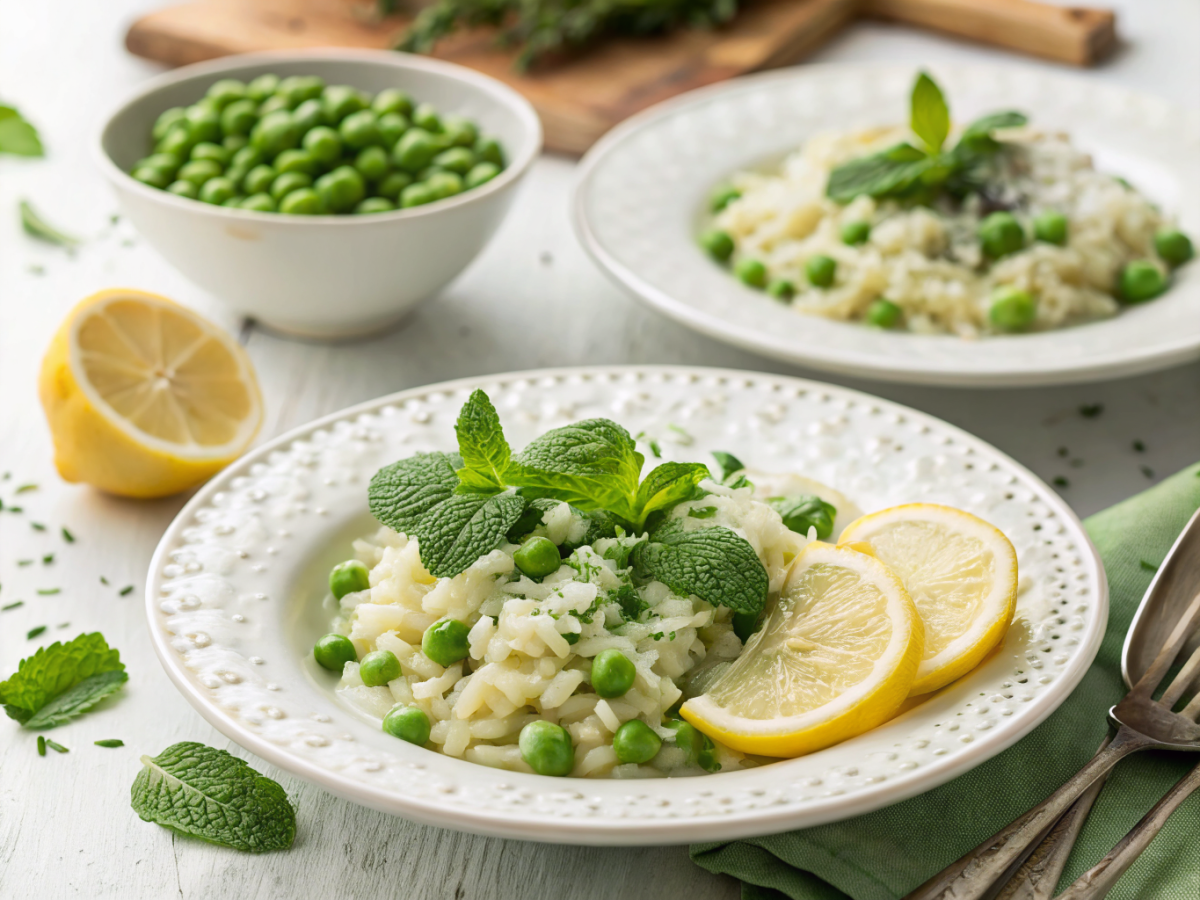
Creamy Spring Pea Risotto With Lemon And Mint
Ingredients
Method
- Heat the vegetable broth in a medium saucepan over low heat and keep it warm throughout the cooking process. This ensures the rice cooks evenly.
- In a large heavy-bottomed pan or Dutch oven, heat the olive oil and 1 tablespoon of butter over medium heat. Add the diced onion and cook for 4-5 minutes until softened and translucent, stirring occasionally.
- Add the arborio rice to the pan and stir constantly for 2-3 minutes until the grains are lightly toasted and coated with the oil. The edges should become slightly translucent.
- Pour in the white wine and stir until completely absorbed. Begin adding the warm broth one ladle at a time, stirring frequently and allowing each addition to be absorbed before adding the next. Continue this process for about 18-20 minutes until the rice is creamy and tender but still has a slight bite.
- When the rice is almost done, stir in the peas and cook for an additional 3-4 minutes until the peas are tender and heated through.
- Remove the pan from heat and stir in the remaining 2 tablespoons of butter, Parmesan cheese, lemon zest, lemon juice, and chopped mint. Season with salt and pepper to taste. Stir vigorously to create a creamy consistency.
- Serve the risotto immediately in warm bowls, garnished with additional Parmesan cheese, fresh mint leaves, and a drizzle of olive oil if desired.
Notes
nnThis Creamy Spring Pea Risotto With Lemon And Mint brings restaurant-quality Italian comfort food right to your kitchen with vibrant spring flavors. The combination of tender arborio rice, sweet peas, bright lemon, and fresh mint creates a dish that’s both elegant and satisfying. Whether you’re hosting a dinner party or treating yourself to a special weeknight meal, this risotto delivers creamy perfection every single time.
Creamy Spring Pea Risotto With Lemon And Mint: 5 Easy Tips
Making perfect risotto doesn’t require culinary school training or fancy equipment. The secret lies in understanding a few fundamental techniques that transform simple ingredients into something extraordinary. These five essential tips will ensure your risotto turns out creamy, flavorful, and perfectly cooked every time.
First, always use warm broth when making risotto. Cold liquid shocks the rice and slows down the cooking process, resulting in unevenly cooked grains. Keep your vegetable or chicken broth simmering in a separate pot throughout the cooking process.
Second, stir frequently but not constantly. Stirring releases the starches from the rice, creating that signature creamy texture. However, constant stirring can break down the grains too much and make your risotto gluey rather than luxuriously smooth.
Third, add liquid gradually, one ladle at a time. Wait until each addition is almost completely absorbed before adding more. This patient approach allows the rice to cook evenly and develop the proper texture.
Fourth, don’t overcook your peas. Adding them toward the end preserves their bright green color and sweet flavor. Overcooked peas turn dull and mushy, losing the fresh spring quality that makes this dish special.
Fifth, finish with butter and cheese off the heat. This final step, called “mantecatura” in Italian, creates an incredibly creamy consistency. The residual heat gently melts these ingredients without making the risotto greasy.
Why You’ll Love This Creamy Spring Pea Risotto With Lemon And Mint
This risotto celebrates the best of spring produce while delivering comfort food satisfaction. The sweet garden peas provide bursts of fresh flavor throughout each bite. The lemon zest and juice add brightness that cuts through the richness, while fresh mint brings an unexpected herbaceous note that elevates the entire dish.
The texture is absolutely divine—creamy without being heavy, with each grain of rice maintaining a slight bite at the center. Unlike heavier winter risottos, this version feels light and refreshing. It’s substantial enough to serve as a main course yet elegant enough to impress the most discerning dinner guests.
Another reason to love this recipe is its versatility. You can easily adapt it to what’s available in your kitchen or at the market. The cooking technique remains the same, making it a reliable foundation for countless variations throughout the seasons.
The visual appeal shouldn’t be underestimated either. The vibrant green peas against the creamy white risotto, flecked with fresh mint and lemon zest, creates a stunning presentation. It looks as beautiful as it tastes, making it perfect for special occasions or when you want to treat yourself to something special.
Best of all, this dish comes together in about 30 minutes from start to finish. While it does require your attention during cooking, the active time is minimal. You’ll spend most of the time simply stirring and adding broth, making it a meditative cooking experience that’s actually quite relaxing.
Core Ingredients for Creamy Spring Pea Risotto With Lemon And Mint
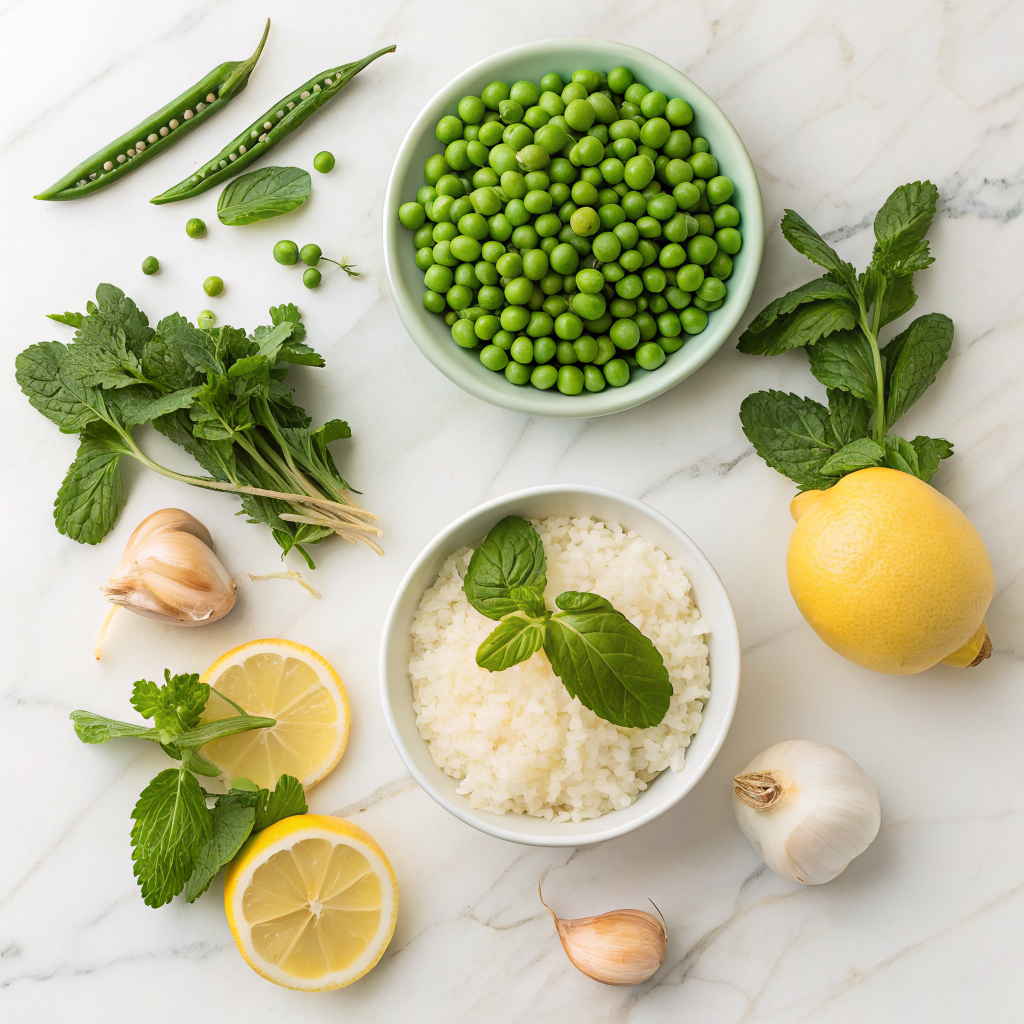
The foundation of any great risotto starts with arborio rice. This short-grain Italian rice contains high levels of amylopectin starch, which releases during cooking to create that signature creamy texture. Don’t substitute with long-grain rice or you’ll end up with a completely different dish.
Fresh or frozen peas both work beautifully in this recipe. If using fresh peas, you’ll need about 1½ cups shelled. Frozen peas are actually an excellent choice since they’re picked and frozen at peak sweetness, and they’re available year-round.
Good quality vegetable or chicken broth forms the cooking liquid. You’ll need approximately 6 cups, kept warm throughout the cooking process. Homemade broth adds incredible depth, but store-bought works perfectly fine as long as you choose a low-sodium variety so you can control the seasoning.
Fresh lemon provides both zest and juice. You’ll need one large lemon or two smaller ones. The zest contains aromatic oils that infuse the risotto with bright citrus flavor, while the juice adds acidity that balances the richness.
Fresh mint is non-negotiable for this recipe. Dried mint simply doesn’t provide the same vibrant, fresh flavor. You’ll need about ¼ cup of fresh mint leaves, roughly chopped. Look for bright green leaves without any brown spots or wilting.
Parmesan cheese adds umami depth and helps create that luxurious creaminess. Use freshly grated Parmigiano-Reggiano rather than pre-grated cheese from a container. The difference in flavor and texture is remarkable, and fresh cheese melts much more smoothly into the risotto.
Butter and olive oil work together in this recipe. The olive oil is used for sautéing the aromatics, while butter is stirred in at the end for richness. Use unsalted butter so you can control the salt level in your finished dish.
Shallots provide a milder, sweeter onion flavor that’s perfect for risotto. You’ll need one large shallot, finely minced. If you can’t find shallots, you can substitute with half a small yellow onion, but shallots really do provide a more refined flavor.
Garlic adds aromatic depth. Two cloves, minced finely, provide just enough garlic presence without overwhelming the delicate pea and mint flavors. Add it with the shallots to bloom the flavor in the oil.
White wine is traditional in risotto, adding acidity and depth. You’ll need about ½ cup of dry white wine like Pinot Grigio or Sauvignon Blanc. If you prefer not to cook with alcohol, you can substitute with additional broth plus a tablespoon of white wine vinegar for acidity.
How to Make Creamy Spring Pea Risotto With Lemon And Mint: Step-by-Step
Begin by preparing your mise en place, which means having all ingredients measured and ready before you start cooking. Keep your broth warming in a pot on a back burner over low heat. Finely mince your shallot and garlic, grate your Parmesan, zest and juice your lemon, and chop your mint.
Heat 2 tablespoons of olive oil in a large, heavy-bottomed pan or Dutch oven over medium heat. Add the minced shallot and cook for 2-3 minutes until softened and translucent but not browned. Add the garlic and cook for another 30 seconds until fragrant.
Add 1½ cups of arborio rice to the pan and stir to coat each grain with the oil. Toast the rice for about 2 minutes, stirring frequently. You’ll know it’s ready when the grains become slightly translucent around the edges and smell nutty.
Pour in the white wine and stir constantly until it’s almost completely absorbed. The wine will sizzle and steam initially, then gradually incorporate into the rice. This step adds complexity and helps deglaze any flavorful bits stuck to the pan bottom.
Now begin adding the warm broth one ladle at a time (about ¾ cup per addition). Stir frequently and wait until each addition is almost completely absorbed before adding the next ladle. The rice should always be just barely covered with liquid, bubbling gently but not vigorously.
Continue this process for about 18-20 minutes, stirring regularly and adding broth as needed. The rice should gradually become tender while releasing its starches, creating a creamy consistency. Taste a grain—it should be tender with just a slight firmness at the very center, what Italians call “al dente.”
When the rice is nearly done (after about 16 minutes), stir in the peas. If using frozen peas, add them directly from the freezer. They’ll thaw quickly in the hot risotto and cook in just 2-3 minutes, retaining their bright color and sweet flavor.
Once the rice is perfectly cooked and the peas are tender, remove the pan from heat. This is crucial—you’ll finish the risotto off the heat to prevent it from becoming overcooked or greasy. Stir in 2 tablespoons of butter, ½ cup of freshly grated Parmesan, the lemon zest, 2 tablespoons of lemon juice, and most of the chopped mint (reserving some for garnish).
Stir vigorously for about 30 seconds to incorporate everything. The residual heat will melt the butter and cheese, creating an incredibly creamy, glossy consistency. If the risotto seems too thick, add a splash more warm broth to reach your desired consistency—it should flow slowly when spooned onto a plate.
Taste and adjust seasoning with salt and freshly ground black pepper. Remember that Parmesan is salty, so you may need less salt than you think. The lemon juice should provide brightness without making the dish taste overtly citrusy.
Serve immediately in warmed shallow bowls. Garnish with the reserved fresh mint, a little extra Parmesan, additional lemon zest, and a drizzle of good quality olive oil. Risotto waits for no one—it continues to absorb liquid as it sits, so serve it right away for the best texture.
Nutrition & Health Benefits
This risotto provides a balanced combination of carbohydrates, protein, and vegetables in one satisfying dish. One serving contains approximately 380-420 calories, depending on how much cheese and butter you use. The arborio rice provides complex carbohydrates that offer sustained energy throughout the day.
Peas are nutritional powerhouses despite their small size. They’re rich in plant-based protein, providing about 8 grams per cup. They also contain significant amounts of vitamins A, C, and K, along with several B vitamins including folate, which is essential for cell growth and metabolism.
The fiber content in both the peas and rice supports digestive health and helps maintain steady blood sugar levels. One serving of this risotto provides approximately 5-6 grams of dietary fiber. This makes it more satisfying and helps you feel full longer than refined grain dishes.
Lemon adds more than just flavor—it provides vitamin C and antioxidants. The citric acid in lemon juice can also help your body absorb the iron present in the peas more efficiently. Mint contains beneficial compounds that may aid digestion and provide anti-inflammatory benefits.
Parmesan cheese contributes calcium for bone health and provides complete protein with all essential amino acids. While cheese does add saturated fat, using it in moderation as part of a balanced diet isn’t problematic for most people. The umami-rich flavor means a little goes a long way.
To make this dish lighter, you can reduce the butter and cheese slightly without sacrificing too much creaminess. The starch from the rice creates much of the creamy texture naturally. You can also increase the proportion of peas to rice for more vegetables and fiber.
For those seeking more high protein recipes, consider adding grilled chicken or shrimp to this risotto. The mild flavors of the dish pair beautifully with simply seasoned proteins, turning it into an even more substantial meal.
Variations & Substitutions
This risotto is wonderfully adaptable to different seasons and preferences. In summer, substitute fresh corn kernels for half the peas and add fresh basil instead of mint. The sweetness of corn pairs beautifully with the lemon, creating a completely different but equally delicious dish.
For a fall version, swap the peas for roasted butternut squash and replace mint with sage. The earthy sweetness of squash creates a heartier risotto perfect for cooler weather. Add a pinch of nutmeg for extra warmth and depth.
If you want to add protein directly to the risotto, stir in cooked shrimp during the last few minutes of cooking. The shrimp will warm through without overcooking, and their sweet, delicate flavor complements the peas beautifully. Alternatively, top each serving with pan-seared scallops for an elegant presentation.
For a vegan version, omit the butter and Parmesan. Replace the butter with additional olive oil and the Parmesan with nutritional yeast, which provides a similar umami flavor. You can also add a tablespoon of white miso paste for extra depth and richness.
Can’t find fresh mint? Basil makes an excellent substitute and creates a more Italian-traditional flavor profile. Tarragon is another interesting option that adds a subtle anise-like flavor that pairs well with peas. Use slightly less tarragon than you would mint, as it has a stronger flavor.
For those avoiding alcohol, simply replace the white wine with additional broth plus a tablespoon of white wine vinegar or lemon juice. Add this acidic component after the rice has toasted, just as you would the wine. The acidity is important for balancing the richness of the dish.
If arborio rice isn’t available, you can use carnaroli or vialone nano rice, which are also Italian short-grain varieties perfect for risotto. Carnaroli is actually preferred by many Italian chefs because it maintains its structure even better than arborio while still releasing plenty of starch.
For added texture and nutrition, stir in a handful of baby spinach or arugula along with the peas. The greens will wilt into the risotto, adding color and nutrients without changing the fundamental character of the dish. This is an easy way to increase the vegetable content.
Serving Suggestions
This risotto shines as a main course for a light lunch or dinner. Serve it in shallow bowls with a simple arugula salad dressed with lemon vinaigrette on the side. The peppery greens and bright dressing complement the creamy risotto perfectly without competing with its delicate flavors.
For a more substantial meal, pair the risotto with grilled or roasted protein. Pan-seared salmon works beautifully, as does roasted chicken breast seasoned simply with herbs. The mild proteins allow the risotto’s flavors to remain the star of the plate.
Consider serving this as part of a larger Italian-inspired menu. Start with a light soup or antipasto platter, serve the risotto as a primo course in smaller portions, then follow with a simple grilled fish or meat as the secondo. This traditional Italian meal structure allows you to showcase multiple dishes.
Wine pairing is important for any risotto dish. A crisp white wine like Pinot Grigio, Vermentino, or Sauvignon Blanc complements the bright lemon and mint flavors. The wine’s acidity cuts through the richness while its fruit notes enhance the sweetness of the peas.
Garnishing properly elevates the presentation significantly. Beyond the reserved mint and extra Parmesan, consider adding a few fresh pea shoots or microgreens on top. A drizzle of high-quality extra virgin olive oil adds both flavor and visual appeal with its golden-green color.
For entertaining, you can serve this risotto in individual portions using a ring mold for an elegant presentation. Pack the risotto into the mold on the plate, then carefully lift it away to reveal a perfect cylinder. Top with your garnishes for a restaurant-quality appearance.
This dish fits perfectly into various dinner recipes rotation as a sophisticated yet approachable option. It’s fancy enough for guests but simple enough for a weeknight when you want something special without too much fuss.
Common Mistakes to Avoid
The most common mistake is adding too much liquid too quickly. Patience is essential when making risotto. Adding broth gradually allows the rice to release its starches properly, creating that signature creamy texture. Rushing this process results in unevenly cooked rice and a soupy consistency.
Another frequent error is using cold broth. Cold liquid shocks the rice and dramatically slows the cooking process. Keep your broth simmering throughout the cooking time. If you run out of warm broth, heat additional broth in the microwave rather than adding it cold.
Over-stirring is problematic despite risotto’s reputation as a dish that requires constant attention. Stirring too frequently or too vigorously breaks down the rice grains excessively, resulting in a gluey texture. Stir regularly but gently, allowing the rice to cook undisturbed for 30-45 seconds between stirring sessions.
Using pre-grated cheese is a mistake that significantly impacts the final texture and flavor. Pre-grated cheese contains anti-caking agents that prevent it from melting smoothly into the risotto. Always grate Parmesan fresh from a block for the best results.
Adding the peas too early causes them to overcook and lose their vibrant color. Those dull, olive-green peas lack visual appeal and don’t taste as sweet and fresh. Add peas during the final 2-3 minutes of cooking to preserve their bright color and sweet flavor.
Cooking the risotto at too high a temperature is another common problem. The mixture should bubble gently, not boil vigorously. High heat causes the liquid to evaporate too quickly and can scorch the rice on the bottom of the pan. Medium to medium-low heat is ideal.
Forgetting to toast the rice before adding liquid means missing out on an important flavor development step. Toasting the rice in oil for a couple of minutes brings out nutty flavors and helps the grains maintain their structure during cooking. Don’t skip this step.
Finally, many home cooks make their risotto too thick or too thin. The proper consistency is “all’onda,” meaning it should flow in waves when you tilt the plate. It shouldn’t be stiff and dense, nor should it be soupy. You can always adjust with a splash of warm broth at the end.
Storage & Meal Prep Tips
Risotto is best enjoyed immediately after cooking, but you can store leftovers successfully with the right approach. Transfer cooled risotto to an airtight container and refrigerate for up to 3 days. The rice will continue to absorb liquid as it sits, so the texture will be firmer when cold.
To reheat refrigerated risotto, add a splash of broth or water to a pan along with the risotto. Heat gently over medium-low heat, stirring frequently. The added liquid will help restore some of the creamy consistency. You can also reheat in the microwave, adding liquid and stirring every 30 seconds.
For meal prep purposes, you can partially cook the risotto ahead of time using a technique called “par-cooking.” Cook the risotto until it’s about three-quarters done, then spread it on a baking sheet to cool quickly. Refrigerate for up to 2 days, then finish cooking when ready to serve by adding warm broth and continuing the normal process.
Freezing finished risotto isn’t ideal, as the texture changes significantly upon thawing. However, if you must freeze it, portion it into individual servings in freezer bags, pressing out excess air. Freeze for up to 1 month. Thaw overnight in the refrigerator before reheating with additional liquid.
You can prep some components ahead to make weeknight cooking easier. Measure your rice, grate your cheese, chop your shallots and garlic, and store them separately in the refrigerator. Having these elements ready makes the actual cooking process much more manageable when you’re short on time.
The broth can be made days in advance if you’re using homemade stock. Store it in the refrigerator and simply reheat it when you’re ready to make the risotto. This advance preparation doesn’t compromise quality and actually makes the cooking process more relaxing.
Leftover risotto can be transformed into delicious arancini (Italian rice balls). Form the cold risotto into balls, stuff with mozzarella if desired, coat in breadcrumbs, and fry until golden and crispy. This gives you a completely different dish from the same base ingredient.
You can also make risotto cakes from leftovers. Form the cold risotto into patties, pan-fry them in olive oil until crispy on both sides, and serve topped with a poached egg or alongside a salad. This is an excellent way to repurpose leftovers into an entirely new meal.
Final Thoughts on Creamy Spring Pea Risotto With Lemon And Mint
This Creamy Spring Pea Risotto With Lemon And Mint represents everything wonderful about seasonal cooking—fresh ingredients combined with classic technique to create something truly special. The bright flavors of spring shine through in every bite, making this dish perfect for celebrating the season. Whether you’re an experienced home cook or attempting risotto for the first time, this recipe provides clear guidance for success.
The beauty of mastering this recipe lies in its versatility. Once you understand the basic risotto technique, you can adapt it endlessly throughout the year. The patient stirring, gradual liquid addition, and proper finishing technique remain constant regardless of which ingredients you feature.
Don’t be intimidated by risotto’s reputation as a difficult dish. While it does require attention and patience, it’s not technically challenging. The repetitive stirring can actually be meditative and relaxing, making it a perfect cooking project when you want to unwind after a busy day.
The impressive results you’ll achieve make this recipe worthy of your dinner party repertoire. Guests always appreciate the time and care that goes into a properly made risotto. The vibrant colors and fresh flavors make it memorable, and the creamy texture provides comfort food satisfaction with an elegant twist.
Remember that practice makes perfect with risotto. Your first attempt might not be flawless, but each time you make it, you’ll develop a better feel for the proper consistency and timing. Pay attention to how the rice looks and feels as it cooks, and you’ll soon be able to judge doneness instinctively.
This recipe also demonstrates how simple ingredients can create sophisticated results. You don’t need exotic components or expensive equipment—just good quality basics and proper technique. This makes it accessible while still feeling special enough for important occasions.
For those looking for more quick easy meals that deliver impressive results, this risotto fits the bill perfectly. While it requires 30 minutes of attention, the actual hands-on work is minimal and the technique is straightforward once you understand the basics.
Frequently Asked Questions
Can I make Creamy Spring Pea Risotto With Lemon And Mint ahead of time?
While risotto is best served immediately, you can par-cook it up to 75% done, spread it on a baking sheet to cool, then refrigerate for up to 2 days. When ready to serve, reheat gently with warm broth and finish cooking. This technique preserves the creamy texture better than fully cooking and reheating. The final stirring in of butter, cheese, lemon, and mint should always be done just before serving for the best flavor and consistency.
What’s the best rice substitute if I can’t find arborio?
For more culinary inspiration, visit AllRecipes.

HomeCook Legacy Kitchen is the editorial name of homecooklegacy.com. Recipes on this site are drafted with the help of AI tools and published by the HomeCook Legacy team. Please check ingredients, cooking times and food-safety guidance for your own situation.