
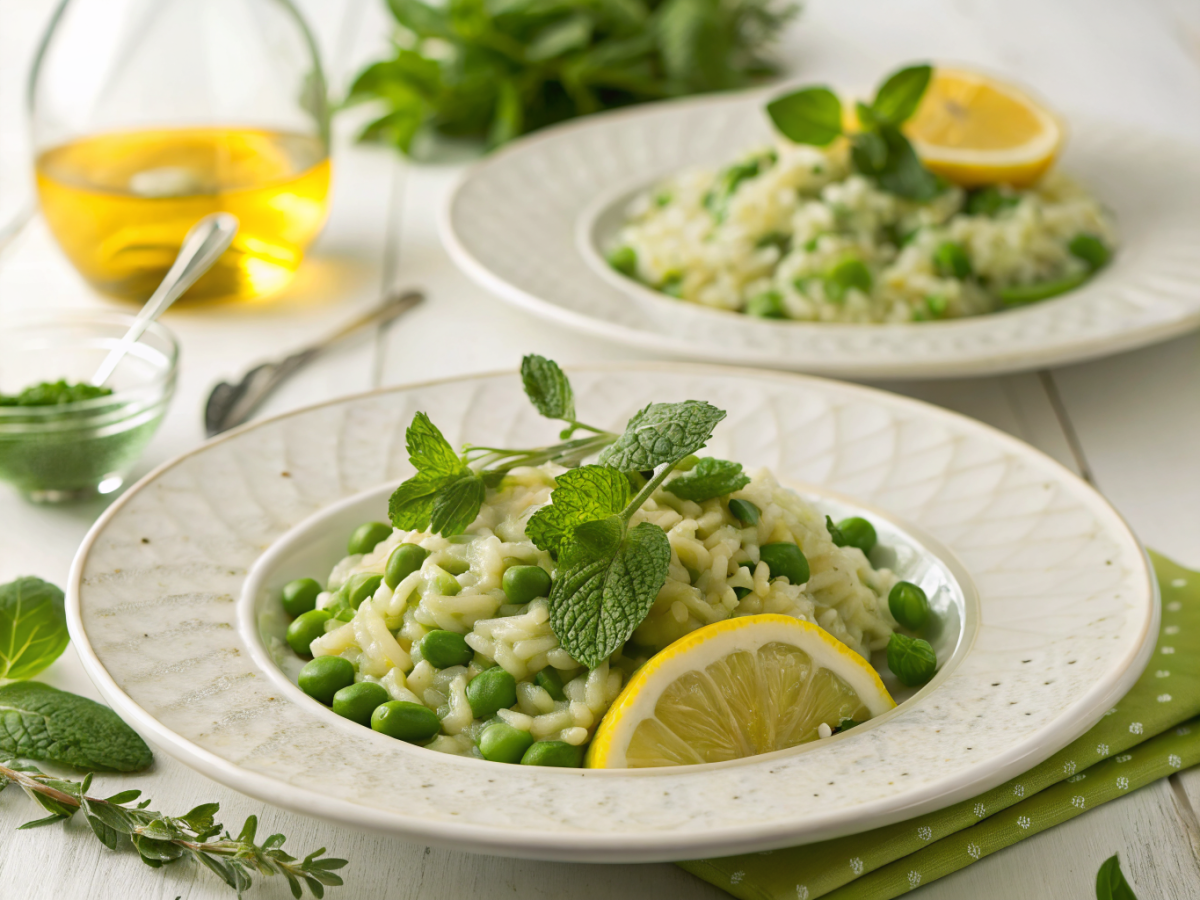
Spring Pea Risotto With Lemon And Mint Everyone Will Ask You To Make Again
Ingredients
Method
- Heat the vegetable broth in a medium saucepan and keep it warm over low heat throughout the cooking process.
- In a large, heavy-bottomed pan, heat olive oil over medium heat. Add the diced onion and cook for 4-5 minutes until softened and translucent, stirring occasionally.
- Add the arborio rice to the pan and stir constantly for 2-3 minutes until the grains are lightly toasted and coated with oil. Pour in the white wine and stir until completely absorbed.
- Add one ladle of warm broth to the rice and stir frequently until absorbed. Continue adding broth one ladle at a time, stirring frequently and allowing each addition to be absorbed before adding more. This process should take about 20-25 minutes.
- When the rice is almost tender but still has a slight bite, stir in the peas and cook for 3-4 minutes until they are tender and bright green.
- Remove from heat and stir in the butter, parmesan cheese, lemon zest, lemon juice, and half of the chopped mint. Season with salt and pepper to taste. The risotto should be creamy and flow slightly when plated.
- Divide the risotto among serving bowls and garnish with the remaining fresh mint and additional parmesan cheese if desired. Serve immediately while hot and creamy.
Nutrition
Notes
Tried this recipe?
Let us know how it was!Spring Pea Risotto With Lemon And Mint: 5 Easy Tips for Perfect Results
Creating the perfect risotto might seem intimidating, but with these five essential tips, you’ll master this elegant dish in no time. The key to success lies in understanding the fundamental techniques that transform simple ingredients into something extraordinary. Let me walk you through the secrets that will have everyone asking for your recipe.
First, always use warm broth when making risotto. Cold liquid shocks the rice and slows down the cooking process, preventing that signature creamy texture from developing properly. Keep your vegetable or chicken broth simmering in a separate pot throughout the cooking process.
Second, resist the urge to rush the stirring process. Constant, gentle stirring releases the starches from the arborio rice, creating that luxurious, velvety consistency risotto is famous for. This meditative process typically takes 18-25 minutes, so put on some music and enjoy the rhythm.
Third, add your broth gradually, one ladle at a time. Wait until each addition is almost completely absorbed before adding more liquid. This patient approach ensures each grain of rice cooks evenly and develops the proper texture.
Fourth, don’t overcook your peas. Fresh or frozen peas only need a few minutes to become tender while maintaining their bright green color and sweet flavor. Add them near the end of cooking to preserve their vibrant appearance and nutritional value.
Fifth, finish with butter and parmesan cheese off the heat. This final step, called “mantecatura” in Italian cooking, creates an incredibly smooth, glossy finish that coats each grain of rice. The residual heat gently melts these ingredients without making the risotto greasy.
Why You’ll Love This Spring Pea Risotto With Lemon And Mint
This dish celebrates the best of spring produce with ingredients that complement each other beautifully. The sweetness of fresh peas pairs perfectly with the bright acidity of lemon and the cooling freshness of mint. Together, they create a harmonious balance that feels light yet satisfying.
The creamy texture of properly cooked risotto provides comfort without feeling heavy or overly rich. Unlike cream-based pasta dishes, risotto achieves its luxurious consistency through the natural starches released from arborio rice. This makes it a more wholesome option that still delivers on indulgence.
Visually, this risotto is absolutely stunning with its pale green hue dotted with bright peas and flecks of fresh herbs. It’s the kind of dish that photographs beautifully and impresses guests before they even take their first bite. The presentation alone makes it perfect for spring gatherings and special occasions.
The versatility of this recipe makes it suitable for various dietary preferences. It’s naturally vegetarian when made with vegetable broth, and you can easily adapt it to be vegan by substituting the butter and cheese with plant-based alternatives. This flexibility means you can serve it to a diverse group of diners with confidence.
From a practical standpoint, this risotto comes together in about 35-40 minutes from start to finish. While it does require your attention during cooking, the actual hands-on time is minimal. It’s an achievable weeknight dinner that feels special enough for entertaining.
Core Ingredients for Spring Pea Risotto With Lemon And Mint
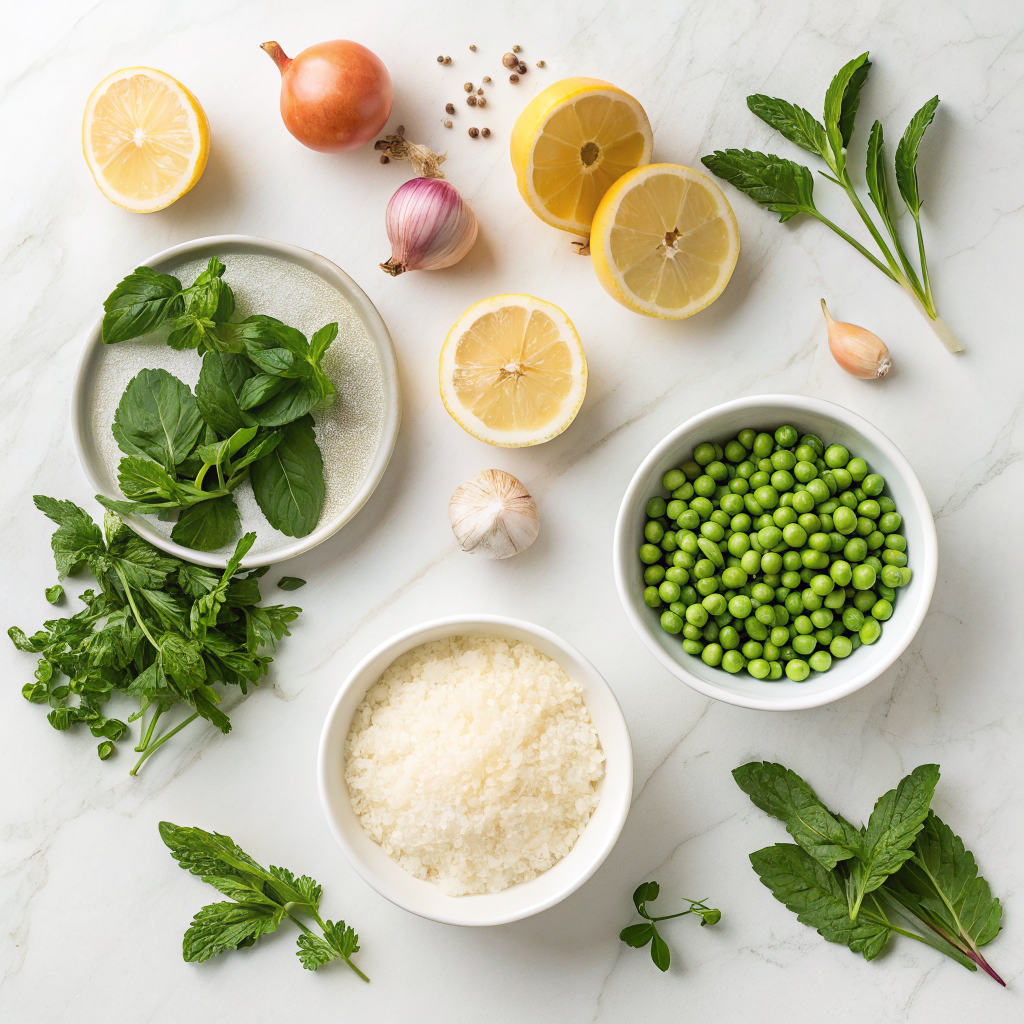
The foundation of excellent risotto starts with arborio rice, a short-grain Italian rice variety with high starch content. This specific type of rice is essential for achieving that characteristic creamy texture. Don’t substitute with long-grain rice, as it won’t produce the same results.
Fresh or frozen spring peas provide the star ingredient that gives this dish its vibrant color and sweet flavor. If using fresh peas, you’ll need about 1.5 pounds in the pod to yield 2 cups shelled. Frozen peas work wonderfully and are often sweeter since they’re frozen at peak ripeness.
Vegetable or chicken broth forms the cooking liquid that gradually hydrates the rice. You’ll need approximately 6 cups of broth kept warm throughout the cooking process. Quality broth makes a noticeable difference in the final flavor, so choose a brand you enjoy or make your own.
Parmesan cheese adds savory depth and helps create that glossy finish. Use freshly grated Parmigiano-Reggiano for the best flavor and texture. Pre-grated cheese contains anti-caking agents that can affect the creaminess of your risotto.
Fresh lemon provides both zest and juice, brightening the entire dish with citrusy notes. You’ll need one large lemon, which typically yields about 2-3 tablespoons of juice and 1 tablespoon of zest. Always zest before juicing for easier handling.
Fresh mint adds an aromatic, cooling element that complements the peas beautifully. You’ll need about 1/4 cup of chopped fresh mint leaves. Avoid dried mint in this recipe, as the fresh herb’s vibrant flavor is essential to the dish’s character.
Additional ingredients include shallots or onion for aromatic base notes, white wine for acidity and depth, butter for richness, olive oil for sautéing, and salt and pepper for seasoning. Each component plays a specific role in building layers of flavor.
How to Make Spring Pea Risotto With Lemon And Mint: Step-by-Step
Begin by preparing your mise en place, which means having all ingredients measured and ready before you start cooking. Finely dice 2 shallots or 1 small onion, grate 1 cup of parmesan cheese, zest and juice your lemon, and chop your mint leaves. This preparation ensures smooth cooking without scrambling for ingredients mid-process.
Heat 6 cups of vegetable or chicken broth in a medium saucepan and keep it at a gentle simmer. This warm broth is crucial for proper risotto cooking. Place the pot near your cooking station so you can easily ladle broth as needed.
In a large, heavy-bottomed pan or Dutch oven, heat 2 tablespoons of olive oil and 1 tablespoon of butter over medium heat. Add the diced shallots and sauté for 3-4 minutes until softened and translucent but not browned. This aromatic base provides the flavor foundation for your risotto.
Add 1.5 cups of arborio rice to the pan and stir constantly for 2-3 minutes until the grains are well-coated and slightly toasted. You’ll notice the rice becomes slightly translucent around the edges. This toasting step adds a subtle nutty flavor to the finished dish.
Pour in 1/2 cup of dry white wine and stir until it’s almost completely absorbed. The wine adds acidity that balances the richness of the butter and cheese. Make sure to let the alcohol cook off, which takes about 2 minutes.
Begin adding the warm broth one ladle at a time, stirring frequently. Wait until each addition is almost completely absorbed before adding the next ladle. This gradual process typically takes 18-22 minutes and requires your attention, but the results are worth it.
While the risotto cooks, prepare your pea puree for extra flavor. Blanch 1 cup of peas in boiling water for 2 minutes, then transfer to ice water. Blend these peas with 2 tablespoons of broth until smooth. This puree will intensify the pea flavor and enhance the green color.
After about 15 minutes of adding broth, when the rice is almost tender but still has a slight bite, stir in the remaining 1 cup of whole peas. Continue cooking and adding broth for another 3-5 minutes. The peas should be tender but still bright green.
When the rice is creamy and tender but still has a slight firmness in the center (al dente), remove the pan from heat. Stir in the pea puree, 3 tablespoons of butter, 3/4 cup of grated parmesan, the lemon zest, and 2 tablespoons of lemon juice. Mix vigorously to create a creamy, glossy consistency.
Fold in the chopped fresh mint, reserving some for garnish. Taste and adjust seasoning with salt and freshly ground black pepper. The risotto should be loose enough to spread slightly when plated, not stiff or thick.
Serve immediately in warm shallow bowls, garnished with additional mint leaves, a sprinkle of parmesan, and a drizzle of good olive oil. Risotto waits for no one, so have your diners ready at the table. The texture is best enjoyed within minutes of finishing.
Nutrition & Health Benefits
This risotto provides a balanced combination of carbohydrates, protein, and vegetables in one satisfying dish. A typical serving contains approximately 380-420 calories, depending on the amount of butter and cheese used. The dish offers about 12-15 grams of protein per serving, primarily from the parmesan cheese and peas.
Spring peas are nutritional powerhouses packed with vitamins A, C, and K, along with folate and fiber. They contain plant-based protein and provide important minerals like iron, magnesium, and potassium. The antioxidants in peas support immune function and may help reduce inflammation.
Lemon contributes vitamin C and beneficial plant compounds that support digestive health and enhance iron absorption from the meal. The citric acid in lemon juice also aids in breaking down food and supports liver function. Fresh lemon zest contains essential oils with anti-inflammatory properties.
Mint offers more than just fresh flavor; it contains antioxidants and may help with digestion and reducing inflammation. The herb has been traditionally used to soothe upset stomachs and improve nutrient absorption. Its aromatic compounds can also promote feelings of satiety and satisfaction.
While risotto does contain refined carbohydrates from white rice, the addition of vegetables, protein, and healthy fats creates a more balanced glycemic response. The fiber from peas helps slow digestion and provides sustained energy. For more nutritious meal ideas, check out our collection of dinner recipes that prioritize wholesome ingredients.
The olive oil and butter provide essential fatty acids that help absorb fat-soluble vitamins from the vegetables. Moderate amounts of these fats also contribute to feelings of fullness and satisfaction. Using high-quality fats makes a difference in both flavor and nutritional value.
Variations & Substitutions
For a vegan version, replace the butter with additional olive oil or vegan butter, and substitute the parmesan with nutritional yeast or cashew parmesan. Use vegetable broth instead of chicken broth. The texture won’t be quite as creamy, but adding a tablespoon of cashew cream at the end helps replicate that richness.
Create an asparagus and pea variation by adding 1 cup of chopped asparagus along with the peas. The combination of spring vegetables creates even more texture and nutritional variety. Blanch the asparagus briefly before adding to maintain its bright color and crisp-tender texture.
For a protein boost, add cooked shrimp, grilled chicken, or pan-seared scallops on top of the finished risotto. These proteins complement the delicate flavors without overwhelming the dish. If you’re looking for more protein-rich options, explore our high protein recipes for additional inspiration.
Try a herb variation by substituting or combining mint with fresh basil, tarragon, or dill. Each herb brings its own personality to the dish. Basil creates an Italian-garden feel, tarragon adds a subtle anise note, and dill provides a fresh, slightly tangy flavor.
Make it gluten-free by ensuring your broth is certified gluten-free and omitting the wine or using a gluten-free variety. The risotto itself is naturally gluten-free since rice contains no gluten. This makes it an excellent option for guests with celiac disease or gluten sensitivity.
For a lower-fat version, reduce the butter to 2 tablespoons total and use less cheese, or opt for a reduced-fat parmesan. Increase the pea puree to maintain creaminess without as much dairy fat. The dish will be lighter but still satisfying.
Create a truffle version by finishing with a drizzle of truffle oil or shaved fresh truffle. This luxurious addition elevates the dish for special occasions. Use a light hand with truffle products, as their intense flavor can easily overpower the delicate pea and lemon notes.
Serving Suggestions
This risotto shines as a main course for lunch or dinner, especially when paired with a simple arugula salad dressed with lemon vinaigrette. The peppery greens and bright dressing complement the creamy risotto perfectly. Add some crusty bread to round out the meal.
Serve it as an elegant first course for a multi-course dinner party. Smaller portions allow guests to enjoy the flavors without filling up before the main course. Present it in shallow bowls with a artistic garnish of mint leaves and microgreens.
Pair this risotto with grilled or roasted fish like salmon, halibut, or sea bass. The light, fresh flavors of the risotto don’t compete with delicate seafood. A piece of crispy-skinned fish placed atop the risotto creates a restaurant-worthy presentation.
For a complete spring menu, serve alongside roasted asparagus or a medley of spring vegetables. The seasonal vegetables reinforce the fresh, garden-inspired theme of the meal. Roasting vegetables brings out their natural sweetness, which harmonizes beautifully with the peas.
Wine pairing is important for enhancing the dining experience. Choose a crisp Sauvignon Blanc, Pinot Grigio, or unoaked Chardonnay that won’t overpower the delicate flavors. The wine’s acidity should complement the lemon in the dish while refreshing the palate between bites.
Consider serving this as part of a spring brunch spread alongside quiche, fresh fruit, and mimosas. The risotto adds a sophisticated, savory element to the typical brunch offerings. It can be made shortly before guests arrive and held warm for a short time.
Common Mistakes to Avoid
The biggest mistake home cooks make is not stirring frequently enough. While you don’t need to stir constantly every second, regular stirring every 30-60 seconds is essential for releasing starches and creating creaminess. Set a timer if needed to remind yourself to keep stirring.
Using cold broth is another common error that results in uneven cooking and a longer preparation time. Cold liquid shocks the rice and stops the cooking process each time you add it. Always keep your broth at a gentle simmer throughout the risotto-making process.
Adding too much liquid at once prevents proper starch release and can make your risotto soupy rather than creamy. Be patient and add broth gradually, one ladle at a time. Wait until each addition is almost absorbed before adding more.
Many cooks overcook the peas, resulting in a dull, olive-green color and mushy texture. Fresh or frozen peas only need 3-5 minutes of cooking to become tender. Add them near the end to preserve their bright color and sweet flavor.
Skipping the final butter and cheese addition off the heat robs your risotto of its signature glossy, creamy finish. This step, called mantecatura, is what transforms good risotto into great risotto. Don’t skip it, even if you’re watching calories—just use less.
Letting risotto sit too long before serving causes it to thicken and lose its creamy, flowing consistency. Risotto should be served immediately after finishing. If you must wait, keep it warm and add a splash of warm broth before serving to restore the texture.
Using the wrong type of rice will never produce authentic risotto texture. Long-grain rice doesn’t contain enough starch to create creaminess. Stick with arborio, carnaroli, or vialone nano rice varieties specifically designed for risotto.
Storage & Meal Prep Tips
While risotto is best enjoyed immediately, you can store leftovers in an airtight container in the refrigerator for up to 3 days. The texture will change as the rice continues to absorb liquid and becomes firmer. Don’t expect reheated risotto to have the same creamy consistency as freshly made.
To reheat refrigerated risotto, place it in a pan with 1/4 to 1/2 cup of warm broth or water. Heat gently over medium-low heat, stirring frequently until warmed through. The added liquid helps restore some of the original creaminess, though it won’t be quite the same as fresh.
For meal prep purposes, you can prepare components ahead of time. Chop your shallots, grate your cheese, and measure your ingredients the night before. Keep the broth in the refrigerator and reheat when ready to cook. This advance preparation cuts down on active cooking time.
The pea puree can be made up to 2 days ahead and stored in the refrigerator. This actually works well since the flavors have time to develop. Bring it to room temperature before adding to your risotto for even incorporation.
Leftover risotto can be transformed into arancini (fried risotto balls), which is actually a traditional way to use day-old risotto in Italian cuisine. Form chilled risotto into balls, optionally stuff with mozzarella, coat in breadcrumbs, and fry until golden. This gives new life to leftovers.
You can also make risotto cakes by forming cold risotto into patties and pan-frying them in olive oil until crispy on both sides. These make excellent side dishes or can be topped with a poached egg for brunch. It’s a creative way to enjoy the flavors in a different format.
Freezing risotto is possible but not ideal, as the texture suffers significantly. If you must freeze it, portion it into airtight containers and freeze for up to 1 month. Thaw overnight in the refrigerator and reheat with plenty of added liquid, stirring constantly.
Final Thoughts on Spring Pea Risotto With Lemon And Mint
This Spring Pea Risotto With Lemon And Mint represents the essence of spring cooking—fresh, vibrant, and full of life. The combination of sweet peas, bright lemon, and aromatic mint creates a dish that feels both comforting and refreshing. It’s proof that simple, seasonal ingredients can create something truly special when treated with care and attention.
Mastering risotto technique opens up endless possibilities in your cooking repertoire. Once you understand the basic method, you can adapt it to showcase whatever seasonal ingredients inspire you. The patient stirring and gradual liquid addition become meditative rather than tedious with practice.
This recipe works beautifully for both casual family dinners and elegant entertaining. Its versatility makes it a valuable addition to your cooking rotation. Whether you’re looking for a meatless Monday option or a sophisticated dinner party dish, this risotto delivers on all fronts.
The visual appeal of this dish cannot be overstated—the pale green color dotted with bright peas looks absolutely stunning on the plate. It’s the kind of recipe that photographs beautifully and makes you proud to serve. Your guests will be impressed before they even taste it.
Don’t be intimidated by risotto’s reputation for being difficult or time-consuming. With the right technique and a bit of patience, anyone can create restaurant-quality results at home. The 30-40 minutes of cooking time is well worth the reward of creamy, flavorful perfection.
I encourage you to make this recipe during peak spring season when fresh peas are abundant and at their sweetest. However, frozen peas work wonderfully year-round, so you can enjoy these bright flavors even in winter. The dish brings a taste of spring to your table no matter the season.
Frequently Asked Questions
Can I make Spring Pea Risotto With Lemon And Mint ahead of time?
While risotto is truly best served immediately after cooking, you can prepare components ahead to streamline the process. Make the pea puree, chop ingredients, and grate cheese up to a day in advance. Cook the actual risotto just before serving for optimal texture and creaminess. If you must make it ahead, undercook it slightly, spread it on a baking sheet to cool quickly, then reheat gently with additional warm broth.
What’s the best rice to use for this recipe?
Arborio rice is the most commonly available and works perfectly for this Spring Pea Risotto With Lemon And Mint. Carnaroli and vialone nano are premium alternatives that produce excellent results with slightly different textures. Never substitute long-grain rice like basmati or jasmine, as they lack the starch content necessary to create risotto’s signature creaminess. The short, plump grains of risotto rice are essential to the dish’s success.
Can I use frozen peas instead of fresh?
Absolutely! Frozen peas often work even better than fresh because they’re frozen at peak sweetness and require no shelling. Use them straight from the freezer without thawing—just add them to the risotto during the last few minutes of cooking. Frozen peas maintain their bright green color beautifully and provide consistent quality year-round. This makes the recipe accessible even when fresh spring peas aren’t in season.
Why is my risotto too thick or too thin?
Risotto consistency depends on the ratio of rice to liquid and cooking time. If too thick, add warm broth a few tablespoons at a time until you reach the desired flowing consistency. If too thin, continue cooking uncovered to allow excess liquid to evaporate, or stir in a bit more grated parmesan to thicken. The finished risotto should spread slightly when plated, with a consistency described as “all’onda” (like a wave). Adjust the texture just before serving for best results.
