
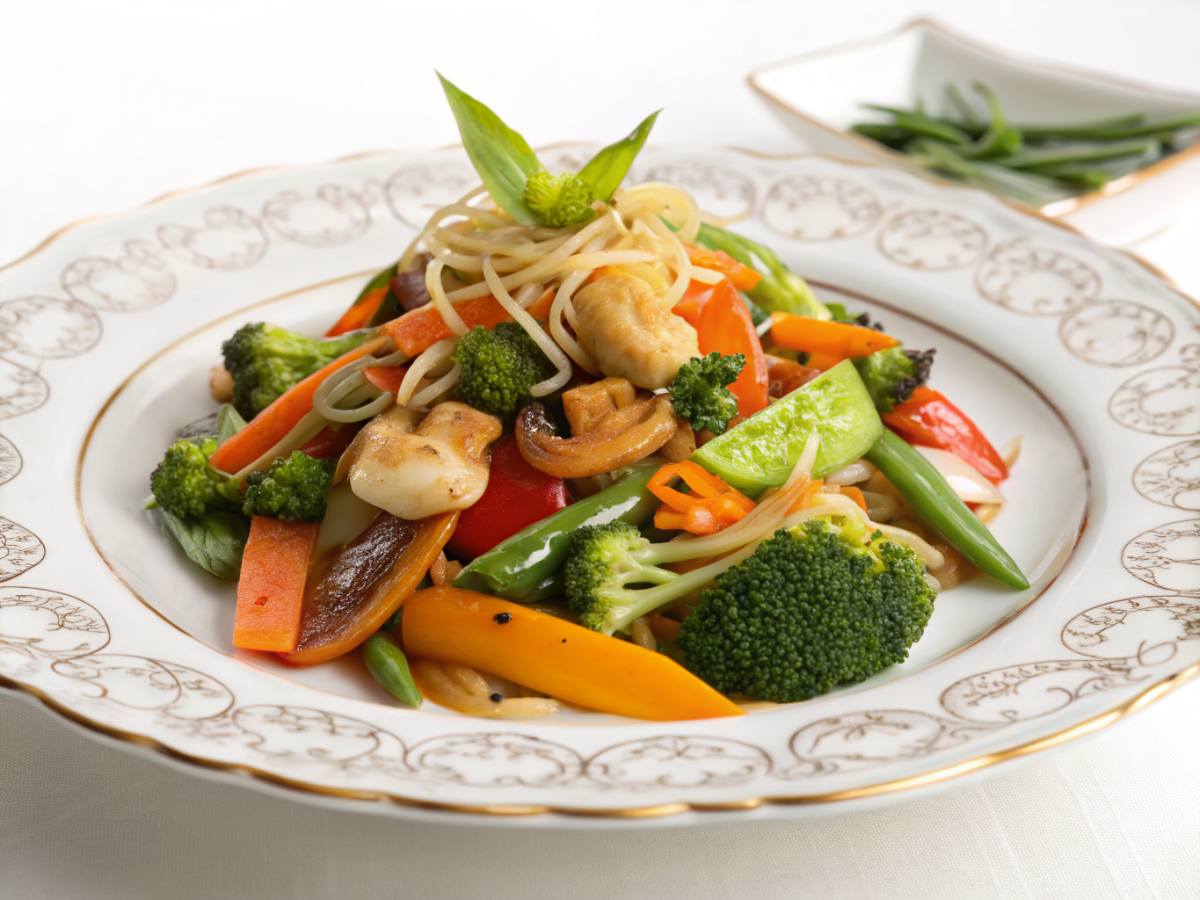
Mixed Vegetable Stir Fry Everyone Will Ask You To Make Again
Ingredients
Method
- In a small bowl, whisk together soy sauce, sesame oil, cornstarch, and vegetable broth until smooth. Set aside.
- Heat vegetable oil in a large wok or skillet over high heat until shimmering and very hot.
- Add minced garlic and grated ginger to the hot oil and stir fry for 30 seconds until fragrant.
- Add carrots and broccoli first and stir fry for 3 minutes. Then add bell peppers, snap peas, and mushrooms. Continue stir frying for another 4-5 minutes until vegetables are tender-crisp.
- Pour the prepared sauce over the vegetables and toss everything together. Cook for 2-3 minutes until the sauce thickens and coats all the vegetables evenly.
- Remove from heat and taste for seasoning. Serve immediately over steamed rice or noodles.
Nutrition
Notes
Tried this recipe?
Let us know how it was!Mixed Vegetable Stir Fry: Perfect Results in 25 Minutes
Creating the perfect vegetable stir fry is all about timing, temperature, and technique. The key to achieving that restaurant-style texture lies in cooking over high heat while keeping your vegetables crisp-tender rather than mushy. This method locks in nutrients, preserves vibrant colors, and creates those coveted caramelized edges that add depth to every bite.
The beauty of this recipe is its incredible versatility and speed. You can have a complete, nutritious meal on the table in under half an hour, making it ideal for busy weeknights when time is precious. The high-heat cooking method also means you’ll use minimal oil while maximizing flavor through proper seasoning and sauce application.
Understanding the science behind stir-frying transforms your cooking from good to exceptional. When vegetables hit a properly heated wok or skillet, the moisture evaporates quickly, allowing the natural sugars to caramelize. This creates complex flavors and that signature “wok hei” or breath of the wok that professional chefs achieve.
Why You’ll Love This Mixed Vegetable Stir Fry
This recipe solves the eternal question of how to make vegetables exciting and craveable. Unlike steamed or boiled vegetables that can taste bland, stir-frying creates layers of flavor through caramelization, umami-rich sauce, and aromatic ingredients like garlic and ginger. The result is a dish so delicious that even vegetable skeptics will ask for seconds.
The nutritional profile of this dish is impressive without feeling like health food. You’re getting multiple servings of vegetables in one meal, complete with fiber, vitamins, minerals, and antioxidants. The cooking method preserves more nutrients than boiling or long-cooking methods, and you control exactly what goes into your sauce.
Budget-friendly and practical, this recipe uses affordable vegetables that are available year-round. You can easily adapt it to whatever’s on sale or in season, reducing food waste while keeping costs low. It’s also naturally gluten-free when using tamari instead of soy sauce, and can be made vegan or paired with your protein of choice.
The meal prep potential is outstanding for those planning ahead. You can chop all your vegetables in advance, prepare the sauce, and have everything ready for a lightning-fast cooking session. This makes it perfect for quick and easy meals when you’re short on time but want something homemade and wholesome.
Core Ingredients for Mixed Vegetable Stir Fry
The vegetable selection is where you can truly customize this dish to your preferences. Classic choices include broccoli florets, bell peppers in multiple colors, snap peas, carrots, mushrooms, and baby corn. Each vegetable contributes different textures, flavors, and nutritional benefits, creating a well-rounded dish that’s as beautiful as it is delicious.

Your aromatics form the flavor foundation of any great stir fry. Fresh garlic, ginger, and scallions are non-negotiable for authentic taste. These ingredients release their essential oils when they hit hot oil, perfuming your entire kitchen and infusing the vegetables with incredible depth of flavor.
The sauce components transform simple vegetables into something extraordinary. You’ll need soy sauce or tamari for saltiness and umami, a touch of sesame oil for nuttiness, rice vinegar for brightness, and a small amount of sweetener like honey or brown sugar to balance the flavors. Cornstarch acts as a thickener, creating that glossy, restaurant-style coating.
Essential Vegetables
- Broccoli florets: 2 cups, cut into bite-sized pieces for even cooking
- Bell peppers: 2 medium, mixed colors, sliced into strips
- Carrots: 2 medium, julienned or cut into thin diagonal slices
- Snap peas: 1 cup, ends trimmed for crisp texture
- Mushrooms: 8 ounces, sliced (shiitake or button work well)
- Baby corn: 1 cup, halved lengthwise for presentation
- Water chestnuts: 1/2 cup, sliced for crunch
Aromatic Base
- Garlic: 4 cloves, minced finely for maximum flavor distribution
- Fresh ginger: 1 tablespoon, grated or minced
- Scallions: 4 stalks, white and green parts separated
- Cooking oil: 3 tablespoons, high smoke point (vegetable, peanut, or avocado oil)
Signature Sauce
- Soy sauce: 1/4 cup (or tamari for gluten-free)
- Rice vinegar: 2 tablespoons for acidity
- Sesame oil: 1 tablespoon for aromatic finish
- Honey or brown sugar: 1 tablespoon for balance
- Cornstarch: 1 tablespoon mixed with 2 tablespoons water
- Vegetable broth: 1/4 cup for sauce consistency
- Red pepper flakes: 1/2 teaspoon (optional, for heat)
How to Make Mixed Vegetable Stir Fry: Step-by-Step
Preparation is everything when it comes to successful stir-frying. This cooking method moves quickly, so having all your ingredients prepped and within arm’s reach is essential. Chop all vegetables to similar sizes for even cooking, mince your aromatics, and whisk together your sauce before you turn on the heat.
Start by heating your wok or largest skillet over high heat until it’s smoking hot. This step is crucial for achieving that proper sear and preventing vegetables from steaming instead of frying. Add your oil and swirl to coat the surface, then immediately add your aromatics for 30 seconds until fragrant.
Add vegetables in order of cooking time, starting with the densest ones first. Broccoli and carrots go in first, followed by bell peppers and mushrooms, with quick-cooking items like snap peas added last. Keep everything moving constantly with a spatula or by tossing the pan to ensure even cooking and prevent burning.
Detailed Cooking Instructions
Step 1: Prepare Your Mise en Place
Wash and cut all vegetables into uniform, bite-sized pieces. This ensures everything cooks at the same rate and looks professional. Pat vegetables dry with paper towels to remove excess moisture, which can cause steaming instead of searing.
Step 2: Make the Sauce
In a small bowl, whisk together soy sauce, rice vinegar, sesame oil, honey, vegetable broth, and red pepper flakes if using. In a separate small container, mix cornstarch with water until smooth. Keep both near your cooking station for quick access.
Step 3: Heat Your Cooking Vessel
Place your wok or large skillet over high heat for 2-3 minutes until very hot. You should see wisps of smoke rising from the pan. This high temperature is what creates the characteristic flavor and texture of properly stir-fried vegetables.
Step 4: Cook Aromatics
Add 2 tablespoons of oil and swirl to coat. Immediately add minced garlic, ginger, and the white parts of scallions. Stir constantly for 30 seconds until fragrant but not browned, as burnt garlic tastes bitter.
Step 5: Stir-Fry Dense Vegetables
Add broccoli and carrots first, tossing constantly for 2-3 minutes. These vegetables need more cooking time to become tender. Keep them moving to prevent burning while allowing some caramelization on the edges.
Step 6: Add Medium-Density Vegetables
Add bell peppers, mushrooms, and baby corn. Continue stir-frying for another 2-3 minutes, maintaining high heat and constant movement. The vegetables should be developing some color while remaining crisp-tender.
Step 7: Incorporate Quick-Cooking Items
Add snap peas and water chestnuts, cooking for just 1-2 minutes. These vegetables need minimal cooking time to maintain their signature crunch. Overcooking at this stage results in mushy, unappetizing textures.
Step 8: Add Sauce and Thicken
Pour the prepared sauce over the vegetables and toss to coat evenly. Let it bubble for 30 seconds, then add the cornstarch slurry while stirring constantly. The sauce will thicken within 30-60 seconds, creating a glossy coating on all the vegetables.
Step 9: Final Touches
Remove from heat immediately once the sauce has thickened. Toss in the green parts of scallions and an extra drizzle of sesame oil if desired. Transfer to a serving platter while still hot for the best presentation and flavor.
This recipe pairs beautifully with other options from our collection of dinner recipes when you’re planning a complete meal. The versatility means it works as a main dish over rice or noodles, or as a side dish alongside protein.
Nutrition & Health Benefits
This vegetable stir fry is a nutritional powerhouse that delivers substantial health benefits with every serving. The variety of colorful vegetables ensures you’re getting a wide spectrum of vitamins, minerals, and phytonutrients that support overall health. Each color represents different antioxidants that protect your cells from damage and reduce inflammation.
The cooking method preserves more nutrients compared to boiling or long-simmering techniques. Quick, high-heat cooking means water-soluble vitamins like vitamin C and B vitamins remain largely intact. The small amount of oil used actually helps your body absorb fat-soluble vitamins A, D, E, and K from the vegetables.
Fiber content is exceptional in this dish, promoting digestive health and helping you feel satisfied longer. Most adults need 25-35 grams of fiber daily, and one serving of this stir fry can provide 6-8 grams. The combination of soluble and insoluble fiber supports gut health and helps regulate blood sugar levels.
The low calorie density makes this perfect for weight management goals. You can enjoy a generous portion that fills your plate and stomach without consuming excessive calories. The high water and fiber content of the vegetables creates volume and satiety, making this an ideal choice for anyone watching their weight.
Nutritional Breakdown Per Serving
- Calories: 180-220 (depending on oil used)
- Protein: 6-8 grams
- Carbohydrates: 25-30 grams
- Fiber: 6-8 grams
- Fat: 8-10 grams (primarily healthy unsaturated fats)
- Sodium: 600-800mg (can be reduced with low-sodium soy sauce)
- Vitamin C: 150% of daily value
- Vitamin A: 120% of daily value
Key Health Benefits
The cruciferous vegetables like broccoli contain sulforaphane, a compound studied for its potential cancer-fighting properties. Bell peppers provide exceptional amounts of vitamin C, supporting immune function and skin health. Mushrooms offer unique nutrients including vitamin D and selenium, which many people don’t get enough of through diet alone.
The garlic and ginger aren’t just flavor enhancers—they’re medicinal foods used for centuries. Garlic supports cardiovascular health and has antimicrobial properties, while ginger aids digestion and has powerful anti-inflammatory effects. Together, they create a dish that’s both delicious and therapeutic.
Variations & Substitutions
The beauty of stir fry lies in its adaptability to whatever ingredients you have available. Seasonal variations keep this dish interesting year-round while taking advantage of peak produce. In spring, add asparagus and peas; summer brings zucchini and green beans; fall offers Brussels sprouts and cauliflower; winter features hearty cabbage and root vegetables.
Protein additions transform this from a side dish to a complete meal. Add cubed tofu, tempeh, edamame, or chickpeas for plant-based protein. For omnivores, chicken, shrimp, beef, or pork work beautifully when cooked separately first, then combined with the vegetables at the end.
Sauce variations allow you to explore different flavor profiles. Try a Thai-inspired version with coconut aminos, lime juice, and a touch of curry paste. Go Korean with gochujang and a bit of sugar for sweet heat. A Chinese black bean sauce creates an entirely different but equally delicious experience.
Vegetable Substitutions
- Instead of broccoli: Use cauliflower, broccolini, or Chinese broccoli (gai lan)
- Instead of bell peppers: Try poblano peppers for mild heat or sweet mini peppers
- Instead of snap peas: Use snow peas, green beans, or edamame
- Instead of mushrooms: Add eggplant, zucchini, or bok choy
- Instead of carrots: Try parsnips, sweet potato, or butternut squash cubes
Dietary Modifications
Gluten-Free: Simply replace regular soy sauce with tamari or coconut aminos. Ensure all other ingredients are certified gluten-free, as some sauces contain hidden gluten. This simple swap makes the dish completely safe for those with celiac disease or gluten sensitivity.
Low-Sodium: Use low-sodium soy sauce and reduce the amount by half, compensating with extra aromatics, citrus juice, and herbs. You can also add a splash of vegetable broth for moisture without the salt content.
Keto/Low-Carb: Focus on above-ground vegetables like broccoli, bell peppers, and mushrooms while limiting carrots and baby corn. Substitute the honey with a keto-friendly sweetener like monk fruit or erythritol to maintain the sauce’s balance.
Oil-Free: Use vegetable broth for sautéing instead of oil, adding it in small amounts as needed. The results will be slightly different in texture but still delicious, and you’ll significantly reduce the calorie content.
Serving Suggestions
The most traditional way to serve stir fry is over a bed of steamed white or brown rice, which soaks up the flavorful sauce beautifully. Jasmine rice offers a subtle floral aroma that complements the vegetables, while brown rice adds extra fiber and a nutty flavor. For a lower-carb option, cauliflower rice provides similar texture with fewer calories.
Noodle lovers can serve this over rice noodles, lo mein, udon, or even zucchini noodles for a lighter option. The sauce clings beautifully to noodles, creating a satisfying one-bowl meal. Toss the hot vegetables and sauce directly with cooked noodles for the best flavor integration.
For a complete Asian-inspired meal, pair your stir fry with complementary dishes. Spring rolls or dumplings make excellent appetizers, while a light cucumber salad with rice vinegar dressing provides refreshing contrast. Miso soup adds warmth and umami depth to round out the dining experience.
Garnishing Ideas
- Sesame seeds: Toasted white or black sesame seeds add visual appeal and nutty crunch
- Fresh herbs: Cilantro, Thai basil, or mint provide bright, fresh notes
- Crushed peanuts or cashews: Add protein, healthy fats, and satisfying texture
- Crispy fried shallots: Provide an irresistible crunchy topping
- Lime wedges: Allow diners to add brightness to taste
- Chili oil or sriracha: For those who want extra heat
Meal Combinations
This stir fry works wonderfully as part of a larger spread when entertaining. Serve it family-style alongside other dishes for a feast that lets everyone customize their plates. The colorful presentation makes it a showstopper at potlucks and gatherings.
For meal prep purposes, portion the stir fry into individual containers with your grain of choice. It reheats beautifully for work lunches throughout the week. Add a protein source if desired, and you have complete, balanced meals ready to grab and go.
Common Mistakes to Avoid
The most frequent error home cooks make is overcrowding the pan, which causes vegetables to steam rather than sear. When too many vegetables are added at once, they release moisture that can’t evaporate quickly enough, resulting in a soggy, bland dish. Cook in batches if necessary to maintain proper heat and achieve that desirable caramelization.
Using insufficient heat is another critical mistake that prevents proper stir-frying. Your pan must be smoking hot before adding ingredients, and the heat should remain high throughout cooking. If you hear sizzling when vegetables hit the pan, you’re on the right track; silence means your pan isn’t hot enough.
Cutting vegetables into uneven sizes leads to inconsistent cooking where some pieces are mushy while others remain raw. Take time to cut everything uniformly, and group vegetables by density so you can add them at appropriate intervals. This attention to detail separates amateur results from professional-quality dishes.
Over-stirring prevents the caramelization that creates depth of flavor. While stir-frying does involve movement, you need to let vegetables sit undisturbed for brief moments to develop color. The technique is more about tossing and folding rather than constant stirring that never allows contact with the hot surface.
Additional Pitfalls
- Adding sauce too early: This steams vegetables instead of allowing them to sear properly
- Using wet vegetables: Excess moisture creates steam and prevents browning
- Not preparing mise en place: Scrambling for ingredients mid-cooking leads to burnt aromatics
- Using the wrong oil: Low smoke-point oils like olive oil can burn at stir-fry temperatures
- Skipping the cornstarch slurry: Results in thin, watery sauce that doesn’t coat vegetables
Storage & Meal Prep Tips
Proper storage ensures your stir fry maintains quality for several days. Transfer cooled stir fry to airtight containers and refrigerate within two hours of cooking. It will keep well for 3-4 days when stored properly, making it excellent for meal prep and planned leftovers.
For best results when reheating, use a skillet or wok over medium-high heat rather than the microwave. Add a splash of water or broth to refresh the sauce and prevent drying out. The high heat method helps restore some of the texture that softens during storage, bringing back that just-cooked quality.
Freezing is possible but not ideal for this dish, as the high water content in vegetables creates texture changes upon thawing. If you must freeze, slightly undercook the vegetables initially and freeze in portion-sized containers. Thaw in the refrigerator overnight and reheat thoroughly, understanding that the texture will be softer than fresh.
Advanced Meal Prep Strategy
For maximum efficiency, prep all vegetables on your meal prep day and store them in separate containers. Keep harder vegetables like broccoli and carrots together, and softer ones like bell peppers and mushrooms in another container. This allows you to cook fresh stir fry in minutes on busy weeknights.
Pre-mix your sauce and store it in a jar in the refrigerator for up to one week. Shake well before using, as ingredients may separate. Having sauce ready eliminates a step during cooking and ensures consistent flavor every time.
Consider batch-cooking rice or noodles at the beginning of the week to serve alongside your stir fry. Properly stored cooked rice lasts 4-5 days refrigerated, and can be quickly reheated or even fried for added flavor and texture.
Final Thoughts on Mixed Vegetable Stir Fry
Mastering the Mixed Vegetable Stir Fry opens up endless possibilities for quick, healthy, and delicious meals that fit into any lifestyle. This recipe provides a solid foundation that you can adapt infinitely based on seasons, preferences, and what’s available in your kitchen. The techniques you learn here transfer to countless other stir-fry dishes, making you a more confident and capable cook.
The versatility of this dish cannot be overstated—it works for meal prep, weeknight dinners, entertaining guests, or using up vegetables before they spoil. It accommodates various dietary needs and preferences without sacrificing flavor or satisfaction. Once you’ve perfected this recipe, you’ll find yourself turning to it again and again as a reliable solution to the eternal question of what’s for dinner.
Beyond the practical benefits, there’s something deeply satisfying about creating a beautiful, colorful dish that nourishes your body and delights your taste buds. The sizzle of vegetables hitting a hot wok, the aromatic steam of garlic and ginger, and the glossy finish of perfectly sauced vegetables—these sensory experiences make cooking this dish as enjoyable as eating it. This Mixed Vegetable Stir Fry truly is a recipe everyone will ask you to make again.
