
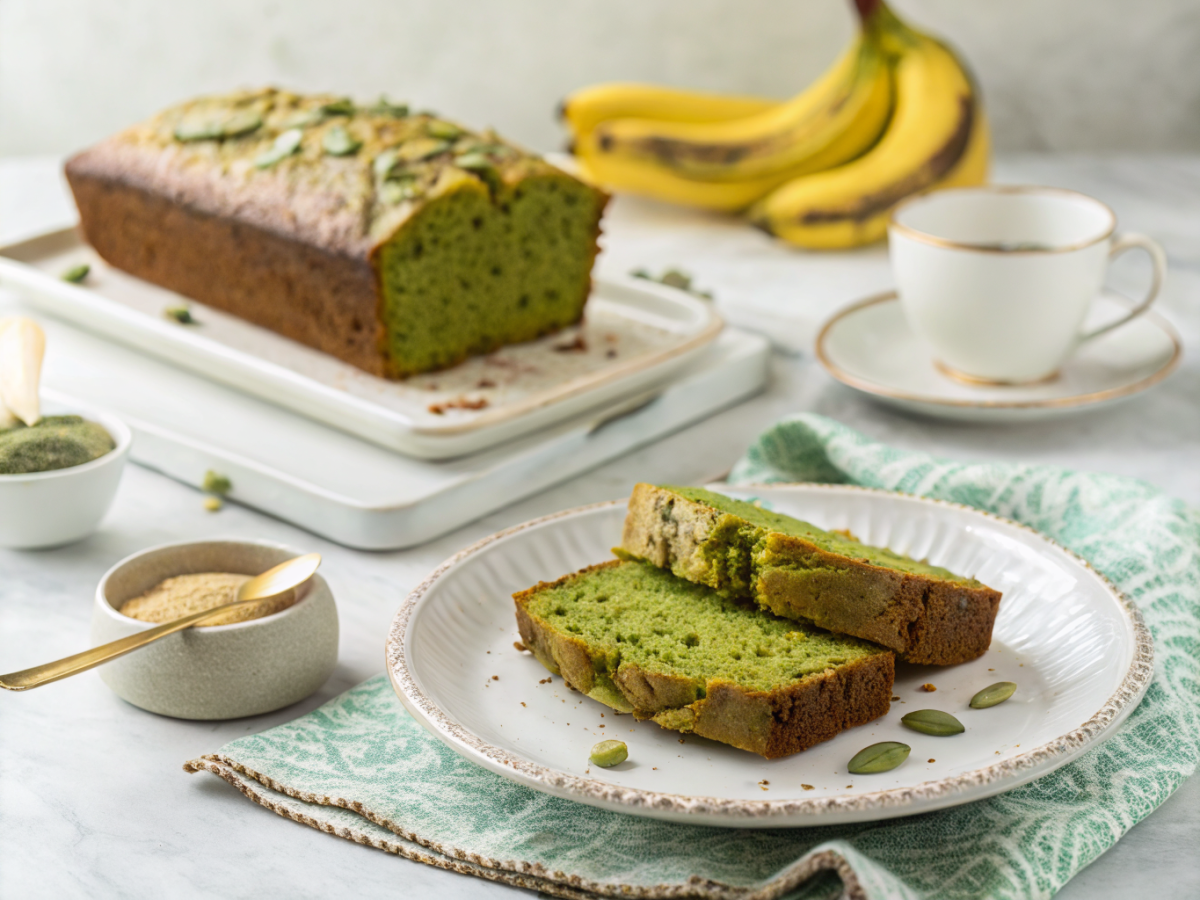
Matcha Banana Bread Gluten Free Everyone Will Ask You To Make Again
Ingredients
Method
- Preheat your oven to 350 degrees Fahrenheit. Grease a 9x5 inch loaf pan with cooking spray or line it with parchment paper for easy removal.
- In a large mixing bowl, whisk together the gluten-free flour, matcha powder, baking soda, and salt until well combined and no lumps remain.
- In a separate bowl, mash the ripe bananas with a fork until smooth. Add the eggs, melted coconut oil, sugar, and vanilla extract. Mix until thoroughly combined.
- Pour the wet ingredients into the dry ingredients and gently fold together using a spatula until just combined. Do not overmix as this can make the bread dense.
- Pour the batter into the prepared loaf pan and smooth the top with a spatula. Tap the pan gently on the counter to remove any air bubbles.
- Bake for 50-55 minutes, or until a toothpick inserted into the center comes out clean or with just a few moist crumbs. If the top browns too quickly, tent with aluminum foil during the last 15 minutes.
- Remove from the oven and let cool in the pan for 10 minutes, then transfer to a wire rack to cool completely before slicing. Store in an airtight container for up to 5 days.
Nutrition
Notes
Tried this recipe?
Let us know how it was!Matcha Banana Bread Gluten Free: 5 Easy Tips for Perfect Results
Creating the perfect matcha banana bread requires just a few key techniques that ensure your loaf turns out moist, flavorful, and perfectly balanced every time. The combination of ceremonial-grade matcha powder with ripe bananas creates a unique flavor profile that’s both sophisticated and comforting. These five tips will help you master this recipe on your first attempt.
First, always use overripe bananas with plenty of brown spots for maximum sweetness and moisture. Second, sift your matcha powder to prevent clumps and ensure even distribution throughout the batter. Third, don’t overmix your batter once you add the dry ingredients, as this can make gluten-free baked goods dense.
Fourth, let your bread cool completely in the pan for at least 15 minutes before transferring to a wire rack. Fifth, store your finished bread wrapped tightly to maintain moisture, as gluten-free baked goods can dry out faster than traditional recipes. Following these simple guidelines will guarantee bakery-quality results every single time.
Why You’ll Love This Matcha Banana Bread Gluten Free
This recipe stands out from ordinary banana bread because it offers a sophisticated flavor twist while accommodating dietary restrictions without compromise. The vibrant green color from matcha makes it visually stunning and Instagram-worthy. It’s naturally sweetened primarily by ripe bananas, requiring less added sugar than traditional recipes.
The texture is incredibly moist and tender, rivaling any wheat-based banana bread you’ve ever tasted. Matcha provides a gentle caffeine boost and antioxidants, making this a more functional breakfast or snack option. The earthy, slightly grassy notes of matcha complement the sweetness of bananas beautifully without overwhelming the palate.
It’s versatile enough to serve as breakfast, an afternoon snack, or even a healthier dessert option. The recipe is straightforward with simple steps that even beginner bakers can follow successfully. Plus, it stays fresh for days when properly stored, making it perfect for meal prep or bringing to gatherings where you’ll inevitably be asked for the recipe.
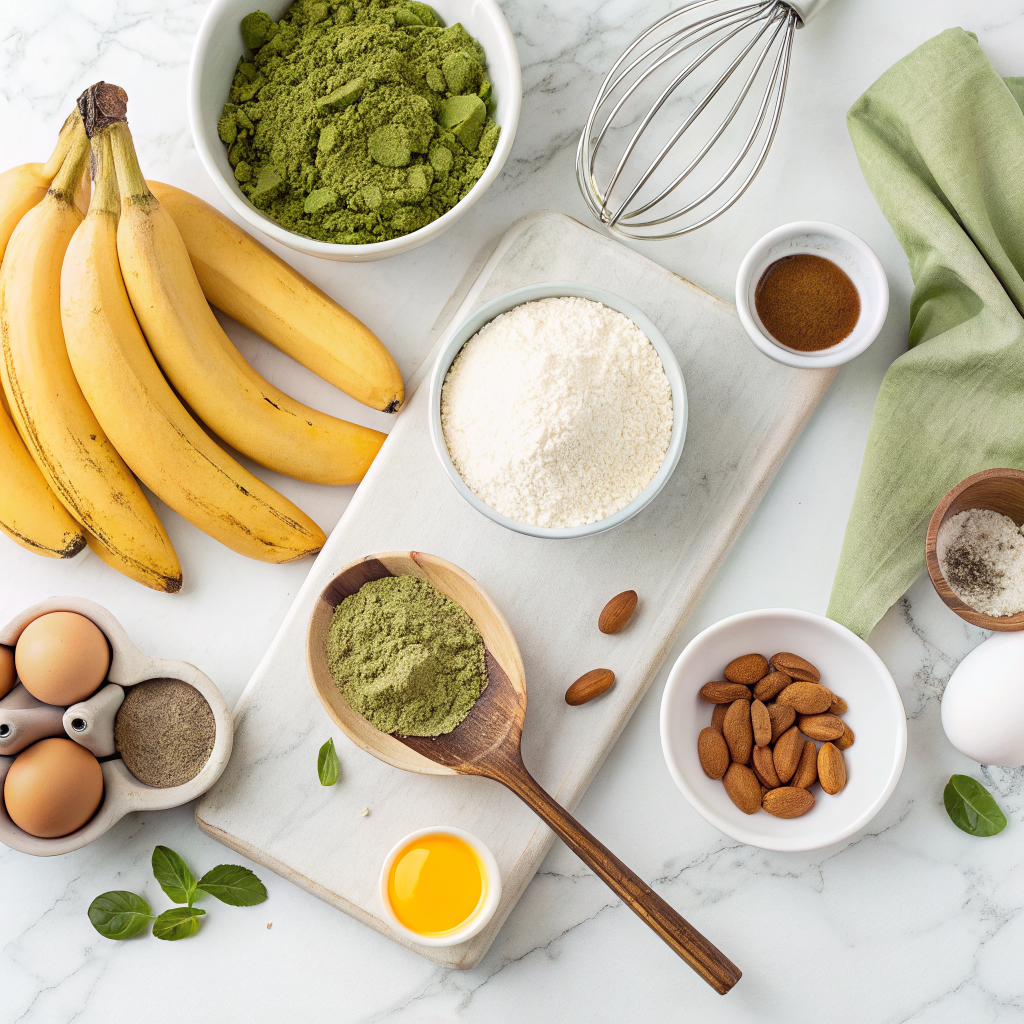
Core Ingredients for Matcha Banana Bread Gluten Free
The foundation of this recipe relies on carefully selected ingredients that work together to create the perfect texture and flavor. Quality matters significantly when working with gluten-free baking, so choose your ingredients thoughtfully. Each component serves a specific purpose in achieving that tender, moist crumb we’re after.
Dry Ingredients
Gluten-free flour blend: Use a high-quality all-purpose gluten-free flour blend that contains xanthan gum for the best structure. Avoid single-flour alternatives like almond flour alone, as they won’t provide the right texture. A blend of rice flour, tapioca starch, and potato starch typically works best.
Ceremonial-grade matcha powder: This is the star ingredient that gives the bread its distinctive color and flavor. Ceremonial-grade matcha is smoother and less bitter than culinary-grade options. You’ll need about 2 tablespoons for a vibrant color and pronounced matcha flavor.
Baking powder and baking soda: These leavening agents help the bread rise and create a light, fluffy texture. Make sure they’re fresh for optimal results. The combination of both creates the perfect lift and tender crumb.
Salt: Just a pinch enhances all the other flavors and balances the sweetness. Sea salt or fine table salt both work perfectly. Don’t skip this ingredient as it’s essential for flavor development.
Wet Ingredients
Overripe bananas: You’ll need about 3 large bananas (approximately 1.5 cups mashed) that are very ripe with plenty of brown spots. The riper the bananas, the sweeter and more flavorful your bread will be. They also provide natural moisture and act as a binding agent in gluten-free baking.
Eggs: Two large eggs provide structure, moisture, and help bind all the ingredients together. They’re especially important in gluten-free baking where we lack the binding properties of gluten. Room temperature eggs incorporate more easily into the batter.
Coconut oil or butter: About 1/3 cup of melted coconut oil adds richness and moisture to the bread. You can substitute with melted butter if you prefer, or use a neutral oil like avocado oil. The fat content keeps the bread tender and prevents it from drying out.
Maple syrup or honey: A quarter cup of natural sweetener complements the banana sweetness without making the bread overly sweet. Maple syrup adds a subtle depth of flavor that pairs beautifully with matcha. Honey works equally well if that’s what you have on hand.
Vanilla extract: One teaspoon of pure vanilla extract rounds out the flavors and adds warmth. It helps balance the earthiness of the matcha beautifully. Always use pure vanilla extract rather than imitation for the best flavor.
Optional Add-ins
Consider folding in 1/2 cup of dark chocolate chips for extra indulgence and a delightful contrast to the matcha. Chopped walnuts or pecans add a satisfying crunch and healthy fats. White chocolate chips create a sweeter, more dessert-like version that’s incredibly popular with kids.
How to Make Matcha Banana Bread Gluten Free: Step-by-Step
This straightforward process takes about 15 minutes of active preparation time, followed by an hour of baking. Having all your ingredients measured and ready before you start makes the process even smoother. Let’s walk through each step to ensure your bread turns out perfectly every time.
Step 1: Prepare Your Pan and Preheat
Preheat your oven to 350°F (175°C) and position the rack in the center of the oven for even baking. Grease a 9×5-inch loaf pan generously with coconut oil or butter, then line it with parchment paper for easy removal. Leave some overhang on the sides so you can lift the bread out easily once it’s cooled.
Step 2: Mash the Bananas
In a large mixing bowl, mash your overripe bananas with a fork until mostly smooth with just a few small lumps remaining. These lumps will add pockets of banana flavor throughout the bread. You should have approximately 1.5 cups of mashed banana for the best results.
Step 3: Mix Wet Ingredients
Add the eggs, melted coconut oil, maple syrup, and vanilla extract to the mashed bananas. Whisk everything together vigorously until well combined and slightly frothy, about 30 seconds. This creates an emulsion that helps distribute the fat evenly throughout the batter for a tender crumb.
Step 4: Combine Dry Ingredients
In a separate medium bowl, whisk together the gluten-free flour blend, matcha powder, baking powder, baking soda, and salt. Make sure to sift the matcha powder first to break up any clumps that might create green spots in your bread. Whisk thoroughly to ensure the matcha is evenly distributed throughout the flour mixture.
Step 5: Combine Wet and Dry
Pour the dry ingredients into the bowl with the wet ingredients all at once. Using a rubber spatula, gently fold the mixture together until just combined and no dry flour pockets remain. Be careful not to overmix, as this can lead to dense, tough bread—stop as soon as you no longer see streaks of flour.
Step 6: Add Optional Mix-ins
If you’re using chocolate chips, nuts, or other add-ins, gently fold them into the batter now. Reserve a small handful to sprinkle on top of the batter for a beautiful presentation. This step is completely optional but adds wonderful texture and flavor contrast.
Step 7: Bake
Pour the batter into your prepared loaf pan and smooth the top with a spatula. Tap the pan gently on the counter a few times to release any air bubbles. Bake for 55-65 minutes, or until a toothpick inserted into the center comes out with just a few moist crumbs attached.
The top should be golden brown and spring back lightly when touched. If the top is browning too quickly, tent it loosely with aluminum foil during the last 15 minutes of baking. Every oven is different, so start checking at the 55-minute mark.
Step 8: Cool and Serve
Remove the bread from the oven and let it cool in the pan for 15-20 minutes on a wire rack. This resting period allows the bread to set properly and makes it easier to remove from the pan. Use the parchment paper overhang to lift the bread out, then let it cool completely on the wire rack before slicing.
For the cleanest slices, use a sharp serrated knife and wipe it clean between cuts. The bread will be at its most flavorful after it has cooled completely and the flavors have had time to meld. If you’re interested in exploring more delicious breads and baked goods recipes, you’ll find plenty of inspiration for your next baking project.
Nutrition & Health Benefits
This matcha banana bread offers an impressive nutritional profile compared to traditional banana bread recipes. Each slice provides sustained energy from complex carbohydrates, healthy fats, and natural sugars. The gluten-free nature makes it accessible to those with celiac disease or gluten sensitivities without sacrificing taste or texture.
Matcha is packed with antioxidants called catechins, particularly EGCG, which supports cellular health and may boost metabolism. The caffeine content in matcha provides a gentle, sustained energy boost without the jitters or crash associated with coffee. L-theanine, an amino acid in matcha, promotes calm alertness and can improve focus and concentration.
Bananas contribute essential vitamins and minerals including potassium, vitamin B6, and vitamin C. They’re also a good source of dietary fiber, which supports digestive health and helps you feel satisfied longer. The resistant starch in bananas can support healthy gut bacteria and blood sugar regulation.
Using coconut oil provides medium-chain triglycerides (MCTs) that are easily digested and can be used quickly for energy. Eggs add high-quality protein and important nutrients like choline, which supports brain health. By using natural sweeteners like maple syrup or honey instead of refined sugar, you get trace minerals and a lower glycemic impact.
One slice of this bread typically contains approximately 180-220 calories, depending on add-ins and portion size. It provides about 3-4 grams of protein, 8-10 grams of healthy fats, and 25-30 grams of carbohydrates. For more information on the health benefits of matcha and green tea, research continues to reveal impressive advantages for overall wellness.
Variations & Substitutions
This recipe is wonderfully adaptable to different dietary needs, preferences, and what you have available in your pantry. Experimenting with variations can help you discover your perfect version of this bread. Here are some tested substitutions that work beautifully without compromising the final result.
Flour Alternatives
If you don’t have a gluten-free flour blend, you can make your own by combining 1.5 cups white rice flour, 1/2 cup tapioca starch, and 1/4 cup potato starch with 1 teaspoon xanthan gum. Almond flour can replace up to half of the gluten-free blend for a nuttier flavor and added protein, though the texture will be slightly denser. Oat flour (certified gluten-free) can also substitute for up to one-third of the blend for added fiber and a subtle oat flavor.
Sweetener Options
Replace maple syrup with an equal amount of honey, agave nectar, or date syrup for different flavor profiles. For a lower-sugar version, use just 2-3 tablespoons of sweetener and rely more heavily on very ripe bananas for sweetness. Coconut sugar can replace liquid sweeteners at a 1:1 ratio if you prefer granulated sweeteners, though you may need to add an extra tablespoon of milk or water.
Fat Substitutions
Greek yogurt or unsweetened applesauce can replace half the oil for a lower-fat version, though the bread will be slightly less moist. Melted butter works beautifully if you’re not dairy-free and adds a rich, traditional flavor. Avocado oil or light olive oil are neutral alternatives that work just as well as coconut oil.
Egg Replacements
For a vegan version, replace each egg with a flax egg (1 tablespoon ground flaxseed mixed with 3 tablespoons water, left to gel for 5 minutes). Chia eggs work similarly and add extra omega-3 fatty acids to the bread. Commercial egg replacers designed for baking also work well—follow the package directions for replacing two eggs.
Flavor Variations
Add 1 teaspoon of cinnamon or cardamom to the dry ingredients for a warm, spiced version. Fold in 1/2 cup of dried fruit like chopped dates, cranberries, or raisins for added sweetness and texture. A tablespoon of orange zest brightens the flavor and complements both the matcha and banana beautifully.
For a chocolate matcha version, add 2 tablespoons of cocoa powder along with the matcha for a unique flavor combination. Swirl in a few tablespoons of almond butter or tahini before baking for extra richness and protein. These variations allow you to customize the bread to your taste preferences while maintaining the wonderful base recipe.
Serving Suggestions
This versatile bread shines in numerous serving scenarios, from breakfast to dessert and everything in between. The beautiful green color makes it a conversation starter at any gathering. Here are some delicious ways to enjoy your matcha banana bread that will impress family and friends.
Breakfast Ideas
Serve a thick slice toasted with a smear of almond butter or cashew butter for a satisfying, protein-rich breakfast. Top with fresh berries and a drizzle of honey for an elegant brunch presentation. Pair it with a matcha latte or your favorite morning coffee for a coordinated flavor experience.
Create a breakfast sandwich by spreading cream cheese between two slices and adding sliced strawberries. Toast a slice and top it with Greek yogurt, sliced banana, and a sprinkle of granola for a complete meal. The bread also pairs wonderfully with scrambled eggs for those who enjoy sweet and savory combinations.
Snack Time
Enjoy a slice plain as an afternoon pick-me-up that provides sustained energy without a sugar crash. Pack slices in lunchboxes for a homemade treat that’s far superior to store-bought options. Spread with coconut butter or sunflower seed butter for extra healthy fats and staying power.
Dessert Presentations
Warm a slice and serve it with a scoop of vanilla ice cream for an impressive yet simple dessert. Drizzle with a white chocolate ganache and sprinkle with matcha powder for an elegant presentation. Layer slices with whipped coconut cream and fresh fruit for a beautiful trifle-style dessert.
Cut into cubes and use as the base for bread pudding with a matcha-infused custard. Top with a cream cheese frosting for a more decadent, cake-like treat perfect for celebrations. These serving suggestions work wonderfully alongside other healthy dessert options when you’re entertaining guests with various dietary preferences.
Beverage Pairings
The earthy matcha flavor pairs beautifully with hot tea, especially green tea, white tea, or jasmine tea. A glass of cold almond milk or oat milk complements the bread perfectly for a simple snack. For something special, serve with a matcha latte, chai tea, or even a glass of sparkling water with lemon.
Common Mistakes to Avoid
Even with a straightforward recipe like this, certain pitfalls can prevent you from achieving perfect results. Understanding these common errors will help you troubleshoot any issues and ensure success every time. Let’s explore the most frequent mistakes and how to avoid them.
Using Bananas That Aren’t Ripe Enough
Bananas that are still yellow or only slightly spotted won’t provide enough sweetness or moisture for optimal results. The bread will taste bland and may require additional sweetener to compensate. Always use bananas that are heavily spotted or even completely brown for the best flavor and natural sweetness.
Overmixing the Batter
Stirring the batter too vigorously or for too long after adding the dry ingredients can result in tough, dense bread. Gluten-free batters are particularly sensitive to overmixing, which can break down the structure provided by xanthan gum. Mix only until the flour is just incorporated and you no longer see dry pockets.
Not Sifting the Matcha Powder
Matcha powder clumps easily, and failing to sift it will result in concentrated green spots throughout your bread. These clumps can taste bitter and create an uneven color distribution. Always sift your matcha powder before adding it to the dry ingredients for a uniform, beautiful green color.
Opening the Oven Door Too Early
Checking on your bread too frequently or opening the oven door during the first 45 minutes can cause temperature fluctuations that lead to sinking or uneven baking. The sudden temperature drop can cause the bread to collapse in the center. Resist the urge to peek until at least the 50-minute mark.
Cutting Into Hot Bread
Slicing the bread before it has cooled completely will result in gummy, compressed slices that fall apart. The interior needs time to set properly as it cools, which allows the structure to firm up. Always wait until the bread has cooled to at least room temperature before slicing for the best texture.
Using Low-Quality Matcha
Culinary-grade matcha or old, oxidized matcha powder will give your bread a dull color and bitter, unpleasant flavor. Investing in ceremonial-grade or high-quality culinary matcha makes a significant difference in both appearance and taste. Store your matcha properly in an airtight container away from light and heat to maintain freshness.
Incorrect Pan Size
Using a pan that’s too large will result in a flat, dry loaf, while one that’s too small may cause overflow and uneven baking. A standard 9×5-inch loaf pan is ideal for this recipe’s batter quantity. If you only have an 8×4-inch pan, reduce the recipe by one-third or expect a longer baking time.
Storage & Meal Prep Tips
Proper storage is essential for maintaining the moisture and flavor of your gluten-free banana bread, which can dry out faster than traditional versions. With the right techniques, you can enjoy this bread for days or even months. Here’s everything you need to know about storing and preparing this bread in advance.
Room Temperature Storage
Once completely cooled, wrap the bread tightly in plastic wrap or aluminum foil to prevent it from drying out. Store at room temperature for up to 3 days in a cool, dry place away from direct sunlight. For extra protection, place the wrapped bread in an airtight container or resealable plastic bag.
Avoid storing in the refrigerator, as this can actually accelerate staling and make the bread dry and crumbly. If your kitchen is particularly warm or humid, room temperature storage may only be suitable for 1-2 days. Always check for any signs of mold before consuming, especially in humid climates.
Freezing Instructions
This bread freezes exceptionally well and can be stored frozen for up to 3 months without quality loss. Wrap the completely cooled bread (whole or pre-sliced) tightly in plastic wrap, then again in aluminum foil or place in a freezer-safe bag. Remove as much air as possible to prevent freezer burn and maintain optimal texture.
For maximum convenience, slice the bread before freezing so you can remove individual portions as needed. Place parchment paper between slices to prevent them from sticking together, making it easy to grab just one or two slices. Label the package with the date so you can track freshness.
Thawing and Reheating
Thaw frozen bread at room temperature for 1-2 hours, or overnight in the refrigerator if you prefer. Individual slices can be toasted directly from frozen for a quick breakfast or snack. For a fresh-baked taste, warm thawed slices in a 300°F oven for 5-7 minutes wrapped in foil.
Microwave individual slices for 15-20 seconds for a quick warm-up, though this can sometimes make the texture slightly rubbery. A toaster or toaster oven provides the best results for reheating, creating a slightly crispy exterior while warming the interior. The bread tastes remarkably fresh even after freezing when properly stored and reheated.
Meal Prep Strategies
Bake multiple loaves at once and freeze extras for easy grab-and-go breakfast or snack options throughout the month. Pre-slice and individually wrap portions in plastic wrap, then store all wrapped slices together in a large freezer bag. This method makes it easy to pack lunches or have quick breakfasts ready with no morning prep required.
The batter itself doesn’t freeze well, so it’s best to bake the bread first before freezing. However, you can prepare your dry ingredients in advance and store them in an airtight container for up to a month. This makes it even quicker to whip up a fresh loaf whenever you have ripe bananas on hand, similar to the convenience of quick and easy meal prep strategies.
Final Thoughts on Matcha Banana Bread Gluten Free

creates quick vegetarian dinners and vibrant taco recipes.