
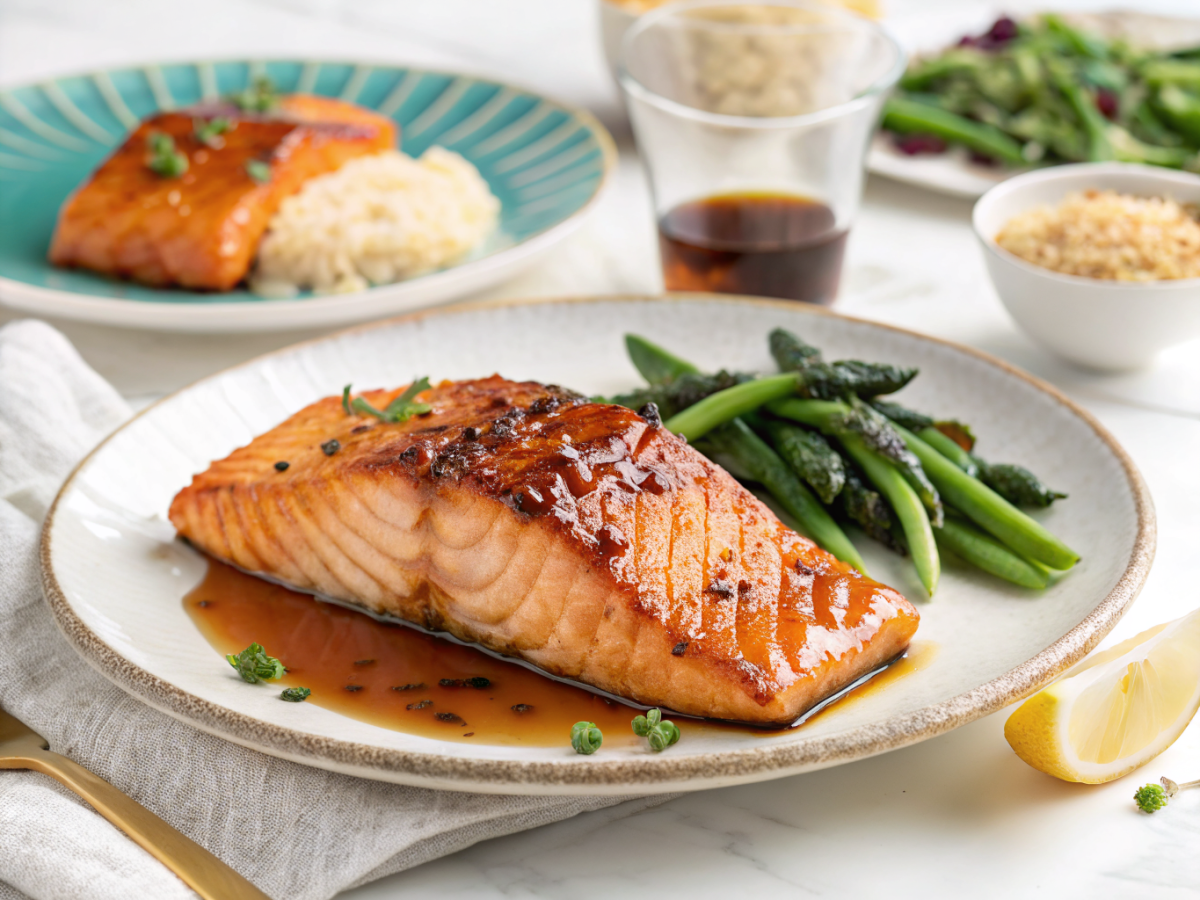
Air Fryer Salmon Soy Sauce Honey You'll Want On Repeat
Ingredients
Method
- In a small bowl, whisk together soy sauce, honey, olive oil, minced garlic, grated ginger, sesame oil, and rice vinegar until well combined.
- Pat salmon fillets dry with paper towels. Place salmon in a shallow dish and pour half of the marinade over the fillets. Reserve the remaining marinade for basting. Let marinate for 5 minutes at room temperature.
- Preheat your air fryer to 400 degrees Fahrenheit for 3-5 minutes. Lightly spray the air fryer basket with cooking spray to prevent sticking.
- Place salmon fillets in the air fryer basket skin-side down, making sure they are not touching. Air fry at 400 degrees Fahrenheit for 8-10 minutes, depending on thickness.
- After 6 minutes, carefully open the air fryer and brush the reserved marinade over the salmon fillets. Continue cooking for the remaining 2-4 minutes until salmon reaches an internal temperature of 145 degrees Fahrenheit and flakes easily with a fork.
- Remove salmon from air fryer and let rest for 2 minutes. The glaze will thicken slightly as it cools.
- Transfer salmon to serving plates and sprinkle with sesame seeds and sliced green onions. Serve immediately with your choice of rice or vegetables.
Nutrition
Notes
Tried this recipe?
Let us know how it was!Air Fryer Salmon Soy Sauce Honey: 5 Easy Tips for Perfect Results
Cooking salmon in an air fryer might seem intimidating at first, but it’s actually one of the easiest methods for achieving restaurant-quality fish at home. The circulating hot air creates an even cook while the honey soy glaze caramelizes beautifully on top. This technique locks in moisture and flavor without the need for excessive oil or complicated cooking methods.
The key to mastering this recipe lies in five simple tips that will transform your salmon every single time. First, always pat your salmon fillets completely dry before seasoning to ensure the glaze adheres properly. Second, don’t overcrowd the air fryer basket—leave space between fillets for optimal air circulation.
Third, brush the glaze on in layers rather than all at once for better flavor penetration and caramelization. Fourth, use a meat thermometer to check for an internal temperature of 145°F for perfectly cooked salmon. Finally, let the salmon rest for 2-3 minutes after cooking to allow the juices to redistribute throughout the fillet.
Why You’ll Love This Air Fryer Salmon Soy Sauce Honey
This recipe combines convenience with incredible flavor, making it perfect for busy weeknights when you want something healthy and delicious. The air fryer cuts cooking time nearly in half compared to traditional oven methods. You’ll have a complete protein on the table in under 30 minutes from start to finish.
The sweet and savory glaze creates an addictive flavor profile that appeals to both adults and children. The honey provides natural sweetness that balances the salty umami notes from the soy sauce. This combination creates a complex taste that rivals expensive restaurant dishes without requiring advanced culinary skills.
Cleanup is remarkably easy since the air fryer basket is the only cooking vessel you’ll need. Unlike pan-searing, there’s no oil splatter to clean from your stovetop. The non-stick surface of most air fryer baskets means a quick wash is all that’s required after cooking.
This recipe is also incredibly versatile and works well with various side dishes and dietary preferences. The salmon pairs beautifully with rice, quinoa, roasted vegetables, or fresh salads. It fits seamlessly into high-protein meal plans while remaining naturally gluten-free when using tamari instead of regular soy sauce.
Core Ingredients for Air Fryer Salmon Soy Sauce Honey
The beauty of this recipe lies in its simplicity—you only need a handful of ingredients that you likely already have in your pantry. Fresh salmon fillets form the foundation, and you’ll want to choose pieces that are approximately 6 ounces each and about 1 inch thick. Look for vibrant pink or orange flesh with no brown spots or strong fishy odor.
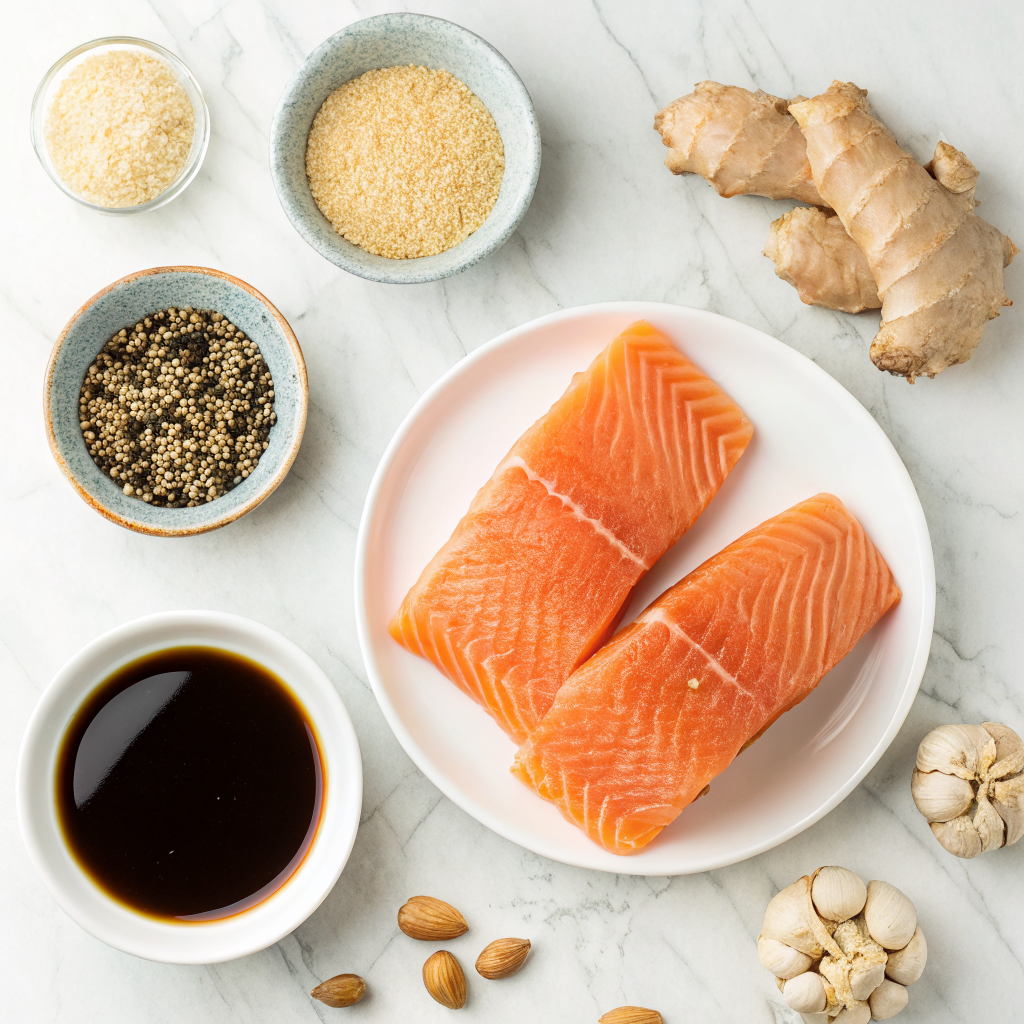
Soy sauce provides the savory, umami-rich base for your glaze. Regular soy sauce works perfectly, but you can substitute with low-sodium soy sauce if you’re watching your salt intake. For a gluten-free version, tamari or coconut aminos are excellent alternatives that maintain the same depth of flavor.
Honey is the sweet component that balances the saltiness and helps create that gorgeous caramelized coating. Use pure honey rather than processed honey blends for the best flavor and health benefits. The honey also acts as a natural thickener that helps the glaze cling to the salmon during cooking.
Fresh garlic adds aromatic complexity and enhances the overall flavor profile of the dish. Minced garlic works best as it distributes evenly throughout the glaze. If you’re short on time, garlic powder can substitute in a pinch, though fresh garlic delivers superior taste.
Fresh ginger brings a subtle warmth and brightness that complements the richness of the salmon. Grated ginger releases more flavor than chopped pieces and blends seamlessly into the glaze. Ground ginger can work as a substitute, but use it sparingly as it’s more concentrated than fresh.
A splash of rice vinegar or lime juice adds acidity that cuts through the richness and brightens all the flavors. This ingredient is optional but highly recommended for a more balanced taste. Sesame oil is another optional addition that contributes a nutty aroma and authentic Asian-inspired flavor.
How to Make Air Fryer Salmon Soy Sauce Honey: Step-by-Step
Begin by preparing your salmon fillets, removing them from the refrigerator about 15 minutes before cooking to bring them to room temperature. Pat each fillet completely dry with paper towels, paying special attention to the top surface where the glaze will be applied. This step is crucial for achieving proper caramelization and preventing the glaze from sliding off during cooking.
In a small bowl, whisk together the soy sauce, honey, minced garlic, grated ginger, and any optional ingredients like rice vinegar or sesame oil. Mix thoroughly until the honey is completely dissolved and the glaze has a smooth, uniform consistency. Taste the glaze and adjust the sweetness or saltiness according to your preference before applying it to the salmon.
Preheat your air fryer to 400°F for about 3-5 minutes to ensure even cooking from the moment the salmon goes in. While the air fryer heats, lightly spray the basket with cooking spray or brush it with a thin layer of oil. This prevents sticking and makes cleanup easier, though most modern air fryers have excellent non-stick surfaces.
Place the salmon fillets skin-side down in the air fryer basket, leaving at least half an inch of space between each piece. Brush a generous layer of the honey soy glaze over the top of each fillet, making sure to coat the entire surface. Reserve about one-third of the glaze for basting during cooking and serving.
Cook the salmon at 400°F for 7-8 minutes, then carefully open the air fryer and brush another layer of glaze over the fillets. Continue cooking for an additional 3-5 minutes, depending on the thickness of your salmon and your desired level of doneness. The salmon is ready when it flakes easily with a fork and reaches an internal temperature of 145°F.
For thicker fillets over 1.5 inches, you may need to add 2-3 minutes to the total cooking time. Watch carefully during the final minutes to prevent the glaze from burning. If the top begins to darken too quickly, you can tent the salmon loosely with aluminum foil for the remaining cooking time.
Once cooked, remove the salmon from the air fryer and let it rest for 2-3 minutes before serving. Brush with any remaining glaze for extra flavor and shine. The resting period allows the juices to redistribute, ensuring each bite is moist and flavorful rather than dry.
Nutrition & Health Benefits
Salmon is renowned as one of the healthiest proteins you can include in your diet, packed with omega-3 fatty acids that support heart and brain health. A 6-ounce serving provides approximately 35 grams of high-quality protein along with essential vitamins and minerals. These omega-3s, particularly EPA and DHA, have been shown to reduce inflammation and support cognitive function throughout life.
The air fryer cooking method significantly reduces the need for added fats compared to pan-frying or deep-frying methods. This recipe uses minimal oil while still achieving a delicious, caramelized exterior. The result is a nutrient-dense meal that’s lower in calories without sacrificing any flavor or satisfaction.
Each serving of this recipe contains approximately 320-350 calories, depending on the exact size of your salmon fillet and amount of glaze used. The macronutrient breakdown is roughly 35g protein, 12g fat, and 18g carbohydrates. This balanced profile makes it suitable for various eating plans, from quick healthy meals to more structured dietary approaches.
Salmon is also an excellent source of vitamin D, which many people are deficient in, especially during winter months. It provides vitamin B12, selenium, and potassium, all essential for optimal bodily function. The addition of garlic and ginger in this recipe contributes additional antioxidants and anti-inflammatory compounds that support overall wellness.
While honey does add natural sugars to the recipe, it also provides trace minerals and antioxidants not found in refined sugars. You can reduce the honey slightly if you’re monitoring sugar intake, though this will affect the glaze’s caramelization. For more information on the nutritional benefits of salmon, research shows numerous health advantages of regular salmon consumption.
Variations & Substitutions
This versatile recipe adapts easily to accommodate different taste preferences and dietary needs without compromising on flavor. For a spicier version, add sriracha, red pepper flakes, or gochujang to the glaze for a sweet-spicy kick. Start with a small amount and adjust according to your heat tolerance, keeping in mind that the honey will temper some of the spiciness.
If you’re avoiding soy, coconut aminos provide a similar umami flavor with a slightly sweeter profile. Tamari is another excellent gluten-free alternative that tastes nearly identical to regular soy sauce. For a completely different flavor direction, try substituting the Asian-inspired ingredients with a maple-mustard or balsamic glaze instead.
Maple syrup can replace honey for a different sweetness profile with subtle caramel notes. Agave nectar is another option that works well for those following a vegan diet when paired with plant-based fish alternatives. Brown sugar or coconut sugar can also substitute for honey, though you’ll need to dissolve them completely in the liquid ingredients.
The recipe works beautifully with other fish varieties if salmon isn’t available or preferred. Try it with arctic char, steelhead trout, or even firm white fish like cod or halibut. Adjust cooking times based on the thickness and type of fish—delicate fish may need 2-3 minutes less cooking time.
For additional flavor complexity, consider adding orange zest, five-spice powder, or fresh herbs like cilantro or green onions. A teaspoon of miso paste mixed into the glaze adds extra umami depth. Sesame seeds sprinkled on top before or after cooking provide a pleasant textural contrast and visual appeal.
Serving Suggestions
This glazed salmon pairs beautifully with a variety of side dishes that complement its sweet and savory profile. Steamed jasmine rice or coconut rice provides a neutral base that soaks up any extra glaze. Cauliflower rice offers a low-carb alternative that still delivers on texture and satisfaction while keeping the meal light.
Roasted or steamed vegetables make excellent accompaniments that add color and nutrition to your plate. Try broccoli, asparagus, bok choy, snap peas, or green beans for Asian-inspired pairings. Brussels sprouts or roasted sweet potatoes offer heartier options that stand up well to the bold flavors of the glazed salmon.
A fresh salad with crisp greens, cucumber, and a light sesame dressing provides refreshing contrast to the rich fish. Asian slaw made with cabbage, carrots, and a tangy vinaigrette adds crunch and brightness. For a complete dinner recipe experience, consider serving the salmon over a grain bowl with various toppings.
Quinoa or farro make excellent alternatives to rice, offering more protein and a nutty flavor that complements the salmon. Soba noodles or rice noodles can transform this into a noodle bowl when topped with the glazed salmon. Add edamame, pickled vegetables, and a soft-boiled egg for a restaurant-quality bowl at home.
For entertaining, serve the salmon on a platter garnished with fresh herbs, lime wedges, and sesame seeds. Offer additional glaze on the side for guests who want extra sauce. This presentation elevates the dish from a simple weeknight meal to an impressive centerpiece for dinner parties.
Common Mistakes to Avoid
One of the most frequent errors is overcooking the salmon, which results in dry, chalky fish that lacks the luxurious texture salmon is known for. Remember that salmon continues cooking slightly after you remove it from the air fryer due to residual heat. Pull it out when it’s just barely done, around 145°F internal temperature, for the best results.
Applying too much glaze at once can cause it to drip into the air fryer basket and burn, creating smoke and unpleasant flavors. Instead, brush on thin layers throughout the cooking process for better caramelization. This technique also prevents the glaze from sliding off the salmon and pooling around the edges.
Starting with cold salmon straight from the refrigerator can lead to uneven cooking with a cold center and overcooked edges. Always let your salmon sit at room temperature for 10-15 minutes before cooking. This simple step ensures more consistent results and better texture throughout the fillet.
Using salmon fillets of drastically different thicknesses in the same batch creates cooking challenges since they’ll finish at different times. Try to select pieces that are similar in size and thickness. If you must cook varied sizes, consider removing smaller pieces earlier to prevent overcooking.
Neglecting to preheat the air fryer is another common mistake that affects cooking time and texture. A preheated air fryer ensures the salmon starts cooking immediately at the correct temperature. This helps achieve that desirable caramelized exterior while maintaining a moist interior.
Finally, overcrowding the air fryer basket restricts airflow and leads to steaming rather than air frying. This results in less caramelization and a less appealing texture. Cook in batches if necessary to maintain proper spacing between fillets for optimal results.
Storage & Meal Prep Tips
Cooked salmon stores well in the refrigerator for up to 3 days when properly stored in an airtight container. Let the salmon cool completely before refrigerating to prevent condensation that can make it soggy. Separate any leftover glaze and store it in a small container to use for reheating or drizzling over other dishes.
For meal prep purposes, you can prepare the glaze up to 5 days in advance and store it in the refrigerator. This makes weeknight cooking even faster since you’ll only need to cook the salmon. You can also portion and season raw salmon fillets in advance, keeping them refrigerated until ready to cook.
Freezing cooked glazed salmon is possible but not ideal, as the texture can become slightly mushy upon thawing. If you do freeze it, wrap individual portions tightly in plastic wrap, then place in a freezer bag with the air pressed out. Consume within 2 months for best quality and thaw overnight in the refrigerator before reheating.
To reheat leftover salmon without drying it out, use the air fryer at 300°F for 3-4 minutes or until just warmed through. Alternatively, reheat gently in a covered skillet over low heat with a splash of water or broth. Avoid microwaving if possible, as it can create hot spots and further cook the salmon, making it dry.
Raw salmon freezes exceptionally well for up to 3 months when properly wrapped and stored. Freeze individual portions for convenient single servings that thaw quickly. Thaw frozen raw salmon overnight in the refrigerator, never at room temperature, to maintain food safety and quality.
Consider batch cooking several salmon fillets at once if your air fryer is large enough. Use the cooked salmon throughout the week in different preparations—flaked over salads, mixed into grain bowls, or served alongside different sides. This approach maximizes efficiency while preventing flavor fatigue by varying the accompaniments.
Final Thoughts on Air Fryer Salmon Soy Sauce Honey
This Air Fryer Salmon Soy Sauce Honey recipe demonstrates how simple ingredients and modern cooking technology can create extraordinary results with minimal effort. The combination of convenience, health benefits, and outstanding flavor makes this recipe a worthy addition to any home cook’s repertoire. Once you master this basic technique, you’ll find yourself returning to it again and again for reliable, delicious results.
The beauty of this recipe lies in its flexibility and forgiving nature, making it accessible for beginners while still satisfying for experienced cooks. You can easily adjust the flavors to suit your preferences or dietary needs without compromising the fundamental appeal. Whether you’re cooking for yourself, your family, or guests, this Air Fryer Salmon Soy Sauce Honey delivers impressive results every single time.
Investing time in perfecting this recipe pays dividends in your overall cooking confidence and repertoire. The skills you develop—proper glazing technique, temperature control, and timing—transfer to countless other air fryer recipes. You’ll find that cooking fish becomes less intimidating and more enjoyable as you gain experience with this foolproof method.
Frequently Asked Questions
Can I use frozen salmon for this recipe?
While fresh salmon yields the best results for Air Fryer Salmon Soy Sauce Honey, you can use frozen salmon if you thaw it properly first. Thaw frozen salmon overnight in the refrigerator, never at room temperature or in warm water, to maintain texture and food safety. Pat the thawed salmon very dry before applying the glaze, as frozen salmon tends to release more moisture during thawing.
What’s the best thickness for salmon fillets in the air fryer?
The ideal thickness for salmon fillets in this recipe is between 1 to 1.5 inches, which cooks evenly in the recommended time. Thinner fillets under 3/4 inch may overcook quickly and become dry, so reduce cooking time by 2-3 minutes. Thicker fillets over 1.5 inches require additional cooking time and may need the temperature reduced slightly to prevent the glaze from burning before the center cooks through.
Should I remove the skin from the salmon before air frying?
Leaving the skin on is actually recommended when making Air Fryer Salmon Soy Sauce Honey as it helps hold the fillet together during cooking. The skin also creates a barrier between the basket and the delicate flesh, preventing sticking. After cooking, the skin often crisps up beautifully and can be eaten, or it peels away easily if you prefer to remove it before serving.
How do I know when the salmon is perfectly cooked?
The most reliable method is using an instant-read thermometer inserted into the thickest part of the fillet, looking for 145°F internal temperature. Visually, perfectly cooked salmon appears opaque throughout with a slightly translucent center, and flakes easily when gently pressed with a fork. The flesh should still look moist and have a slight sheen rather than appearing dry or chalky, which indicates overcooking.

focuses on smoothies, detox drinks, and mindful eating.