
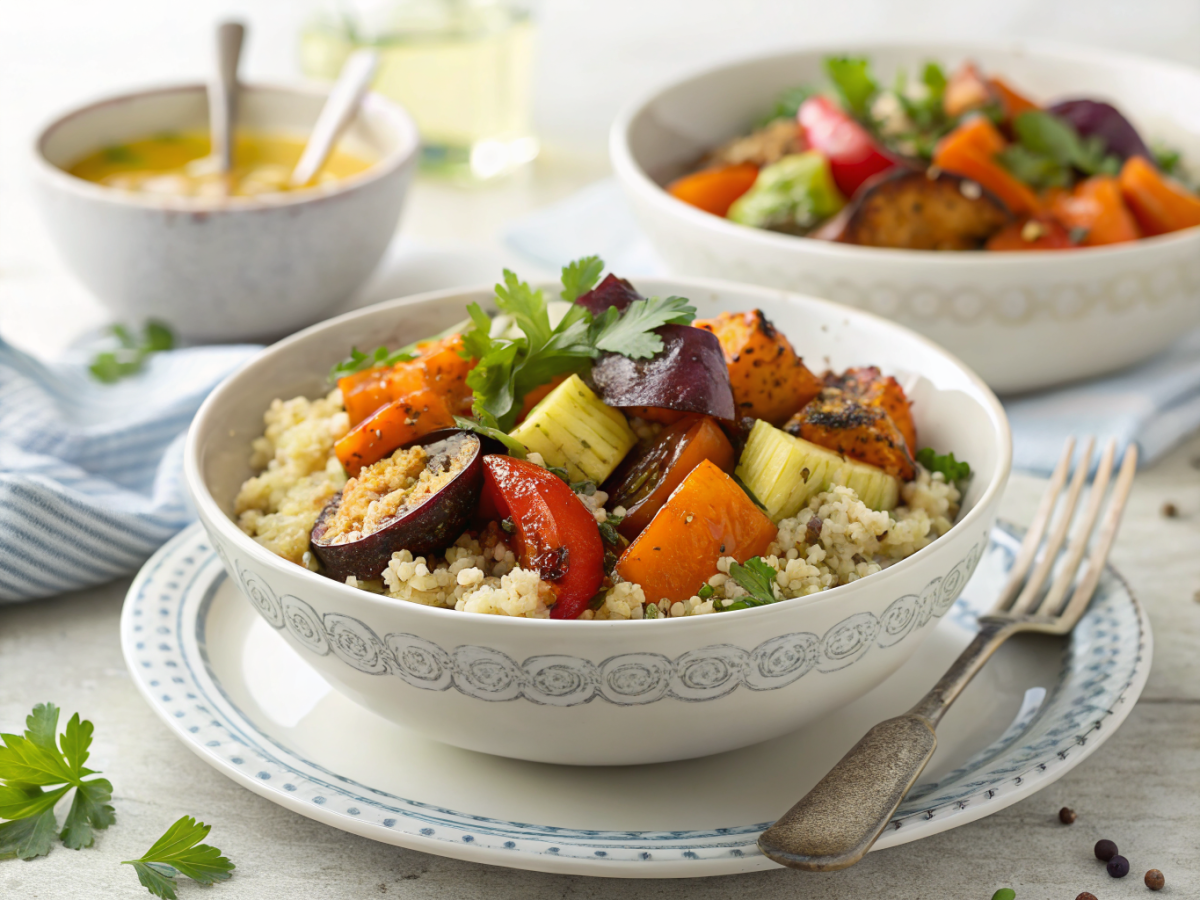
Easy Anti Inflammatory Quinoa Bowl With Roasted Veggies
Ingredients
Method
- Preheat oven to 400 degrees Fahrenheit. Line a large baking sheet with parchment paper.
- In a medium saucepan, combine quinoa and vegetable broth. Bring to a boil, then reduce heat to low, cover, and simmer for 15 minutes until liquid is absorbed. Remove from heat and let stand covered for 5 minutes, then fluff with a fork.
- In a large bowl, toss broccoli, sweet potato, bell pepper, and cherry tomatoes with 2 tablespoons olive oil, turmeric, garlic powder, ginger, salt, and pepper until evenly coated.
- Spread vegetables in a single layer on the prepared baking sheet. Roast for 25-30 minutes, stirring halfway through, until vegetables are tender and lightly caramelized.
- Divide cooked quinoa among four bowls. Top each bowl with an equal portion of roasted vegetables.
- Drizzle remaining tablespoon of olive oil over the bowls and garnish with fresh parsley. Serve warm and enjoy.
Notes
nnThis Anti Inflammatory Quinoa Bowl With Roasted Veggies is one of those recipes you’ll come back to time and time again, especially if you’re looking for a nourishing meal that supports your wellness goals. Packed with colorful roasted vegetables, protein-rich quinoa, and anti-inflammatory ingredients, this bowl delivers both incredible flavor and powerful health benefits. Whether you’re meal prepping for the week or need a quick weeknight dinner, this recipe checks all the boxes.
Anti Inflammatory Quinoa Bowl With Roasted Veggies: 5 Easy Tips for Perfect Results
Creating the perfect anti-inflammatory bowl starts with understanding a few key techniques. First, always rinse your quinoa thoroughly to remove the natural coating called saponin, which can make it taste bitter. Second, roast your vegetables at a high temperature (425°F) to achieve that perfect caramelized exterior while keeping the inside tender.
Third, don’t overcrowd your baking sheet when roasting vegetables, as this creates steam instead of the crispy texture you want. Fourth, season your vegetables generously with anti-inflammatory spices like turmeric, ginger, and black pepper to maximize health benefits. Fifth, prepare your dressing while the vegetables roast to save time and ensure all components are ready simultaneously.
These simple tips transform a good bowl into an exceptional one. The combination of properly cooked quinoa and perfectly roasted vegetables creates a satisfying texture contrast. When you master these basics, you’ll find yourself making this bowl weekly.
Why You’ll Love This Anti Inflammatory Quinoa Bowl With Roasted Veggies
This recipe stands out because it’s incredibly versatile and adapts to whatever vegetables you have on hand. The anti-inflammatory properties come from carefully selected ingredients that work together to reduce inflammation naturally. You’ll appreciate how simple it is to prepare, requiring just one pot for quinoa and one baking sheet for vegetables.
The flavor profile is anything but boring, with roasted vegetables developing deep, caramelized notes that pair beautifully with fluffy quinoa. Each bite delivers a satisfying combination of textures and tastes that keep you coming back for more. Plus, this bowl keeps you full for hours thanks to the perfect balance of complex carbohydrates, fiber, and plant-based protein.
Unlike many healthy recipes that sacrifice taste, this bowl delivers restaurant-quality flavors while supporting your health goals. The colorful presentation makes it Instagram-worthy, yet it’s practical enough for everyday meals. You can easily double or triple the recipe for meal prep, making healthy eating throughout the week effortless.
This is the kind of recipe that proves healthy food doesn’t have to be complicated or bland. It’s become a staple for those following anti-inflammatory diets, plant-based lifestyles, or simply anyone who wants to eat more vegetables. The best part is how forgiving this recipe is—even cooking beginners can achieve excellent results.
Core Ingredients for Anti Inflammatory Quinoa Bowl With Roasted Veggies
The foundation of this bowl starts with high-quality quinoa, preferably organic white, red, or tri-color varieties. You’ll need about 1 cup of dry quinoa, which will yield approximately 3 cups cooked. Choose quinoa that’s fresh and stored properly to ensure the best nutty flavor.
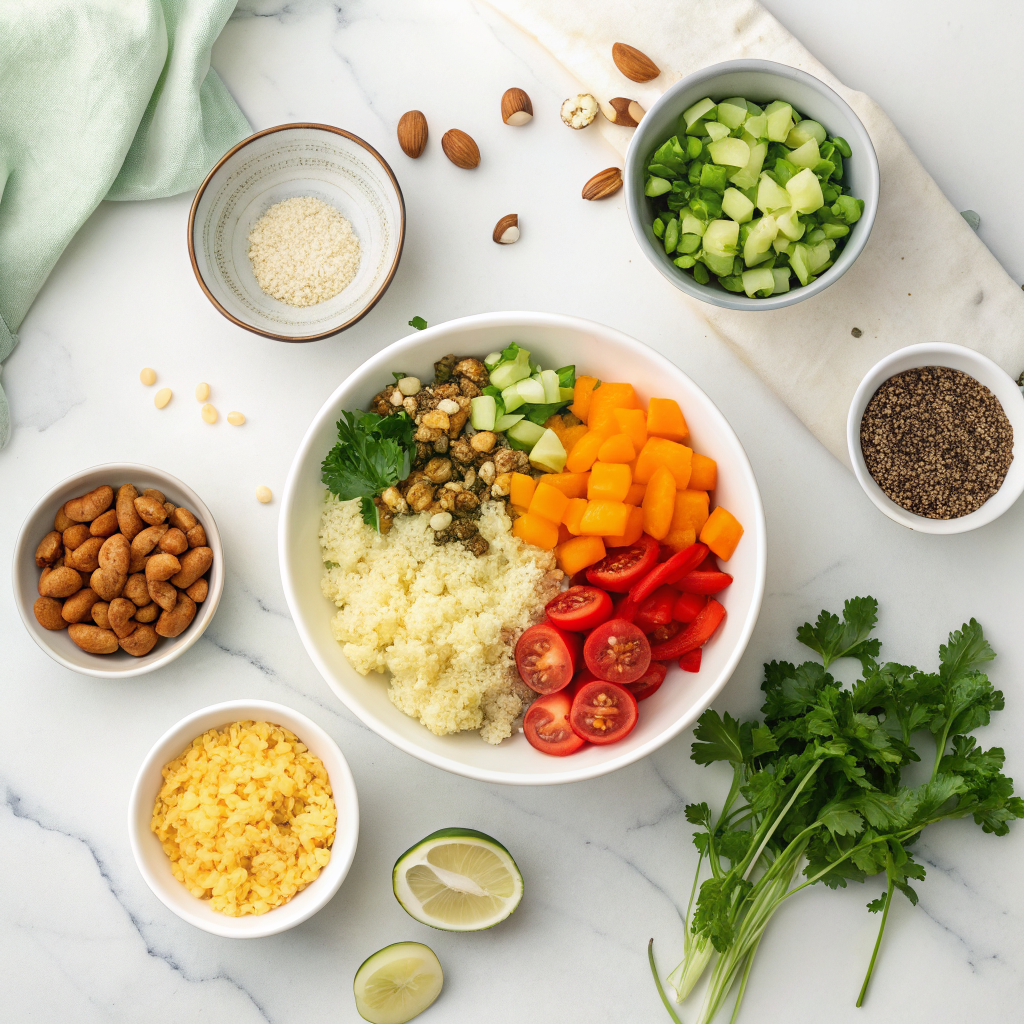
For the roasted vegetables, select a rainbow of options including sweet potatoes, broccoli, cauliflower, bell peppers, and red onions. Aim for about 6 cups of chopped vegetables total, cut into uniform 1-inch pieces for even roasting. The variety of colors ensures you’re getting a wide spectrum of antioxidants and phytonutrients.
Anti-inflammatory spices are crucial and include turmeric powder (1 teaspoon), ground ginger (½ teaspoon), and black pepper (¼ teaspoon). Add garlic powder (1 teaspoon) and smoked paprika (½ teaspoon) for depth of flavor. These spices don’t just add taste—they’re powerful inflammation fighters backed by scientific research.
You’ll need extra virgin olive oil (3 tablespoons) for roasting, which contains oleocanthal, a compound with anti-inflammatory properties similar to ibuprofen. For the dressing, gather tahini (¼ cup), lemon juice (3 tablespoons), maple syrup (1 tablespoon), and a pinch of sea salt. Fresh greens like spinach or arugula (2 cups) add a peppery freshness and additional nutrients.
Optional toppings include hemp seeds, pumpkin seeds, avocado slices, and fresh herbs like cilantro or parsley. These additions boost the nutritional profile while adding interesting textures. If you enjoy more nutritious meal options, keeping these ingredients stocked makes healthy eating convenient.
Vegetable Selection Guide
Sweet potatoes are rich in beta-carotene and provide natural sweetness that balances savory elements. Cut them into ½-inch cubes for faster, more even cooking. Their orange flesh indicates high levels of antioxidants that fight free radicals.
Cruciferous vegetables like broccoli and cauliflower contain sulforaphane, a powerful anti-inflammatory compound. Break them into small florets to maximize surface area for caramelization. These vegetables become incredibly sweet and nutty when properly roasted.
Bell peppers add vibrant color and vitamin C, with red peppers containing the highest antioxidant levels. Remove all seeds and membranes, then cut into 1-inch squares. Their natural sugars caramelize beautifully, creating sweet, charred edges.
Spice Blend Importance
Turmeric contains curcumin, one of nature’s most potent anti-inflammatory compounds studied extensively for its health benefits. Always pair it with black pepper, which contains piperine that increases curcumin absorption by up to 2000%. This combination is essential for maximizing the anti-inflammatory effects.
Fresh ginger or ground ginger powder adds warmth and contains gingerol, another powerful anti-inflammatory agent. It also aids digestion and adds a subtle spicy note that complements roasted vegetables. Don’t skip this ingredient—it’s crucial for both flavor and function.
How to Make Anti Inflammatory Quinoa Bowl With Roasted Veggies: Step-by-Step
Begin by preheating your oven to 425°F and lining two large baking sheets with parchment paper for easy cleanup. This high temperature is essential for achieving caramelized, crispy vegetables rather than steamed ones. While the oven heats, prepare your ingredients for efficient cooking.
Rinse 1 cup of quinoa under cold water in a fine-mesh strainer for at least 30 seconds, rubbing the grains gently. This removes the bitter saponin coating that can affect taste. Combine the rinsed quinoa with 2 cups of water or vegetable broth in a medium saucepan.
Bring the quinoa to a boil over high heat, then reduce to low, cover, and simmer for 15 minutes. After 15 minutes, remove from heat and let it sit covered for 5 minutes to absorb remaining liquid. Fluff with a fork—the quinoa should be tender with a slight bite and display its characteristic spiral tail.
Preparing the Roasted Vegetables
While quinoa cooks, chop all vegetables into uniform 1-inch pieces for even roasting. Place sweet potato cubes in one bowl, and broccoli, cauliflower, bell peppers, and onions in another. Sweet potatoes often need slightly longer cooking time, so keeping them separate initially helps.
Toss sweet potatoes with 1½ tablespoons olive oil, ½ teaspoon turmeric, ¼ teaspoon ginger, and salt. Spread them in a single layer on one baking sheet without overcrowding. Roast for 10 minutes before adding other vegetables.
Meanwhile, toss the remaining vegetables with 1½ tablespoons olive oil, remaining spices, and salt. After the sweet potatoes have roasted for 10 minutes, add the second baking sheet to the oven. Roast both sheets for an additional 20-25 minutes, stirring halfway through for even browning.
Vegetables are done when they’re tender inside with golden-brown, caramelized edges. The broccoli should have crispy florets, and sweet potatoes should be easily pierced with a fork. If needed, broil for 2-3 minutes at the end for extra crispiness, watching carefully to prevent burning.
Creating the Tahini Dressing
In a small bowl, whisk together ¼ cup tahini, 3 tablespoons fresh lemon juice, 1 tablespoon maple syrup, and a pinch of salt. The mixture will initially seize up and become thick—this is normal. Gradually add 2-4 tablespoons of water, one tablespoon at a time, whisking until you achieve a pourable consistency.
The dressing should be creamy and smooth, similar to heavy cream in texture. Taste and adjust seasoning, adding more lemon for brightness or maple syrup for sweetness. This dressing can be made up to 5 days ahead and stored in the refrigerator.
Assembling Your Bowl
Start with a base of fresh greens in a large bowl, followed by a generous scoop of fluffy quinoa. Arrange the roasted vegetables in sections around the bowl for an appealing presentation. Drizzle the tahini dressing generously over everything, or serve it on the side.
Add your favorite toppings like sliced avocado, hemp seeds, pumpkin seeds, or fresh herbs. A squeeze of fresh lemon juice brightens all the flavors and adds extra vitamin C. Serve immediately while vegetables are still warm and quinoa is fluffy.
For those who enjoy exploring more dinner recipe ideas, this bowl format works beautifully with countless variations. The assembly method remains the same regardless of which vegetables or grains you choose.
Nutrition & Health Benefits
This bowl delivers approximately 450-500 calories per serving with an impressive nutritional profile. You’ll get about 15 grams of plant-based protein from quinoa alone, making it a complete protein containing all nine essential amino acids. The fiber content reaches around 12-15 grams per serving, supporting digestive health and stable blood sugar levels.
The anti-inflammatory benefits come from multiple sources working synergistically. Turmeric’s curcumin has been shown in numerous studies to reduce markers of inflammation in the body. Combined with the antioxidants from colorful vegetables, this bowl actively fights oxidative stress and chronic inflammation.
Quinoa provides important minerals including magnesium, iron, zinc, and manganese that many people lack in their diets. These minerals play crucial roles in immune function, energy production, and reducing inflammation. The complex carbohydrates provide sustained energy without blood sugar spikes.
Roasted vegetables retain most of their nutrients while developing enhanced flavors through caramelization. Cruciferous vegetables like broccoli and cauliflower contain compounds that support detoxification pathways in the liver. Sweet potatoes offer beta-carotene, which converts to vitamin A for immune support and healthy skin.
The healthy fats from olive oil and tahini help absorb fat-soluble vitamins A, D, E, and K present in the vegetables. These fats also provide oleic acid and omega-3 fatty acids that reduce inflammation at the cellular level. For more information on anti-inflammatory eating patterns, Harvard Medical School provides excellent research-backed guidance.
Specific Anti-Inflammatory Compounds
Curcumin from turmeric inhibits molecules that play major roles in inflammation, including NF-kB, which travels into cell nuclei and activates inflammation-related genes. Studies show it’s as effective as some anti-inflammatory drugs without the side effects. The black pepper in this recipe enhances absorption significantly.
Gingerol in ginger has powerful anti-inflammatory and antioxidant effects, particularly beneficial for joint health and pain reduction. Research indicates it may help reduce exercise-induced muscle pain and soreness. It also supports digestive health by reducing gut inflammation.
Quercetin found in red onions and bell peppers acts as a natural antihistamine and anti-inflammatory agent. This flavonoid has been studied for its ability to reduce inflammation markers and support immune function. It’s particularly beneficial for respiratory health.
Variations & Substitutions
Replace quinoa with brown rice, farro, or bulgur wheat for different textures and flavors while maintaining nutritional benefits. Each grain brings its own unique properties—farro offers a chewy texture, while brown rice provides familiar comfort. Cooking times will vary, so adjust accordingly.
For a lower-carb version, substitute quinoa with cauliflower rice or increase the proportion of vegetables. You can also use a combination of quinoa and cauliflower rice for a lighter bowl that still provides some whole grain benefits. This modification reduces calories by about 150 per serving.
Swap vegetables based on seasonal availability—try Brussels sprouts, butternut squash, zucchini, or asparagus. Winter months call for heartier root vegetables like parsnips and carrots. Summer allows for lighter options like cherry tomatoes and summer squash.
The tahini dressing can be replaced with a lemon-olive oil vinaigrette, creamy avocado dressing, or even a miso-ginger sauce. Each dressing variation changes the flavor profile while maintaining the anti-inflammatory benefits. Experiment to find your favorite combination.
Protein Additions
Add grilled chicken, baked salmon, or crispy tofu for extra protein to make this bowl more substantial. These additions increase the protein content to 30-40 grams per serving, perfect for post-workout meals. Season proteins with the same anti-inflammatory spice blend for flavor consistency.
Chickpeas make an excellent plant-based protein addition—toss them with spices and roast alongside vegetables for a crispy texture. They add about 7 grams of protein per half-cup serving. Hemp seeds sprinkled on top contribute complete protein and omega-3 fatty acids.
For those interested in high-protein meal options, these additions transform the bowl into a complete post-workout meal. The combination of carbohydrates and protein supports muscle recovery and sustained energy.
Allergy-Friendly Modifications
For nut-free versions, replace tahini with sunflower seed butter, which provides similar creaminess and healthy fats. The flavor profile changes slightly but remains delicious. You can also use a simple olive oil and lemon dressing without any seed or nut butters.
Make it gluten-free by ensuring your quinoa is certified gluten-free, as cross-contamination can occur during processing. All other ingredients are naturally gluten-free. This bowl is already suitable for vegan, vegetarian, and dairy-free diets without modifications.
Serving Suggestions
Serve this bowl as a complete meal for lunch or dinner, requiring no additional sides. The balance of vegetables, grains, and healthy fats makes it satisfying on its own. However, pairing it with warm pita bread or naan creates a more substantial meal for larger appetites.
For entertaining, set up a build-your-own bowl bar with quinoa, roasted vegetables, and various toppings in separate dishes. Guests can customize their bowls according to preferences and dietary needs. This interactive approach makes healthy eating fun and inclusive.
This bowl works beautifully for meal prep lunches throughout the week when stored in individual containers. Pack the dressing separately to prevent soggy greens. The components stay fresh for 4-5 days, making healthy eating during busy workweeks effortless.
Pair with a light soup like miso or vegetable broth for a warming combination on cold days. The soup adds hydration and additional vegetables without overwhelming the meal. A simple cucumber salad on the side provides refreshing contrast to warm roasted vegetables.
Beverage Pairings
Serve with herbal teas like ginger, turmeric, or green tea to enhance the anti-inflammatory benefits. These beverages complement the earthy flavors without competing with them. Cold-pressed green juice or golden milk (turmeric latte) also pair wonderfully.
For wine pairings, choose a light white wine like Sauvignon Blanc or Pinot Grigio that won’t overpower the vegetables. A dry rosé also works beautifully, especially in warmer months. The acidity in these wines complements the lemon-tahini dressing.
Common Mistakes to Avoid
The biggest mistake is overcrowding the baking sheet, which causes vegetables to steam rather than roast. This results in soggy, pale vegetables instead of caramelized, crispy ones. Use two baking sheets if necessary to ensure proper spacing.
Not rinsing quinoa thoroughly leads to a bitter, unpleasant taste that can ruin the entire bowl. Take the extra 30 seconds to rinse it well under cold water. This simple step dramatically improves the final flavor.
Cutting vegetables into uneven sizes causes inconsistent cooking—some pieces burn while others remain undercooked. Take time to cut uniform pieces, approximately 1-inch in size. This ensures everything finishes cooking simultaneously with perfect texture.
Under-seasoning is another common error that results in bland vegetables and quinoa. Be generous with spices and salt, remembering that vegetables need more seasoning than you might think. Taste and adjust seasoning before serving.
Timing Issues
Starting vegetables too early or too late throws off the entire meal timing. Begin roasting vegetables when quinoa has about 15 minutes left to cook. This ensures both components finish simultaneously for optimal serving temperature.
Forgetting to let quinoa rest after cooking results in mushy, waterlogged grains instead of fluffy, separate ones. Always let it sit covered for 5 minutes off heat after cooking time completes. This allows remaining moisture to absorb properly.
Storage Mistakes
Storing components together makes everything soggy and unappetizing by the next day. Keep quinoa, roasted vegetables, dressing, and greens in separate containers. Assemble bowls fresh when ready to eat for best texture and flavor.
Refrigerating the bowl while vegetables are still hot creates excess condensation and moisture. Allow roasted vegetables to cool to room temperature before refrigerating. This prevents soggy vegetables and maintains better texture throughout the week.
Storage & Meal Prep Tips
Store cooked quinoa in an airtight container in the refrigerator for up to 5 days. It actually tastes better after a day as flavors meld together. You can also freeze cooked quinoa in portion-sized bags for up to 3 months.
Roasted vegetables keep well for 4-5 days when stored properly in airtight containers. They’re delicious cold, at room temperature, or quickly reheated. Avoid microwaving if possible—reheat in a 350°F oven for 5-7 minutes to restore crispiness.
The tahini dressing stays fresh for up to one week in the refrigerator in a sealed jar. It will thicken when cold—simply add a tablespoon of water and shake vigorously to restore consistency. Make a double batch to use on other salads and bowls throughout the week.
For optimal meal prep, prepare all components on Sunday and store separately. Assemble bowls each morning or right before eating for best results. This method takes about 15 minutes of prep time for an entire week of healthy lunches.
Freezing Guidelines
Quinoa freezes exceptionally well—portion it into individual servings before freezing for easy thawing. Thaw overnight in the refrigerator or microwave directly from frozen with a splash of water. Fluff with a fork after reheating to restore texture.
Most roasted vegetables don’t freeze well as they become mushy upon thawing, except for sweet potatoes and Brussels sprouts. If you must freeze, slightly undercook vegetables and freeze in a single layer before transferring to bags. This prevents them from sticking together.
Never freeze the assembled bowl with dressing and greens—these components don’t survive freezing. Only freeze the quinoa and select vegetables separately. Fresh greens and dressing should always be added just before serving.
Reheating Methods
The best reheating method is in a 350°F oven for 8-10 minutes, which restores the roasted texture of vegetables. Cover with foil if vegetables start to brown too much. This method is superior to microwaving for texture and flavor.
For quick reheating, microwave quinoa and vegetables separately in 30-second intervals, stirring between each. Add a tablespoon of water to quinoa to prevent drying out. Microwave for no more than 2 minutes total to avoid overcooking.
Alternatively, reheat in a skillet over medium heat with a small amount of olive oil for 5-7 minutes. This method adds extra crispiness to vegetables and prevents sogginess. Stir occasionally to heat evenly throughout.
Final Thoughts on Anti Inflammatory Quinoa Bowl With Roasted Veggies
This Anti Inflammatory Quinoa Bowl With Roasted Veggies represents the perfect intersection of health, convenience, and delicious flavor. It proves that eating for wellness doesn’t require complicated recipes or obscure ingredients. With basic pantry staples and fresh vegetables, you can create restaurant-quality meals that support your body’s natural healing processes.
The versatility of this recipe means you’ll never get bored—swap vegetables seasonally, try different dressings, or add various proteins. Each variation delivers the same anti-inflammatory benefits while keeping your meals interesting. This adaptability makes it sustainable for long-term healthy eating rather than a temporary diet trend.
Whether you’re managing chronic inflammation, recovering from intense workouts, or simply want to eat more vegetables, this bowl delivers. The combination of whole grains, colorful produce, and anti-inflammatory spices creates a powerful nutritional profile. You’ll feel satisfied, energized, and nourished after every bowl.
Start incorporating this Anti Inflammatory Quinoa Bowl With Roasted Veggies into your weekly meal rotation and notice the difference in how you feel. The investment of about 45 minutes yields multiple servings of wholesome food that supports your health goals. Once you master this basic template, you’ll find endless ways to customize it to your preferences.
Frequently Asked Questions
Can I make this Anti Inflammatory Quinoa Bowl With Roasted Veggies ahead of time?
Yes, this bowl is perfect for meal prep. Cook the quinoa and roast vegetables up to 5 days in advance, storing them separately in airtight containers. Keep the dressing and fresh greens separate as well. When ready to eat, simply assemble your bowl with all components—you can enjoy it cold or quickly reheat the quinoa and vegetables. This make-ahead approach saves significant time during busy weekdays while ensuring you have nutritious meals ready.

HomeCook Legacy Kitchen is the editorial name of homecooklegacy.com. Recipes on this site are drafted with the help of AI tools and published by the HomeCook Legacy team. Please check ingredients, cooking times and food-safety guidance for your own situation.