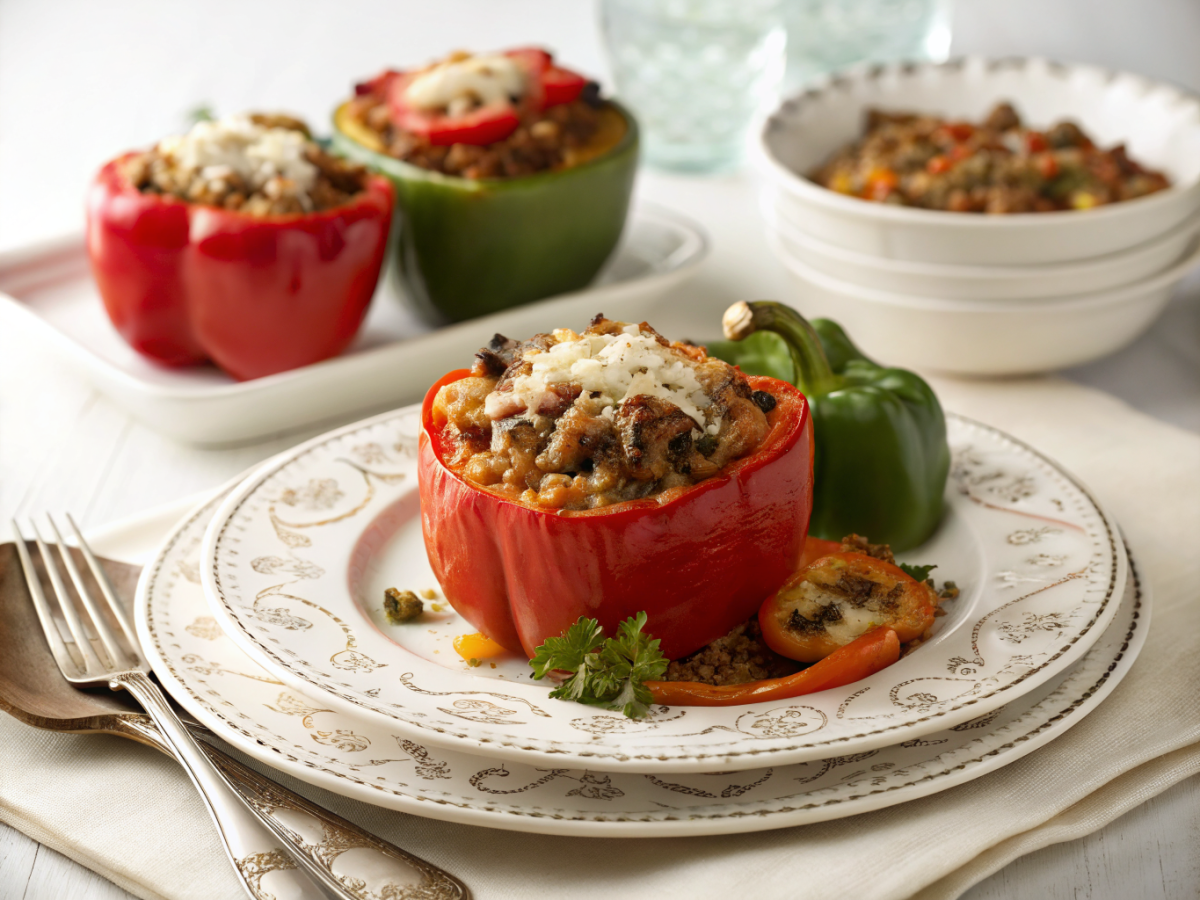
One-Pan Stuffed Pepper Casserole Recipe: 5 Easy Tips for the Best Results

Delicious one-pan stuffed pepper casserole guide

Delicious One-Pan Stuffed Pepper Casserole

A hearty and flavorful casserole that captures all the taste of traditional stuffed peppers in an easy one-pan dish.
Prep Time 15 minutes
Cook Time 35 minutes
Total Time 50 minutes
Servings: 6 servings
Course: Dinner Recipes
Cuisine: American
Calories: 485

Ingredients
  

  • 1.5 pounds ground beef or ground turkey
  • 3 large bell peppers any color, diced
  • 1 medium onion diced
  • 3 cloves garlic minced
  • 1 cup long grain white rice uncooked
  • 1 can diced tomatoes 14.5 oz, undrained
  • 2 cups beef broth
  • 1 tablespoon Italian seasoning
  • 2 cups shredded mozzarella cheese divided
  • 1 teaspoon salt
  • 0.5 teaspoon black pepper

Method
 

  1. In a large oven-safe skillet or pan over medium-high heat, brown the ground beef until no longer pink, breaking it apart as it cooks, about 6-8 minutes. Drain excess fat if needed.
  2. Add the diced bell peppers, onion, and minced garlic to the pan with the beef. Cook for 4-5 minutes until vegetables begin to soften, stirring occasionally.
  3. Stir in the uncooked rice, diced tomatoes with their juices, beef broth, Italian seasoning, salt, and black pepper. Mix everything together well.
  4. Bring the mixture to a boil, then reduce heat to low. Cover the pan with a lid and simmer for 20-25 minutes until the rice is tender and has absorbed most of the liquid, stirring occasionally.
  5. Preheat your broiler. Stir in 1 cup of the shredded mozzarella cheese into the casserole, then sprinkle the remaining 1 cup of cheese evenly over the top.
  6. Place the uncovered pan under the broiler for 2-3 minutes until the cheese is melted and bubbly with golden spots. Watch carefully to prevent burning.
  7. Remove from oven and let the casserole rest for 5 minutes before serving. Garnish with fresh parsley if desired and serve hot.

Nutrition

Calories: 485kcalCarbohydrates: 38gProtein: 32gFat: 21gSodium: 720mgFiber: 3g

Notes

For best results, use a mix of red, yellow, and green bell peppers for color and flavor variety. If the rice is not quite tender after simmering, add a splash more broth and continue cooking covered for a few more minutes. Leftovers store well in the refrigerator for up to 4 days and reheat beautifully in the microwave.

Tried this recipe?

Let us know how it was!
nnThis One-Pan Stuffed Pepper Casserole transforms the classic stuffed pepper recipe into an easy weeknight dinner that requires minimal cleanup. With layers of seasoned ground beef, tender bell peppers, fluffy rice, and melted cheese, this comforting dish delivers all the flavors you love in a fraction of the time. Whether you’re feeding a hungry family or meal prepping for the week, this casserole is guaranteed to become a staple in your dinner rotation.

One-Pan Stuffed Pepper Casserole: 5 Simple Steps to Dinner Success

Traditional stuffed peppers can be time-consuming and fiddly to prepare, requiring you to hollow out peppers and stuff them individually. This casserole version eliminates all that tedious work while maintaining every bit of the delicious flavor. You’ll have a complete, satisfying meal ready in about 45 minutes from start to finish.

The beauty of this recipe lies in its simplicity and versatility. Everything cooks together in one pan, allowing the flavors to meld beautifully while you avoid a sink full of dishes. The result is a hearty, colorful dish that looks as impressive as it tastes, making it perfect for both casual family dinners and when you need to bring something to a potluck.

This casserole works wonderfully as part of your dinner recipes collection, especially when you need something reliable and crowd-pleasing. The combination of protein, vegetables, and grains makes it a complete meal that doesn’t require elaborate side dishes. Plus, it reheats beautifully, making leftovers something to look forward to rather than dread.

Why You’ll Love This One-Pan Stuffed Pepper Casserole

The first reason to love this recipe is the incredible time savings it offers compared to traditional stuffed peppers. Instead of spending 20 minutes just preparing the peppers, you simply chop them and toss everything into one pan. This approach cuts your active cooking time nearly in half while delivering the same comforting flavors you crave.

Cleanup is another major advantage that busy home cooks will appreciate. With only one pan, a cutting board, and a few utensils to wash, you’ll spend less time at the sink and more time enjoying your meal. This makes it an ideal choice for weeknight cooking when energy and time are both in short supply.

The flavor profile of this casserole is deeply satisfying and appeals to both adults and children. The savory ground beef pairs perfectly with the sweet bell peppers, while the tomato sauce adds a tangy richness. The melted cheese on top creates a golden, bubbly crust that adds textural contrast to the tender ingredients beneath.

Budget-conscious cooks will appreciate how economical this recipe is to prepare. Ground beef, rice, peppers, and pantry staples come together to feed a family of four to six people for under $15 in most markets. It stretches your grocery budget without sacrificing flavor or nutrition, making it a smart choice for meal planning.

This dish is also incredibly forgiving and adaptable to what you have on hand. Forgot to buy green peppers? Use all red ones. Out of ground beef? Ground turkey or chicken works beautifully. This flexibility means you can make this casserole work with whatever ingredients are already in your kitchen, reducing food waste and last-minute grocery runs.

Core Ingredients for One-Pan Stuffed Pepper Casserole

The foundation of this casserole starts with ground beef, preferably 85/15 lean-to-fat ratio for the best balance of flavor and texture. You’ll need about 1.5 pounds to provide enough protein for a satisfying meal. The beef creates a savory base that anchors all the other flavors in the dish.

One-pan stuffed pepper casserole ingredients

Bell peppers are the star vegetable in this recipe, and using a variety of colors makes the dish visually stunning. You’ll need about 3 to 4 large peppers, choosing from red, yellow, orange, and green varieties. Each color offers slightly different flavor notes, with red being the sweetest and green having a more vegetal bite.

For the grain component, long-grain white rice works best because it cooks evenly and doesn’t become mushy. You’ll need 1 cup of uncooked rice, which will absorb the flavorful liquids as the casserole bakes. Some cooks prefer using instant rice to reduce cooking time, which is a perfectly acceptable substitution.

The sauce is built from crushed tomatoes and tomato sauce, totaling about 3 cups of tomato product. This creates the moisture needed to cook the rice while infusing everything with rich tomato flavor. Choose quality canned tomatoes for the best results, as they form the backbone of the dish’s taste profile.

Beef broth adds depth and savory notes that water simply cannot provide. You’ll need approximately 1 cup to ensure the rice cooks properly and the casserole doesn’t dry out. Low-sodium broth gives you better control over the final seasoning, allowing you to adjust salt to your preference.

Aromatics including onion and garlic are essential for building flavor complexity. One large diced onion and 3 to 4 minced garlic cloves create an aromatic foundation that permeates the entire dish. These ingredients should be sautéed until fragrant before adding the other components.

The seasoning blend includes Italian seasoning, paprika, salt, and black pepper, which work together to create a well-rounded flavor profile. About 2 teaspoons of Italian seasoning and 1 teaspoon of paprika provide warmth without overwhelming the other ingredients. Adjust these seasonings to match your family’s taste preferences.

Finally, shredded cheese tops the casserole during the final minutes of baking. Mozzarella, cheddar, or a Mexican blend all work wonderfully, with about 1.5 to 2 cups needed for a generous, melty topping. The cheese creates that irresistible golden crust that makes this dish so visually appealing and delicious.

How to Make One-Pan Stuffed Pepper Casserole: Step-by-Step

Step 1: Prepare Your Ingredients. Begin by preheating your oven to 375°F (190°C) to ensure it’s ready when you need it. Dice your bell peppers into roughly 1-inch pieces, keeping them uniform in size so they cook evenly. Chop your onion finely and mince the garlic, setting all your prepared vegetables aside in separate bowls for easy access during cooking.

Step 2: Brown the Ground Beef. Heat a large oven-safe skillet or Dutch oven over medium-high heat and add your ground beef. Break it up with a wooden spoon as it cooks, stirring occasionally until it’s browned and no longer pink, which takes about 6 to 8 minutes. Drain excess fat if there’s more than a tablespoon or two, leaving just enough to sauté your aromatics.

Step 3: Sauté the Aromatics and Peppers. Add the diced onion to the browned beef and cook for 3 to 4 minutes until it becomes translucent and fragrant. Stir in the minced garlic and cook for another 30 seconds until aromatic. Add the diced bell peppers and cook for 2 to 3 minutes, just enough to slightly soften them while maintaining some texture.

Step 4: Add Rice and Liquids. Sprinkle the uncooked rice over the beef and vegetable mixture, stirring to distribute it evenly throughout the pan. Pour in the crushed tomatoes, tomato sauce, and beef broth, stirring everything together thoroughly. Add your Italian seasoning, paprika, salt, and pepper, mixing well to ensure even seasoning distribution.

Step 5: Bring to a Simmer. Increase the heat slightly and bring the entire mixture to a gentle simmer, stirring occasionally to prevent sticking. Once you see bubbles breaking the surface consistently, remove the pan from the heat. This initial simmer helps jumpstart the rice cooking process and ensures even heat distribution when it goes into the oven.

Step 6: Cover and Bake. Cover your pan tightly with either a lid or aluminum foil, ensuring no steam can escape during baking. Transfer the covered pan to your preheated oven and bake for 30 to 35 minutes. The casserole is ready when the rice is tender and has absorbed most of the liquid, though there should still be some sauciness.

Step 7: Add Cheese and Finish. Remove the pan from the oven and carefully remove the cover, watching for hot steam. Sprinkle the shredded cheese evenly over the top of the casserole. Return the uncovered pan to the oven for an additional 5 to 7 minutes, or until the cheese is melted, bubbly, and beginning to turn golden in spots.

Step 8: Rest and Serve. Once the cheese is perfectly melted, remove the casserole from the oven and let it rest for 5 minutes before serving. This resting period allows the liquids to settle and makes serving much easier. Garnish with fresh parsley or basil if desired, and serve hot directly from the pan for a rustic presentation.

For those who enjoy exploring quick easy meals, this recipe fits perfectly into that category with its straightforward preparation and minimal hands-on time. The technique used here can be applied to many other one-pan dinner concepts. If you’re interested in learning more about building flavors in one-pot dishes, this resource on layering flavors offers excellent insights.

Nutrition & Health Benefits

This casserole provides a well-balanced meal with protein, complex carbohydrates, and vegetables all in one dish. A typical serving contains approximately 380 to 420 calories, depending on the type of ground beef and amount of cheese used. The protein content ranges from 25 to 30 grams per serving, making it satisfying and supportive of muscle maintenance.

Bell peppers are nutritional powerhouses, loaded with vitamin C, vitamin A, and various antioxidants that support immune function. Red bell peppers contain especially high levels of beta-carotene and lycopene, both of which have been studied for their potential protective effects. The variety of colored peppers in this recipe ensures you’re getting a diverse range of beneficial plant compounds.

The tomato-based sauce contributes lycopene, a powerful antioxidant that becomes more bioavailable when tomatoes are cooked. This compound has been associated with heart health and may play a role in reducing certain health risks. The sauce also provides additional vitamin C and potassium, supporting overall wellness.

Using lean ground beef provides high-quality protein along with important minerals like iron, zinc, and B vitamins, particularly B12. These nutrients are essential for energy production, immune function, and red blood cell formation. Choosing grass-fed beef when possible adds omega-3 fatty acids and conjugated linoleic acid to the nutritional profile.

The rice component offers energy-sustaining complex carbohydrates and some B vitamins, though white rice is less nutrient-dense than brown rice. If you substitute brown rice, you’ll increase the fiber content significantly, which supports digestive health and helps maintain stable blood sugar levels. Keep in mind that brown rice requires a longer cooking time and additional liquid.

To make this recipe more aligned with high protein recipes, consider increasing the beef to 2 pounds and reducing the rice to 3/4 cup. This adjustment raises the protein-to-carbohydrate ratio while maintaining the dish’s satisfying nature. You could also add a can of drained black beans for additional protein and fiber without significantly changing the cooking method.

For those watching sodium intake, using low-sodium broth and tomato products allows you to control the salt level precisely. You can reduce the added salt by half or eliminate it entirely if you’re on a sodium-restricted diet. The natural flavors from the beef, vegetables, and seasonings provide plenty of taste without relying heavily on salt.

Variations & Substitutions

Protein Variations: Ground turkey or chicken creates a leaner version with a milder flavor that some families prefer. Ground pork or Italian sausage adds richness and additional seasoning, though you may want to reduce other spices accordingly. For a vegetarian version, substitute with plant-based ground meat or use a combination of black beans and mushrooms for a meaty texture.

Grain Alternatives: Cauliflower rice makes this recipe low-carb and keto-friendly, though you’ll need to reduce the liquid by about half since cauliflower doesn’t absorb as much. Quinoa offers a protein boost and nutty flavor while providing a complete amino acid profile. Orzo pasta creates an interesting texture variation, though cooking times may need slight adjustment.

Vegetable Additions: Zucchini, mushrooms, or corn can be added to increase the vegetable content and add different flavors and textures. Diced tomatoes with green chilies replace some of the tomato sauce for a Tex-Mex twist with a slight kick. Spinach or kale can be stirred in during the last few minutes of cooking for added nutrition without significantly changing the dish’s character.

Cheese Options: Pepper jack cheese adds a spicy kick that complements the sweet peppers beautifully. A combination of mozzarella and parmesan creates a more Italian-inspired flavor profile with added depth. For dairy-free versions, use your favorite plant-based cheese alternative, or simply omit the cheese and add nutritional yeast for a cheesy flavor.

Seasoning Variations: Mexican-inspired versions can use cumin, chili powder, and oregano instead of Italian seasoning. An Asian-inspired twist with ginger, soy sauce, and sesame oil creates an entirely different but equally delicious dish. Mediterranean flavors emerge when you add oregano, basil, and a splash of balsamic vinegar to the tomato mixture.

Spice Level Adjustments: Red pepper flakes, diced jalapeños, or hot sauce can be added for those who enjoy heat. Starting with a small amount allows you to gauge your family’s tolerance and adjust in future preparations. Conversely, using only sweet bell peppers and mild seasonings keeps the dish family-friendly for sensitive palates or young children.

Serving Suggestions

This casserole is substantial enough to serve as a complete meal on its own, but pairing it with complementary sides elevates the dining experience. A simple green salad with a light vinaigrette provides freshness and crunch that contrasts beautifully with the rich, hearty casserole. The acidity in the dressing also helps cut through the richness of the cheese and beef.

Crusty bread or garlic bread is perfect for soaking up any extra sauce on your plate, ensuring not a drop of flavor goes to waste. Warm dinner rolls or cornbread offer a slightly sweet counterpoint to the savory casserole. If you’re interested in homemade bread options, exploring breads and baked goods can provide excellent accompaniment ideas.

For a complete meal presentation, consider serving with roasted or steamed green beans, broccoli, or asparagus on the side. These vegetables add color, nutrition, and textural variety to the plate. A dollop of sour cream or Greek yogurt on top of each serving adds creaminess and a pleasant tang that many diners enjoy.

Fresh herbs as garnish make a significant visual and flavor impact with minimal effort. Chopped fresh parsley, cilantro, or basil sprinkled over the top just before serving adds brightness and a pop of color. Sliced green onions or chives provide a mild onion flavor and attractive garnish that signals freshness.

For beverage pairings, this casserole works well with both casual and more thoughtful drink selections. A medium-bodied red wine like Merlot or Chianti complements the tomato and beef flavors nicely. For non-alcoholic options, iced tea, lemonade, or sparkling water with citrus keeps the meal refreshing without competing with the food’s flavors.

When serving for a crowd or potluck, keep the casserole warm in a slow cooker set to the warm setting after baking. This prevents overcooking while maintaining the ideal serving temperature for hours. Provide a large serving spoon and remind guests that the pan will be hot if serving directly from the baking dish.

Common Mistakes to Avoid

Using the Wrong Rice: Instant rice and regular long-grain rice have different liquid absorption rates and cooking times. If you substitute instant rice without adjusting the liquid and cooking time, you’ll end up with mushy, overcooked rice. Always follow the specific type of rice called for in the recipe or adjust cooking parameters accordingly.

Not Browning the Meat Properly: Rushing the browning step results in gray, steamed meat rather than flavorful, caramelized beef. Take the time to let the meat develop a nice brown color before stirring, which creates fond (browned bits) that add depth. This step is crucial for building the savory foundation of the entire dish.

Skipping the Simmer Before Baking: Putting cold or room-temperature liquid into the oven significantly extends cooking time and can result in unevenly cooked rice. The initial simmer on the stovetop jumpstarts the cooking process and ensures everything reaches the oven at the right temperature. This step takes just a few minutes but makes a substantial difference in the final result.

Overcooking the Peppers: Adding the peppers too early or cutting them too small causes them to become mushy and lose their structure. Peppers should retain some texture and bite even after baking, providing contrast to the tender rice and meat. Cutting them into 1-inch pieces and adding them at the right time preserves their integrity.

Not Covering Tightly During Baking: If steam escapes during the baking process, the rice won’t cook properly and the casserole will dry out. Use a tight-fitting lid or create a secure seal with aluminum foil to trap moisture inside. This steam is essential for cooking the rice evenly and maintaining the right consistency.

Adding Cheese Too Early: Putting cheese on before the casserole is fully cooked results in overcooked, separated, or browned cheese that doesn’t look appetizing. The cheese should be added only in the final minutes of baking when everything else is done. This timing ensures perfectly melted, gooey cheese with an attractive golden finish.

Skipping the Resting Period: Cutting into the casserole immediately after removing it from the oven causes the liquids to run all over the plate. A 5-minute rest allows the starches to set slightly and the liquids to redistribute, making serving much neater. This patience pays off with better presentation and texture in every serving.

Storage & Meal Prep Tips

Refrigerator Storage: Leftover casserole keeps well in the refrigerator for 3 to 4 days when stored in an airtight container. Allow the casserole to cool completely before covering and refrigerating to prevent condensation that can make it watery. Portion it into individual servings before storing for grab-and-go lunches throughout the week.

Freezing Instructions: This casserole freezes beautifully for up to 3 months, making it perfect for advance meal preparation. Cool the casserole completely, then wrap tightly in plastic wrap followed by aluminum foil, or portion into freezer-safe containers. Label with the date and reheating instructions for easy reference when you’re ready to enjoy it.

Reheating Methods: For refrigerated leftovers, microwave individual portions for 2 to 3 minutes until heated through, stirring halfway through for even warming. For larger portions, reheat covered in a 350°F oven for 20 to 25 minutes until hot in the center. Add a splash of broth or water if the casserole seems dry after storage.

Thawing Frozen Casserole: The safest method is to transfer frozen casserole to the refrigerator 24 hours before you plan to reheat it. For faster thawing, use the defrost setting on your microwave, checking and stirring every few minutes. Never thaw at room temperature, as this can allow bacterial growth in the danger zone temperature range.

Make-Ahead Assembly: You can brown the meat and prepare all the vegetables a day ahead, storing them separately in the refrigerator. When ready to cook, simply combine everything in the pan and proceed with the recipe as written. This advance prep reduces active cooking time on busy evenings to just a few minutes.

Freezing Unbaked Casserole: Assemble the entire casserole in a freezer-safe, oven-safe dish without baking, then wrap tightly and freeze. When ready to cook, thaw in the refrigerator overnight, then bake as directed, adding 5 to 10 minutes to the cooking time. This method provides the convenience of freezer meals with the quality of freshly baked food.

Portion Control for Meal Prep: Divide the casserole into individual portions using a muffin tin or small containers for perfect single servings. This approach makes it easy to grab exactly what you need without defrosting more than necessary. It’s particularly helpful for those living alone or managing specific portion sizes for dietary goals.

For additional meal planning inspiration and complementary recipes, check out this collection of make-ahead dinner ideas that pair well with casserole-style cooking. Understanding proper food safety and storage techniques ensures your meal prep efforts remain both delicious and safe to consume throughout the week.

Final Thoughts on One-Pan Stuffed Pepper Casserole

This One-Pan Stuffed Pepper Casserole represents everything we love about comfort food: it’s satisfying, flavorful, and brings people together around the table. The simplicity of preparation combined with the complexity of flavors makes it a recipe you’ll return to again and again. Whether you’re cooking for your family on a Tuesday night or preparing meals for the week ahead, this casserole delivers on every front.

The versatility of this recipe means it can adapt to your dietary needs, ingredient availability, and flavor preferences without losing its essential character. From swapping proteins to adjusting vegetables and seasonings, you have countless opportunities to make this dish your own. Each variation teaches you more about flavor building and helps you become a more confident, intuitive cook.

Beyond the practical benefits of easy cleanup and budget-friendly ingredients, this casserole offers something more valuable: reliability. In a world where recipes sometimes disappoint or require techniques beyond a home cook’s comfort zone, this one simply works. Following the straightforward steps consistently produces a delicious meal that looks as good as it tastes, building your confidence in the kitchen.

Leave a Comment

Recipe Rating