
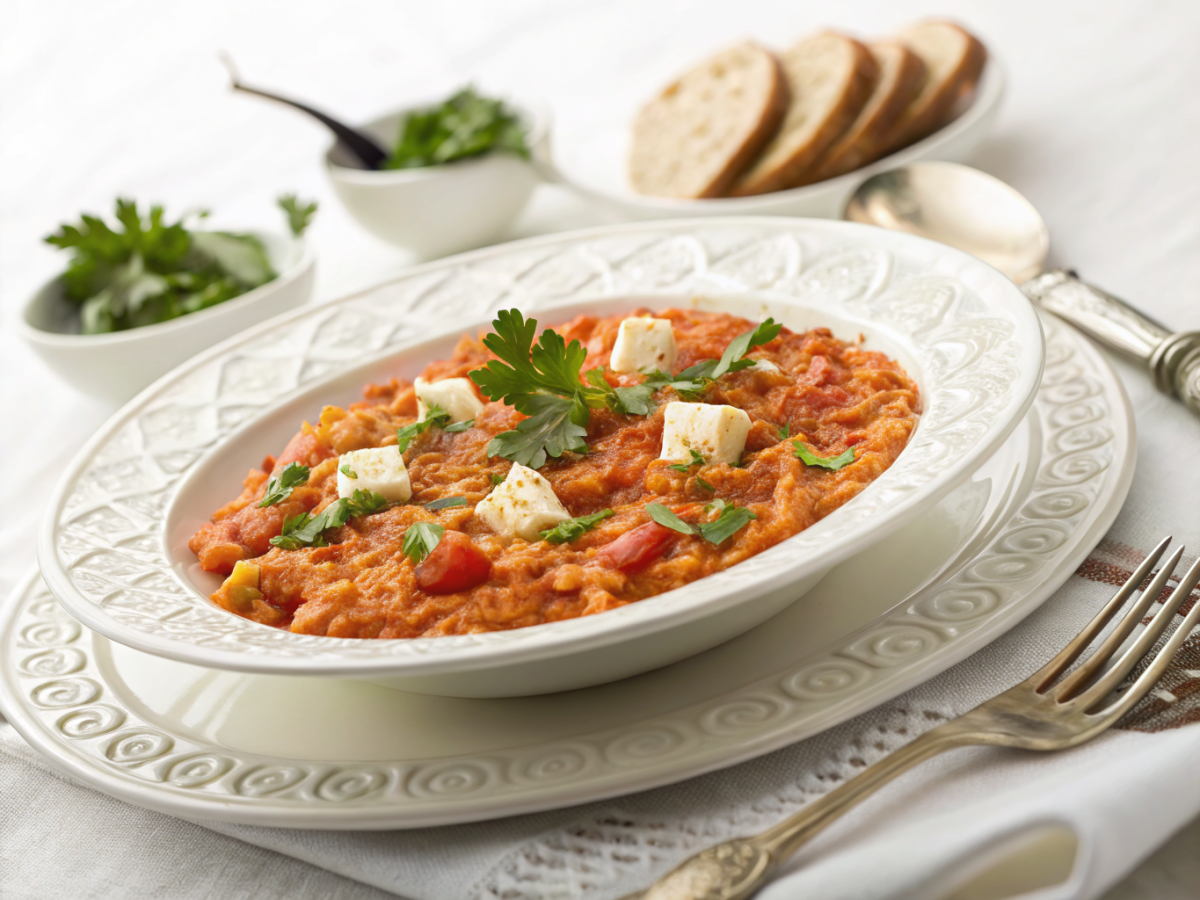
Best Menemen You'll Ever Have
Ingredients
Method
- Heat olive oil in a large skillet over medium heat until shimmering.
- Add the diced green peppers and chopped onion to the skillet. Saute for 5-6 minutes until softened and slightly golden.
- Add the diced tomatoes, red pepper flakes, salt, and black pepper. Cook for 6-7 minutes, stirring occasionally, until tomatoes break down and release their juices.
- Crack the eggs directly into the skillet over the tomato mixture. Gently stir to combine, breaking up the yolks but keeping some texture.
- Cook for 2-3 minutes, stirring gently, until eggs are just set but still creamy. Do not overcook.
- Remove from heat immediately, garnish with fresh chopped parsley, and serve hot with crusty bread.
Nutrition
Notes
Tried this recipe?
Let us know how it was!Menemen: 5 Easy Tips for Perfect Results
Creating the perfect Menemen requires attention to a few key techniques that elevate this simple dish from good to extraordinary. The secret lies in properly cooking the vegetables until they release their natural sweetness and moisture. Many home cooks rush this process, but patience here makes all the difference in achieving that authentic Turkish flavor profile.
First, always use ripe, flavorful tomatoes as they form the foundation of your dish. Second, don’t overcook the eggs—they should remain soft and slightly creamy. Third, use quality olive oil for authentic taste and proper sautéing of vegetables.
Fourth, add your spices at the right moment to allow them to bloom without burning. Fifth, serve immediately while hot to enjoy the best texture and flavor. These simple guidelines will transform your cooking experience and guarantee restaurant-quality results every single time.
Why You’ll Love This Menemen
This recipe stands out because it delivers authentic Turkish flavors while remaining incredibly simple to prepare in your own kitchen. Unlike complicated breakfast dishes that require multiple pans and extensive prep work, this one-pan wonder comes together in less than 25 minutes. The combination of fresh vegetables and perfectly cooked eggs creates a nutritionally balanced meal that keeps you satisfied for hours.
The versatility of this dish makes it perfect for any meal of the day, not just breakfast. You can easily adjust the spice level to suit your preferences, making it family-friendly or adding extra heat for those who love bold flavors. The vibrant colors and aromatic herbs create an Instagram-worthy presentation that impresses guests without requiring professional culinary skills.
Budget-conscious cooks will appreciate how this recipe uses affordable, everyday ingredients that are readily available at any grocery store. The dish is naturally gluten-free and can be adapted for various dietary preferences. Plus, it’s an excellent way to incorporate more vegetables into your diet without sacrificing taste or satisfaction.
For those exploring quick and easy meal options, this Turkish classic offers maximum flavor with minimal effort. The cooking process is forgiving enough for beginners while still delivering results that experienced cooks will appreciate. Each bite offers a perfect harmony of textures and flavors that showcases Mediterranean cuisine at its finest.
Core Ingredients for Menemen
The beauty of this traditional Turkish dish lies in its simplicity, requiring only a handful of fresh, quality ingredients. Each component plays a crucial role in building the layers of flavor that make this breakfast so memorable. Using fresh produce rather than canned alternatives will significantly improve the final taste and texture of your dish.

Main Ingredients:
- 4 large eggs (preferably free-range for richer flavor and color)
- 3 medium ripe tomatoes, diced (or 1 can of quality diced tomatoes)
- 2 green bell peppers, chopped (Turkish sivri peppers are traditional)
- 1 medium onion, finely diced
- 3 tablespoons extra virgin olive oil
- 2 cloves garlic, minced
- 1 teaspoon red pepper flakes (adjust to taste)
- 1 teaspoon paprika (sweet or smoked)
- Salt and black pepper to taste
- Fresh parsley, chopped for garnish
- Optional: crumbled feta cheese for serving
The quality of your eggs matters significantly in this recipe since they’re a primary component. Free-range or organic eggs provide richer flavor and more vibrant yolks that enhance both taste and visual appeal. Fresh tomatoes at peak ripeness will contribute natural sweetness and acidity that balances the richness of the eggs perfectly.
Turkish sivri peppers are the traditional choice, but standard green bell peppers work wonderfully as a substitute. If you enjoy heat, consider adding one small hot pepper to the mix. The olive oil should be good quality since it contributes significantly to the overall flavor profile and authentic Mediterranean character.
How to Make Menemen: Step-by-Step
Begin by preparing all your vegetables before you start cooking, as this dish comes together quickly once you begin. Dice the tomatoes into medium-sized chunks, chop the peppers into bite-sized pieces, and finely dice the onion. Having everything ready ensures smooth cooking without burning or overcooking any components.
Step 1: Sauté the Aromatics
Heat the olive oil in a large, deep skillet or sauté pan over medium heat until shimmering but not smoking. Add the diced onions and cook for 3-4 minutes, stirring occasionally until they become translucent and slightly golden. Add the minced garlic and cook for another 30 seconds until fragrant, being careful not to let it brown.
Step 2: Cook the Peppers
Add the chopped green peppers to the pan and continue cooking for 5-6 minutes, stirring occasionally. The peppers should soften and develop some light caramelization on the edges. This step is crucial for developing the deep, complex flavors that characterize authentic Turkish cuisine.
Step 3: Add Tomatoes and Spices
Stir in the diced tomatoes along with the paprika, red pepper flakes, salt, and black pepper. Cook for 8-10 minutes, stirring occasionally, until the tomatoes break down and release their juices. The mixture should become saucy but not watery—if it’s too liquid, continue cooking until it thickens slightly.
Step 4: Incorporate the Eggs
Crack the eggs directly into the pan, spacing them evenly over the vegetable mixture. You can either leave them whole for a more rustic presentation or gently scramble them into the vegetables for a more uniform texture. Cover the pan with a lid and cook for 3-4 minutes until the eggs reach your desired doneness.
Step 5: Final Touches
Remove from heat while the eggs are still slightly soft, as they’ll continue cooking from residual heat. Garnish generously with fresh chopped parsley and serve immediately. For an extra layer of flavor, drizzle with a small amount of olive oil and add crumbled feta cheese if desired.
This cooking method ensures that every element is perfectly cooked while maintaining distinct textures and flavors. The vegetables should be tender but not mushy, and the eggs should be creamy rather than rubbery. Timing is everything, so keep a close eye during the final cooking stages.
Those interested in expanding their breakfast repertoire should explore breads and baked goods that pair beautifully with this egg dish. Crusty bread is essential for soaking up the delicious tomato-based sauce. The combination of textures creates a complete and satisfying meal experience.
Nutrition & Health Benefits
This Turkish breakfast powerhouse delivers impressive nutritional value while remaining relatively low in calories. A single serving provides approximately 220-250 calories, depending on the amount of oil used and whether you add cheese. The high protein content from eggs makes this an excellent choice for sustained energy throughout the morning.
Each serving contains roughly 14 grams of protein, essential for muscle maintenance and satiety. The eggs provide all nine essential amino acids, making this a complete protein source. The vegetables contribute significant amounts of vitamins A and C, supporting immune function and skin health.
The tomatoes are rich in lycopene, a powerful antioxidant linked to heart health and cancer prevention. Bell peppers add vitamin B6 and folate, important for brain health and cellular function. The olive oil provides heart-healthy monounsaturated fats that help reduce inflammation and support cardiovascular wellness.
This dish is naturally low in carbohydrates, making it suitable for those following low-carb or ketogenic diets. The fiber from the vegetables aids digestion and promotes feelings of fullness. For those monitoring sodium intake, you can easily control salt levels by adjusting seasoning to taste.
The combination of protein, healthy fats, and vegetables creates a balanced macronutrient profile that stabilizes blood sugar levels. This prevents the energy crashes often associated with carbohydrate-heavy breakfasts. For additional nutritional guidance, resources like trusted recipe sites offer valuable information about balanced eating.
Variations & Substitutions
The traditional recipe serves as an excellent foundation for countless creative variations that suit different tastes and dietary needs. You can easily customize this dish while maintaining its essential character and delicious flavor profile. Experimentation is encouraged in Turkish cooking, where regional variations are celebrated rather than criticized.
Protein Variations:
Add crumbled Turkish sucuk (spicy sausage) for a heartier version with smoky, spiced flavors. Incorporate cooked ground lamb or beef for extra protein and richness. For vegetarians, additional vegetables like mushrooms or zucchini can boost the nutritional content without adding meat.
Vegetable Alternatives:
Substitute red bell peppers for green to add sweetness and vibrant color. Add diced eggplant for a more substantial, Mediterranean-inspired version. Spinach or kale can be stirred in during the last few minutes for added nutrients and a pop of green color.
Spice Adjustments:
Use smoked paprika instead of regular for a deeper, more complex flavor profile. Add cumin for an earthy, warm note that complements the tomatoes beautifully. Fresh chili peppers can replace dried flakes for those who prefer fresh heat and brighter flavors.
Dairy Options:
Crumbled feta cheese is a popular addition that adds tangy, salty notes. Turkish white cheese (beyaz peynir) is the most traditional choice if you can find it. For a creamier texture, stir in a tablespoon of Greek yogurt just before serving.
Those exploring high-protein recipe options can increase the egg count or add cottage cheese for extra protein. Vegan versions can substitute tofu scramble for eggs, though the texture and flavor will differ significantly. The versatility of this dish means you can adapt it to virtually any dietary preference or ingredient availability.
Serving Suggestions
Traditional Turkish breakfast spreads this dish alongside crusty bread, fresh vegetables, olives, and cheese for a complete morning feast. The bread is essential—use it to scoop up the eggs and soak up every bit of the flavorful tomato sauce. Turkish pide bread or rustic sourdough work particularly well for this purpose.
Serve with thick slices of feta cheese, cucumber slices, and fresh tomatoes on the side for authentic presentation. Black olives and pickled peppers add briny, tangy elements that complement the rich eggs perfectly. A glass of strong Turkish tea completes the traditional breakfast experience.
For a more substantial meal, pair with roasted potatoes or hash browns to add satisfying carbohydrates. A simple green salad dressed with lemon and olive oil provides freshness and helps balance the richness. Avocado slices add creamy texture and healthy fats that enhance the overall nutritional profile.
This dish works equally well for brunch gatherings, where you can serve it family-style in the cooking pan. Set out various accompaniments and let guests customize their plates according to preference. The casual, communal nature of this presentation encourages conversation and creates a warm, welcoming atmosphere.
For beverage pairings, freshly squeezed orange juice provides vitamin C and bright acidity that cuts through the richness. Strong coffee or espresso offers a traditional Turkish breakfast pairing. For those seeking lighter options, herbal teas or sparkling water with lemon work beautifully without overwhelming the delicate egg flavors.
Common Mistakes to Avoid
One of the most frequent errors is cooking the vegetables at too high a temperature, causing them to burn before softening properly. Medium heat allows the vegetables to caramelize gently while releasing their natural sugars and developing complex flavors. Rushing this process results in bitter, unevenly cooked vegetables that compromise the entire dish.
Overcooking the eggs creates a rubbery, unappetizing texture that lacks the creamy richness characteristic of properly prepared Turkish eggs. Remember that eggs continue cooking after you remove the pan from heat, so take them off slightly earlier than you think necessary. The residual heat will finish the cooking process perfectly.
Using low-quality or under-ripe tomatoes produces a watery, flavorless base that fails to provide the necessary foundation. If fresh tomatoes aren’t in season, high-quality canned tomatoes are actually preferable to pale, flavorless fresh ones. The tomato quality directly impacts the final dish more than almost any other ingredient.
Adding too much liquid creates a soupy consistency rather than the desired thick, saucy texture. If your tomatoes release excessive water, increase cooking time to allow evaporation before adding eggs. The mixture should be moist but not swimming in liquid when you crack in the eggs.
Skipping the olive oil or using too little results in vegetables that stick and lack the characteristic Mediterranean richness. While you can reduce oil for dietary reasons, some fat is necessary for proper cooking and flavor development. For additional cooking tips, resources like established recipe collections offer helpful guidance for home cooks.
Neglecting to taste and adjust seasoning before serving is another common oversight that results in bland food. Salt enhances all the other flavors, so proper seasoning is crucial. Add salt gradually and taste frequently, remembering that you can always add more but cannot remove excess.
Storage & Meal Prep Tips
While this dish tastes best when served immediately after cooking, you can store leftovers in an airtight container in the refrigerator for up to two days. The texture of the eggs will change slightly upon reheating, becoming firmer but still enjoyable. Reheat gently in a skillet over low heat or in the microwave at reduced power to prevent further overcooking.
For meal prep purposes, you can prepare the vegetable base ahead of time and store it separately from the eggs. Cook the tomato-pepper mixture completely, let it cool, and refrigerate for up to three days. When ready to eat, simply reheat the vegetable base and add fresh eggs for the best texture and flavor.
Freezing is not recommended for this egg-based dish, as the texture deteriorates significantly when frozen and thawed. The eggs become watery and rubbery, while the vegetables lose their pleasant texture. If you must freeze, consider freezing only the cooked vegetable base and adding fresh eggs when reheating.
To streamline morning preparation, chop all vegetables the night before and store them in separate containers. This reduces active cooking time to just 15 minutes, making it feasible even on busy weekday mornings. Pre-measured spices in a small container further simplify the process.
For batch cooking, you can double or triple the recipe and divide it into individual portions for quick breakfasts throughout the week. Store in microwave-safe containers for convenient reheating. While the texture won’t match freshly cooked, it remains a nutritious and tasty option for time-pressed mornings.
Final Thoughts on Menemen
This traditional Turkish breakfast dish represents the perfect intersection of simplicity, nutrition, and incredible flavor that home cooks of all skill levels can master. The straightforward technique and readily available ingredients make it accessible while delivering restaurant-quality results. Once you’ve experienced the satisfaction of creating this authentic dish in your own kitchen, it will likely become a regular part of your breakfast rotation.
The cultural significance of Menemen extends beyond its delicious taste—it represents the Turkish philosophy of starting the day with a substantial, nourishing meal shared with loved ones. The communal aspect of eating together around a shared pan fosters connection and conversation. This simple act of cooking and sharing food creates memories and traditions that transcend the meal itself.
Whether you’re exploring Mediterranean cuisine for the first time or seeking to expand your breakfast repertoire, this recipe offers an excellent entry point. The forgiving nature of the cooking process allows for experimentation and personalization. Each time you prepare it, you’ll discover new nuances and develop your own preferred techniques.
The versatility of this dish means it adapts beautifully to whatever ingredients you have available or dietary requirements you need to meet. From adding extra vegetables to adjusting spice levels, you can make this recipe truly your own. The foundation remains consistent while allowing endless creative possibilities.
For those passionate about home cooking and seeking inspiration, exploring resources like diverse recipe collections can spark new ideas. Combining traditional techniques with modern dietary awareness creates meals that honor culinary heritage while meeting contemporary nutritional needs. This balance defines successful home cooking in today’s world.
Frequently Asked Questions
Can I make Menemen ahead of time for meal prep?
While Menemen tastes best fresh, you can prepare the vegetable base ahead and store it in the refrigerator for up to three days. When ready to eat, simply reheat the tomato-pepper mixture and add fresh eggs for optimal texture. This method preserves the quality while saving significant time during busy mornings.
What’s the difference between Menemen and shakshuka?
Though similar, Menemen differs from shakshuka in that the eggs are typically scrambled into the vegetables rather than poached whole. Turkish Menemen also uses green peppers and fewer spices compared to the North African shakshuka, which often includes cumin and more complex spice blends. Both dishes celebrate the combination of eggs and tomatoes but reflect their distinct cultural origins.
Do I need special equipment to make this recipe?
No special equipment is required—just a good-quality skillet or sauté pan with a lid. A non-stick or well-seasoned cast-iron pan works best to prevent sticking and ensure even cooking. A wooden spoon for stirring and a sharp knife for chopping vegetables are the only other tools you’ll need.
Can I make a vegan version of this dish?
Yes, you can create a vegan version by substituting scrambled tofu for the eggs and using nutritional yeast for a cheesy flavor. Season the tofu with turmeric for color and add extra vegetables to maintain substance. While the texture and flavor will differ from traditional Menemen, it can still be delicious and satisfying in its own right.

creates quick vegetarian dinners and vibrant taco recipes.
