
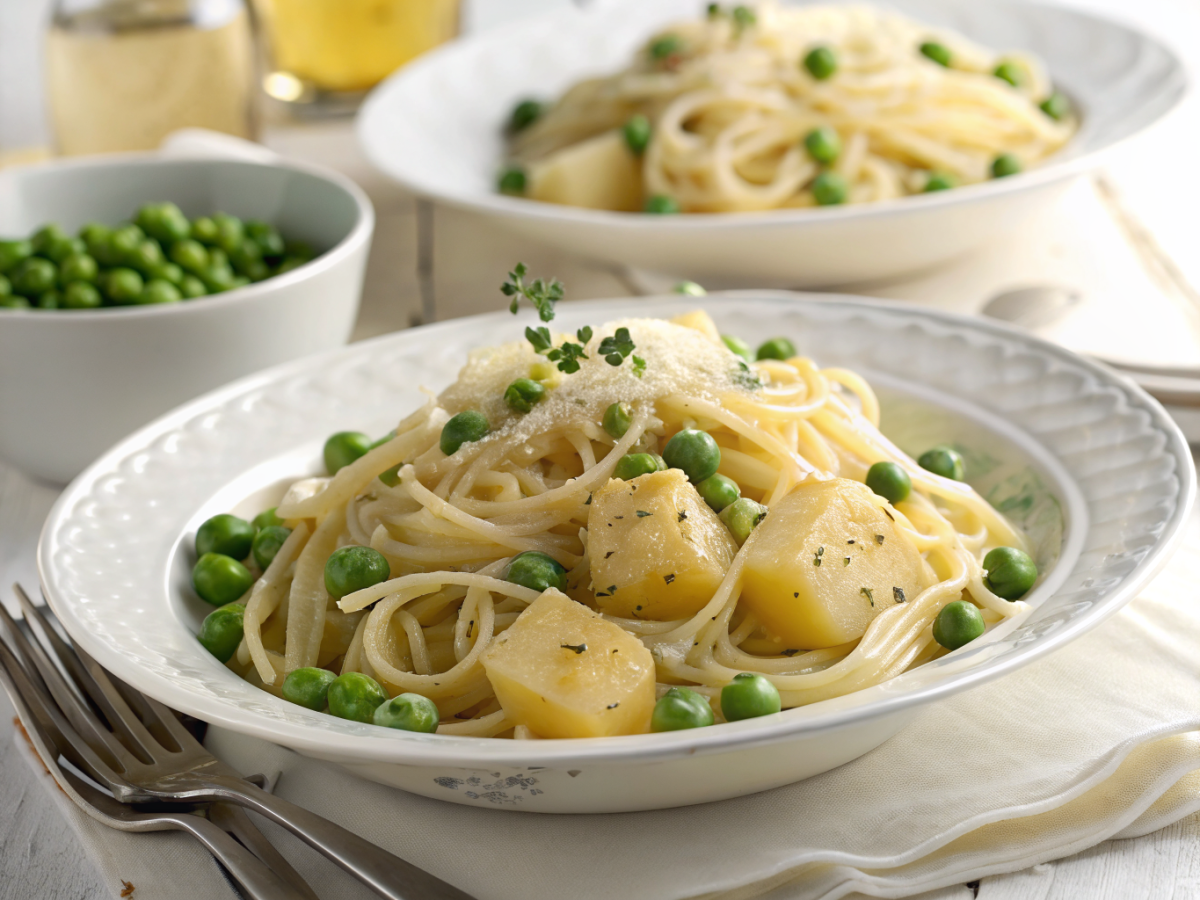
Pasta with Peas and Potatoes Recipe: 5 Easy Tips for the Best Results

Amazing pasta with peas and potatoes for busy nights

Amazing Pasta with Peas and Potatoes for Busy Nights

A comforting Italian-inspired pasta dish combining tender potatoes, sweet peas, and pasta in a light, flavorful sauce perfect for weeknight dinners.
Prep Time 10 minutes
Cook Time 20 minutes
Total Time 30 minutes
Servings: 4 servings
Course: Quick & Easy Meals
Cuisine: American
Calories: 425

Ingredients
  

  • 12 oz short pasta ditalini or small shells
  • 2 cups potatoes peeled and diced into small cubes
  • 1.5 cups frozen peas
  • 3 tablespoons olive oil
  • 3 cloves garlic minced
  • 1 teaspoon salt or to taste
  • 0.5 teaspoon black pepper
  • 0.25 cup grated Parmesan cheese plus extra for serving
  • 2 tablespoons fresh parsley chopped

Method
 

  1. Bring a large pot of salted water to a boil over high heat.
  2. Add the diced potatoes to the boiling water and cook for 5 minutes until they start to soften.
  3. Add the pasta to the pot with the potatoes and cook according to package directions, about 8-10 minutes.
  4. During the last 3 minutes of cooking, add the frozen peas to the pot. Reserve 1 cup of pasta cooking water before draining.
  5. While pasta cooks, heat olive oil in a large skillet over medium heat. Add minced garlic and cook for 1-2 minutes until fragrant but not browned.
  6. Drain the pasta, potatoes, and peas, then add them to the skillet with garlic oil. Toss well, adding reserved pasta water as needed to create a light sauce. Season with salt and pepper.
  7. Remove from heat, stir in Parmesan cheese and fresh parsley. Serve immediately with extra Parmesan on top.

Nutrition

Calories: 425kcalCarbohydrates: 68gProtein: 14gFat: 12gSodium: 420mgFiber: 6g

Notes

Cut potatoes into small uniform cubes so they cook at the same rate as the pasta. Do not skip reserving the pasta water as it helps create a silky sauce that coats everything beautifully. For extra richness, add a tablespoon of butter when tossing the pasta with the garlic oil.

Tried this recipe?

Let us know how it was!
\n\nThis Pasta with Peas and Potatoes is a comforting Italian classic that brings together simple ingredients for a satisfying meal perfect for busy weeknights. The creamy texture of tender potatoes combines beautifully with sweet peas and perfectly cooked pasta. This dish delivers authentic flavors without requiring hours in the kitchen.

Pasta with Peas and Potatoes: Amazing Recipe in 25 Minutes

Traditional Italian home cooking celebrates simplicity, and this recipe exemplifies that philosophy perfectly. Known as “pasta patate e piselli” in Italy, this dish has fed families for generations with its humble yet delicious combination. The starchy potatoes create a naturally creamy sauce that coats every piece of pasta beautifully.

This one-pot wonder saves time on both cooking and cleanup, making it ideal for those hectic evenings. The ingredients are pantry-friendly and budget-conscious, yet the result tastes like something from a trattoria. You’ll appreciate how the flavors meld together to create something greater than the sum of its parts.

The beauty of this dish lies in its versatility and forgiving nature. Whether you’re cooking for picky eaters or adventurous foodies, this recipe adapts easily. The mild flavors appeal to children while still satisfying adult palates with proper seasoning.

Why You’ll Love This Pasta with Peas and Potatoes

This recipe requires minimal ingredients that you likely already have in your kitchen. The cooking process is straightforward enough for beginners yet produces restaurant-quality results. Everything cooks together in one pot, reducing both effort and dishes significantly.

The nutritional profile balances carbohydrates with vegetables and can easily incorporate protein. Budget-friendly ingredients make this an economical choice for feeding families or meal prepping. The comfort food factor is undeniable, providing warmth and satisfaction in every bite.

Preparation takes less than 30 minutes from start to finish, perfect for quick and easy meals during busy schedules. The recipe scales beautifully whether cooking for two or ten people. Leftovers taste even better the next day as flavors continue to develop.

This dish works for various dietary preferences with simple modifications. The creamy texture comes naturally from the potatoes without heavy cream or cheese. It’s naturally vegetarian and can be made vegan by adjusting the butter component.

Core Ingredients for Pasta with Peas and Potatoes

Pasta with peas and potatoes ingredients

Pasta: Short pasta shapes like ditalini, tubetti, or small shells work best for this recipe. These shapes capture the peas and small potato pieces perfectly. Use about 12 ounces for four servings, adjusting based on your appetite.

Potatoes: Yukon Gold or russet potatoes provide the best creamy texture when cooked. Choose medium-sized potatoes and dice them into half-inch cubes for even cooking. You’ll need approximately 2 cups of diced potatoes.

Peas: Fresh or frozen peas both work wonderfully in this recipe. Frozen peas are actually sweeter since they’re flash-frozen at peak ripeness. Plan for about 1.5 cups of peas for balanced vegetable content.

Aromatics: Onion and garlic form the flavor foundation of this dish. One medium onion finely diced and three garlic cloves minced create the perfect base. These aromatics add depth without overwhelming the delicate vegetables.

Broth: Vegetable or chicken broth provides flavor and cooking liquid for the pasta. You’ll need approximately 4 cups, though the exact amount varies. Quality broth makes a noticeable difference in the final taste.

Olive Oil and Butter: Extra virgin olive oil starts the cooking process with authentic Italian flavor. A tablespoon of butter at the end adds richness and glossy finish. This combination creates the perfect fat balance.

Seasonings: Salt, black pepper, and optional red pepper flakes season the dish appropriately. Fresh or dried herbs like parsley or basil add brightness. Parmesan cheese for serving enhances the savory notes beautifully.

How to Make Pasta with Peas and Potatoes: Step-by-Step

Preparing Your Ingredients

Start by washing and peeling your potatoes, then dice them into uniform half-inch cubes. Uniform sizing ensures even cooking and prevents some pieces from turning mushy while others remain firm. Place the diced potatoes in cold water to prevent browning while you prepare other ingredients.

Finely dice your onion and mince the garlic cloves for maximum flavor distribution. If using fresh peas, shell them now; if using frozen, keep them frozen until needed. Measure out your pasta and have your broth ready to streamline the cooking process.

Gather all seasonings and have them within reach for easy access. Set up your workspace with a large pot or Dutch oven ready. Having everything prepared before you start cooking makes the process smooth and enjoyable.

Building the Flavor Base

Heat three tablespoons of olive oil in a large pot over medium heat until shimmering. Add the diced onion and sauté for about 5 minutes until softened and translucent. The onions should smell sweet and look glossy without taking on any brown color.

Add the minced garlic and cook for another minute, stirring constantly to prevent burning. The garlic should become fragrant but not brown, as burnt garlic tastes bitter. This aromatic base provides the foundation for all the flavors to come.

Season this base with salt and pepper to begin building layers of flavor. Some cooks add a pinch of red pepper flakes here for subtle heat. This step might seem simple, but it’s crucial for depth of flavor.

Cooking the Potatoes

Drain the diced potatoes and add them to the pot with the aromatics. Stir to coat the potatoes with the flavored oil and cook for 2-3 minutes. This initial sautéing helps develop flavor on the potato surfaces.

Pour in the broth, ensuring the potatoes are completely covered by liquid. Bring the mixture to a boil, then reduce to a steady simmer. The potatoes need about 10 minutes to become tender but not falling apart.

Test the potatoes with a fork after 8 minutes to check doneness. They should pierce easily but still hold their shape when stirred. Properly cooked potatoes will release some starch, helping to thicken the sauce naturally.

Adding Pasta and Peas

Once the potatoes are nearly tender, add your pasta directly to the pot. Stir well to prevent sticking and ensure even cooking. The pasta will absorb the flavored broth while releasing starch for creaminess.

Add more broth if needed to keep everything submerged during cooking. The liquid should be at a gentle boil to cook the pasta properly. Stir occasionally to prevent sticking and ensure even heat distribution.

Add the peas during the last 3-4 minutes of pasta cooking time. This timing keeps them bright green and tender without becoming mushy. Frozen peas need only a few minutes to heat through and become tender.

Final Touches and Serving

When the pasta reaches al dente texture, check the consistency of your dish. The liquid should have reduced to a creamy sauce that coats everything lightly. If too soupy, simmer uncovered for a few more minutes; if too thick, add a splash of broth.

Remove the pot from heat and stir in a tablespoon of butter for richness. Add freshly chopped parsley or basil for brightness and color. Taste and adjust seasoning with additional salt and pepper as needed.

Let the dish rest for 2-3 minutes before serving to allow flavors to meld. The sauce will thicken slightly as it sits. Serve immediately in warm bowls with grated Parmesan cheese on the side.

Nutrition & Health Benefits

This dish provides a balanced combination of complex carbohydrates from pasta and potatoes for sustained energy. The peas contribute plant-based protein, fiber, and essential vitamins. One serving delivers approximately 350-400 calories depending on portion size and additions.

Potatoes offer vitamin C, potassium, and vitamin B6, supporting immune function and heart health. Despite their reputation, potatoes are nutrient-dense when prepared without excessive fat. The resistant starch in cooled potatoes may benefit digestive health.

Peas pack impressive nutrition into their small size, providing vitamins A, C, and K. They contain minerals like iron, magnesium, and zinc essential for various body functions. The fiber content aids digestion and promotes feelings of fullness.

Using olive oil provides heart-healthy monounsaturated fats and antioxidants. This Mediterranean staple has been linked to reduced inflammation and improved cardiovascular health. For more nutritious meal ideas, consider incorporating vegetables into your weekly rotation.

The dish is naturally low in saturated fat and can be made even lighter. Reducing or eliminating butter and cheese lowers calories and fat content. Adding extra vegetables increases nutrient density without significantly impacting calories.

Variations & Substitutions

Protein Additions

Transform this vegetarian dish into a heartier meal by adding protein sources. Diced cooked chicken, turkey sausage, or crispy pancetta complement the flavors beautifully. Add proteins during the last few minutes of cooking to heat through without overcooking.

Cannellini beans or chickpeas provide plant-based protein while maintaining the dish’s vegetarian nature. White beans especially blend seamlessly with the Italian flavor profile. These additions make the meal more substantial and satisfying for those seeking high protein recipes.

Crispy bacon or prosciutto adds smoky, salty depth that elevates the entire dish. Cook these separately and crumble over individual servings for textural contrast. The rendered fat can replace some of the olive oil for extra flavor.

Vegetable Variations

Incorporate additional vegetables like diced carrots, celery, or zucchini for more nutrition. Add harder vegetables like carrots with the potatoes for proper cooking time. Softer vegetables like zucchini should go in during the last 5 minutes.

Spinach or kale wilts beautifully into this dish during the final minutes of cooking. These leafy greens boost the nutritional profile significantly with minimal effort. They add color and earthy flavors that complement the sweet peas.

Roasted cherry tomatoes provide acidity and brightness that cuts through the starchy richness. Roast them separately and stir in just before serving to maintain their integrity. Sun-dried tomatoes offer concentrated flavor in smaller quantities.

Dairy-Free and Vegan Options

Replace butter with additional olive oil or vegan butter for a completely plant-based version. Nutritional yeast provides a cheesy flavor without dairy products. The dish remains creamy from the potato starch without any dairy additions.

Use vegetable broth instead of chicken broth to keep the recipe fully vegetarian. Many store-bought vegetable broths are surprisingly flavorful and work perfectly. Homemade vegetable stock adds even more depth if you have time to prepare it.

Cashew cream can be stirred in for extra richness without dairy. Blend soaked cashews with water until smooth and creamy. This addition makes the dish feel more indulgent while remaining plant-based.

Pasta Alternatives

Whole wheat pasta increases fiber content and provides a nuttier flavor. The cooking time may vary slightly, so check package instructions. The heartier texture stands up well to the potatoes and peas.

Gluten-free pasta made from rice, corn, or legumes works for those with dietary restrictions. Cook gluten-free pasta separately as it can become mushy in the one-pot method. Combine everything at the end for best results.

For a lower-carb version, use chickpea or lentil pasta for added protein. These alternative pastas have become widely available and taste surprisingly good. They change the nutritional profile significantly while maintaining satisfying texture.

Serving Suggestions

Serve this comforting pasta in shallow bowls to showcase the creamy sauce. Top each portion with freshly grated Parmesan or Pecorino Romano cheese. A drizzle of high-quality extra virgin olive oil adds finishing richness and shine.

Fresh herbs like basil, parsley, or mint brighten the dish with color and flavor. Torn basil leaves add aromatic freshness that complements the sweet peas. A sprinkle of red pepper flakes provides optional heat for those who enjoy spice.

Crusty Italian bread is perfect for soaking up the delicious sauce. Garlic bread or focaccia makes the meal feel more substantial and special. Consider checking out breads and baked goods for homemade bread recipes that pair wonderfully.

A simple green salad with lemon vinaigrette provides refreshing contrast to the rich pasta. The acidity cuts through the starch and cleanses the palate between bites. Keep the salad simple to let the pasta remain the star.

For a complete Italian meal, serve with roasted vegetables or sautéed greens on the side. Broccoli rabe with garlic complements the flavors beautifully. Roasted asparagus or green beans add elegant color to the plate.

Common Mistakes to Avoid

Overcooking the Vegetables

Mushy potatoes and peas ruin the texture and visual appeal of this dish. Monitor cooking times carefully and test doneness frequently. Remember that vegetables continue cooking slightly after removing from heat.

Cut potatoes uniformly to ensure even cooking throughout the batch. Larger pieces remain hard while smaller ones disintegrate into the sauce. Aim for consistent half-inch cubes for best results.

Add peas at the right moment to preserve their bright color and sweet flavor. Overcooked peas turn drab olive green and lose their pleasant texture. Three to four minutes is sufficient for frozen peas.

Incorrect Liquid Ratios

Too much liquid results in soupy pasta rather than a creamy, cohesive dish. Start with less broth than you think you need, adding more as necessary. The pasta and potatoes absorb liquid as they cook.

Too little liquid causes pasta to cook unevenly and stick to the pot. The dish should look slightly soupy during cooking, knowing it will thicken. Stir regularly and add hot broth if the pot looks dry.

Different pasta shapes absorb varying amounts of liquid during cooking. Adjust your broth quantity based on the pasta type you’re using. Smaller shapes typically need slightly less liquid than larger ones.

Underseasoning

Potatoes and pasta require generous seasoning to taste their best. Salt the cooking liquid adequately, as this is when the ingredients absorb flavor. Taste and adjust seasoning before serving, as flavors can dull during cooking.

Don’t rely solely on Parmesan cheese to provide all the saltiness. The dish should taste well-seasoned even before adding cheese. Layer seasonings throughout the cooking process for depth.

Fresh herbs added at the end brighten flavors significantly and shouldn’t be skipped. Dried herbs can be used but add them earlier for proper flavor development. Fresh black pepper adds important complexity that pre-ground pepper can’t match.

Rushing the Process

Properly sautéing the aromatics builds essential flavor foundations for the entire dish. Don’t skip or rush this step even when pressed for time. The few extra minutes make a noticeable difference in the final result.

Allowing the dish to rest briefly before serving lets the sauce thicken properly. The starch continues to work its magic during this resting period. Patience here rewards you with better texture and cohesion.

Stirring too frequently can break down the potatoes into mush. Stir enough to prevent sticking but not so much that you damage ingredients. Gentle folding motions work better than aggressive stirring.

Storage & Meal Prep Tips

Refrigerator Storage

Store leftovers in airtight containers in the refrigerator for up to four days. The flavors actually improve overnight as everything melds together. The dish will thicken considerably when cold due to the starch.

Separate portions into individual containers for easy grab-and-go lunches throughout the week. This makes meal planning simpler and portion control easier. Label containers with the date to track freshness.

Add a splash of broth or water when reheating to restore the creamy consistency. The pasta absorbs liquid during storage, becoming quite thick. Gentle reheating prevents the pasta from becoming mushy.

Freezing Instructions

This dish freezes reasonably well for up to two months in freezer-safe containers. Leave some headspace in containers as the liquid expands when frozen. Cool completely before freezing to prevent ice crystal formation.

The texture of potatoes may change slightly after freezing, becoming a bit grainier. The overall dish still tastes delicious despite minor textural changes. Thaw overnight in the refrigerator before reheating for best results.

Portion into single servings before freezing for more convenient defrosting and reheating. This prevents repeatedly thawing and refreezing the entire batch. Individual portions also thaw more quickly than large containers.

Meal Prep Strategies

Prep ingredients ahead by dicing potatoes and onions up to two days in advance. Store prepped potatoes submerged in water in the refrigerator to prevent browning. Drain and pat dry before using in the recipe.

Cook a double batch and use throughout the week in different ways. Add it to soups, use as a side dish, or stuff into peppers. The versatility makes it excellent for meal planning strategies similar to other dinner recipes.

Undercook the pasta slightly if planning to reheat later in the week. The pasta continues softening during storage and reheating. This prevents mushy pasta in your meal-prepped portions.

Reheating Methods

Reheat on the stovetop over medium-low heat with additional broth for best texture. Stir gently and frequently to heat evenly without breaking down the ingredients. This method preserves the dish’s original consistency best.

Microwave reheating works in a pinch but can create hot spots. Add liquid before microwaving and stir halfway through heating. Cover loosely to prevent splattering while allowing steam to escape.

Oven reheating at 350°F works well for larger portions. Cover with foil and add extra liquid before heating. This gentle method heats evenly without drying out the dish.

Final Thoughts on Pasta with Peas and Potatoes

This Pasta with Peas and Potatoes recipe proves that simple ingredients can create extraordinary comfort food. The dish honors Italian culinary traditions while adapting perfectly to modern busy lifestyles. Its versatility allows endless customization while maintaining its essential character.

The one-pot cooking method makes this recipe accessible even for novice cooks. Minimal cleanup and straightforward techniques remove barriers to home cooking. The affordable ingredients make it budget-friendly without sacrificing flavor or satisfaction.

Whether feeding a family on a Tuesday night or meal prepping for the week ahead, this recipe delivers. The balanced nutrition, comforting flavors, and practical preparation make it a keeper. You’ll find yourself returning to this reliable recipe again and again.

Experiment with the variations to keep the dish interesting and suited to your preferences. The basic formula remains constant while allowing creative freedom. This flexibility ensures the recipe never becomes boring despite frequent preparation.

Master this classic Italian dish and you’ll have a reliable recipe for any occasion. From casual weeknight dinners to comforting meals when you’re under the weather, it fits every need. The Pasta with Peas and Potatoes deserves a permanent place in your cooking rotation.

Frequently Asked Questions

Can I use fresh peas instead of frozen for Pasta with Peas and Potatoes?

Absolutely! Fresh peas work beautifully in this recipe when they’re in season during spring and early summer. Shell about 1.5 pounds of pea pods to yield the necessary 1.5 cups of peas. Fresh peas may need an extra minute or two of cooking compared to frozen, so adjust timing accordingly. The flavor will be slightly sweeter and more delicate with fresh peas. For more information on seasonal ingredient benefits, explore various cooking resources.

What’s the best pasta shape for this dish?

Small pasta shapes like ditalini, tubetti, small shells, or elbow macaroni work best for Pasta with Peas and Potatoes. These shapes are proportional to the peas and potato cubes, creating balanced bites. They also capture the creamy sauce in their curves and hollows. Avoid long pasta like spaghetti or linguine, which doesn’t work as well with chunky vegetables. The traditional Italian version uses ditalini or tubetti for authentic results.

How do I prevent my potatoes from becoming mushy?

Cut potatoes into uniform half-inch cubes to ensure even cooking throughout. Use waxy potatoes like Yukon Gold which hold their shape better than russets. Don’t overcook the potatoes—they should be tender but still hold together when stirred. Avoid stirring too vigorously or too frequently, which breaks down the potato pieces. Test doneness after 8 minutes and remove from heat promptly when tender. For additional cooking technique tips, consult comprehensive recipe guides.

Can I make Pasta with Peas and Potatoes ahead of time?

Yes, this dish actually improves in flavor when made ahead and reheated the next day. Cook the recipe fully, then cool and refrigerate in an airtight container for up to four days. The pasta will absorb liquid and thicken considerably during storage. When reheating, add a splash of broth or water to restore the creamy consistency. Reheat gently on the stovetop or in the microwave, stirring occasionally for even heating. The flavors meld beautifully overnight, making it an excellent meal prep option.

Leave a Comment

Recipe Rating