
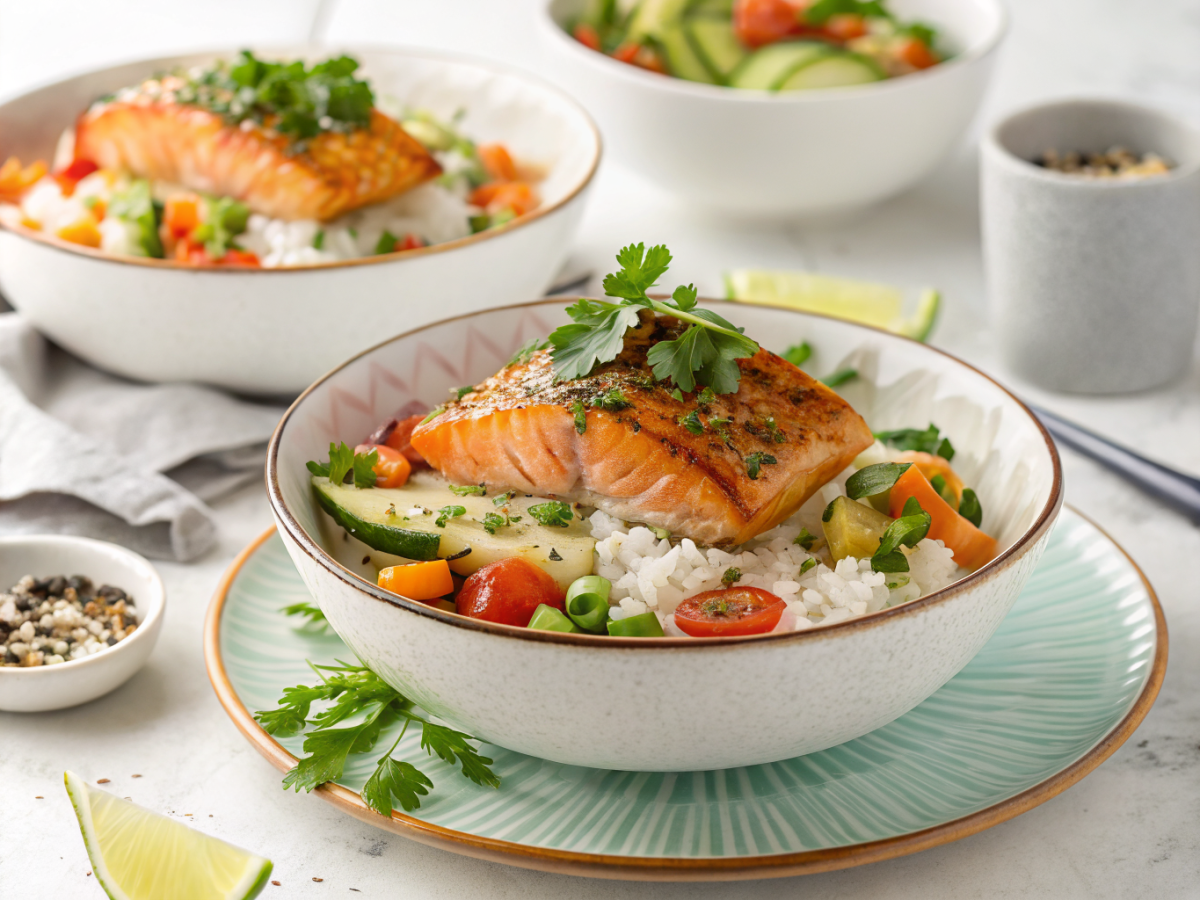
Delicious Crispy Salmon Rice Bowls
Ingredients
Method
- Cook jasmine rice according to package directions. Once cooked, fluff with a fork and keep warm.
- Pat salmon fillets dry with paper towels. Season both sides with salt, pepper, and garlic powder.
- Heat olive oil in a large skillet over medium-high heat. Place salmon skin-side down and cook for 5-6 minutes until skin is crispy. Flip and cook for another 3-4 minutes until cooked through.
- In a small bowl, whisk together soy sauce, sesame oil, and rice vinegar until well combined.
- While salmon cooks, prepare cucumber by dicing it. Cook edamame according to package instructions if frozen.
- Divide cooked rice among four bowls. Top each with a salmon fillet, diced cucumber, and edamame.
- Drizzle the soy sauce mixture over each bowl. Garnish with sesame seeds if desired and serve immediately while salmon is crispy.
Nutrition
Notes
Tried this recipe?
Let us know how it was!Crispy Salmon Rice Bowls: 5 Easy Tips for Perfect Results
Achieving the perfect crispy salmon skin is all about technique and timing. The key lies in starting with dry salmon, using the right heat level, and resisting the urge to flip too early. These fundamental principles separate soggy salmon from the gloriously crispy version that makes this dish so irresistible.
First, always pat your salmon completely dry with paper towels before seasoning. Moisture is the enemy of crispiness, so take an extra minute to ensure the skin is bone dry. Season generously with salt, which also helps draw out additional moisture while enhancing flavor.
Second, use a non-stick or well-seasoned cast iron skillet over medium-high heat. Add a thin layer of oil with a high smoke point like avocado or grapeseed oil. Wait until the oil shimmers before adding your salmon skin-side down, and don’t move it for at least 4-5 minutes.
Third, press down gently on the salmon with a spatula during the first minute of cooking. This ensures even contact with the pan and prevents the fish from curling. The pressure helps create that uniformly golden, crackling skin you’re after.
Fourth, cook the salmon 80% of the way skin-side down before flipping. Most of the cooking should happen with the skin against the heat, which renders the fat and creates maximum crispiness. A quick 1-2 minute flip is all you need to finish the flesh side.
Fifth, let the salmon rest for 2-3 minutes after cooking before assembling your bowl. This allows the juices to redistribute and the skin to maintain its crispiness. Cutting into it immediately can cause moisture to soften that perfectly crispy exterior you worked so hard to achieve.
Why You’ll Love This Crispy Salmon Rice Bowls
This recipe belongs firmly in the high protein recipes category, delivering approximately 35-40 grams of protein per serving. The omega-3 rich salmon provides essential fatty acids that support heart health, brain function, and reduce inflammation throughout your body. Combined with nutrient-dense vegetables and whole grains, you’re getting a complete nutritional profile in one delicious bowl.
The versatility of this dish makes it perfect for any occasion or dietary preference. You can easily customize the vegetables based on what’s in season or sitting in your refrigerator. The base recipe works beautifully with additions like edamame, cucumber, avocado, pickled vegetables, or seaweed.
Preparation time is remarkably quick, taking only about 25-30 minutes from start to finish. This efficiency makes it ideal for busy weeknights when you want something nutritious but don’t have hours to spend in the kitchen. The simple cooking techniques mean even novice cooks can achieve impressive results.
The textural contrast in every bite creates an engaging eating experience that keeps you coming back for more. Crispy salmon skin against tender fish, fluffy rice with crunchy vegetables, and creamy sauce tying everything together delivers satisfaction on multiple sensory levels. This complexity of textures elevates the dish beyond basic meal prep fare.
Budget-conscious cooks will appreciate that salmon, while premium, stretches beautifully in bowl format. A single fillet serves one person generously when paired with rice and vegetables. Shopping sales or using frozen salmon makes this dish even more economical without sacrificing quality.
Core Ingredients for Crispy Salmon Rice Bowls

The salmon itself is obviously the star ingredient, and quality matters significantly here. Look for fresh, wild-caught salmon when possible, with skin on for that signature crispiness. Sockeye, coho, or king salmon varieties work beautifully, each offering slightly different flavor profiles and fat content.
For the rice base, short-grain white rice or sushi rice provides the best texture and authentic experience. The slight stickiness helps the rice clump together perfectly for easy eating with chopsticks. Brown rice or cauliflower rice work as healthier alternatives, though they’ll change the overall texture and flavor profile slightly.
Fresh vegetables add color, crunch, and nutritional value to balance the rich salmon. Consider including shredded carrots, sliced cucumber, edamame, radishes, and leafy greens like spinach or arugula. The more colorful your vegetable selection, the more diverse the nutrient content and visual appeal.
The sauce component brings everything together with flavor and moisture. A simple combination of mayonnaise, sriracha, and soy sauce creates a spicy, creamy element. Alternatively, try a sesame-ginger dressing, ponzu sauce, or miso-based dressing depending on your flavor preferences.
Garnishes and toppings provide the finishing touches that elevate presentation and taste. Toasted sesame seeds, sliced green onions, nori strips, pickled ginger, and furikake seasoning all make excellent additions. These small touches add layers of flavor and authentic Asian-inspired character to your bowl.
Essential Ingredients List
- 4 salmon fillets (6 oz each), skin-on
- 2 cups uncooked short-grain rice
- 1 tablespoon avocado or vegetable oil
- 2 teaspoons kosher salt
- 1 teaspoon black pepper
- 2 cups shredded carrots
- 1 English cucumber, sliced thin
- 1 cup edamame, shelled
- 2 avocados, sliced
- 4 tablespoons mayonnaise
- 2 tablespoons sriracha sauce
- 2 tablespoons soy sauce
- 2 tablespoons rice vinegar
- 2 teaspoons sesame oil
- 2 tablespoons sesame seeds
- 4 green onions, sliced
- Nori sheets, cut into strips
How to Make Crispy Salmon Rice Bowls: Step-by-Step
Begin by cooking your rice according to package directions, typically a 1:1.25 ratio of rice to water for short-grain varieties. Rinse the rice thoroughly under cold water until the water runs clear to remove excess starch. This washing step ensures fluffy, separate grains rather than gummy, overcooked rice.
While the rice cooks, prepare your salmon fillets by patting them completely dry with paper towels. Season both sides generously with salt and pepper, paying special attention to the skin side. Let the seasoned salmon rest at room temperature for 10-15 minutes, which helps it cook more evenly.
Heat a large non-stick or cast iron skillet over medium-high heat and add your oil. Once the oil shimmers and moves easily across the pan, carefully place the salmon fillets skin-side down. Press gently with a spatula for the first 30-60 seconds to ensure full contact with the cooking surface.
Cook undisturbed for 5-6 minutes, resisting the temptation to peek or move the fish. You’ll know it’s ready to flip when the flesh has turned opaque about 80% of the way up the side. Flip carefully and cook for an additional 1-2 minutes on the flesh side until just cooked through.
While the salmon cooks, prepare your vegetables by washing, peeling, and slicing as needed. Arrange them in separate piles for easy assembly later. This mise en place approach makes the final bowl construction quick and organized.
Mix together your sauce ingredients in a small bowl, adjusting the spice level to your preference. Taste and adjust seasoning with additional soy sauce, sriracha, or a touch of honey for sweetness. The sauce should be creamy, slightly spicy, and well-balanced between salty and tangy flavors.
Once the rice is cooked, fluff it gently with a fork and season with a splash of rice vinegar and sesame oil. This simple seasoning adds depth and authentic flavor that complements the salmon perfectly. Let it cool slightly before assembling to prevent wilting your fresh vegetables.
Assembly Instructions
Divide the seasoned rice among four bowls, creating a base layer. Arrange your prepared vegetables in separate sections around the bowl for an attractive presentation. This segmented approach looks professional and allows diners to mix ingredients according to their preferences.
Place one salmon fillet on top of each rice bowl, positioning it prominently as the centerpiece. Drizzle your prepared sauce over the salmon and vegetables, or serve it on the side for individual control. Garnish generously with sesame seeds, sliced green onions, and nori strips for authentic finishing touches.
Nutrition & Health Benefits
Salmon ranks among the most nutritious proteins available, packed with omega-3 fatty acids EPA and DHA. These essential fats support cardiovascular health, reduce inflammation, and promote optimal brain function. A single serving provides more than your daily recommended intake of these crucial nutrients.
The high protein content in this dish supports muscle maintenance, satiety, and metabolic health. With approximately 35-40 grams of protein per serving, this bowl keeps you full for hours and helps stabilize blood sugar levels. This makes it an excellent choice for anyone following balanced nutrition guidelines or managing their weight.
Salmon provides an excellent source of B vitamins, particularly B12, B6, and niacin, which support energy production and nervous system function. It also contains significant amounts of selenium, an important antioxidant mineral that supports thyroid function and immune health. The vitamin D content helps with calcium absorption and bone health.
The vegetables in this bowl contribute fiber, vitamins, minerals, and phytonutrients that support overall health. Carrots provide beta-carotene for eye health, cucumbers offer hydration and silica for skin health, and edamame adds plant-based protein and fiber. The variety of colors ensures a diverse nutrient profile.
The rice provides easily digestible carbohydrates that fuel your body and brain, making this a balanced macronutrient profile. While white rice is more processed, it’s easier to digest and works well for post-workout recovery. Switching to brown rice increases fiber and micronutrient content for those prioritizing whole grains.
Nutritional Information Per Serving
- Calories: 620
- Protein: 38g
- Carbohydrates: 52g
- Fat: 28g
- Fiber: 8g
- Omega-3 fatty acids: 2,200mg
- Vitamin D: 112% DV
- Vitamin B12: 127% DV
- Selenium: 85% DV
Variations & Substitutions
For those following specific dietary patterns, this recipe adapts easily to various needs and preferences. Swap white rice for cauliflower rice to create a low-carb, keto-friendly version that still delivers on flavor and satisfaction. Brown rice, quinoa, or farro work beautifully for those seeking more whole grains and fiber in their diet.
If salmon isn’t available or preferred, other fish work wonderfully with this same preparation method. Try arctic char, trout, or striped bass for similar results with slightly different flavor profiles. Even firm white fish like halibut or cod can be prepared this way, though they lack the rich omega-3 content of salmon.
The sauce component offers endless opportunities for customization based on your taste preferences. A tahini-based sauce with lemon and garlic creates a Mediterranean twist, while a ginger-miso dressing adds earthy, umami depth. Peanut sauce or a simple ponzu with citrus brings entirely different but equally delicious flavor profiles.
Vegetable selections can change seasonally to take advantage of peak freshness and flavor. Summer might feature snap peas and corn, while winter could include roasted sweet potato and Brussels sprouts. This flexibility ensures the recipe never gets boring and stays aligned with sustainable eating practices.
For meal prep purposes, consider preparing components separately and assembling just before eating. This prevents the rice from absorbing too much moisture and keeps vegetables crisp. The salmon can be reheated gently or enjoyed cold, making it versatile for packed lunches.
Serving Suggestions
This bowl stands beautifully on its own as a complete meal, but certain additions can enhance the experience further. A side of miso soup adds warmth and umami depth while keeping the meal light and digestive-friendly. Seaweed salad provides additional minerals and authentic Japanese restaurant vibes.
For entertaining or special occasions, set up a DIY bowl bar with all components separated. Guests can customize their bowls according to their preferences, dietary needs, and hunger levels. This interactive approach works wonderfully for casual dinner parties or family meals with picky eaters.
Beverage pairings can elevate the dining experience significantly. Green tea, both hot and iced, complements the Asian-inspired flavors perfectly while providing antioxidants. For those who enjoy wine, a crisp Sauvignon Blanc or unoaked Chardonnay pairs beautifully with the rich salmon.
Consider serving this as part of a larger dinner recipes spread for gatherings. Pair it with gyoza, spring rolls, or edamame as appetizers for a complete Asian-fusion meal. The variety of textures and flavors creates a memorable dining experience that impresses guests.
Leftover components can be repurposed creatively throughout the week. Use extra salmon in salads, grain bowls, or scrambled eggs for breakfast. The seasoned rice works perfectly for fried rice, and the vegetables can top sandwiches or wraps for quick lunches.
Common Mistakes to Avoid
The most frequent error home cooks make is not drying the salmon thoroughly before cooking. Even a small amount of surface moisture prevents proper browning and creates steam instead of that coveted crispy skin. Take the extra time to pat it completely dry and even let it air-dry for a few minutes.
Overcrowding the pan is another common pitfall that leads to disappointing results. When fillets touch each other, they steam rather than sear, resulting in rubbery skin instead of crispy perfection. Cook in batches if necessary to maintain proper spacing and heat distribution.
Flipping the salmon too early or too frequently disrupts the crisping process and can cause the skin to stick and tear. Patience is essential—wait until the fish releases naturally from the pan before attempting to flip. If it’s sticking, it’s not ready yet.
Using rice that’s too hot when assembling the bowls can wilt delicate vegetables and make everything soggy. Let the rice cool for 5-10 minutes after cooking before building your bowls. This small step preserves the textural contrast that makes these bowls so enjoyable.
Underseasoning is a subtle but significant mistake that results in bland, forgettable bowls. Don’t be shy with salt and seasoning at every stage—the salmon, rice, and vegetables all benefit from proper seasoning. Taste as you go and adjust accordingly for balanced, flavorful results.
Storage & Meal Prep Tips
Proper storage techniques ensure your prepared components stay fresh and delicious for several days. Store cooked salmon in an airtight container in the refrigerator for up to 3 days, keeping it separate from other components. The skin won’t remain crispy after refrigeration, but you can re-crisp it briefly in a hot skillet or under the broiler.
Cooked rice stores well for 4-5 days when kept in an airtight container in the refrigerator. Add a splash of water before reheating to restore moisture and fluffiness. Freeze portions in individual servings for up to 3 months if you want to prep further in advance.
Prepare vegetables in advance by washing, cutting, and storing them in separate containers with paper towels to absorb excess moisture. Hardy vegetables like carrots and radishes keep for 4-5 days, while more delicate options like cucumber and avocado should be cut fresh. This approach streamlines assembly while maintaining quality.
The sauce can be prepared up to a week in advance and stored in a sealed container in the refrigerator. Give it a good stir before using, as ingredients may separate during storage. Making a larger batch saves time and ensures consistent flavor throughout the week.
For optimal meal prep, consider the assembly-line approach used in professional kitchens. Dedicate one session to cooking all proteins and grains, another to vegetable prep, and keep assembly quick and simple throughout the week. This method, similar to techniques used in quick easy meals, maximizes efficiency while minimizing daily cooking time.
Final Thoughts on Crispy Salmon Rice Bowls
These Crispy Salmon Rice Bowls represent the perfect intersection of nutrition, convenience, and culinary satisfaction. The recipe demonstrates that healthy eating doesn’t require sacrifice or bland flavors, but rather smart ingredient choices and proper technique. With practice, you’ll develop the confidence to customize and adapt this framework to your personal preferences and dietary needs.
The versatility of this dish makes it a valuable addition to any home cook’s repertoire, suitable for everything from meal prep to entertaining. The impressive presentation belies the simplicity of preparation, making you look like a culinary expert with minimal effort. Once you master the basic technique, endless variations become possible, ensuring you’ll never tire of this nutritious bowl.
Whether you’re focused on building muscle, losing weight, or simply eating more whole foods, this recipe delivers on all fronts. The balanced macronutrient profile and nutrient density support various health goals while satisfying your taste buds completely. Investing time in learning this recipe pays dividends in improved health, reduced food costs, and enhanced cooking skills that transfer to other dishes.
Frequently Asked Questions
Can I make Crispy Salmon Rice Bowls without the skin?
While you can certainly prepare this recipe with skinless salmon, you’ll miss out on the signature crispy texture that makes these bowls so special. The skin provides healthy fats, additional flavor, and that satisfying crunch that contrasts beautifully with the tender fish. If you must use skinless fillets, consider adding crispy elements like toasted nuts or fried shallots for textural interest.
How do I know when my salmon is cooked perfectly?
Perfectly cooked salmon should reach an internal temperature of 125-130°F for medium doneness, which leaves the center slightly translucent and moist. The fish should flake easily with a fork but still hold together, not falling apart into dry pieces. Visual cues include opaque flesh that’s just turned from translucent to solid throughout, with a slightly darker exterior and lighter interior.
What’s the best way to reheat leftover Crispy Salmon Rice Bowls?
For best results, reheat components separately rather than the assembled bowl. Microwave the rice with a splash of water covered for 1-2 minutes, warm the salmon gently in a 275°F oven for 8-10 minutes, and keep vegetables fresh by adding them cold. This method preserves textures better than reheating everything together, which can make the rice mushy and the vegetables limp.
Can I use frozen salmon for this recipe?
Frozen salmon works perfectly well for this recipe, though proper thawing is essential for best results. Thaw salmon in the refrigerator overnight or use the quick-thaw method by sealing it in a plastic bag and submerging in cold water for 30-60 minutes. Pat it extremely dry before cooking, as frozen salmon tends to retain more moisture than fresh, which can interfere with achieving crispy skin.

Food lover & recipe creator sharing simple, protein-rich recipes for busy lives.
