
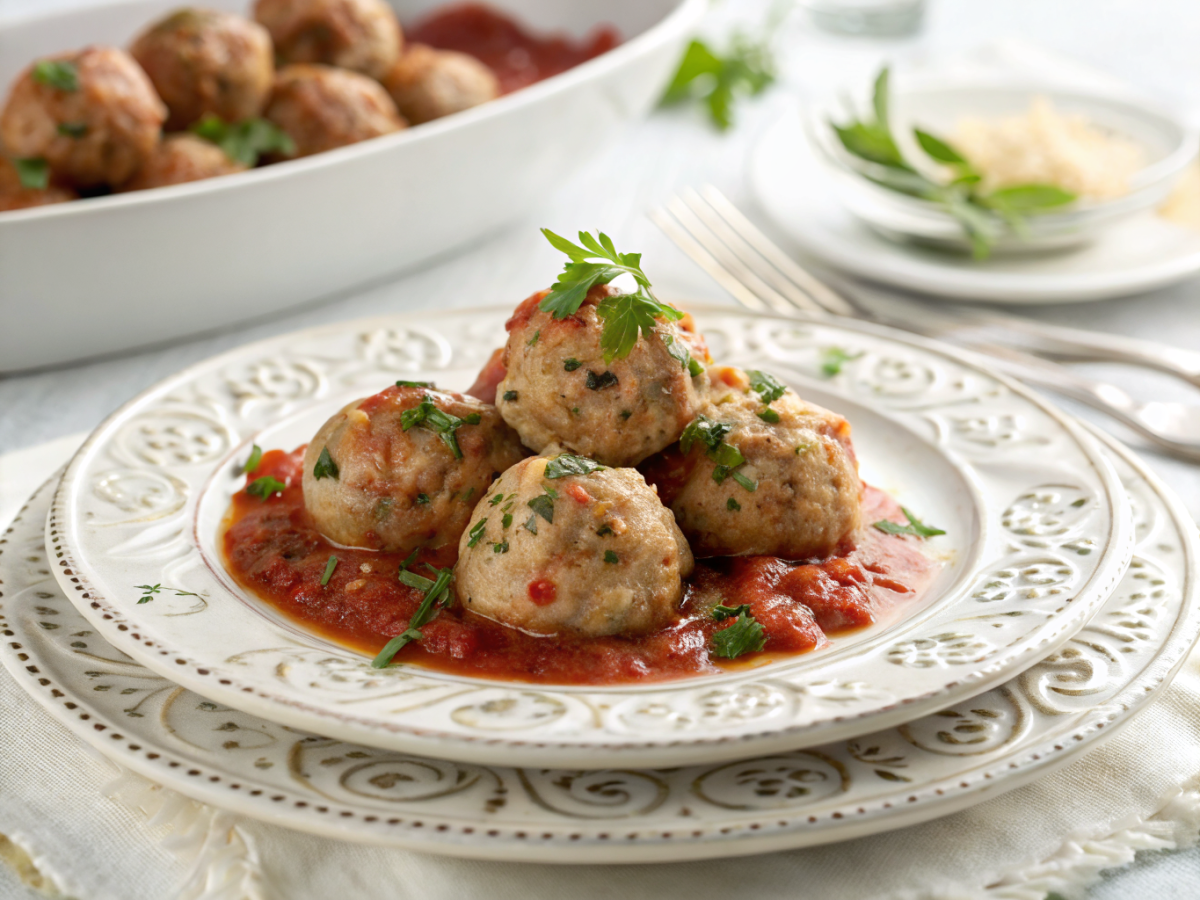
Turkey Ricotta Meatballs Recipe: 5 Easy Tips for the Best Results

Ultimate turkey ricotta meatballs recipe

Ultimate Turkey Ricotta Meatballs

Tender and juicy turkey meatballs enriched with creamy ricotta cheese for a high-protein, flavorful dinner.
Prep Time 15 minutes
Cook Time 25 minutes
Total Time 40 minutes
Servings: 4 servings
Course: High Protein Recipes
Cuisine: American
Calories: 285

Ingredients
  

  • 1 lb ground turkey 93% lean
  • 1 cup ricotta cheese whole milk or part-skim
  • 1/2 cup breadcrumbs Italian seasoned
  • 1/4 cup Parmesan cheese grated
  • 2 cloves garlic minced
  • 1 large egg beaten
  • 2 tablespoons fresh parsley chopped
  • 1 teaspoon salt
  • 1/2 teaspoon black pepper

Method
 

  1. Preheat your oven to 400 degrees Fahrenheit. Line a baking sheet with parchment paper or lightly grease it with cooking spray.
  2. In a large mixing bowl, combine ground turkey, ricotta cheese, breadcrumbs, Parmesan cheese, minced garlic, beaten egg, chopped parsley, salt, and black pepper. Mix gently with your hands until just combined, being careful not to overmix.
  3. Using your hands or a cookie scoop, form the mixture into 16-20 meatballs, about 1.5 inches in diameter. Place them evenly spaced on the prepared baking sheet.
  4. Bake in the preheated oven for 20-25 minutes, or until the meatballs are golden brown on the outside and cooked through to an internal temperature of 165 degrees Fahrenheit.
  5. Remove from oven and let the meatballs rest for 5 minutes. Serve with marinara sauce over pasta, in a sub sandwich, or with your favorite side dishes.

Nutrition

Calories: 285kcalCarbohydrates: 12gProtein: 32gFat: 12gSodium: 720mgFiber: 1g

Notes

The ricotta keeps these turkey meatballs incredibly moist and tender. For best results, avoid overmixing the meat mixture as this can make the meatballs tough. These meatballs freeze beautifully - store in an airtight container for up to 3 months and reheat in the oven or microwave.

Tried this recipe?

Let us know how it was!
\n\nThese Turkey Ricotta Meatballs are the ultimate high-protein dinner solution that delivers tender, juicy results every single time. Combining lean ground turkey with creamy ricotta cheese creates an incredibly moist texture that traditional meatballs simply can’t match. Whether you’re meal prepping for the week or feeding a hungry family, this recipe will quickly become your go-to favorite.

Turkey Ricotta Meatballs: 5 Easy Tips for Perfect Results

Creating restaurant-quality meatballs at home requires understanding a few key techniques that separate good from exceptional. The secret lies in the perfect balance of protein, fat, and binding agents that work together harmoniously. These five essential tips will transform your meatball game and ensure consistent, delicious results every time you cook.

First, never overmix your meat mixture as this develops too much gluten and creates dense, tough meatballs. Use a gentle folding motion to combine ingredients until just incorporated. Second, always use cold ricotta straight from the refrigerator to maintain the proper texture and prevent the mixture from becoming too loose or sticky.

Third, portion your meatballs uniformly using a cookie scoop or ice cream scoop for even cooking. Fourth, let the formed meatballs rest in the refrigerator for at least 15 minutes before cooking to help them hold their shape. Fifth, resist the urge to flip them too early when pan-searing—let a proper crust develop first for maximum flavor and structural integrity.

Why You’ll Love This Turkey Ricotta Meatballs Recipe

This recipe stands out because it delivers maximum flavor while keeping calories and fat content remarkably low compared to traditional beef meatballs. The ricotta cheese adds incredible moisture and a subtle creaminess that prevents the common problem of dry turkey meat. You’ll enjoy tender, succulent meatballs that satisfy without the heaviness of their beef counterparts.

These meatballs are incredibly versatile and work beautifully in countless dishes throughout the week. Serve them over pasta with marinara sauce, nestle them in hoagie rolls for sandwiches, or enjoy them as a protein-packed snack. They’re perfect for anyone following high protein recipes or looking to incorporate leaner meats into their diet without sacrificing taste.

The preparation is straightforward and beginner-friendly, requiring no special equipment or advanced cooking techniques. From start to finish, you can have these meatballs ready in under 40 minutes, making them ideal for busy weeknights. Plus, they freeze exceptionally well, allowing you to batch cook and have healthy, homemade protein ready whenever you need it.

Kids absolutely love these mild, tender meatballs, making them an excellent choice for family dinners. The subtle flavor profile means even picky eaters will clean their plates. They’re also naturally gluten-free when paired with appropriate breadcrumbs or almond flour, accommodating various dietary needs without complicated substitutions.

Core Ingredients for Turkey Ricotta Meatballs

The foundation of exceptional meatballs starts with selecting quality ingredients that complement each other perfectly. Each component plays a specific role in creating the ideal texture, flavor, and nutritional profile. Understanding these ingredients helps you make informed substitutions if needed while maintaining the integrity of the recipe.

Turkey ricotta meatballs ingredients

The Protein Base

Ground Turkey (1.5 pounds): Use 93% lean ground turkey for the best balance of flavor and moisture. Avoid extra-lean varieties as they can produce dry meatballs. The turkey provides approximately 35 grams of protein per serving, making these meatballs an excellent choice for muscle building and recovery.

Ricotta Cheese (1 cup): Full-fat or part-skim ricotta both work beautifully in this recipe. The ricotta adds creaminess, moisture, and helps bind the ingredients together naturally. It also contributes calcium and additional protein while keeping the meatballs incredibly tender throughout the cooking process.

Binding and Texture Agents

Breadcrumbs (1/2 cup): Plain or Italian-seasoned breadcrumbs provide structure and help absorb excess moisture. Panko breadcrumbs create a slightly lighter texture if you prefer. For a gluten-free version, substitute with almond flour or gluten-free breadcrumbs in equal amounts without compromising texture.

Eggs (2 large): Eggs act as the primary binder, holding all ingredients together during cooking. They also add richness and contribute to the tender interior texture. Room temperature eggs incorporate more easily into the mixture than cold eggs straight from the refrigerator.

Flavor Enhancers

Garlic (4 cloves, minced): Fresh garlic provides aromatic depth and savory notes that complement the mild turkey. Garlic powder can substitute in a pinch, using 1 teaspoon per clove. The garlic also offers immune-boosting properties and adds complexity without overwhelming the delicate ricotta flavor.

Fresh Parsley (1/4 cup, chopped): Italian flat-leaf parsley adds freshness and a subtle herbaceous quality. Fresh herbs always provide superior flavor compared to dried versions. The parsley also contributes vitamins A, C, and K along with antioxidants that support overall health.

Parmesan Cheese (1/2 cup, grated): Freshly grated Parmesan adds nutty, salty, umami-rich flavor that elevates the entire dish. Pre-grated cheese works but fresh delivers noticeably better results. The Parmesan also helps with binding and creates those delicious crispy bits when the meatballs are seared.

Salt and Pepper: Kosher salt (1.5 teaspoons) and freshly ground black pepper (1/2 teaspoon) are essential for proper seasoning. Don’t skip the salt as it enhances all other flavors and helps the proteins bind properly. Taste the mixture before forming meatballs by cooking a small test portion.

Italian Seasoning (1 tablespoon): A blend of dried oregano, basil, thyme, and rosemary provides classic Italian flavor. You can create your own blend or use a quality store-bought version. This seasoning ties all the flavors together and gives the meatballs their characteristic Italian-American profile.

How to Make Turkey Ricotta Meatballs: Step-by-Step

Following a systematic approach ensures consistently perfect results every time you prepare these meatballs. Taking your time with each step prevents common mistakes and builds proper technique. These detailed instructions walk you through the entire process from preparation to the final perfectly cooked meatball.

Step 1: Prepare Your Workspace

Preheat your oven to 400°F (200°C) and line a large baking sheet with parchment paper or a silicone baking mat. Gather all your ingredients and measure them out before beginning—this mise en place approach streamlines the process. Having everything ready prevents overmixing while searching for ingredients, which is crucial for tender meatballs.

Set out a large mixing bowl and a smaller bowl for the wet ingredients. Prepare a plate or tray where you’ll place the formed meatballs before cooking. Having your workspace organized makes the assembly process smooth and efficient, especially if you’re cooking with kids or helpers.

Step 2: Combine the Ingredients

In your large mixing bowl, add the ground turkey, ricotta cheese, breadcrumbs, eggs, minced garlic, chopped parsley, grated Parmesan, salt, pepper, and Italian seasoning. Using your hands or a large fork, gently combine the ingredients until just mixed. The mixture should look uniform but avoid overworking it, which develops tough proteins.

The mixture will feel slightly wet and sticky, which is exactly right. If it seems too loose to form into balls, add another tablespoon or two of breadcrumbs. If it feels too dry or dense, incorporate another tablespoon of ricotta to achieve the proper consistency.

Step 3: Form the Meatballs

Using a 2-tablespoon cookie scoop or ice cream scoop, portion out the meat mixture onto your prepared baking sheet. This yields approximately 24-28 meatballs depending on your preferred size. Uniform sizing ensures even cooking, so all meatballs finish at the same time without some being overcooked while others remain underdone.

Lightly wet your hands with cold water and gently roll each portion into a smooth ball. Don’t compress them too tightly—a gentle touch creates tender meatballs. Space them about 1 inch apart on the baking sheet to allow air circulation for even browning.

Step 4: Baking Method

Place the baking sheet in your preheated oven and bake for 20-25 minutes until the meatballs are golden brown and reach an internal temperature of 165°F (74°C). Use an instant-read thermometer to check the temperature in the center of the largest meatball. The meatballs will firm up as they cook and develop a beautiful golden exterior.

For extra browning, turn on the broiler for the last 2-3 minutes of cooking, watching carefully to prevent burning. This creates a deliciously caramelized crust while maintaining the tender, juicy interior. Remove from the oven and let rest for 5 minutes before serving to allow juices to redistribute.

Step 5: Pan-Searing Method (Alternative)

For a crispier exterior, heat 2 tablespoons of olive oil in a large skillet over medium-high heat. Working in batches to avoid crowding, add meatballs and sear for 2-3 minutes per side until golden brown. The meatballs don’t need to cook through completely at this stage if you’re finishing them in sauce.

Transfer the seared meatballs to your favorite marinara sauce and simmer for 15-20 minutes until cooked through. This method infuses the meatballs with sauce flavor while ensuring they stay incredibly moist. The combination of searing and simmering creates restaurant-quality results with complex, layered flavors.

Step 6: Air Fryer Method (Quick Option)

Preheat your air fryer to 380°F (193°C) and lightly spray the basket with cooking oil. Arrange meatballs in a single layer without touching, working in batches if necessary. Cook for 12-15 minutes, shaking the basket halfway through for even browning on all sides.

The air fryer produces exceptionally crispy exteriors while keeping the insides moist and tender. This method is faster than oven-baking and uses minimal oil, making it perfect for those seeking quick easy meals without compromising on flavor or texture.

Nutrition & Health Benefits

These meatballs pack an impressive nutritional punch while remaining relatively low in calories and fat. Each serving of 4 meatballs contains approximately 280 calories, 35 grams of protein, 8 grams of fat, and 12 grams of carbohydrates. This macronutrient profile makes them ideal for anyone focused on muscle building, weight management, or simply eating more balanced meals.

Ground turkey is an excellent source of lean protein that supports muscle growth, repair, and maintenance. It’s rich in B vitamins, particularly niacin and B6, which play crucial roles in energy metabolism and brain function. Turkey also provides selenium, a powerful antioxidant that supports immune function and thyroid health.

The ricotta cheese contributes calcium, phosphorus, and additional protein while adding minimal saturated fat. These minerals are essential for bone health, especially important for growing children and aging adults. Ricotta also contains riboflavin and vitamin A, supporting eye health and cellular energy production.

Compared to traditional beef meatballs, this turkey version contains approximately 40% less saturated fat and 30% fewer calories per serving. This makes them heart-healthier while still delivering satisfying, rich flavor. The reduced fat content doesn’t mean sacrificing taste—the ricotta ensures each bite remains moist and delicious.

Garlic and parsley provide additional health benefits beyond flavor enhancement. Garlic contains allicin, a compound with antibacterial and antiviral properties that may help reduce blood pressure and cholesterol levels. Parsley is rich in vitamin K, crucial for blood clotting and bone metabolism, plus it contains antioxidants that combat inflammation.

For those monitoring sodium intake, you can reduce the salt to 1 teaspoon without significantly impacting flavor, especially if using Italian seasoning that contains salt. The Parmesan cheese also contributes sodium, so adjust accordingly. Balanced nutrition approaches help you enjoy flavorful food while meeting health goals.

Variations & Substitutions

This versatile recipe adapts easily to accommodate different dietary needs, preferences, and ingredient availability. Understanding which substitutions work best helps you customize the recipe while maintaining the essential characteristics. These variations ensure everyone can enjoy delicious, tender meatballs regardless of dietary restrictions.

Protein Alternatives

Ground Chicken: Substitute ground turkey with ground chicken in equal amounts for a similar lean protein option. Chicken produces slightly milder flavor but works identically in the recipe. The nutritional profile remains nearly identical, making this an easy swap based on availability or personal preference.

Turkey-Pork Blend: Mix ground turkey with ground pork (70/30 ratio) for added richness and moisture. The pork fat enhances flavor and creates an even more tender texture. This combination bridges the gap between healthy turkey and traditional beef meatballs while keeping calories reasonable.

Plant-Based Ground: Use plant-based ground meat alternatives for a vegetarian version that maintains similar texture. Reduce the ricotta slightly as plant proteins often contain more moisture. Add an extra tablespoon of breadcrumbs to help with binding since plant proteins behave differently than animal proteins.

Cheese Modifications

Cottage Cheese: Replace ricotta with well-drained cottage cheese for a tangier flavor and higher protein content. Blend the cottage cheese briefly for smoother texture if you prefer. This substitution works particularly well for those seeking maximum protein with minimal fat.

Greek Yogurt: Use thick, full-fat Greek yogurt in place of half the ricotta for added protein and probiotic benefits. This creates slightly tangier meatballs with extra moisture. The yogurt also adds beneficial bacteria that support digestive health.

Gluten-Free Options

Almond Flour: Replace breadcrumbs with almond flour in equal amounts for a naturally gluten-free, low-carb version. Almond flour adds nutty flavor and healthy fats while maintaining proper binding. This substitution also increases the protein content slightly.

Crushed Pork Rinds: For a zero-carb keto-friendly option, use finely crushed pork rinds instead of breadcrumbs. This creates incredibly crispy exteriors when pan-seared. The pork rinds add savory depth while keeping the recipe grain-free and low-carbohydrate.

Flavor Variations

Mediterranean Style: Add 1/4 cup chopped sun-dried tomatoes, 2 tablespoons chopped fresh basil, and 1/4 cup crumbled feta cheese. Replace Italian seasoning with oregano and a pinch of red pepper flakes. These additions create bright, tangy flavors reminiscent of Greek cuisine.

Asian-Inspired: Mix in 2 tablespoons soy sauce, 1 tablespoon grated fresh ginger, 2 chopped green onions, and 1 teaspoon sesame oil. Replace the Parmesan with water chestnuts for crunch. Serve these with sweet chili sauce for a fusion twist on traditional meatballs.

Mexican-Style: Add 1 tablespoon cumin, 1 teaspoon chili powder, 1/4 cup chopped cilantro, and 1/4 cup pepper jack cheese. Replace Italian seasoning with taco seasoning for bold, spicy flavor. These work beautifully in taco bowls or with enchilada sauce.

Serving Suggestions

These versatile meatballs shine in numerous dishes and presentation styles, making them perfect for any meal occasion. Their mild, complementary flavor profile means they pair beautifully with various cuisines and side dishes. Consider these serving ideas to maximize enjoyment and create complete, satisfying meals.

Classic Italian Presentations

Serve over spaghetti or your favorite pasta with homemade marinara sauce for a traditional Italian-American dinner. Top with additional Parmesan cheese and fresh basil for restaurant-quality presentation. The combination of tender meatballs, al dente pasta, and rich tomato sauce creates the ultimate comfort food experience.

Create meatball subs by nestling 3-4 meatballs in toasted hoagie rolls with marinara sauce and melted mozzarella cheese. Add sautéed peppers and onions for extra flavor and nutrition. These sandwiches are perfect for casual dinners, game day gatherings, or satisfying lunches that keep you full for hours.

Layer meatballs in baked ziti or lasagna for hearty, crowd-pleasing casseroles perfect for potlucks and family gatherings. The meatballs add protein and substance while the ricotta in the meatballs complements the ricotta layers. These dishes can be assembled ahead and baked when needed, making entertaining stress-free.

Low-Carb and Healthy Options

Serve over zucchini noodles, spaghetti squash, or cauliflower rice for a low-carb, veggie-forward meal. These lighter bases allow the meatballs to shine while significantly reducing calories and carbohydrates. Add a simple tomato sauce and you have a nutritious meal that doesn’t feel like diet food.

Create Mediterranean-style bowls with quinoa, roasted vegetables, hummus, and tzatziki sauce. Add cucumber, tomatoes, and kalamata olives for fresh, bright flavors. This presentation transforms the meatballs into a complete, balanced meal packed with fiber, vitamins, and healthy fats.

Pair with cauliflower mash and roasted green beans for a complete, protein-rich plate that supports fitness goals. This combination provides approximately 45 grams of protein per serving while keeping the meal under 500 calories. It’s perfect for those following dinner recipes focused on health and wellness.

Appetizer and Party Ideas

Thread meatballs on skewers with cherry tomatoes and fresh mozzarella for elegant party appetizers. Serve with marinara for dipping or drizzle with balsamic glaze. These skewers look impressive but require minimal effort, making them perfect for entertaining without stress.

Create a meatball bar with various sauces including marinara, alfredo, pesto, and barbecue for interactive dining. Let guests customize their plates with different pasta types, vegetables, and toppings. This approach works wonderfully for casual gatherings and allows everyone to create their perfect meal.

Serve as cocktail meatballs in a slow cooker with sweet and tangy sauce for easy entertaining. Keep them warm throughout your event for grab-and-go snacking. Mini versions work especially well for this presentation—form 1-inch meatballs for perfect bite-sized appetizers.

Common Mistakes to Avoid

Understanding potential pitfalls helps you achieve perfect results consistently and builds confidence in your cooking skills. Many home cooks make the same errors that lead to dry, dense, or falling-apart meatballs. Learning from these common mistakes saves time, ingredients, and frustration while elevating your cooking game.

Overmixing the Meat

The most frequent mistake is overworking the meat mixture, which develops gluten and creates tough, dense meatballs. Mix ingredients only until just combined—you should still see slight streaks. Use a gentle folding motion rather than aggressive stirring or kneading.

Your hands are the best tool for mixing, but work quickly and gently to prevent the mixture from warming up too much. Warm meat mixture becomes sticky and difficult to form, plus it can affect food safety. If the mixture becomes too warm, refrigerate it for 10 minutes before proceeding.

Incorrect Meat-to-Binder Ratio

Using too much or too little breadcrumbs and ricotta throws off the texture balance. Too much binder creates mushy meatballs that lack structure, while too little results in dry, crumbly ones. Follow the recipe ratios carefully, especially the first time you make them.

The mixture should hold together when squeezed but not feel paste-like or overly wet. If you can’t form a ball that holds its shape, add breadcrumbs one tablespoon at a time. If the mixture feels dry and won’t hold together, add ricotta or a beaten egg one tablespoon at a time.

Skipping the Rest Period

Cooking meatballs immediately after forming often results in them falling apart during cooking. Refrigerating formed meatballs for at least 15 minutes allows the proteins to firm up and the breadcrumbs to absorb moisture. This simple step dramatically improves structural integrity.

If you’re short on time, place the formed meatballs in the freezer for 5-7 minutes instead. The cold temperature firms up the fat and proteins quickly, helping them hold together during the initial cooking phase. This extra step prevents the disappointment of meatballs that crumble or lose their shape.

Cooking at Wrong Temperature

Cooking meatballs at too high heat causes the exterior to brown before the interior cooks through. This leads to burnt outsides and raw centers, a dangerous combination. Moderate oven temperature (400°F) or medium-high stovetop heat produces the best results with even cooking throughout.

Always verify doneness with an instant-read thermometer rather than relying on visual cues alone. Turkey must reach 165°F internal temperature for food safety. Cutting into meatballs to check doneness releases precious juices, so invest in a good thermometer for consistent, safe results.

Overcrowding the Pan

When pan-searing, placing too many meatballs in the skillet at once lowers the temperature and causes steaming instead of browning. This prevents the delicious crust from forming and can make meatballs stick together. Leave at least 1 inch of space between meatballs for proper air circulation and heat distribution.

Work in batches if necessary, keeping finished meatballs warm in a low oven while cooking the remainder. This patience pays off with beautifully browned, evenly cooked meatballs. Proper searing techniques apply to many proteins and improve overall cooking skills.

Leave a Comment

Recipe Rating