
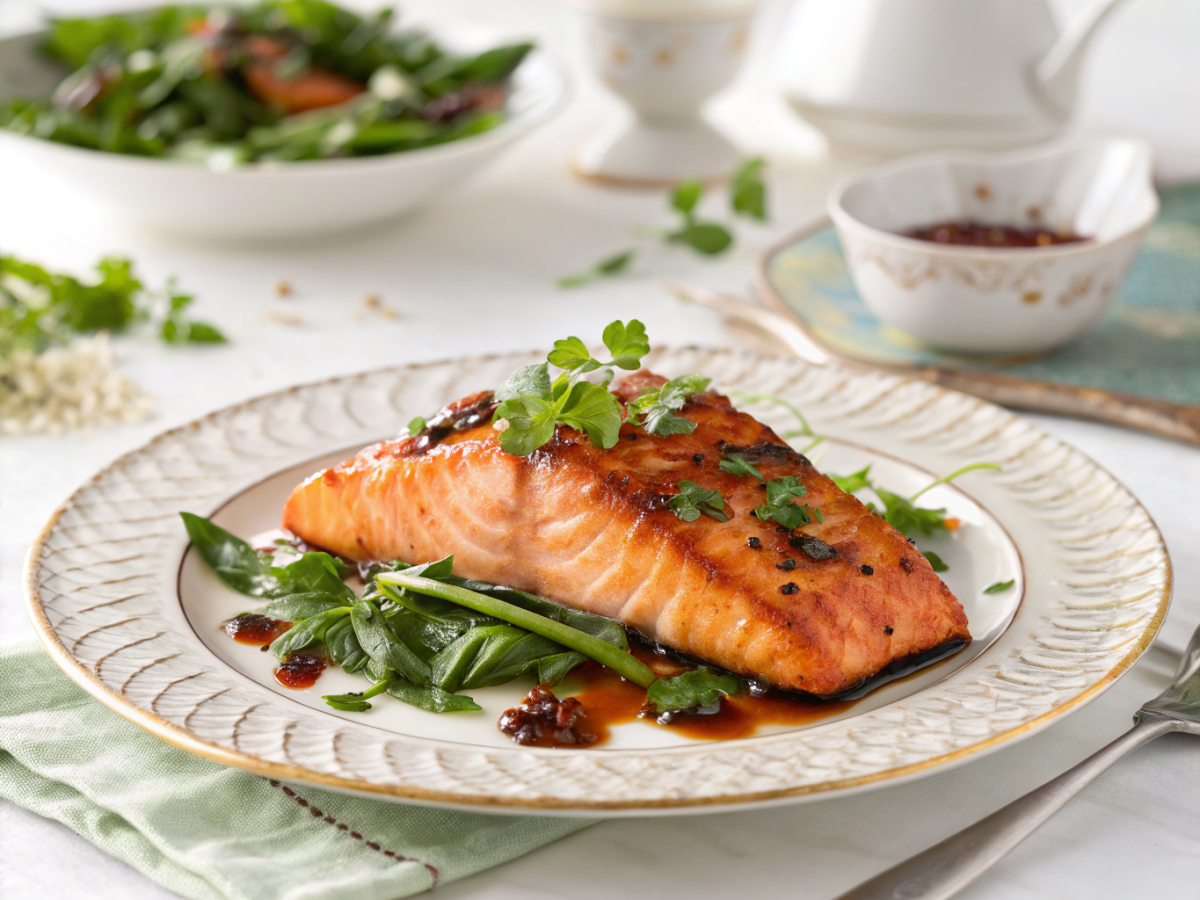
Soy Glazed Salmon Air Fryer You'll Want On Repeat
Ingredients
Method
- In a small bowl, whisk together soy sauce, honey, rice vinegar, sesame oil, minced garlic, and grated ginger until well combined. Set aside.
- Pat salmon fillets dry with paper towels. This helps achieve a better sear and allows the glaze to adhere properly.
- Brush each salmon fillet generously with the soy glaze mixture, reserving about half for basting during cooking.
- Preheat your air fryer to 400 degrees Fahrenheit for 3 minutes. Lightly spray the air fryer basket with cooking spray.
- Place salmon fillets in the air fryer basket in a single layer, leaving space between each piece. Cook for 8 minutes.
- Open the air fryer and brush salmon with remaining glaze. Continue cooking for 3-4 more minutes until salmon reaches an internal temperature of 145 degrees Fahrenheit and flakes easily with a fork.
- Remove salmon from air fryer and let rest for 2 minutes. Garnish with sliced green onions and sesame seeds before serving.
Notes
\n\nThis Soy Glazed Salmon Air Fryer recipe delivers restaurant-quality fish with a perfectly caramelized exterior and tender, flaky interior in just 25 minutes. The combination of savory soy sauce, sweet honey, and aromatic garlic creates an irresistible glaze that transforms ordinary salmon into an extraordinary meal. Whether you’re a busy weeknight cook or meal prep enthusiast, this air fryer method guarantees consistent results every single time.
Soy Glazed Salmon Air Fryer: 5 Easy Tips for Perfect Results
Mastering this recipe starts with understanding the fundamentals of air fryer cooking and how it interacts with delicate fish. The circulating hot air creates a beautiful crust while keeping the salmon moist inside, eliminating the need for excessive oil. This cooking method reduces preparation time significantly compared to traditional oven baking or pan-searing.
The first tip is to always pat your salmon fillets completely dry before applying the glaze. Excess moisture prevents proper caramelization and creates steam instead of that coveted crispy exterior. Use paper towels to thoroughly remove any surface water from the fish.
Second, preheat your air fryer for at least 3-5 minutes before adding the salmon. This ensures even cooking from the moment the fish enters the basket. A properly preheated air fryer mimics the searing effect of a hot pan, locking in juices immediately.
Third, don’t overcrowd the air fryer basket. Leave at least half an inch of space between fillets to allow proper air circulation. Overlapping salmon pieces will cook unevenly and won’t develop that gorgeous glazed finish.
Fourth, brush the glaze on in two stages—once before cooking and again halfway through. This layering technique builds flavor depth and creates a thicker, more lustrous coating. The second application caramelizes beautifully in the final minutes of cooking.
Fifth, use an instant-read thermometer to check for doneness at 145°F internal temperature. Salmon continues cooking slightly after removal from the air fryer, so pulling it at exactly 145°F ensures perfectly moist fish. Overcooked salmon becomes dry and loses its delicate texture.
Why You’ll Love This Soy Glazed Salmon Air Fryer
This recipe solves the common problem of dry, overcooked salmon that plagues home cooks everywhere. The air fryer’s precise temperature control and rapid cooking time preserve the fish’s natural oils and moisture. You’ll achieve professional results without culinary school training or expensive equipment.
The flavor profile balances sweet, salty, and umami notes in perfect harmony. Soy sauce provides the savory foundation while honey adds natural sweetness that caramelizes into a sticky glaze. Fresh ginger and garlic contribute aromatic complexity that elevates this dish beyond basic seasoned fish.
Cleanup is remarkably simple compared to traditional cooking methods. No splattered stovetops, greasy pans, or smoky kitchens to deal with afterward. Simply remove the air fryer basket, wash with warm soapy water, and you’re done in minutes.
This recipe fits seamlessly into various dietary preferences and lifestyles. It’s naturally gluten-free when using tamari instead of regular soy sauce, high in protein, rich in omega-3 fatty acids, and low in carbohydrates. The nutritional profile supports heart health, brain function, and muscle maintenance.
The versatility of this preparation method means you can easily scale it up or down. Cooking for one? Make a single fillet. Hosting a dinner party? Prepare multiple batches in under an hour. The consistent results make meal planning and portion control effortless.
Core Ingredients for Soy Glazed Salmon Air Fryer
Quality ingredients make the difference between good salmon and extraordinary salmon. Start with fresh, wild-caught salmon fillets whenever possible for superior flavor and texture. Look for bright, firm flesh with no fishy odor—fresh salmon should smell like the ocean, clean and mild.
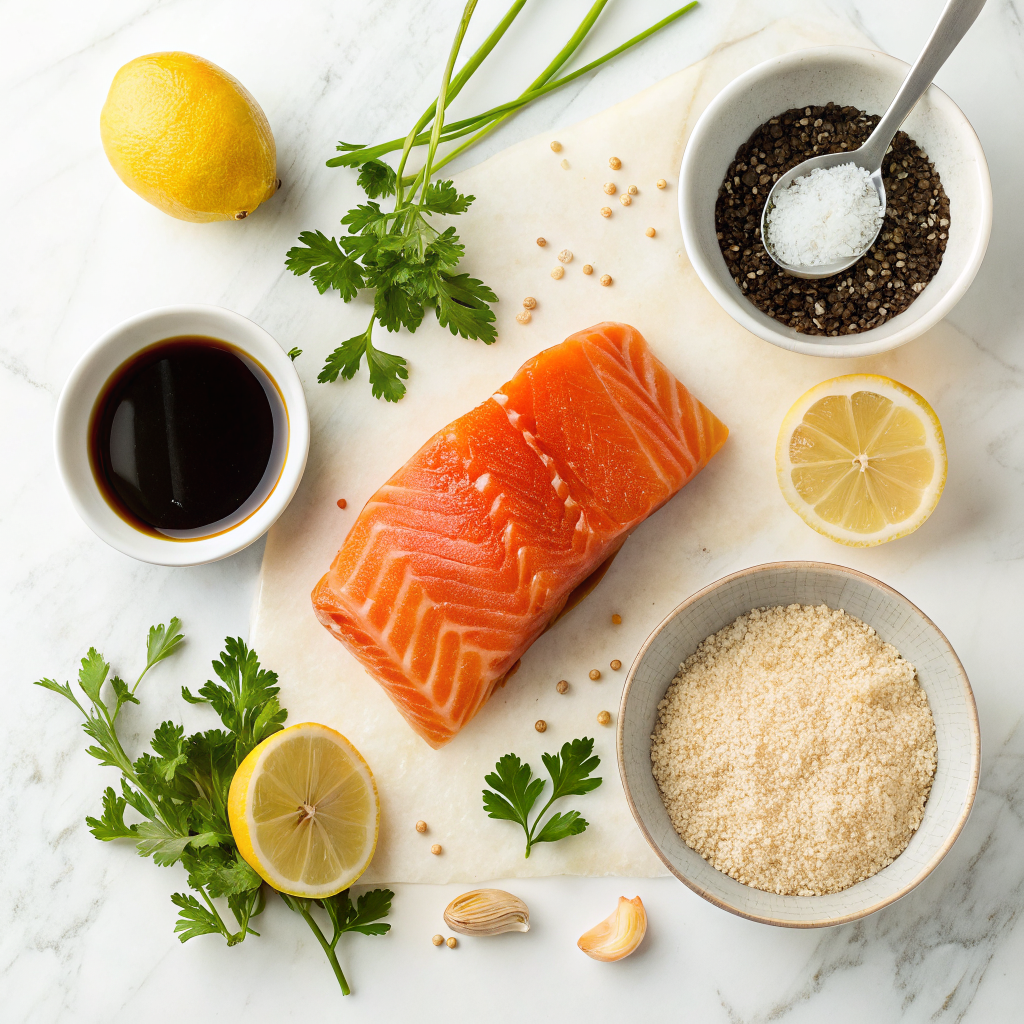
The glaze requires just six simple ingredients that you likely already have in your pantry. Low-sodium soy sauce forms the base, providing that essential umami depth without overwhelming saltiness. If you’re avoiding gluten, tamari or coconut aminos work perfectly as substitutes.
Honey acts as both sweetener and binding agent, helping the glaze adhere to the salmon surface. Raw honey offers more complex flavor than processed varieties, though any type works in a pinch. For a refined sugar-free option, maple syrup or agave nectar substitute beautifully.
Fresh garlic cloves deliver pungent, aromatic notes that mellow during cooking into sweet, savory undertones. Minced garlic from a jar can substitute in emergencies, but fresh always provides superior flavor. Use approximately three medium cloves for optimal impact without overpowering the fish.
Fresh ginger root adds a bright, slightly spicy element that cuts through the richness of salmon. Peel and grate about one tablespoon for the perfect balance. Ground ginger powder can substitute at a ratio of 1 teaspoon powder to 1 tablespoon fresh, though the flavor will be slightly different.
Rice vinegar contributes subtle acidity that brightens the overall flavor profile and helps tenderize the fish. This mild vinegar won’t overpower delicate salmon like harsher varieties might. Apple cider vinegar works as an alternative, though use slightly less due to its stronger acidity.
Toasted sesame oil provides nutty depth and authentic Asian flavor in just a small amount. A little goes a long way—one teaspoon is sufficient for four salmon fillets. This ingredient is optional but highly recommended for that restaurant-quality finish.
Ingredient List
- 4 salmon fillets (6 ounces each), skin-on or skinless
- 3 tablespoons low-sodium soy sauce
- 2 tablespoons honey
- 3 cloves garlic, minced
- 1 tablespoon fresh ginger, grated
- 1 tablespoon rice vinegar
- 1 teaspoon toasted sesame oil
- 1/2 teaspoon black pepper
- 2 green onions, sliced (for garnish)
- 1 tablespoon sesame seeds (for garnish)
How to Make Soy Glazed Salmon Air Fryer: Step-by-Step
Begin by preparing your glaze in a small bowl, combining soy sauce, honey, minced garlic, grated ginger, rice vinegar, and sesame oil. Whisk these ingredients together until the honey fully dissolves and the mixture becomes smooth and glossy. This glaze can be made up to three days in advance and stored in the refrigerator.
Pat your salmon fillets completely dry with paper towels, removing all surface moisture. This critical step ensures proper glaze adhesion and prevents steaming during cooking. Season the flesh side lightly with black pepper, avoiding salt since the soy sauce provides plenty of sodium.
Preheat your air fryer to 400°F for 5 minutes. While it heats, brush approximately half of the glaze over the top and sides of each salmon fillet. Reserve the remaining glaze for a second application during cooking.
Place the glazed salmon fillets in the air fryer basket skin-side down if using skin-on fish. Ensure the fillets don’t touch each other, leaving space for air circulation. If your air fryer is small, cook in batches rather than overcrowding.
Cook for 7 minutes at 400°F, then carefully open the air fryer and brush the remaining glaze over the salmon. The first layer should already be caramelizing beautifully. Close the air fryer and continue cooking for another 3-5 minutes depending on fillet thickness.
Check for doneness by inserting an instant-read thermometer into the thickest part of the fillet. The internal temperature should reach 145°F for fully cooked salmon. For medium-rare salmon, which many prefer, aim for 125-130°F internal temperature.
Remove the salmon from the air fryer and let it rest for 2-3 minutes before serving. This resting period allows juices to redistribute throughout the fish, ensuring maximum moisture. The glaze will thicken slightly as it cools, creating a beautiful sheen.
Garnish with sliced green onions and toasted sesame seeds for visual appeal and added flavor. Serve immediately while the salmon is hot and the glaze is at its most lustrous. For those interested in expanding their air fryer recipe collection, this technique works beautifully with other fish varieties as well.
Cooking Time Guidelines
- Thin fillets (1 inch): 8-10 minutes total
- Medium fillets (1.5 inches): 10-12 minutes total
- Thick fillets (2 inches): 12-15 minutes total
- Frozen salmon: Add 5-7 minutes to cooking time
Nutrition & Health Benefits
Salmon ranks among the most nutritious proteins available, packed with omega-3 fatty acids that support cardiovascular health and reduce inflammation. A single 6-ounce serving provides approximately 350 calories, 40 grams of protein, and 18 grams of healthy fats. These omega-3s, specifically EPA and DHA, contribute to brain function, joint health, and cellular repair.
The air fryer cooking method requires minimal added oil, significantly reducing overall calorie content compared to pan-frying. Traditional pan-seared salmon can absorb 100-200 additional calories from cooking oil. This preparation method delivers the same crispy exterior with a fraction of the fat.
Salmon contains exceptional amounts of vitamin D, with one serving providing over 100% of the daily recommended intake. This essential vitamin supports bone health, immune function, and mood regulation. Many people are deficient in vitamin D, making salmon an important dietary source.
The B vitamins present in salmon—particularly B12, B6, and niacin—support energy metabolism and nervous system function. These vitamins help convert food into usable energy and maintain healthy red blood cells. Combined with selenium and potassium, salmon offers comprehensive mineral nutrition.
The soy-based glaze adds minimal calories while contributing plant-based compounds called isoflavones. According to research on heart-healthy eating patterns, incorporating fish like salmon twice weekly supports optimal cardiovascular function. The combination of lean protein and healthy fats makes this dish ideal for those following high protein meal plans.
Nutritional Information Per Serving
- Calories: 380
- Protein: 42g
- Total Fat: 18g
- Saturated Fat: 3g
- Carbohydrates: 12g
- Fiber: 0g
- Sugar: 10g
- Sodium: 680mg
- Omega-3 Fatty Acids: 2.5g
Variations & Substitutions
Transform this base recipe into countless variations by adjusting the glaze ingredients. For a spicier version, add sriracha, gochujang, or red pepper flakes to the marinade. Start with one teaspoon and adjust according to your heat tolerance—the sweetness of honey balances spicy elements beautifully.
Create a citrus variation by incorporating orange juice, lime zest, or lemon juice into the glaze. The acidity brightens the rich salmon while adding vitamin C and fresh flavor. Replace half the soy sauce with citrus juice for a lighter, more refreshing profile.
For a teriyaki-style preparation, increase the honey to three tablespoons and add a tablespoon of mirin. This Japanese rice wine adds subtle sweetness and authentic flavor. Thicken the glaze with a cornstarch slurry for a more viscous, restaurant-style coating.
Substitute different proteins using the same glaze and cooking method. Chicken thighs, pork chops, or firm tofu all work wonderfully with this soy-based marinade. Adjust cooking times accordingly—chicken requires 165°F internal temperature, while pork needs 145°F.
Make it keto-friendly by replacing honey with a sugar-free sweetener like erythritol or monk fruit. The glaze won’t caramelize quite as dramatically, but the flavor remains delicious. This modification reduces carbohydrates to approximately 2 grams per serving.
For a nut-free version, omit the sesame oil or replace it with avocado oil. While you’ll lose some of that distinctive nutty flavor, the glaze remains delicious. Garnish with fresh herbs instead of sesame seeds to maintain visual appeal.
Pro Tip: Make a double batch of glaze and use half as a marinade for 30 minutes before cooking. This intensifies flavor penetration throughout the fish. Always reserve separate glaze for basting to avoid cross-contamination with raw fish.
Serving Suggestions
Pair this glazed salmon with steamed jasmine rice or cauliflower rice for a complete, balanced meal. The rice absorbs the extra glaze that drips from the fish, creating flavor-packed bites. Add steamed broccoli, bok choy, or snap peas for colorful vegetable accompaniment.
Create a grain bowl by placing the salmon over quinoa or brown rice with edamame, shredded carrots, and cucumber. Drizzle with additional glaze thinned with a bit of water for extra sauce. Top with avocado slices and pickled ginger for restaurant-quality presentation.
Serve alongside Asian-inspired salads featuring cabbage, mandarin oranges, and crunchy wonton strips. The light, refreshing crunch contrasts beautifully with rich, glazed salmon. Dress the salad with a simple sesame-ginger vinaigrette that complements the fish flavors.
For a low-carb option, serve over zucchini noodles or shirataki noodles tossed with a touch of sesame oil. Add sautéed mushrooms and bell peppers for additional vegetables and fiber. This combination keeps the meal under 400 calories while maintaining satisfying portions.
Transform leftovers into salmon salad by flaking the fish and mixing with Greek yogurt, diced celery, and green onions. Serve on lettuce wraps or whole grain bread for lunch the next day. The glaze adds flavor depth that eliminates the need for additional seasonings.
Consider exploring more dinner recipe options that complement this preparation style. The versatility of air fryer cooking opens up countless possibilities for weeknight meals that feel special without requiring extensive time or skill.
Common Mistakes to Avoid
The most frequent error is overcooking the salmon, which results in dry, chalky texture. Remember that carryover cooking continues after removing fish from the air fryer. Pull the salmon at 140-145°F and let residual heat finish the job during the resting period.
Using too much glaze creates a burnt, bitter coating rather than a beautiful caramelized finish. Thin layers applied twice work better than one thick application. The first layer should be just enough to coat the surface without pooling around the fish.
Skipping the preheating step leads to uneven cooking and longer overall cooking times. Cold air fryers can’t create that immediate sear that locks in moisture. Those five minutes of preheating make a significant difference in final texture and appearance.
Placing salmon directly from the refrigerator into the air fryer causes uneven cooking. Let fillets sit at room temperature for 10-15 minutes before cooking. This ensures the center cooks through without overcooking the exterior.
Using old or low-quality salmon compromises the entire dish regardless of cooking technique. Fresh salmon should smell mild and oceanic, never fishy or ammonia-like. The flesh should spring back when pressed and display vibrant color without browning around the edges.
Forgetting to check your specific air fryer’s quirks leads to inconsistent results. All air fryers cook slightly differently based on wattage, basket design, and heating element placement. The first time you make this recipe, check for doneness a few minutes early to calibrate for your specific model.
Storage & Meal Prep Tips
Properly stored cooked salmon remains fresh in the refrigerator for up to three days. Transfer cooled fish to an airtight container, separating layers with parchment paper to prevent sticking. The glaze may solidify slightly when cold but will soften when reheated.
Reheat leftover salmon gently to avoid drying it out. The air fryer works well at 300°F for just 3-4 minutes, warming the fish without overcooking. Alternatively, microwave on 50% power in 30-second intervals until just warmed through.
For meal prep, cook salmon fillets on Sunday and portion them with your chosen sides into individual containers. This creates grab-and-go lunches or dinners for busy weeknights. The fish maintains quality throughout the week when stored properly.
Freeze cooked salmon for up to two months by wrapping individual portions tightly in plastic wrap, then aluminum foil. Label with the date and defrost overnight in the refrigerator before reheating. While texture changes slightly after freezing, the flavor remains excellent.
The glaze can be prepared in advance and stored in a jar in the refrigerator for up to one week. Shake well before using as ingredients may separate during storage. This makes weeknight cooking even faster—just brush on the pre-made glaze and cook.
Raw marinated salmon shouldn’t be stored for more than 24 hours as the acid in the glaze begins to “cook” the fish. If meal prepping, store the glaze and salmon separately until ready to cook. Brush on the glaze immediately before air frying for best results.
Freezing Tip: Freeze individual portions of raw salmon with glaze in freezer bags. Remove air, seal, and freeze flat for easy storage. Cook directly from frozen, adding 5-7 minutes to the cooking time and brushing with additional glaze halfway through.
Final Thoughts on Soy Glazed Salmon Air Fryer
This Soy Glazed Salmon Air Fryer recipe represents the perfect intersection of convenience, health, and flavor. The air fryer technology democratizes restaurant-quality fish preparation, making it accessible to home cooks of all skill levels. No longer do you need specialized culinary training or expensive equipment to create impressive, delicious meals.
The beauty of this recipe lies in its adaptability to various dietary needs and preferences. Whether you’re following a low-carb lifestyle, seeking high-protein meals, or simply trying to incorporate more omega-3s into your diet, this preparation method delivers. The basic technique remains the same while allowing endless customization through glaze variations and accompaniments.
Investing time in mastering this Soy Glazed Salmon Air Fryer technique pays dividends in your weekly meal rotation. Once you understand the fundamentals, you can apply them to other proteins and flavor profiles. The confidence gained from consistently successful results encourages culinary exploration and creativity.
The minimal cleanup and quick cooking time make this recipe particularly valuable for busy households. Spending less time in the kitchen doesn’t mean sacrificing nutrition or taste. This dish proves that healthy, delicious food can fit seamlessly into modern, time-constrained lifestyles.
Consider this recipe your foundation for exploring Asian-inspired flavors and air fryer capabilities. The techniques learned here—proper preheating, glaze application, temperature monitoring—transfer to countless other dishes. Building these fundamental skills expands your cooking repertoire exponentially.
Frequently Asked Questions
Can I make Soy Glazed Salmon Air Fryer with frozen salmon?
Yes, you can cook this Soy Glazed Salmon Air Fryer recipe directly from frozen, though fresh salmon yields slightly better texture. Add 5-7 minutes to the total cooking time and check the internal temperature carefully. Pat off any ice crystals before applying the glaze, and you may need to apply the glaze in three stages instead of two as frozen fish releases more moisture during cooking.
What’s the best type of salmon to use for this recipe?
Wild-caught sockeye, coho, or king salmon work beautifully for Soy Glazed Salmon Air Fryer preparations due to their firm texture and rich flavor. Farm-raised Atlantic salmon is more affordable and still produces excellent results. Choose fillets that are evenly thick (about 1-1.5 inches) for consistent cooking, and look for bright, firm flesh without browning or strong odor.
How do I prevent the glaze from burning in the air fryer?
Prevent burning by applying thin layers of glaze rather than thick coatings, and monitoring cooking temperature carefully. If your air fryer runs hot, reduce temperature to 375°F and extend cooking time by 2-3 minutes. The honey in this Soy Glazed Salmon Air Fryer glaze caramelizes quickly, so applying it in two stages prevents the first layer from burning before the fish cooks through.
Can I use this glaze for other types of fish?
Absolutely! This versatile glaze works wonderfully on firm white fish like cod, halibut, or mahi-mahi, though cooking times will vary. Arctic char and steelhead trout are particularly excellent alternatives that cook similarly to salmon. Adjust cooking time based on fillet thickness—delicate fish like tilapia require only 6-8 minutes total, while thicker cuts need the full duration specified for the Soy Glazed Salmon Air Fryer recipe.

HomeCook Legacy Kitchen is the editorial name of homecooklegacy.com. Recipes on this site are drafted with the help of AI tools and published by the HomeCook Legacy team. Please check ingredients, cooking times and food-safety guidance for your own situation.