
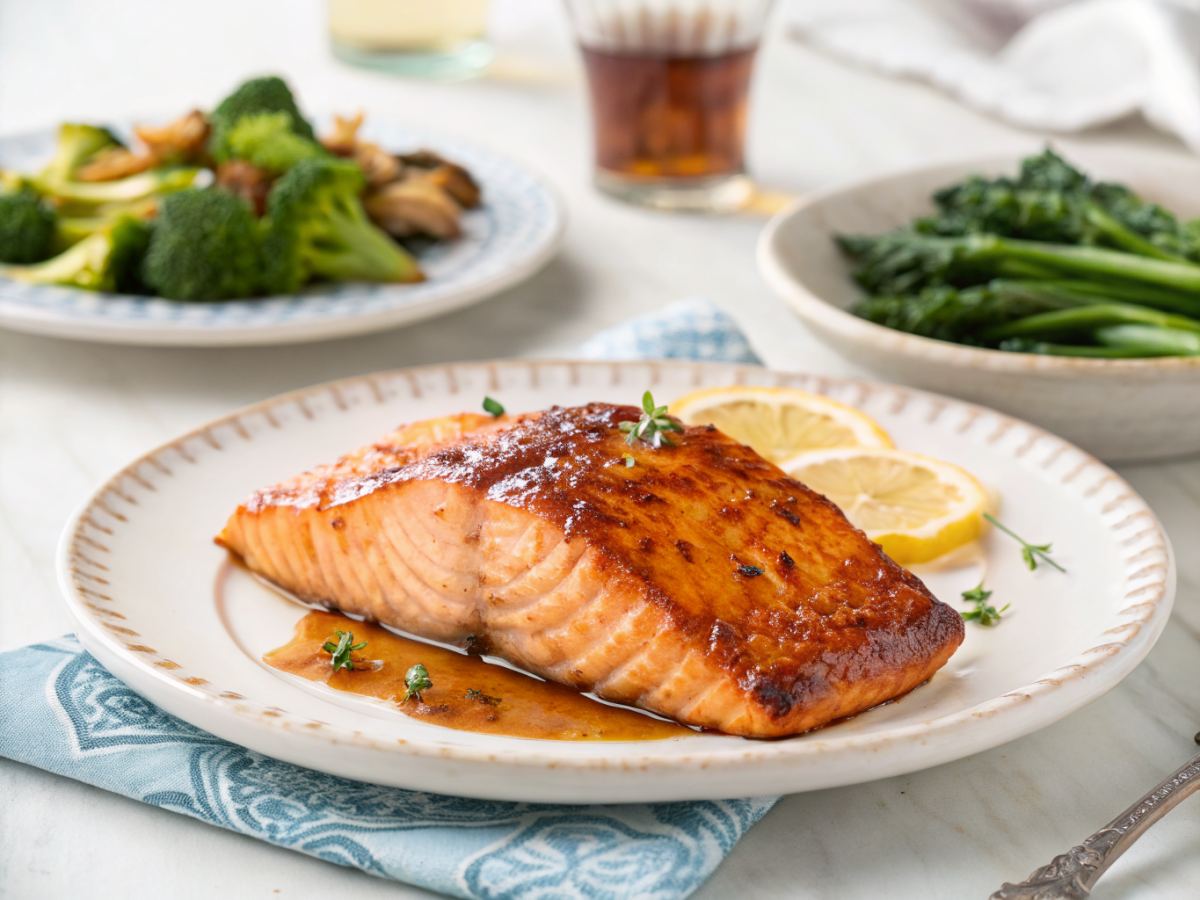
Honey Glazed Salmon Air Fryer Frozen You'll Want On Repeat
Ingredients
Method
- Preheat your air fryer to 390 degrees Fahrenheit for 3 minutes.
- In a small bowl, whisk together honey, soy sauce, olive oil, minced garlic, grated ginger, black pepper, and lemon juice until well combined.
- Place the frozen salmon fillets directly in the air fryer basket in a single layer, leaving space between each fillet. Do not thaw the salmon beforehand.
- Air fry the frozen salmon at 390 degrees Fahrenheit for 7 minutes to partially cook and defrost.
- Remove the basket and brush the honey glaze generously over each salmon fillet, coating the tops evenly.
- Return the salmon to the air fryer and cook for an additional 6 to 8 minutes until the salmon reaches an internal temperature of 145 degrees Fahrenheit and flakes easily with a fork.
- Remove salmon from the air fryer, sprinkle with sesame seeds, and serve immediately with your favorite side dishes.
Notes
\n\nThis Honey Glazed Salmon Air Fryer Frozen recipe transforms a simple frozen salmon fillet into a restaurant-quality meal in under 30 minutes. The combination of sweet honey and savory glaze creates a caramelized crust that perfectly complements the tender, flaky fish. Whether you’re a busy professional or just looking for a hassle-free dinner solution, this method delivers consistent results every time.
Honey Glazed Salmon Air Fryer Frozen: 5 Easy Tips for Perfect Results
Cooking frozen salmon in an air fryer might seem unconventional, but it’s actually one of the smartest kitchen shortcuts you can master. The circulating hot air thaws and cooks the fish simultaneously while creating that coveted crispy exterior. This method eliminates the need for advance meal planning and reduces prep time significantly.
The secret to achieving perfectly cooked salmon lies in understanding your air fryer’s temperature zones and timing. Most frozen salmon fillets require about 15-20 minutes at 390°F, but thickness variations mean you’ll need to adjust accordingly. A simple honey glaze applied halfway through cooking creates a beautiful caramelized finish without burning.
One of the biggest advantages of this cooking method is its forgiving nature compared to traditional oven roasting. The air fryer’s consistent heat distribution means less risk of overcooking or drying out your fish. Plus, cleanup is minimal since you’re working with a single appliance and no messy baking sheets.
Why You’ll Love This Honey Glazed Salmon Air Fryer Frozen
This recipe eliminates the most common excuse for not cooking fish at home: forgetting to thaw it in advance. You can go straight from freezer to air fryer without compromising taste or texture. The convenience factor alone makes this a game-changer for weeknight dinners.
The honey glaze adds a restaurant-quality finish that makes this dish feel special despite its simplicity. The natural sugars in honey caramelize beautifully under high heat, creating a glossy coating with complex flavor notes. This sweet and savory combination appeals to even the pickiest eaters, including children who might otherwise resist seafood.
Health-conscious eaters will appreciate that this cooking method requires minimal added fat while maximizing flavor. Salmon is naturally rich in omega-3 fatty acids, high-quality protein, and essential vitamins. The air fryer method preserves these nutrients better than many other cooking techniques that require extended cooking times.
Time efficiency is another major selling point for busy households. From start to finish, you’re looking at about 25 minutes total, with most of that being hands-off cooking time. This leaves you free to prepare side dishes or simply relax while dinner cooks itself.
Core Ingredients for Honey Glazed Salmon Air Fryer Frozen
The beauty of this recipe lies in its minimal ingredient list that delivers maximum flavor impact. You’ll need frozen salmon fillets as your base—look for individually vacuum-sealed portions for best results. Wild-caught salmon offers superior flavor and nutritional benefits, though farm-raised varieties work perfectly well too.
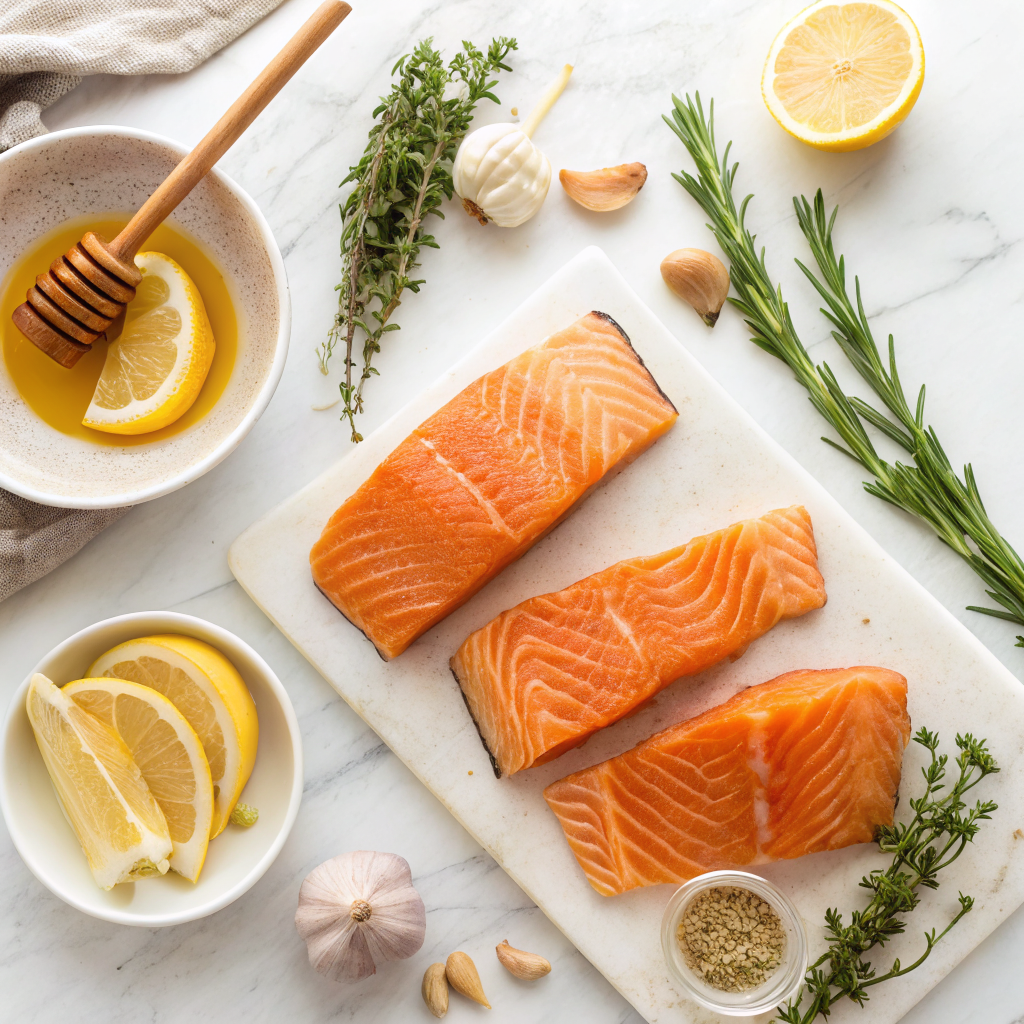
For the glaze, high-quality honey is essential—raw or local varieties provide the most complex flavor profiles. You’ll also need soy sauce for umami depth, fresh garlic for aromatic punch, and a touch of ginger for warmth. A splash of rice vinegar or lemon juice balances the sweetness and brightens the overall flavor.
Seasoning components include salt, black pepper, and optional red pepper flakes for heat. Some cooks like adding sesame oil for a nutty dimension that complements the honey beautifully. Fresh herbs like cilantro or green onions make excellent finishing touches but aren’t strictly necessary.
Essential Ingredients List
- 4 frozen salmon fillets (6 oz each)
- 3 tablespoons honey
- 2 tablespoons soy sauce (low-sodium preferred)
- 2 cloves garlic, minced
- 1 teaspoon fresh ginger, grated
- 1 tablespoon rice vinegar
- 1 teaspoon sesame oil (optional)
- ½ teaspoon black pepper
- ¼ teaspoon red pepper flakes (optional)
- Salt to taste
- Sesame seeds for garnish
- Sliced green onions for garnish
How to Make Honey Glazed Salmon Air Fryer Frozen: Step-by-Step
Start by preheating your air fryer to 390°F for about 3 minutes to ensure even cooking from the start. While it heats, remove your frozen salmon fillets from their packaging and pat away any visible ice crystals with paper towels. Don’t worry about fully thawing them—the air fryer will handle that during the cooking process.
Lightly spray the air fryer basket with cooking oil to prevent sticking, then arrange the frozen fillets skin-side down with space between each piece. Season the tops with a light sprinkle of salt and black pepper. Place the basket in the air fryer and cook for 10 minutes at 390°F to begin the thawing and initial cooking phase.
While the salmon cooks, prepare your honey glaze by whisking together honey, soy sauce, minced garlic, grated ginger, rice vinegar, and sesame oil in a small bowl. The mixture should be smooth and well-combined. If your honey is too thick, warm it slightly in the microwave for 10-15 seconds to make mixing easier.
After the initial 10 minutes, carefully remove the basket and brush half of the glaze generously over each fillet. Return to the air fryer and cook for another 6-8 minutes, depending on fillet thickness. The salmon should reach an internal temperature of 145°F and flake easily with a fork when done.
For the final step, brush the remaining glaze over the cooked salmon and return to the air fryer for 1-2 minutes to caramelize the honey. This creates that beautiful glossy finish and intensifies the flavors. Remove from the air fryer, garnish with sesame seeds and sliced green onions, and serve immediately.
Pro Tips for Perfect Results
Temperature accuracy matters significantly when cooking frozen fish, so invest in an instant-read thermometer if you don’t already have one. The FDA recommends cooking salmon to an internal temperature of 145°F for food safety. However, many chefs prefer pulling it at 135-140°F for a slightly more tender, less dry result.
Don’t overcrowd your air fryer basket, as this restricts airflow and leads to uneven cooking. If you’re cooking for a crowd, work in batches rather than stacking fillets. The few extra minutes are worth it for consistently excellent results across all pieces.
Fillet thickness varies significantly between salmon cuts, so adjust cooking time accordingly. Thinner tail pieces may need only 12-14 minutes total, while thicker center-cut portions might require up to 20 minutes. Visual cues like opaque flesh and easy flaking are more reliable than strict timing.
Nutrition & Health Benefits
Salmon ranks among the most nutritionally dense proteins available, offering exceptional health benefits in every serving. A 6-ounce portion provides approximately 350 calories, 40 grams of protein, and 20 grams of healthy fats. These omega-3 fatty acids support heart health, brain function, and reduce inflammation throughout the body.
The air fryer cooking method preserves these beneficial nutrients better than high-heat methods like pan-frying or grilling. Because you’re using minimal added oil, the calorie count stays reasonable while maximizing the fish’s natural nutritional profile. This makes it an excellent choice for anyone following high protein recipes for weight management or muscle building.
Salmon contains significant amounts of vitamin D, vitamin B12, and selenium—nutrients that many people don’t get enough of through diet alone. Vitamin D supports bone health and immune function, while B12 is essential for energy production and nervous system health. Selenium acts as a powerful antioxidant that protects cells from damage.
The honey glaze does add sugar to the dish, contributing about 50-60 additional calories per serving. However, honey offers trace minerals and antioxidants that refined sugar lacks. If you’re monitoring carbohydrate intake closely, you can reduce the honey to 2 tablespoons or substitute with a sugar-free alternative.
Nutritional Breakdown Per Serving
- Calories: 380-400
- Protein: 40g
- Total Fat: 20g (mostly healthy omega-3s)
- Saturated Fat: 3g
- Carbohydrates: 14g
- Sugar: 12g
- Fiber: 0g
- Sodium: 450mg
- Cholesterol: 95mg
Variations & Substitutions
The basic technique works beautifully with various glaze modifications to suit different taste preferences. For a spicier version, increase the red pepper flakes or add sriracha to the glaze mixture. A teriyaki-style variation swaps the honey for brown sugar and increases the soy sauce for a more savory profile.
Citrus lovers can create a honey-lemon glaze by replacing the rice vinegar with fresh lemon juice and adding lemon zest. Orange juice and zest work equally well, providing a sweeter, more aromatic variation. These citrus versions pair exceptionally well with spring and summer vegetables.
For those avoiding soy products due to allergies or dietary preferences, coconut aminos make an excellent substitute. The flavor profile shifts slightly sweeter and less salty, so you may want to add a pinch of salt to compensate. Tamari is another gluten-free alternative that maintains the traditional umami depth.
Different fish varieties can replace salmon using the same basic method with timing adjustments. Frozen cod, halibut, or mahi-mahi all work well with honey glazes, though cooking times will vary based on thickness. Generally, white fish cooks slightly faster than salmon, so reduce the initial cooking time by 2-3 minutes.
Flavor Variations to Try
- Maple Dijon: Replace honey with pure maple syrup and add 1 tablespoon Dijon mustard
- Asian-Inspired: Add 1 tablespoon hoisin sauce and increase ginger to 2 teaspoons
- Garlic Butter: Mix melted butter with honey and triple the garlic
- Spicy Honey: Add 1-2 tablespoons gochujang or sambal oelek
- Herb-Crusted: Mix dried thyme, rosemary, and parsley into the glaze
Serving Suggestions
This versatile salmon pairs beautifully with a wide range of side dishes that complement its sweet-savory profile. Steamed jasmine or basmati rice provides a neutral base that soaks up the extra glaze beautifully. For a lower-carb option, cauliflower rice or zucchini noodles offer similar textural satisfaction without the starch.
Roasted or air-fried vegetables make excellent companions that can cook alongside your salmon in a larger air fryer. Brussels sprouts, asparagus, broccoli, and green beans all work wonderfully with the honey glaze flavors. Toss them with a bit of oil and seasoning, then cook them in the air fryer while your salmon rests.
Asian-inspired sides like stir-fried bok choy, edamame, or sesame cucumber salad create a cohesive meal theme. A simple mixed green salad with ginger dressing provides freshness and crunch that balances the rich salmon. For heartier appetites, consider adding roasted sweet potatoes or quinoa for additional substance.
The salmon also works beautifully in composed bowls for a trendy, Instagram-worthy presentation. Layer rice or greens as a base, add the glazed salmon, then top with avocado, pickled vegetables, and a drizzle of extra glaze. This approach makes the dish feel more substantial and works well for meal prep purposes.
Complete Meal Ideas
- Honey glazed salmon with coconut rice and steamed bok choy
- Salmon over mixed greens with mandarin oranges and almond slivers
- Asian salmon bowl with edamame, cucumber, avocado, and sesame seeds
- Salmon with roasted Brussels sprouts and sweet potato wedges
- Salmon tacos with purple cabbage slaw and cilantro lime crema
Common Mistakes to Avoid
One of the most frequent errors is attempting to cook salmon straight from frozen at too high a temperature. While you might think higher heat means faster cooking, it actually causes the exterior to overcook before the interior thaws properly. Stick to the recommended 390°F for best results with frozen fillets.
Another common pitfall is applying the honey glaze too early in the cooking process. Honey burns easily at high temperatures, so adding it from the start results in a bitter, charred coating rather than a beautiful caramelized finish. Always wait until the salmon is mostly cooked before introducing sugar-based glazes.
Many home cooks skip preheating the air fryer, which extends cooking time and creates uneven results. Those few minutes of preheating ensure consistent temperature from the moment your food enters the basket. This is particularly important when working with frozen proteins that need reliable heat distribution.
Overcrowding the air fryer basket restricts airflow and leads to steaming rather than air frying. The hot air needs to circulate freely around each piece of food to create that crispy exterior. Leave at least half an inch of space between fillets, even if it means cooking in batches.
Finally, many people forget to check for pin bones before serving, especially with frozen salmon that they didn’t prepare themselves. Run your fingers along the fillet after cooking and use tweezers or needle-nose pliers to remove any remaining bones. This small step makes a significant difference in the eating experience.
Storage & Meal Prep Tips
Cooked honey glazed salmon stores well in the refrigerator for up to 3 days when properly handled. Allow the fish to cool completely before transferring to airtight containers to prevent condensation and sogginess. Store the salmon separately from any side dishes to maintain optimal texture for each component.
For meal prep purposes, you can prepare the honey glaze in advance and store it in a sealed jar in the refrigerator for up to one week. This makes weeknight cooking even faster—simply cook the frozen salmon and brush with pre-made glaze. The flavors actually deepen and meld over time, making the glaze even more delicious.
Reheating leftover salmon requires a gentle approach to avoid drying it out further. The air fryer works well for this at a lower temperature—try 300°F for 3-4 minutes just until warmed through. Alternatively, microwave on 50% power in 30-second intervals, checking frequently to prevent overcooking.
If you want to freeze cooked salmon, wrap individual portions tightly in plastic wrap, then place in freezer bags with air removed. Properly stored, cooked salmon maintains quality for up to 2 months in the freezer. Thaw overnight in the refrigerator before reheating for best texture and food safety.
Consider this recipe as part of your weekly quick easy meals rotation for efficient meal planning. Cooking multiple fillets at once means you’ll have ready-to-eat protein for salads, grain bowls, or simple dinners throughout the week. The versatility of cooked salmon makes it a valuable meal prep staple.
Final Thoughts on Honey Glazed Salmon Air Fryer Frozen
Mastering this Honey Glazed Salmon Air Fryer Frozen recipe opens up a world of convenient, healthy weeknight dinners without sacrificing quality or flavor. The technique is forgiving enough for beginners yet produces results impressive enough for entertaining guests. Once you’ve tried cooking frozen salmon this way, you’ll wonder why you ever bothered with thawing.
The combination of modern air fryer technology and a classic honey glaze creates a dish that feels both contemporary and timeless. It’s proof that convenience cooking doesn’t mean compromising on taste or nutrition. This recipe deserves a permanent spot in your regular rotation alongside other favorite air fryer recipes.
Whether you’re cooking for one or feeding a family, this method scales easily and consistently delivers delicious results. The minimal cleanup, short cooking time, and impressive presentation make it ideal for busy weeknights and casual entertaining alike. Give it a try tonight and discover why Honey Glazed Salmon Air Fryer Frozen might become your new go-to dinner solution.
Frequently Asked Questions
Do I need to thaw frozen salmon before air frying?
No, you don’t need to thaw salmon before cooking it in the air fryer. The beauty of making Honey Glazed Salmon Air Fryer Frozen is that you can cook it directly from frozen, saving time and eliminating the need for advance planning. The air fryer’s circulating heat thaws and cooks the fish simultaneously, producing perfectly cooked results in about 20 minutes total.
How do I know when my frozen salmon is fully cooked?
Properly cooked salmon should reach an internal temperature of 145°F when measured with an instant-read thermometer inserted into the thickest part. The flesh should appear opaque rather than translucent and flake easily when tested with a fork. For Honey Glazed Salmon Air Fryer Frozen, the glaze should be caramelized and slightly darker at the edges, indicating the fish has cooked through completely.
Can I use fresh salmon instead of frozen with this recipe?
Yes, fresh salmon works beautifully with this honey glaze recipe, though you’ll need to adjust the cooking time significantly. Fresh salmon typically requires only 8-12 minutes at 390°F, depending on thickness. Apply the glaze after the first 5 minutes of cooking, then finish for the remaining time. The same delicious results apply whether you’re making this with fresh or frozen fillets.
Why is my honey glaze burning in the air fryer?
Honey burns easily at high temperatures because of its natural sugar content, which is why timing matters when making this dish. Always apply the glaze halfway through cooking rather than at the beginning, and watch carefully during the final minutes. If your air fryer runs hot or your glaze consistently burns, try reducing the temperature to 380°F or applying the glaze even later in the cooking process for better caramelization without burning.
For more culinary inspiration, visit AllRecipes.

HomeCook Legacy Kitchen is the editorial name of homecooklegacy.com. Recipes on this site are drafted with the help of AI tools and published by the HomeCook Legacy team. Please check ingredients, cooking times and food-safety guidance for your own situation.