
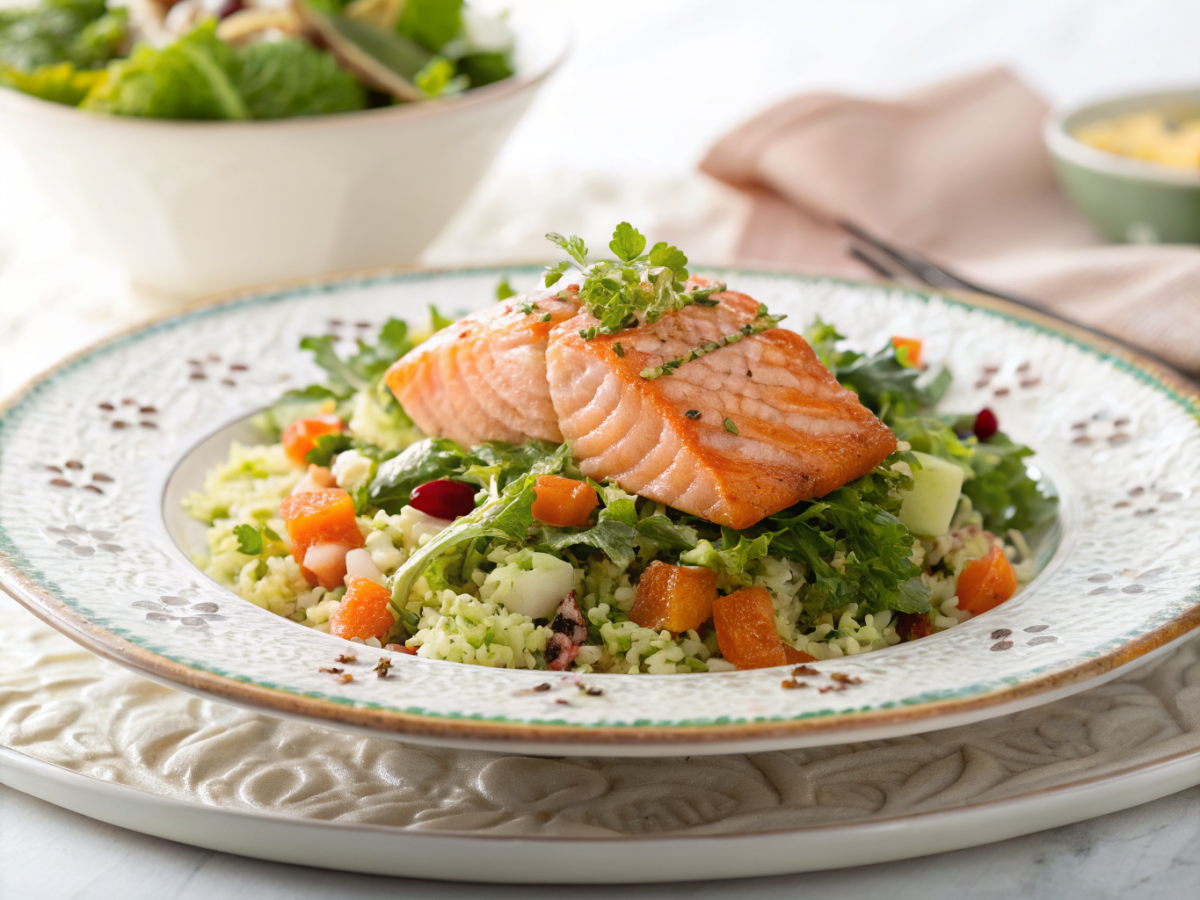
Crispy Rice Salmon Salad Everyone Will Ask You To Make Again
Ingredients
Method
- In a small bowl, whisk together soy sauce, rice vinegar, sesame oil, and honey until well combined. Set aside.
- Season salmon fillets with salt and pepper. Heat 2 tablespoons vegetable oil in a large skillet over medium-high heat. Cook salmon for 4-5 minutes per side until golden and cooked through. Remove from pan and let rest.
- In the same skillet, add remaining 2 tablespoons oil over medium-high heat. Add cooked rice in an even layer, pressing down gently. Cook without stirring for 4-5 minutes until bottom is golden and crispy. Flip in sections and cook another 2-3 minutes. Remove and season with salt.
- In a large serving bowl or individual plates, arrange the mixed salad greens. Top with cucumber, cherry tomatoes, and avocado slices.
- Break the crispy rice into bite-sized pieces and scatter over the salad. Flake the salmon into large chunks and arrange on top of the salad.
- Drizzle the prepared dressing over the entire salad. Garnish with sesame seeds and sliced green onions.
- Serve the salad immediately while the rice is still crispy and the salmon is warm. Toss gently before eating or serve components separately for guests to mix themselves.
Nutrition
Notes
Tried this recipe?
Let us know how it was!Crispy Rice Salmon Salad: 5 Easy Tips for Perfect Results
Mastering this recipe comes down to understanding five key techniques that elevate it from good to exceptional. First, always use day-old rice for the crispiest texture, as fresh rice contains too much moisture and won’t achieve that golden crunch. Second, pat your salmon completely dry before searing to get that beautiful caramelized crust without steaming the fish.
Third, don’t overcrowd your pan when crisping the rice—give each grain space to make contact with the hot surface. Fourth, prepare all your components separately and assemble just before serving to maintain distinct textures. Fifth, taste and adjust your dressing before adding it to the salad, as the balance of acid, salt, and sweetness makes all the difference in the final dish.
These simple strategies transform basic ingredients into a memorable meal that looks as stunning as it tastes. The contrast between warm crispy elements and cool fresh greens creates a dynamic eating experience. With practice, you’ll find this recipe becomes second nature and a regular request from family and friends.
Why You’ll Love This Crispy Rice Salmon Salad
This salad checks every box for modern home cooking: it’s nutritious, visually stunning, and incredibly satisfying to eat. The combination of protein-rich salmon and fiber-filled vegetables makes it a complete meal that fuels your body properly. Unlike heavy dinner options, this dish leaves you feeling energized rather than weighed down.
The textural variety is what truly sets this recipe apart from standard salads. You get the crunch of crispy rice, the flakiness of perfectly cooked salmon, the snap of fresh vegetables, and the creaminess of avocado all in one bite. Each forkful offers something different, keeping your palate engaged throughout the meal.
It’s also remarkably versatile and adapts well to different dietary preferences and what you have on hand. You can swap proteins, change up the vegetables, or adjust the dressing to suit your taste. The recipe works equally well for a quick solo lunch or scaled up for entertaining guests at a dinner party.
Preparation is straightforward enough for weeknight cooking but impressive enough for special occasions. You don’t need advanced culinary skills or specialized equipment to achieve professional results. The visual appeal of this dish makes it perfect for sharing on social media or simply enjoying a beautiful meal at home.
Core Ingredients for Crispy Rice Salmon Salad
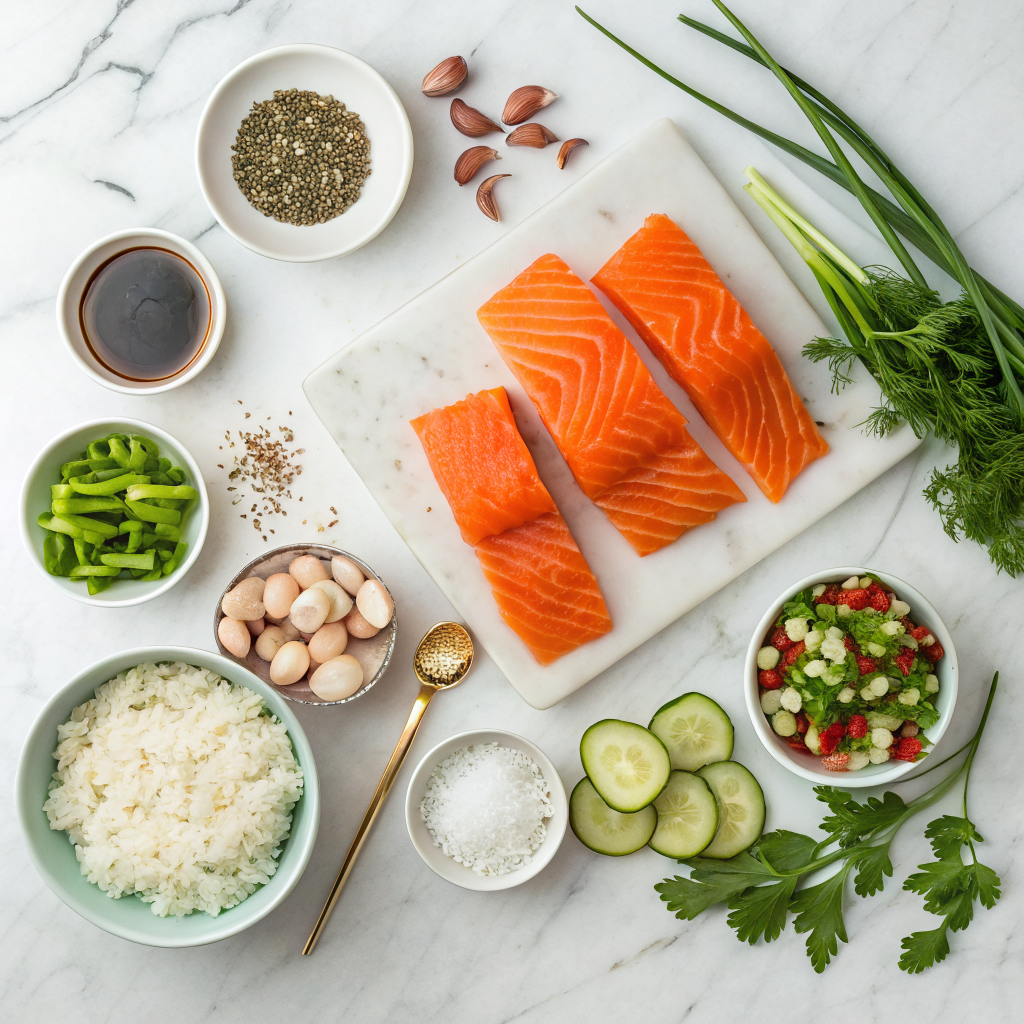
The foundation of this recipe starts with quality salmon fillets, preferably wild-caught for the best flavor and nutritional profile. Look for pieces that are about 6 ounces each with the skin on, as this helps the fish hold together during cooking. Fresh salmon should smell clean and oceanic, never fishy or ammonia-like.
For the rice component, day-old cooked white or jasmine rice works best because it’s dried out slightly and crisps beautifully. You’ll need about two cups of cooked rice, which you can prepare ahead or use leftovers from another meal. Avoid using freshly cooked rice as the excess moisture prevents proper crisping and results in mushy texture.
The salad base includes mixed greens such as arugula, spinach, and butter lettuce for varied flavors and textures. Fresh vegetables like cucumber, radishes, and avocado add crunch, color, and creaminess to balance the warm components. Edamame or snap peas provide additional protein and a pop of green color.
For the dressing, you’ll need ingredients for an Asian-inspired vinaigrette: rice vinegar, soy sauce, sesame oil, honey, and fresh ginger. These pantry staples combine to create a balanced sauce that ties all the elements together. Don’t forget garnishes like sesame seeds, sliced green onions, and nori strips for authentic flavor and visual appeal.
Quality olive oil or avocado oil is essential for both cooking the salmon and crisping the rice. Salt and pepper seem basic but are crucial for proper seasoning at each stage. Having all ingredients prepped and ready before you start cooking ensures smooth execution and prevents overcooking any component.
How to Make Crispy Rice Salmon Salad: Step-by-Step
Begin by removing your salmon from the refrigerator about 15 minutes before cooking to bring it closer to room temperature for even cooking. Pat the fillets completely dry with paper towels, then season both sides generously with salt and pepper. This simple seasoning allows the natural flavor of the salmon to shine through while creating a flavorful crust.
Heat a large skillet over medium-high heat and add two tablespoons of oil until it shimmers but doesn’t smoke. Place the salmon skin-side down in the pan and press gently with a spatula for the first 30 seconds to ensure even contact. Cook for 4-5 minutes without moving it, allowing a golden crust to form on the skin.
Flip the salmon carefully and cook for another 3-4 minutes depending on thickness, aiming for medium doneness with a slightly translucent center. Remove the salmon to a plate and let it rest while you prepare the crispy rice. The residual heat will continue cooking the fish to perfect doneness as it rests.
In the same skillet, add another tablespoon of oil and increase heat to high. Spread your day-old rice in an even layer across the pan, pressing it down gently with a spatula. Let it cook undisturbed for 3-4 minutes until the bottom layer turns golden brown and crispy, then flip sections and crisp the other side.
While the rice crisps, prepare your dressing by whisking together 3 tablespoons rice vinegar, 2 tablespoons soy sauce, 1 tablespoon sesame oil, 1 tablespoon honey, and 1 teaspoon grated fresh ginger. Taste and adjust the balance of sweet, salty, and acidic elements to your preference. This dressing can be made ahead and stored in the refrigerator for up to a week.
Arrange your mixed greens on a large serving platter or individual plates as the base layer. Top with sliced cucumbers, radishes, avocado, and any other fresh vegetables you’re using. Distribute the crispy rice over the salad while it’s still warm for the best textural contrast with the cool greens.
Break the salmon into large flakes and arrange them over the salad, distributing the fish evenly. Drizzle the dressing over everything, starting with about half and adding more as desired. Finish with garnishes like sesame seeds, sliced green onions, and crumbled nori for authentic flavor and restaurant-quality presentation.
For those seeking more high-protein recipes to add to your rotation, this salad provides an excellent template. The assembly method allows each person to customize their portion sizes and ingredient ratios. Serve immediately while the rice is still crispy and the salmon is warm for the ultimate eating experience.
Nutrition & Health Benefits
Salmon stands out as one of the most nutritious proteins available, packed with omega-3 fatty acids that support heart health and reduce inflammation. A typical 6-ounce serving provides about 40 grams of protein along with essential vitamins like B12, D, and selenium. These nutrients support everything from brain function to immune system strength.
The healthy fats in salmon help your body absorb fat-soluble vitamins from the vegetables in the salad. Wild-caught salmon typically contains fewer contaminants and more omega-3s compared to farmed varieties. According to nutritional research on heart-healthy foods, eating fatty fish twice weekly significantly benefits cardiovascular health.
The variety of vegetables contributes fiber, vitamins, minerals, and antioxidants that support overall wellness. Leafy greens provide folate and vitamin K, while cucumbers offer hydration and vitamin C. Avocado adds heart-healthy monounsaturated fats and makes the meal more satisfying and filling.
Rice provides easily digestible carbohydrates that fuel your body and brain throughout the day. While white rice offers quick energy, you can substitute brown rice for additional fiber and nutrients. The sesame oil in the dressing contains lignans and vitamin E with antioxidant properties.
This balanced meal delivers approximately 550-650 calories per serving with an ideal macronutrient ratio for sustained energy. The combination of protein, healthy fats, and complex carbohydrates helps stabilize blood sugar levels. It’s naturally gluten-free when using tamari instead of regular soy sauce, making it accessible for various dietary needs.
Variations & Substitutions
If salmon isn’t available or preferred, this recipe works beautifully with other proteins like seared tuna, grilled chicken, or crispy tofu. Shrimp also makes an excellent substitution, cooking quickly and pairing wonderfully with the Asian-inspired flavors. For a vegetarian version, double up on the crispy rice and add marinated tempeh or additional legumes.
The rice component is flexible beyond traditional white rice—try using forbidden black rice for dramatic color and added nutrients. Cauliflower rice offers a low-carb alternative, though it won’t crisp quite the same way as grain rice. Quinoa can replace rice entirely for a protein boost and different texture profile.
Experiment with different greens based on what’s fresh and available at your market. Kale, cabbage, or bok choy add heartier textures and stand up well to warm toppings. Herbs like cilantro, mint, or Thai basil bring fresh aromatic notes that complement the other flavors beautifully.
The dressing can be modified to suit your taste preferences or what you have in your pantry. Swap honey for maple syrup or agave for a vegan option, or use lime juice instead of rice vinegar for a brighter, more citrusy profile. Adding sriracha or chili oil brings welcome heat for those who enjoy spicy food.
Seasonal vegetables keep this salad interesting throughout the year—try roasted butternut squash in fall or fresh snap peas in spring. Pickled vegetables add tangy crunch and can be prepared ahead for convenient meal assembly. Nuts like cashews or peanuts provide additional crunch if you want more textural variety.
Serving Suggestions
This salad shines as a complete meal on its own but can be part of a larger spread for gatherings. Serve it family-style on a large platter, allowing guests to help themselves to their preferred portions. The visual impact of the colorful ingredients arranged artfully makes it a stunning centerpiece for any table.
For a more casual presentation, prepare individual bowls with each component arranged in sections for an Instagram-worthy grain bowl aesthetic. This approach also allows people with different preferences to mix ingredients as they like. Providing extra dressing on the side lets everyone control how much they want on their salad.
Pair this dish with light Asian-inspired sides like miso soup, steamed edamame, or vegetable spring rolls for a complete menu. A crisp white wine like Sauvignon Blanc or a light beer complements the flavors without overwhelming them. For non-alcoholic options, try iced green tea or sparkling water with cucumber and mint.
This recipe works wonderfully for various occasions from weeknight dinners to special celebrations. It’s impressive enough for date night yet practical enough for meal prep Sunday. The components can be prepared ahead and assembled quickly when you’re ready to eat, making it ideal for busy schedules.
Consider serving it alongside other dinner recipes when entertaining a crowd with diverse tastes. The salad appeals to health-conscious eaters while still satisfying those who want something substantial. Leftovers pack well for lunch the next day, though the crispy rice will soften over time.
Common Mistakes to Avoid
The most frequent error is using freshly cooked rice that’s still warm and moist, which steams instead of crisps. Always use day-old refrigerated rice or spread fresh rice on a sheet pan to cool and dry for at least 30 minutes. Patience during this step makes the difference between soggy and perfectly crispy rice.
Overcooking salmon is another common pitfall that results in dry, chalky fish instead of moist, flaky perfection. Remember that salmon continues cooking after you remove it from heat, so aim for slightly underdone in the pan. A good rule is to cook it to about 125°F internal temperature for medium doneness with a tender center.
Overcrowding the pan when cooking either the salmon or rice prevents proper browning and crisping. Cook in batches if necessary to ensure each piece has direct contact with the hot surface. Giving ingredients space allows moisture to evaporate rather than steam, which is crucial for developing flavor and texture.
Adding dressing too early causes the greens to wilt and the crispy rice to become soggy. Dress the salad just before serving and start with less than you think you need—you can always add more. Keeping components separate until the last moment preserves the textural contrasts that make this dish special.
Skipping the resting period for salmon leads to a messy presentation when you try to flake it. Letting it rest for 3-5 minutes allows the juices to redistribute and the fish to firm up slightly. This makes it much easier to break into attractive, intact pieces rather than mushy flakes.
Storage & Meal Prep Tips
This salad is excellent for meal prep when you store the components separately in airtight containers. Cook the salmon and crispy rice up to 3 days ahead, keeping them refrigerated until ready to assemble. The dressing lasts up to a week in the refrigerator and actually improves as the flavors meld together.
Wash and dry your greens thoroughly, then store them wrapped in paper towels inside a container to absorb excess moisture. Prep your vegetables by slicing them and storing in separate containers to maintain freshness and crunch. Avocado should be cut fresh just before serving to prevent browning, or toss with a bit of lemon juice.
To reheat the salmon, use gentle heat in a 275°F oven for about 10 minutes to warm through without drying out. Alternatively, enjoy it cold straight from the refrigerator, which works surprisingly well in this salad format. The crispy rice can be re-crisped in a hot skillet with a touch of oil for a few minutes.
Assembled salad doesn’t store well due to the dressing wilting the greens and softening the crispy elements. If you must store assembled salad, keep it for no more than a few hours in the refrigerator. For best results, pack components separately and assemble just before eating for maximum freshness and texture.
Freeze cooked salmon for up to 2 months if you want to batch cook for future meals. Thaw overnight in the refrigerator before using, and note that previously frozen salmon works better flaked into the salad rather than served as whole pieces. Rice doesn’t freeze well once crisped, so prepare this component fresh or within 3 days of cooking.
For convenient quick and easy meals throughout the week, prep multiple servings at once. Label containers with dates to track freshness and rotate your meal prep inventory. This organized approach makes healthy eating effortless even during your busiest days.
Final Thoughts on Crispy Rice Salmon Salad
This Crispy Rice Salmon Salad represents the perfect intersection of nutrition, flavor, and visual appeal that modern home cooks seek. It proves that healthy eating doesn’t mean sacrificing taste or satisfaction, delivering a meal that nourishes both body and soul. The recipe’s flexibility means you’ll never get bored, as endless variations keep it fresh and exciting.
Whether you’re new to cooking or an experienced home chef, this dish offers something valuable to your repertoire. The techniques you learn here—properly searing fish, crisping rice, building balanced dressings—transfer to countless other recipes. Mastering these fundamentals elevates your overall cooking skills and confidence in the kitchen.
The enthusiastic response you’ll receive when serving this Crispy Rice Salmon Salad makes all the effort worthwhile. Friends and family will genuinely request it again and again, making it your signature dish for gatherings. There’s something deeply satisfying about creating restaurant-quality food that brings people together around your table.
Don’t be intimidated by the multiple components—with practice, the workflow becomes intuitive and efficient. Start by making it on a relaxed weekend when you have time to enjoy the process. Soon you’ll be whipping it up on busy weeknights, grateful for a delicious healthy option that comes together quickly.
Frequently Asked Questions
Can I make Crispy Rice Salmon Salad ahead of time?
Yes, you can prepare all the components for your Crispy Rice Salmon Salad up to 3 days in advance and store them separately. Cook the salmon and crispy rice, prep the vegetables, and make the dressing, keeping everything in airtight containers in the refrigerator. Assemble just before serving to maintain the best texture and freshness, ensuring the crispy elements stay crunchy and the greens remain crisp.
What type of salmon works best for this recipe?
Wild-caught salmon varieties like sockeye, coho, or king salmon work beautifully in Crispy Rice Salmon Salad due to their rich flavor and firm texture. If wild-caught isn’t available, high-quality farmed Atlantic salmon is a good alternative. Look for fillets that are bright in color, smell fresh, and have the skin on to help them hold together during cooking.
How do I get the rice really crispy?
The secret to perfectly crispy rice is using day-old refrigerated rice that has dried out slightly, which allows it to crisp rather than steam. Spread the rice in a thin, even layer in a very hot pan with enough oil, then resist the urge to stir it for 3-4 minutes. This undisturbed cooking time allows the rice to develop a golden, crunchy crust that makes the salad so addictive.
Can I substitute the salmon with another protein?
Absolutely! While salmon is traditional, you can easily substitute grilled chicken, seared tuna, crispy tofu, or cooked shrimp in your salad. Each protein brings its own character while the crispy rice, fresh vegetables, and flavorful dressing remain the stars. For vegetarians, double the crispy rice portion and add extra legumes like edamame or chickpeas for protein.
