
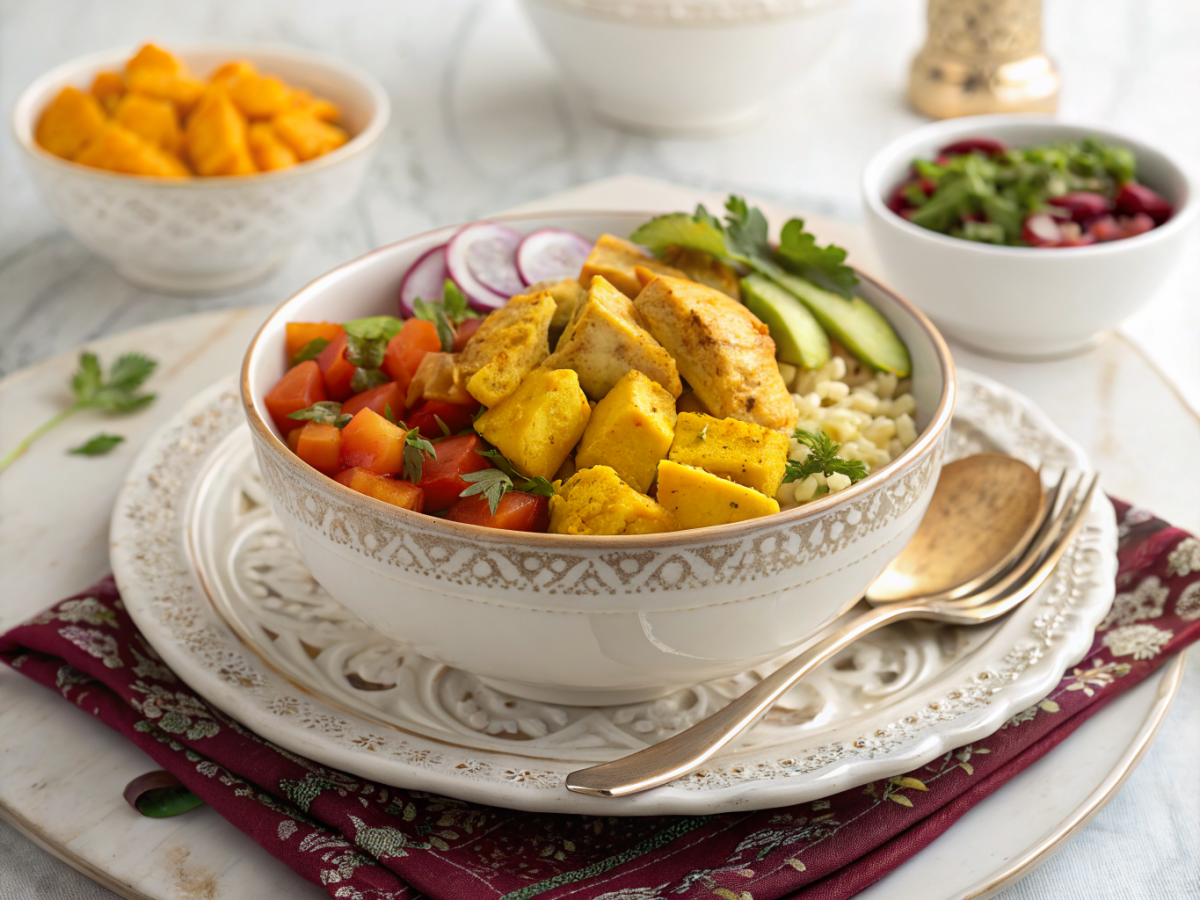
Anti Inflammatory Bowl With Turmeric Chicken Everyone Will Ask You To Make Again
Ingredients
Method
- In a large bowl, combine chicken pieces with turmeric, grated ginger, minced garlic, 1 tablespoon olive oil, half the salt, and black pepper. Mix well to coat evenly and let marinate for 15 minutes at room temperature.
- Heat 1 tablespoon olive oil in a large skillet over medium-high heat. Add the marinated chicken and cook for 6-8 minutes, stirring occasionally, until golden brown and cooked through with an internal temperature of 165 degrees Fahrenheit.
- While chicken cooks, warm the cooked quinoa and season with remaining salt and a drizzle of olive oil. Divide quinoa evenly among four serving bowls as the base.
- In the same skillet used for chicken, add baby spinach and cook for 1-2 minutes until just wilted. Remove from heat.
- Top each quinoa bowl with cooked turmeric chicken, wilted spinach, halved cherry tomatoes, and sliced avocado, arranging ingredients in sections for visual appeal.
- Drizzle each bowl with fresh lemon juice and remaining olive oil. Season with additional salt and pepper to taste if desired. Serve immediately while warm.
Nutrition
Notes
Tried this recipe?
Let us know how it was!Anti Inflammatory Bowl With Turmeric Chicken: 5 Easy Tips for Perfect Results
Creating the perfect anti-inflammatory bowl starts with understanding how to maximize both flavor and health benefits. The key lies in properly marinating your chicken with turmeric and complementary spices that work synergistically to reduce inflammation. This approach ensures every component of your bowl contributes to both taste and wellness.
Turmeric contains curcumin, a powerful compound known for its anti-inflammatory properties. When combined with black pepper, the absorption of curcumin increases by up to 2000%, making this combination essential for maximum benefits. The chicken serves as an excellent protein base that pairs beautifully with fiber-rich vegetables and complex carbohydrates.
The beauty of this bowl lies in its versatility and meal prep potential. You can customize the vegetables based on seasonal availability while maintaining the anti-inflammatory focus. The turmeric chicken remains the star, providing a golden, aromatic centerpiece that ties all the components together.
Tip 1: Marinate Your Chicken for Maximum Flavor
Allow your chicken to marinate for at least 30 minutes, though overnight yields even better results. The turmeric needs time to penetrate the meat and infuse it with both color and flavor. This patience pays off with incredibly tender, flavorful chicken that stands out in your bowl.
Tip 2: Don’t Skip the Black Pepper
Black pepper is non-negotiable when working with turmeric. The piperine in black pepper dramatically increases curcumin absorption, transforming your meal from tasty to truly therapeutic. Just a quarter teaspoon makes a significant difference in bioavailability.
Tip 3: Use Fresh Turmeric When Possible
While ground turmeric works wonderfully, fresh turmeric root takes this dish to another level. Fresh turmeric provides a brighter, more complex flavor profile with potentially higher levels of active compounds. If you can find it at your local market, use about one tablespoon of grated fresh turmeric for every teaspoon of ground.
Tip 4: Balance Your Bowl Components
A well-constructed bowl includes protein, complex carbs, healthy fats, and plenty of vegetables. Aim for roughly one-third protein, one-third grains or starchy vegetables, and one-third non-starchy vegetables. This balance ensures sustained energy and optimal nutrient absorption throughout your day.
Tip 5: Prep Components Separately
Cook each element of your bowl separately to maintain distinct textures and flavors. This method allows you to control doneness for each component and makes meal prep more efficient. You can mix and match throughout the week for varied combinations.
Why You’ll Love This Anti Inflammatory Bowl With Turmeric Chicken
This recipe transforms healthy eating from a chore into a genuine pleasure. The vibrant colors alone make this bowl Instagram-worthy, while the combination of textures keeps every bite interesting. You’ll find yourself craving this meal rather than forcing yourself to eat it for health reasons.
The turmeric chicken provides a warm, earthy flavor that’s both comforting and exotic. Unlike bland “health food,” this bowl delivers complex flavors from ginger, garlic, and aromatic spices. Each component complements the others, creating a harmonious eating experience that satisfies both your taste buds and nutritional needs.
Meal prep enthusiasts will appreciate how well this bowl holds up throughout the week. The components store beautifully in separate containers, maintaining their texture and flavor for up to five days. This makes it perfect for busy professionals who want nutritious lunches without daily cooking.
The anti-inflammatory benefits extend beyond just turmeric. Every ingredient is chosen for its ability to combat inflammation, from omega-3 rich additions to antioxidant-packed vegetables. This synergistic approach means you’re getting compound benefits that work better together than in isolation.
Budget-conscious cooks will love that this recipe uses affordable, accessible ingredients. There’s no need for expensive superfoods or hard-to-find items. Everything can be sourced from a regular grocery store, making anti-inflammatory eating accessible to everyone regardless of budget constraints.
Core Ingredients for Anti Inflammatory Bowl With Turmeric Chicken
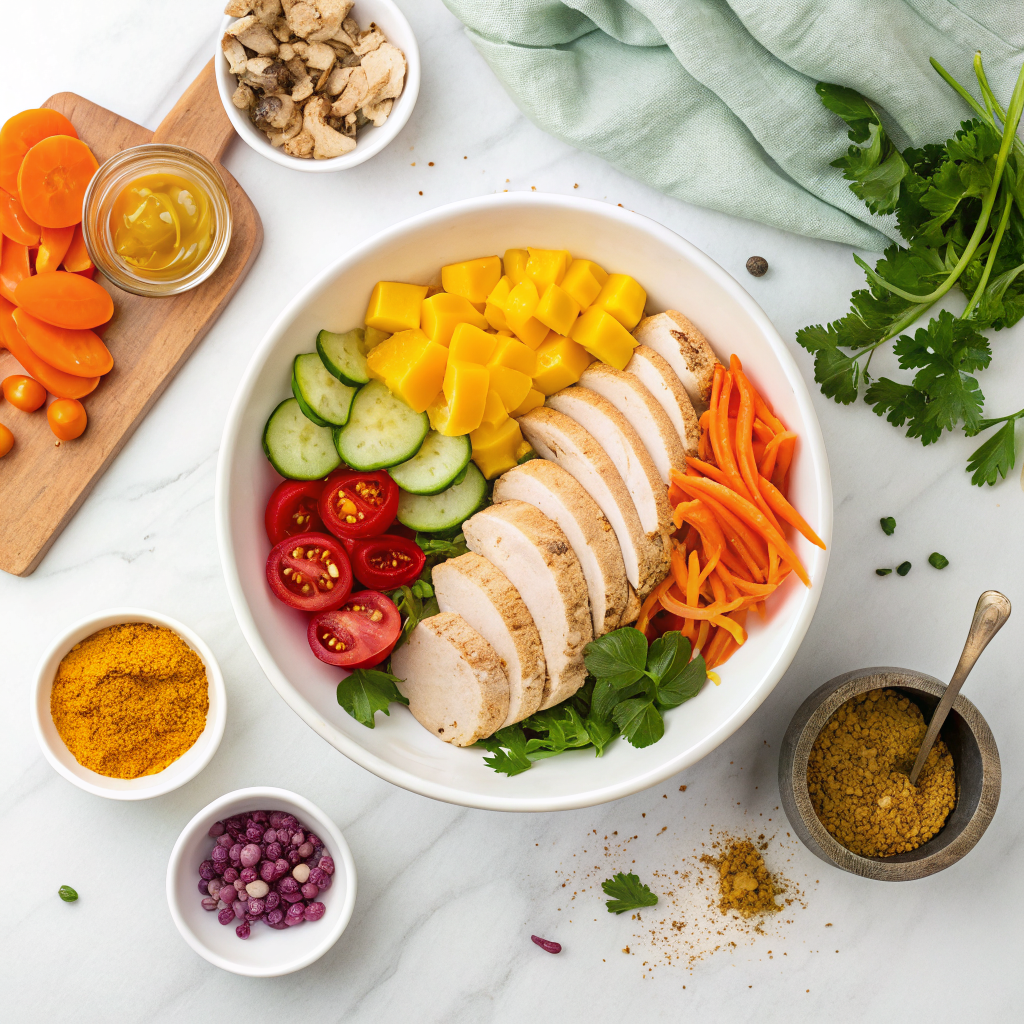
For the Turmeric Chicken
- 1.5 pounds boneless, skinless chicken breasts or thighs
- 2 tablespoons ground turmeric (or 2 tablespoons fresh grated turmeric)
- 1 teaspoon black pepper (essential for curcumin absorption)
- 2 tablespoons olive oil or avocado oil
- 3 cloves garlic, minced
- 1 tablespoon fresh ginger, grated
- 1 teaspoon ground cumin
- 1 teaspoon coriander
- 1/2 teaspoon sea salt
- Juice of 1 lemon
- 2 tablespoons plain Greek yogurt (optional, for extra tenderness)
For the Bowl Base
- 2 cups cooked quinoa, brown rice, or cauliflower rice
- 2 cups mixed greens (spinach, kale, or arugula)
- 1 cup roasted sweet potato cubes
- 1 cup steamed broccoli florets
- 1/2 cup shredded purple cabbage
- 1/2 cup cherry tomatoes, halved
- 1/4 cup sliced cucumber
- 1/4 cup shredded carrots
For the Anti-Inflammatory Dressing
- 3 tablespoons extra virgin olive oil
- 2 tablespoons apple cider vinegar
- 1 tablespoon tahini
- 1 teaspoon honey or maple syrup
- 1/2 teaspoon ground turmeric
- 1/4 teaspoon black pepper
- Pinch of sea salt
Optional Toppings
- 1/4 avocado, sliced
- 2 tablespoons pumpkin seeds or sunflower seeds
- Fresh cilantro or parsley
- Lemon wedges
- Hemp hearts
- Fermented vegetables (kimchi or sauerkraut)
Each ingredient serves a specific anti-inflammatory purpose. Turmeric and ginger are powerful anti-inflammatory agents, while garlic supports immune function. The colorful vegetables provide a spectrum of antioxidants that work synergistically to reduce oxidative stress.
The grain base provides sustained energy and additional fiber for gut health. Quinoa offers complete protein, while brown rice provides resistant starch that feeds beneficial gut bacteria. Cauliflower rice works perfectly for those following lower-carb approaches without sacrificing volume or satisfaction.
Healthy fats from olive oil, avocado, and seeds help absorb fat-soluble nutrients like curcumin. These fats also provide satiety and support brain health. The combination ensures you’re not just eating anti-inflammatory foods, but actually absorbing their beneficial compounds effectively.
How to Make Anti Inflammatory Bowl With Turmeric Chicken: Step-by-Step
Step 1: Prepare the Chicken Marinade
In a medium bowl, combine turmeric, black pepper, olive oil, minced garlic, grated ginger, cumin, coriander, salt, lemon juice, and yogurt if using. Mix thoroughly until you have a vibrant yellow paste. The consistency should be thick enough to coat the chicken but not so thick that it clumps.
Pat the chicken dry with paper towels before adding to the marinade. This helps the marinade adhere better and promotes better browning during cooking. Coat each piece completely, massaging the marinade into the meat for maximum penetration.
Cover the bowl with plastic wrap or transfer to a sealed container. Refrigerate for at least 30 minutes, though 2-4 hours is ideal. For meal prep, you can marinate the night before for even deeper flavor development.
Step 2: Cook Your Grain Base
While the chicken marinates, prepare your chosen grain according to package directions. For quinoa, use a 2:1 water-to-quinoa ratio and simmer for 15 minutes. Brown rice typically requires 45 minutes, while cauliflower rice cooks in just 5-7 minutes.
Season your grains lightly with salt and a squeeze of lemon juice for added flavor. Fluff with a fork once cooked and set aside. If meal prepping, let the grains cool completely before storing to prevent sogginess.
Step 3: Roast Your Vegetables
Preheat your oven to 425°F (220°C). Toss sweet potato cubes with a tablespoon of olive oil, salt, and pepper. Spread on a baking sheet in a single layer and roast for 25-30 minutes until golden and tender.
For the broccoli, toss with olive oil and roast during the last 15 minutes of the sweet potato cooking time. This timing ensures both vegetables finish simultaneously. The high heat caramelizes the vegetables, adding depth of flavor while maintaining nutritional value.
Keep raw vegetables like cucumber, tomatoes, and cabbage fresh and crisp. These provide textural contrast to the cooked components. Their raw enzymes also offer additional digestive benefits that complement the cooked elements.
Step 4: Cook the Turmeric Chicken
Heat a large skillet over medium-high heat with a tablespoon of oil. Remove chicken from marinade, letting excess drip off but keeping a good coating. Place chicken in the hot pan without overcrowding—work in batches if necessary.
Cook for 6-7 minutes on the first side without moving it. This creates a beautiful golden crust that seals in juices. Flip and cook for another 5-6 minutes until the internal temperature reaches 165°F (74°C).
Remove from heat and let rest for 5 minutes before slicing. This resting period allows juices to redistribute throughout the meat. Slice against the grain into strips for easier eating and better presentation in your bowl.
Step 5: Prepare the Dressing
In a small jar with a lid, combine olive oil, apple cider vinegar, tahini, honey, turmeric, black pepper, and salt. Shake vigorously until emulsified and creamy. The tahini helps bind the dressing while adding nutty flavor and additional anti-inflammatory properties.
Taste and adjust seasonings as needed. Some prefer more acidity, others more sweetness. The dressing should be tangy but balanced, complementing rather than overpowering the other flavors.
Step 6: Assemble Your Bowl
Start with a generous base of your chosen grain in a wide, shallow bowl. Add a handful of mixed greens on one side, allowing them to slightly wilt from the warmth of the other ingredients. This creates a nice textural contrast.
Arrange roasted sweet potatoes, broccoli, and sliced turmeric chicken in separate sections. Add fresh vegetables like tomatoes, cucumber, cabbage, and carrots in their own sections. This rainbow arrangement makes the bowl visually appealing and allows you to enjoy each component individually or together.
Drizzle the anti-inflammatory dressing over everything, or serve it on the side for customized portions. Top with optional additions like avocado, seeds, fresh herbs, and a lemon wedge. The final presentation should be colorful, abundant, and inviting.
Nutrition & Health Benefits
This bowl delivers comprehensive nutrition in a single meal, with approximately 450-550 calories depending on portion sizes and optional additions. You’re getting 35-40 grams of high-quality protein from the chicken, supporting muscle maintenance and satiety. The complex carbohydrates provide sustained energy without blood sugar spikes.
Turmeric’s curcumin is the star anti-inflammatory compound, with studies showing it may help reduce symptoms of arthritis, inflammatory bowel disease, and other inflammatory conditions. The addition of black pepper increases curcumin bioavailability by up to 2000%, making this combination particularly effective. Regular consumption may help reduce markers of inflammation throughout the body.
The diverse vegetable selection provides a wide spectrum of antioxidants, vitamins, and minerals. Sweet potatoes offer beta-carotene and vitamin A for immune function. Broccoli provides sulforaphane, a compound with powerful anti-cancer properties, while leafy greens deliver folate, vitamin K, and additional antioxidants.
Healthy fats from olive oil, avocado, and seeds support brain health and hormone production. These fats also enable absorption of fat-soluble vitamins A, D, E, and K present in the vegetables. The omega-3 fatty acids from seeds provide additional anti-inflammatory benefits that complement the turmeric.
Fiber content ranges from 12-15 grams per serving, supporting digestive health and feeding beneficial gut bacteria. A healthy gut microbiome is increasingly recognized as central to reducing systemic inflammation. The combination of soluble and insoluble fiber from various sources optimizes digestive function.
For those interested in exploring more nutritious meal options, check out our collection of wholesome dinner recipes that prioritize both flavor and wellness. These recipes make healthy eating sustainable and enjoyable rather than restrictive.
Variations & Substitutions
Protein Alternatives
Swap chicken for wild-caught salmon, which adds omega-3 fatty acids for additional anti-inflammatory benefits. Season the salmon with the same turmeric marinade and bake at 400°F for 12-15 minutes. The combination of turmeric and omega-3s creates a powerful anti-inflammatory synergy.
Tofu or tempeh work excellently for plant-based versions. Press extra-firm tofu to remove excess moisture, then marinate and pan-fry until golden. Tempeh’s fermented nature adds probiotic benefits that support gut health and reduce inflammation.
Shrimp cooks quickly and absorbs the turmeric marinade beautifully. Marinate for just 15-20 minutes and sauté for 2-3 minutes per side. This option is perfect when you need a faster meal without sacrificing the anti-inflammatory benefits.
Grain Base Options
Farro or barley provide chewy texture and additional fiber. These ancient grains offer a nutty flavor that complements the turmeric chicken perfectly. They’re also rich in selenium and other minerals that support immune function.
For a lower-carb approach, use cauliflower rice or shirataki rice. These alternatives reduce overall carbohydrate content while maintaining volume and satisfaction. Zucchini noodles also work well, adding extra vegetables to your bowl.
Wild rice or a rice blend adds visual interest and varied texture. The darker varieties contain more antioxidants than white rice. Mixing grains creates complexity in both flavor and nutritional profile.
Vegetable Variations
Roasted Brussels sprouts, asparagus, or cauliflower work beautifully in place of broccoli. Each brings unique nutrients and flavors to the bowl. Seasonal rotation keeps the recipe interesting and ensures you’re getting diverse phytonutrients throughout the year.
Add roasted beets for their anti-inflammatory betalains and vibrant color. Beets also support liver detoxification and provide natural sweetness. Their earthy flavor pairs surprisingly well with turmeric and ginger.
Include fermented vegetables like kimchi or sauerkraut for probiotic benefits. These additions support gut health, which is fundamental to reducing systemic inflammation. The tangy flavor also adds complexity and aids digestion.
Dressing Alternatives
A ginger-miso dressing provides umami depth and additional probiotic benefits. Blend white miso, fresh ginger, rice vinegar, sesame oil, and a touch of honey. This Asian-inspired variation complements the turmeric chicken while adding fermented food benefits.
Lemon-tahini dressing offers creamy richness without dairy. Combine tahini, lemon juice, garlic, water, and salt for a Middle Eastern flair. Tahini provides calcium and additional anti-inflammatory sesame lignans.
A simple olive oil and balsamic reduction keeps things light and allows the turmeric chicken to shine. Sometimes simplicity is best, especially when the other components are already flavor-packed.
Serving Suggestions
This bowl shines as a complete meal on its own, but certain additions can enhance the experience. Serve with warm whole grain pita or naan for scooping up the flavorful components. The bread adds comforting carbohydrates and makes the meal feel more substantial for heartier appetites.
A side of cucumber raita or tzatziki provides cooling contrast to the warm spices. The yogurt-based sauce adds probiotic benefits while tempering any heat from black pepper or additional spices. This combination creates a more complex flavor profile reminiscent of Mediterranean cuisine.
Fresh lemon or lime wedges are essential for brightening flavors just before eating. A squeeze of citrus enhances all the other flavors and adds vitamin C. This simple addition makes each bite more vibrant and helps with iron absorption from the greens.
Pair with a cup of anti-inflammatory golden milk or green tea for a complete wellness meal. These beverages complement the turmeric in the bowl while providing additional antioxidants. The warm drinks aid digestion and create a more satisfying meal experience.
For a complete meal plan approach, explore our high protein recipes collection that pairs well with this bowl throughout the week. Variety ensures you’re getting diverse nutrients while maintaining your anti-inflammatory eating pattern.
Common Mistakes to Avoid
Skipping the Black Pepper
This is the most critical mistake when working with turmeric. Without black pepper, you’re absorbing only a fraction of the curcumin’s benefits. The piperine in black pepper is essential for bioavailability, transforming turmeric from mildly beneficial to highly therapeutic.
Don’t worry about the pepper being too spicy—the amount needed for absorption enhancement doesn’t create significant heat. Just 1/4 teaspoon is sufficient to dramatically increase curcumin absorption. This small addition makes a massive difference in the bowl’s anti-inflammatory effectiveness.
Overcooking the Chicken
Dry, overcooked chicken ruins even the best bowl. Use a meat thermometer to ensure you’re hitting exactly 165°F internal temperature. Remove the chicken from heat just before it reaches this temperature, as carryover cooking will bring it to the perfect doneness.
Letting the chicken rest before slicing is equally important. Cutting immediately causes all the juices to run out, leaving you with dry meat. Five minutes of patience results in juicy, flavorful chicken that enhances every bite.
Using Too Little Fat
Curcumin is fat-soluble, meaning you need dietary fat to absorb it properly. Skipping the oil or choosing fat-free options significantly reduces the anti-inflammatory benefits. Don’t fear healthy fats—they’re essential for nutrient absorption and satiety.
Include at least a tablespoon of healthy fat in your bowl, whether from olive oil dressing, avocado, or seeds. This ensures you’re actually absorbing the beneficial compounds you’re eating. Fat also makes the meal more satisfying and prevents blood sugar crashes.
Not Prepping Components Separately
Cooking everything together creates a mushy, one-note bowl. Each component should maintain its distinct texture and flavor. Separate preparation allows you to control doneness and create the textural variety that makes this bowl interesting.
This approach also facilitates better meal prep. Components stored separately maintain their quality much better than pre-mixed bowls. You can assemble fresh bowls throughout the week without any element becoming soggy or overcooked.
Forgetting to Season Adequately
Healthy food doesn’t have to be bland. Each component should be properly seasoned on its own. Season your grains, vegetables, and chicken individually rather than relying solely on the dressing for flavor.
Taste as you go and adjust seasonings accordingly. Salt enhances natural flavors and makes vegetables more enjoyable. Don’t be afraid to use herbs, spices, and aromatics generously throughout the preparation process.
Storage & Meal Prep Tips
Proper Storage Techniques
Store each component separately in airtight containers for optimal freshness. The turmeric chicken keeps well for 4-5 days refrigerated and can be frozen for up to 3 months. Cooked grains last 5-6 days refrigerated and also freeze beautifully for quick future meals.
Roasted vegetables maintain quality for 4-5 days when stored properly. Let them cool completely before refrigerating to prevent condensation and sogginess. Store in glass containers when possible, as turmeric can stain plastic.
Keep raw vegetables separate and prep them fresh when assembling your bowl. Alternatively, prep them 2-3 days in advance and store in containers lined with paper towels to absorb excess moisture. This keeps them crisp and fresh.
Batch Cooking Strategy
Dedicate 1-2 hours on a Sunday to prep components for the entire week. Cook a large batch of turmeric chicken, roast multiple trays of vegetables, and prepare your grain of choice. This upfront investment saves time and ensures you have healthy meals ready.
Portion components into individual containers for grab-and-go convenience. Include the grain base, protein, and roasted vegetables in one container, with raw vegetables and dressing separate. This system makes assembly quick while maintaining food quality.
Label containers with dates to track freshness. Use a first-in, first-out system to ensure you’re eating the oldest food first. This prevents waste and ensures you’re always eating food at peak quality.
Freezing Guidelines
The turmeric chicken freezes exceptionally well. Slice it before freezing for easier portioning and faster thawing. Freeze in single-serving portions for maximum convenience and minimal waste.
For more culinary inspiration, visit AllRecipes.
