
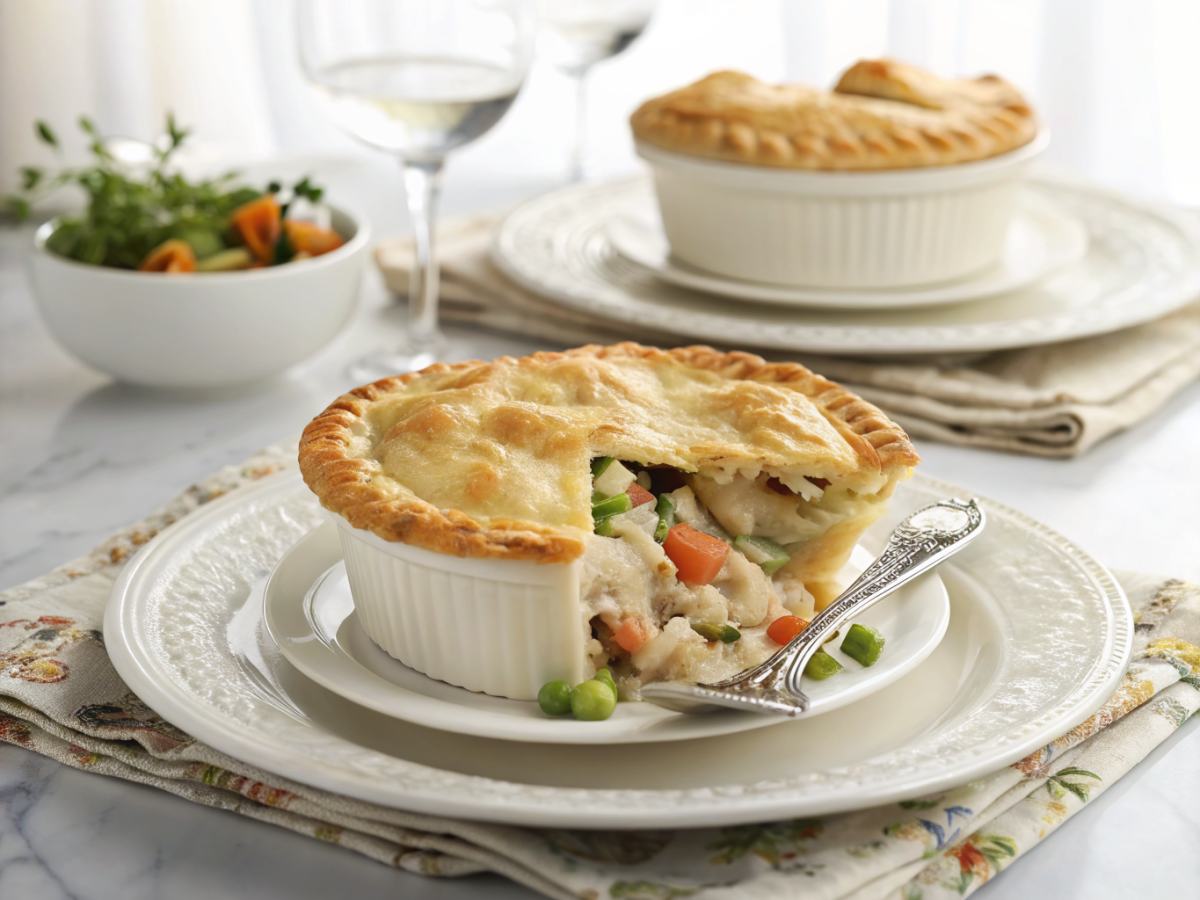
The Secret to Perfect Chicken Pot Pie
Ingredients
Method
- Preheat your oven to 400 degrees Fahrenheit. Lightly grease a 9-inch deep dish pie pan or casserole dish.
- In a large skillet over medium heat, melt the butter. Add the diced onion and cook for 3-4 minutes until softened. Sprinkle in the flour and stir constantly for 1 minute to create a roux.
- Gradually whisk in the chicken broth and milk, stirring constantly to prevent lumps. Add the thyme, salt, and pepper. Bring to a simmer and cook for 3-5 minutes until the sauce thickens.
- Stir in the cooked chicken and mixed vegetables. Cook for 2-3 minutes until everything is heated through and well combined. Taste and adjust seasoning as needed.
- Place one pie crust in the bottom of your prepared dish. Pour the chicken and vegetable mixture over the crust. Top with the second pie crust, crimping the edges to seal. Cut 4-5 small slits in the top to allow steam to escape.
- Place the pie on a baking sheet to catch any drips. Bake for 30-35 minutes until the crust is golden brown and the filling is bubbling through the vents.
- Remove from the oven and let rest for 10 minutes before slicing. This allows the filling to set slightly for easier serving. Enjoy warm.
Nutrition
Notes
Tried this recipe?
Let us know how it was!Chicken Pot Pie: 5 Easy Tips for Perfect Results
Creating the perfect pot pie starts with understanding the fundamentals that separate an average dish from an exceptional one. The secret lies in balancing moisture levels, ensuring your filling isn’t too runny or too thick. A properly thickened filling creates that luxurious, velvety texture that coats each bite without making the crust soggy.
Temperature control plays a crucial role in achieving that coveted golden-brown crust. Baking at the right temperature ensures the pastry cooks through while developing a beautiful color and crisp texture. Too hot, and you risk burning the edges before the center cooks; too cool, and you end up with a pale, undercooked crust.
The quality of your ingredients directly impacts the final result. Fresh vegetables, quality chicken, and real butter make a noticeable difference in flavor and texture. Don’t skimp on these essentials if you want restaurant-quality results at home.
Proper seasoning transforms a bland filling into something memorable. Layer your flavors by seasoning at different stages of cooking rather than adding all the salt and pepper at once. This technique builds depth and complexity that you can taste in every spoonful.
Finally, patience during the resting period after baking cannot be overstated. Allowing your pot pie to cool for 10-15 minutes lets the filling set properly, making it easier to serve and preventing burns. This waiting period also allows the flavors to meld together beautifully.
Why You’ll Love This Chicken Pot Pie
This recipe strikes the perfect balance between convenience and homemade quality, making it ideal for busy weeknights without sacrificing flavor. Unlike store-bought versions loaded with preservatives and artificial ingredients, you control exactly what goes into your dish. The result is a cleaner, fresher taste that your family will notice immediately.
The versatility of this recipe means you can easily adapt it to whatever vegetables you have on hand or dietary preferences you need to accommodate. Swap out ingredients, adjust seasonings, or modify the crust to suit your needs. This flexibility makes it a reliable go-to recipe you’ll return to again and again.
Comfort food doesn’t have to mean unhealthy food, and this recipe proves it. By using wholesome ingredients and controlling portion sizes, you create a satisfying meal that nourishes your body. The combination of protein, vegetables, and carbohydrates provides balanced nutrition in one delicious package.
The make-ahead friendly nature of pot pie makes it perfect for meal planning and entertaining. Prepare it in advance, refrigerate or freeze, and bake when needed. This convenience factor reduces stress while ensuring you always have a delicious meal ready to go.
Finally, there’s something undeniably special about serving a beautiful, golden pot pie at the dinner table. The presentation alone creates excitement and anticipation. When you break through that flaky crust to reveal the steaming, aromatic filling beneath, you create a memorable dining experience that brings people together.
Core Ingredients for Chicken Pot Pie

The foundation of any great pot pie starts with quality chicken, and you have several options depending on your time and preference. Rotisserie chicken offers the ultimate convenience, providing pre-cooked, seasoned meat that shreds easily. Alternatively, poach chicken breasts in seasoned broth for tender, flavorful meat, or use leftover roasted chicken for added depth.
Your vegetable selection typically includes the classic trio of carrots, celery, and peas, though you can certainly expand beyond these basics. Dice your carrots and celery into uniform pieces to ensure even cooking. Frozen peas work perfectly well and save prep time, while fresh peas add a sweet pop when in season.
The sauce base requires butter, flour, and liquid to create that signature creamy filling. All-purpose flour works as the thickening agent, while a combination of chicken broth and heavy cream provides richness and flavor. Some recipes use all broth for a lighter version, while others prefer the indulgence of cream.
Aromatics like onions and garlic form the flavor foundation that elevates your filling from good to exceptional. Sauté these until softened and fragrant before adding other ingredients. Fresh thyme, parsley, and a bay leaf contribute herbal notes that complement the chicken beautifully.
The crust can be homemade or store-bought, depending on your skill level and available time. A butter-based pie dough provides superior flavor and flakiness, but quality store-bought puff pastry or pie crust delivers excellent results with minimal effort. Keep pastry cold until ready to use for the best texture.
Seasonings including salt, black pepper, and a pinch of nutmeg round out the ingredient list. These simple additions make a significant impact on the overall flavor profile. Don’t underestimate the power of proper seasoning to transform your dish from ordinary to extraordinary.
How to Make Chicken Pot Pie: Step-by-Step
Begin by preheating your oven to 400°F (200°C) and preparing your ingredients with proper mise en place. Dice your vegetables into uniform pieces, shred your cooked chicken, and have your pastry ready. This preparation ensures smooth cooking without scrambling to chop vegetables while your sauce bubbles on the stove.
In a large skillet or Dutch oven, melt butter over medium heat until foaming. Add diced onions, carrots, and celery, cooking until the vegetables soften and the onions become translucent, about 5-7 minutes. Stir occasionally to prevent sticking and ensure even cooking.
Add minced garlic and cook for another minute until fragrant, being careful not to burn it. Sprinkle flour over the vegetables, stirring constantly to coat everything evenly. Cook this roux for 2-3 minutes to eliminate the raw flour taste while creating the base for your creamy sauce.
Gradually pour in chicken broth while whisking constantly to prevent lumps from forming. The mixture will thicken as it comes to a simmer. Add heavy cream, stirring to combine, then bring the mixture to a gentle bubble.
Stir in your shredded chicken, peas, and fresh herbs, along with salt and pepper to taste. Let the mixture simmer for a few minutes until it reaches a thick, gravy-like consistency. The filling should coat the back of a spoon without being overly thick or runny.
Transfer the hot filling to your baking dish, spreading it evenly to the edges. Allow it to cool slightly while you prepare your pastry topping. This brief cooling period prevents the pastry from melting before it gets into the oven.
Roll out your pastry dough to fit your baking dish with about an inch of overhang. Drape it over the filling, tucking the edges under and crimping to seal. Cut several slits in the top to allow steam to escape during baking, which prevents a soggy crust.
For a beautiful golden finish, brush the pastry with an egg wash made from one beaten egg mixed with a tablespoon of water. This creates that professional-looking shine and deep color. Place the dish on a baking sheet to catch any drips, then transfer to your preheated oven.
Bake for 30-35 minutes until the crust turns deep golden brown and the filling bubbles through the vents. If the edges brown too quickly, tent them with aluminum foil. The internal temperature should reach 165°F (74°C) for food safety.
Remove from the oven and let rest for 10-15 minutes before serving. This resting time allows the filling to set up properly, making it easier to serve neat portions. The wait also prevents burning your mouth on the piping hot filling, and you can check out more dinner recipes while it cools.
Nutrition & Health Benefits
Chicken provides an excellent source of lean protein, essential for muscle maintenance, repair, and overall body function. A typical serving delivers approximately 25-30 grams of protein, helping you meet daily nutritional requirements. Protein also promotes satiety, keeping you fuller longer and preventing unnecessary snacking between meals.
The vegetable content contributes important vitamins, minerals, and dietary fiber to your meal. Carrots supply beta-carotene for eye health, while celery provides vitamin K for bone health. Peas add folate, vitamin C, and plant-based protein to round out the nutritional profile.
Using chicken broth as part of your liquid base adds minerals like calcium, magnesium, and phosphorus. Homemade bone broth contains collagen, which supports joint health and skin elasticity. Even store-bought versions provide these benefits, though homemade typically offers higher nutrient density.
The herbs in your pot pie aren’t just for flavor—they contribute antioxidants and anti-inflammatory compounds. Thyme contains thymol, which has antimicrobial properties, while parsley provides vitamin K and vitamin C. These small additions pack a nutritional punch beyond their culinary contributions.
To make this dish healthier, consider using whole wheat pastry flour for added fiber in your crust. Increase the vegetable-to-chicken ratio for more nutrients and fewer calories. You can also substitute half-and-half or milk for heavy cream to reduce fat content without sacrificing too much richness, similar to techniques used in breaded chicken preparations.
One serving typically contains 400-600 calories depending on crust thickness and cream content. While this qualifies as a hearty meal, it’s reasonable when enjoyed as part of a balanced diet. Pair it with a simple green salad to add freshness and additional nutrients without significantly increasing calories.
Variations & Substitutions
Transform your classic recipe into a turkey pot pie by substituting cooked turkey for chicken, making it perfect for using Thanksgiving leftovers. The preparation method remains identical, though turkey’s slightly different flavor profile pairs wonderfully with sage instead of thyme. This variation breathes new life into leftover holiday turkey.
Create a vegetarian version by replacing chicken with chickpeas, white beans, or extra-firm tofu for protein. Use vegetable broth instead of chicken broth and increase the variety of vegetables with mushrooms, sweet potatoes, or green beans. The creamy sauce works just as well without meat, delivering satisfying comfort food for plant-based eaters.
For a seafood twist, substitute cooked shrimp, salmon, or a combination of seafood for the chicken. Add fresh dill instead of thyme and include corn for a chowder-inspired filling. This coastal variation offers a lighter, brighter flavor profile while maintaining the comforting pot pie format.
Experiment with different crust options to change the character of your dish entirely. Try puff pastry for an elegant, flaky topping, or use biscuit dough for a more rustic, Southern-style presentation. Mashed potato topping creates a shepherd’s pie hybrid, while phyllo dough adds a crispy, delicate texture.
Make it dairy-free by using olive oil or vegan butter in place of regular butter and coconut milk or cashew cream instead of heavy cream. Nutritional yeast adds a savory depth that compensates for the missing dairy richness. These substitutions work surprisingly well without dramatically altering the final result.
Individual pot pies baked in ramekins or mason jars offer portion control and elegant presentation for dinner parties. They also bake faster than a large pie, typically requiring only 20-25 minutes. This format makes serving easier and allows guests to customize their own portions, much like the individual servings you might find in quick easy meals.
Serving Suggestions
A crisp green salad with a tangy vinaigrette provides the perfect counterpoint to the rich, creamy pot pie. The acidity and freshness cut through the heaviness, cleansing your palate between bites. Mixed greens, cucumber, and cherry tomatoes with a lemon-dijon dressing work particularly well.
Roasted or steamed green beans offer a simple, elegant side that adds color and nutrition to your plate. Season them simply with butter, salt, and pepper, or dress them up with toasted almonds and lemon zest. Their slight crunch contrasts nicely with the soft filling.
Cranberry sauce or a fruit chutney adds a sweet-tart element that complements the savory filling beautifully. This pairing works especially well with the turkey variation. The bright, fruity notes provide flavor complexity and prevent palate fatigue.
Garlic bread or dinner rolls are perfect for soaking up any extra sauce that escapes from your pot pie. Warm, buttery bread adds another comforting element to an already cozy meal. Choose whole grain options for added nutrition and fiber.
For a complete comfort food experience, serve with mashed potatoes or a simple rice pilaf on the side. While this creates a carb-heavy plate, sometimes that’s exactly what you need. The additional starch helps stretch the meal further when feeding a crowd.
Consider pairing with a light white wine like Chardonnay or Sauvignon Blanc if serving at a dinner party. The wine’s acidity balances the richness while its subtle flavors won’t overpower the dish. For non-alcoholic options, sparkling water with lemon or iced tea work wonderfully.
Common Mistakes to Avoid
Overfilling your pie dish ranks among the most common errors, leading to overflow and a messy oven. Leave at least half an inch of space at the top to allow for bubbling during baking. Use a baking sheet underneath to catch any drips that do escape.
Using filling that’s too thin creates a soupy mess rather than a cohesive, sliceable pie. Ensure your sauce reaches the proper consistency before transferring to the baking dish. It should coat the back of a spoon and slowly drip off rather than running freely.
Skipping the resting period after baking leads to filling that runs everywhere when you try to serve it. Patience pays off with clean slices and a properly set texture. Use this time to prepare your sides or set the table.
Neglecting to cut vents in your top crust traps steam inside, resulting in a soggy pastry. Those slits allow moisture to escape while the pie bakes, keeping your crust crisp and flaky. Make several cuts in a decorative pattern for both function and aesthetics.
Using cold filling with cold pastry extends baking time and can result in undercooked crust or overcooked filling. Let your filling cool slightly but not completely before adding the pastry. The residual warmth helps the bottom crust begin cooking immediately.
Underseasoning represents perhaps the most disappointing mistake, turning potentially delicious pot pie into bland disappointment. Taste your filling before transferring it to the dish and adjust seasonings as needed. Remember that flavors mellow slightly during baking, so season assertively, similar to how you’d approach casserole recipes.
Storage & Meal Prep Tips
Properly stored pot pie keeps well in the refrigerator for 3-4 days, making it excellent for meal prep. Allow it to cool completely before covering tightly with aluminum foil or transferring to an airtight container. Reheat individual portions in the microwave or the entire pie in a 350°F oven until heated through.
Freezing pot pie extends its life to 2-3 months, perfect for batch cooking and future convenience. Freeze before or after baking, depending on your preference. Unbaked frozen pot pie goes directly from freezer to oven, adding 15-20 minutes to the baking time.
For best freezer results, wrap the pie tightly in plastic wrap, then aluminum foil to prevent freezer burn. Label with the date and reheating instructions for easy reference later. Use freezer-safe dishes if you plan to freeze, as some materials crack under temperature extremes.
Prepare the filling up to two days in advance and store it separately from the pastry. This approach gives you a head start on dinner while preventing the crust from becoming soggy. Assemble and bake when ready to serve for the freshest possible result.
Individual portions freeze exceptionally well and offer ultimate convenience for singles or couples. Divide the filling among several small containers, top each with pastry, and freeze. Pull out only what you need for a quick, homemade meal anytime.
When reheating, cover the crust with foil if it browns too quickly while the filling heats through. A 350°F oven works best for maintaining texture, though microwave reheating works in a pinch. Add a few minutes to ensure the center reaches a safe temperature of 165°F.
Final Thoughts on Chicken Pot Pie
Mastering this classic Chicken Pot Pie recipe adds an invaluable tool to your cooking repertoire, providing comfort, nourishment, and satisfaction in one beautiful package. The techniques you learn here translate to countless other recipes, building your confidence and skills in the kitchen. Whether you’re cooking for family, friends, or meal prepping for yourself, this dish delivers every time.
The beauty of this recipe lies in its adaptability and forgiving nature, making it accessible to cooks of all skill levels. Don’t be intimidated by the multiple steps—each one builds on the last, creating layers of flavor and texture. With practice, you’ll develop your own rhythm and possibly your own signature variations.
Remember that cooking should bring joy, not stress, so embrace the process and don’t worry about perfection. Even a slightly imperfect pot pie tastes delicious and provides nourishing comfort. The act of creating homemade food for yourself and others carries value beyond the meal itself.
This Chicken Pot Pie represents more than just dinner—it’s a connection to culinary tradition and a way to show care for those you feed. The time invested in preparing this dish pays dividends in satisfaction, health, and the memories created around the dinner table. Make it your own, experiment with variations, and enjoy the delicious results of your efforts, just as you would with other comforting high protein recipes.
Frequently Asked Questions
Can I make Chicken Pot Pie ahead of time?
Yes, you can assemble your pot pie completely up to 24 hours in advance and store it covered in the refrigerator. When ready to bake, add 5-10 minutes to the baking time since it’s starting cold. This make-ahead approach actually allows flavors to meld together beautifully, often resulting in even better taste.
What’s the best way to prevent a soggy bottom crust?
Ensure your filling has thickened properly before adding it to the pie dish, as excess liquid is the primary culprit. You can also blind-bake your bottom crust for 10 minutes before adding the filling, creating a moisture barrier. Placing your pie dish on a preheated baking sheet also helps the bottom crust cook more thoroughly.
Can I use rotisserie chicken for this recipe?
Absolutely! Rotisserie chicken is actually one of the best shortcuts for making pot pie quickly without sacrificing flavor. Simply remove the skin, shred the meat, and use it in place of cooking chicken from scratch. The pre-seasoned meat adds extra flavor to your filling, making the whole process faster and easier.
How do I know when my pot pie is fully cooked?
Your pot pie is done when the crust is deep golden brown and the filling bubbles visibly through the vents. An instant-read thermometer inserted into the center should register 165°F for food safety. The edges of the crust should be crispy and pull away slightly from the sides of the dish, indicating proper cooking throughout.
