
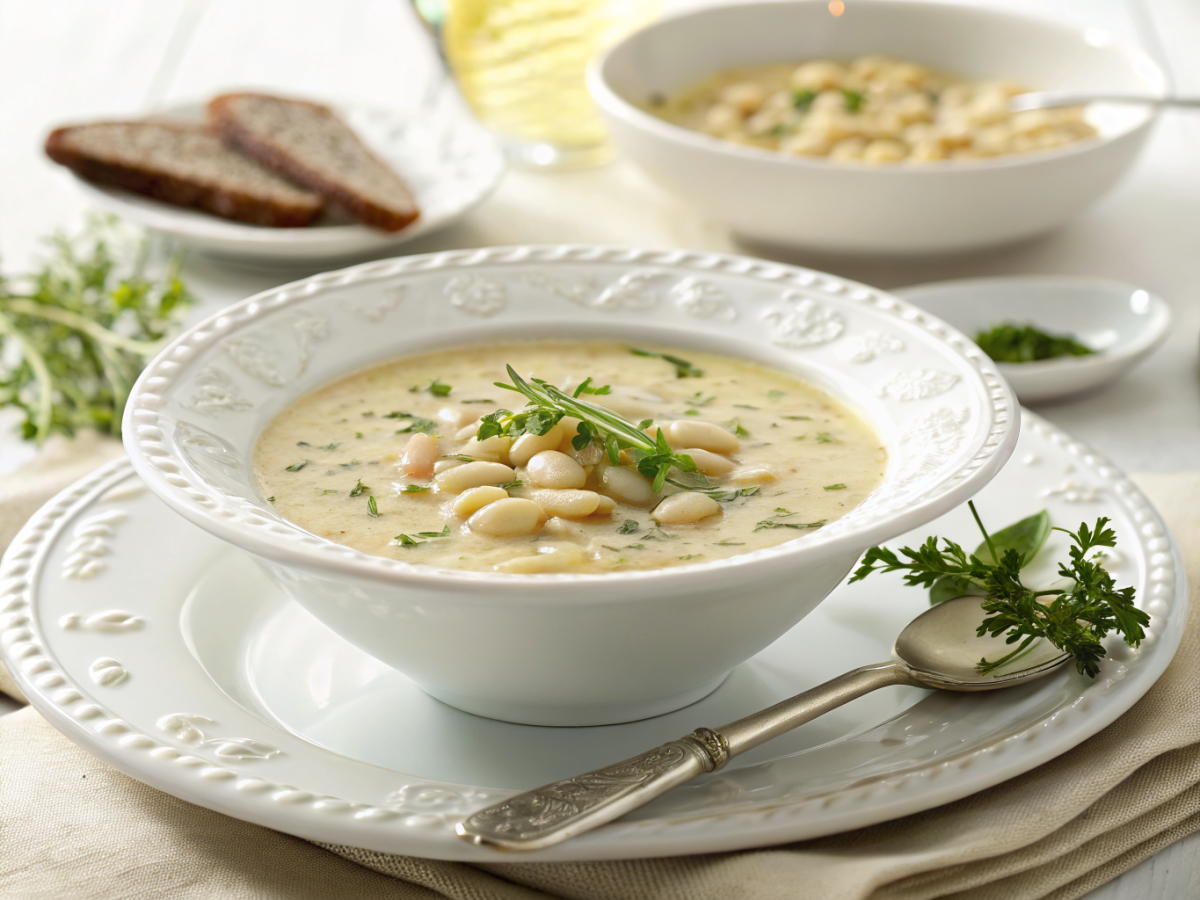
The Secret to Perfect White Bean Soup
Ingredients
Method
- Heat olive oil in a large pot over medium heat. Add the diced onion, carrots, and celery. Cook for 8-10 minutes, stirring occasionally, until the vegetables are softened and the onion is translucent.
- Stir in the minced garlic and cook for 1 minute until fragrant. Add the rosemary sprigs and bay leaves to the pot.
- Pour in the drained white beans and vegetable broth. Stir everything together and bring the soup to a boil over high heat.
- Once boiling, reduce the heat to low and let the soup simmer uncovered for 30 minutes, allowing the flavors to meld together.
- Remove the rosemary sprigs and bay leaves. Use an immersion blender to partially blend the soup, leaving some beans whole for texture. Alternatively, transfer 2 cups of soup to a blender, puree, and return to the pot.
- Taste the soup and season with salt and pepper as needed. If the soup is too thick, add more broth or water to reach your desired consistency.
- Ladle the soup into bowls and serve hot. Garnish with a drizzle of olive oil, fresh herbs, or grated Parmesan cheese if desired.
Nutrition
Notes
Tried this recipe?
Let us know how it was!White Bean Soup: 5 Easy Tips for Perfect Results
Mastering the art of white bean soup starts with understanding a few key techniques that separate good soup from extraordinary soup. The first tip involves properly preparing your beans, whether using dried or canned varieties. Dried beans require overnight soaking to ensure even cooking and optimal texture, while canned beans need thorough rinsing to remove excess sodium.
The second essential tip focuses on building flavor through proper sautéing of your aromatics. Never rush this step—allowing onions, garlic, and celery to cook slowly releases their natural sugars and creates a flavor foundation that permeates the entire dish. Medium heat works best, typically requiring 8-10 minutes of patient stirring.
Tip three centers on choosing the right broth as your liquid base. Vegetable broth keeps the soup vegetarian-friendly, while chicken broth adds deeper savory notes. For maximum flavor impact, consider using homemade stock or enhancing store-bought versions with additional herbs and a parmesan rind.
The fourth tip addresses seasoning timing throughout the cooking process. Adding salt too early can toughen beans and concentrate flavors unevenly as liquid reduces. Season lightly during cooking, then adjust with salt, pepper, and acid (lemon juice or vinegar) just before serving for perfectly balanced taste.
Finally, tip five emphasizes texture control through partial blending. Removing two cups of cooked soup and pureeing it before returning to the pot creates natural creaminess without heavy cream. This technique thickens the broth while maintaining satisfying whole bean texture throughout.
Why You’ll Love This White Bean Soup
This soup delivers exceptional nutritional value while remaining incredibly budget-friendly compared to most protein-rich meals. White beans provide substantial plant-based protein and fiber, keeping you satisfied for hours without the heaviness of meat-based soups. Each serving contains approximately 15 grams of protein and 12 grams of fiber, supporting both muscle maintenance and digestive health.
The versatility of this recipe makes it adaptable to countless dietary preferences and ingredient availability. It’s naturally vegetarian and easily converts to vegan by using vegetable broth and omitting parmesan. You can add Italian sausage for meat lovers, incorporate leafy greens for extra nutrients, or adjust spice levels to suit any palate.
Preparation simplicity ranks among the top reasons home cooks return to this recipe repeatedly. Active cooking time requires only about 15 minutes, while the soup simmers largely unattended. This hands-off approach makes it perfect for multitasking—you can prepare side dishes, help with homework, or simply relax while dinner cooks itself.
The soup’s flavor actually improves after a day in the refrigerator as ingredients meld together overnight. This quality makes it an ideal candidate for Sunday meal prep or advance preparation for dinner parties. Leftovers taste even better than the original batch, a rare quality that maximizes your cooking investment.
Cost-effectiveness cannot be overstated when discussing white bean soup benefits. Dried beans cost mere pennies per serving, while even premium canned beans remain affordable compared to meat proteins. A pot serving six to eight people typically costs under ten dollars total, making it perfect for feeding families or stretching grocery budgets.
Core Ingredients for White Bean Soup

The foundation of exceptional soup begins with selecting the right white beans from the several varieties available. Cannellini beans, also called white kidney beans, offer creamy texture and mild flavor that absorbs surrounding seasonings beautifully. Great Northern beans provide slightly firmer texture and work wonderfully if you prefer more distinct bean presence in each spoonful.
Navy beans represent another excellent choice, cooking down softer and creating naturally thicker broth. For this recipe, you’ll need either 1 pound of dried beans (soaked overnight) or three 15-ounce cans of beans (drained and rinsed). Canned beans dramatically reduce cooking time while dried beans offer superior texture and cost savings.
Aromatic vegetables form the flavor base that distinguishes memorable soup from bland disappointment. You’ll need one large yellow onion (diced), four cloves of fresh garlic (minced), three celery stalks (chopped), and two medium carrots (diced). These vegetables create the classic mirepoix foundation used in professional kitchens worldwide for building complex flavor profiles.
Fresh herbs and dried spices contribute aromatic complexity that elevates simple ingredients into sophisticated cuisine. Gather three fresh thyme sprigs, two bay leaves, one teaspoon of dried rosemary, and one teaspoon of dried oregano. Fresh herbs always surpass dried versions when available, so substitute one tablespoon of fresh rosemary and oregano if possible.
Quality broth serves as the liquid medium carrying flavors throughout the soup. You’ll need six cups of low-sodium vegetable or chicken broth, depending on dietary preferences. Low-sodium versions allow better seasoning control, preventing over-salted final results that can’t be corrected.
Additional ingredients round out the recipe with finishing touches and depth. Include three tablespoons of olive oil for sautéing, one 14-ounce can of diced tomatoes, two tablespoons of tomato paste, salt and black pepper to taste, and optional parmesan cheese rind for umami richness. A squeeze of fresh lemon juice before serving brightens all flavors remarkably.
How to Make White Bean Soup: Step-by-Step
Begin by preparing all ingredients through proper mise en place, the professional cooking technique of having everything measured and ready. Dice your onion, mince garlic, chop celery and carrots into uniform pieces for even cooking. If using dried beans, ensure they’ve soaked at least eight hours or overnight, then drain and rinse thoroughly before proceeding.
Heat three tablespoons of olive oil in a large Dutch oven or heavy-bottomed pot over medium heat. Once the oil shimmers but before it smokes, add diced onions and a pinch of salt. Cook for five minutes, stirring occasionally, until onions turn translucent and begin softening at the edges.
Add minced garlic, chopped celery, and diced carrots to the pot with the onions. Continue cooking for another five minutes, stirring frequently to prevent garlic from burning. The vegetables should soften and release their aromatic oils, filling your kitchen with an irresistible savory fragrance that signals proper flavor development.
Stir in tomato paste and cook for two minutes, allowing it to caramelize slightly against the pot bottom. This step deepens the tomato flavor and removes any raw, tinny taste. The paste should darken to a rich brick-red color and coat the vegetables evenly throughout the mixture.
Add your prepared beans (either soaked dried beans or rinsed canned beans) to the pot along with diced tomatoes and their juices. Pour in six cups of broth, then add thyme sprigs, bay leaves, dried rosemary, and dried oregano. If using a parmesan rind, nestle it into the liquid now for maximum flavor infusion.
Increase heat to high and bring the soup to a rolling boil, then immediately reduce heat to maintain a gentle simmer. If using dried beans, cover partially and simmer for 60-90 minutes until beans are completely tender. For canned beans, simmer for just 25-30 minutes to allow flavors to meld properly.
Test bean tenderness by removing one and pressing it between your fingers—it should mash easily without any chalky center. Once beans reach perfect tenderness, remove and discard thyme sprigs, bay leaves, and parmesan rind. These aromatics have released their flavors and served their purpose.
For creamier texture, remove two cups of soup and carefully blend until completely smooth using an immersion blender or standard blender. Return the puree to the pot and stir thoroughly to incorporate. This technique creates luxurious body without adding cream or other heavy ingredients.
Season the soup with salt and freshly ground black pepper to taste, starting conservatively and adjusting gradually. Add one to two tablespoons of fresh lemon juice to brighten flavors and balance the earthiness of beans. Taste and adjust seasoning one final time before serving, as proper seasoning makes the difference between good and spectacular soup.
Ladle the hot soup into bowls and garnish with optional toppings like fresh parsley, grated parmesan, red pepper flakes, or a drizzle of high-quality olive oil. Serve immediately alongside crusty bread for dipping, or pair with a simple green salad for a complete, satisfying meal that’s perfect for dinner recipes any night of the week.
Nutrition & Health Benefits
White beans stand as nutritional powerhouses packed with essential vitamins, minerals, and macronutrients that support overall health. Each cup of cooked white beans contains approximately 15 grams of plant-based protein, making this soup an excellent choice for vegetarians, vegans, or anyone reducing meat consumption. This protein content rivals many animal sources while providing zero cholesterol and minimal saturated fat.
The exceptional fiber content in white beans promotes digestive health and helps maintain stable blood sugar levels throughout the day. With about 12 grams of fiber per cup, these legumes support healthy gut bacteria, improve regularity, and create lasting satiety that prevents unhealthy snacking. Soluble fiber also helps reduce LDL cholesterol levels, supporting cardiovascular health over time.
White beans deliver impressive amounts of folate, a B-vitamin crucial for cell division and DNA synthesis. One serving provides approximately 35% of the daily recommended folate intake, making this soup particularly beneficial for pregnant women or those planning pregnancy. Folate also supports cardiovascular health by helping metabolize homocysteine, an amino acid linked to heart disease when elevated.
The mineral profile of white beans includes significant amounts of iron, magnesium, and potassium that support various bodily functions. Iron carries oxygen throughout the body and prevents anemia, while magnesium supports muscle and nerve function along with bone health. Potassium helps regulate blood pressure and counteracts sodium’s negative effects, promoting heart health with every serving.
This soup provides substantial nutrition while remaining remarkably low in calories and fat, typically containing only 200-250 calories per generous serving. The combination of protein and fiber creates exceptional satiety relative to calorie content, making it ideal for weight management goals. For those interested in additional high protein recipes, this soup serves as an excellent template for nutritious meal planning.
Antioxidants present in white beans, particularly polyphenols, help combat oxidative stress and inflammation throughout the body. These compounds protect cells from damage caused by free radicals and may reduce the risk of chronic diseases including certain cancers. The tomatoes in this recipe add lycopene, another powerful antioxidant that supports prostate and cardiovascular health.
The low glycemic index of white beans makes this soup suitable for diabetics and those monitoring blood sugar levels. Unlike refined carbohydrates that spike glucose rapidly, beans release energy slowly and steadily, preventing dramatic blood sugar fluctuations. This quality supports sustained energy levels and helps prevent the afternoon crashes common after high-carb meals.
Nutrition Tip: For additional nutritional insights about legume-based dishes and balanced meal planning, explore various healthy recipe options that complement this soup perfectly.
Variations & Substitutions
Transform this basic recipe into countless variations by incorporating different proteins that complement the creamy bean base. Italian sausage (either mild or spicy) adds robust flavor—simply brown it before adding vegetables, then proceed with the recipe. Diced ham or bacon provides smoky depth, while shredded rotisserie chicken stirred in during the final minutes creates a heartier meal.
Leafy greens add nutritional value, color, and textural contrast to the creamy soup base. Spinach, kale, Swiss chard, or escarole work beautifully—add them during the last five minutes of cooking so they wilt perfectly without becoming mushy. Two to three cups of packed greens reduces down to the ideal amount, boosting vitamin and mineral content significantly.
Different bean varieties create interesting flavor and texture variations while maintaining the recipe’s fundamental character. Chickpeas offer nuttier flavor and firmer texture, while butter beans provide exceptionally creamy consistency. Mixing bean types creates visual interest and complex texture—try half cannellini and half chickpeas for delightful variety in every spoonful.
Spice adjustments allow customization for different heat preferences and flavor profiles. Red pepper flakes add gentle warmth, while diced jalapeños or chipotle peppers in adobo create more substantial heat. For Mediterranean flair, increase oregano and add lemon zest; for Tuscan style, incorporate fennel seeds and white wine during the sautéing step.
Dairy additions create ultra-creamy versions that feel indulgent while remaining relatively healthy. Stir in half a cup of heavy cream or coconut cream during the final minutes for luxurious richness. Alternatively, swirl in cream cheese or mascarpone for tangy creaminess that complements the beans’ earthiness beautifully without overwhelming their natural flavor.
Vegetable substitutions work well based on seasonal availability and personal preferences. Fennel bulb replaces celery for subtle anise notes, while parsnips substitute for carrots with slightly sweeter, earthier flavor. Diced zucchini or yellow squash added during the final 10 minutes provides fresh summer character and additional nutrients.
Broth alternatives significantly impact the final flavor profile and dietary compatibility. Bone broth adds collagen and deeper savory notes, while mushroom broth creates earthy, umami-rich vegetarian versions. For lighter soup, use half broth and half water, then compensate with extra herbs and a parmesan rind for maintained flavor depth.
Serving Suggestions
Crusty artisan bread serves as the classic accompaniment, perfect for soaking up every last drop of flavorful broth. Warm sourdough, ciabatta, or French baguette slices brushed with olive oil and toasted until golden provide satisfying crunch and textural contrast. Garlic bread takes this pairing to another level, with butter, herbs, and roasted garlic complementing the soup’s savory profile.
A simple green salad with acidic vinaigrette balances the soup’s richness and adds fresh, crisp elements to the meal. Mixed greens, arugula, or romaine with lemon vinaigrette, cherry tomatoes, and shaved parmesan create a light, refreshing counterpoint. The acidity cuts through the creamy beans while the raw vegetables provide textural variety and additional nutrients.
Garnishes transform simple soup into restaurant-worthy presentation while adding flavor dimensions and textural interest. Fresh herbs like parsley, basil, or chives add color and brightness, while grated parmesan or pecorino romano contributes salty, umami richness. A drizzle of high-quality extra virgin olive oil adds fruity notes and glossy visual appeal that elevates the entire dish.
Additional garnish options include crispy pancetta or bacon bits for smoky crunch, toasted pine nuts for buttery richness, or homemade croutons for satisfying texture. Red pepper flakes offer optional heat, while a dollop of pesto swirled on top creates beautiful presentation and herbaceous flavor. Lemon zest adds bright, citrusy aroma that awakens the palate with every spoonful.
Wine pairings enhance the dining experience when serving this soup for special occasions or dinner parties. Crisp white wines like Pinot Grigio or Sauvignon Blanc complement the soup’s lightness without overwhelming delicate flavors. For red wine lovers, light-bodied options like Pinot Noir or Chianti work beautifully, especially if you’ve added Italian sausage or bacon to the recipe.
Side dishes beyond bread and salad round out the meal for heartier appetites or special gatherings. Roasted vegetables like Brussels sprouts or broccoli add variety and nutrition, while a simple caprese salad provides fresh, summery contrast. For those seeking more quick easy meals, this soup pairs wonderfully with simple sides that don’t require extensive preparation time.
Serving Tip: For creative presentation ideas and complementary side dishes, discover additional meal planning inspiration that helps create complete, balanced menus.
Common Mistakes to Avoid
The most frequent error involves underseasoning the soup throughout the cooking process and attempting to correct it only at the end. Beans absorb significant seasoning as they cook, so adding salt in stages—during sautéing, after adding broth, and before serving—creates properly seasoned soup. Taste frequently and adjust gradually for best results rather than dumping salt in at the finish.
Rushing the aromatic vegetable sautéing step compromises flavor development and creates one-dimensional soup lacking depth. Those initial minutes of cooking onions, garlic, celery, and carrots release essential oils and natural sugars that form the flavor foundation. Patient cooking over medium heat for the full recommended time pays dividends in final taste quality.
Using high heat during simmering causes beans to break down unevenly and creates cloudy, starchy broth instead of clear, flavorful liquid. Gentle simmering with just occasional bubbles breaking the surface cooks beans evenly while maintaining their shape and creating clean-tasting broth. Vigorous boiling also causes excessive evaporation, requiring additional liquid and diluting carefully developed flavors.
Forgetting to rinse canned beans thoroughly leaves excess sodium and starchy liquid that creates off-flavors and overly salty results. Even when using low-sodium beans, rinsing removes the thick canning liquid and reduces sodium content by approximately 40%. This simple step takes only seconds but dramatically improves final soup quality and allows better seasoning control.
Adding acid (tomatoes, lemon juice, or vinegar) too early when cooking dried beans can prevent them from softening properly. Acidic ingredients interfere with the breakdown of bean cell walls, potentially leaving you with crunchy beans even after hours of cooking. Add tomatoes only after beans have fully softened, and reserve lemon juice for the final seasoning adjustment.
Over-blending the soup eliminates textural interest and creates baby-food consistency rather than rustic, satisfying character. Blending only a portion (about one-third) creates natural creaminess while maintaining whole beans throughout for visual appeal and varied mouthfeel. If you accidentally over-blend, stir in additional drained canned beans to restore texture.
Neglecting the final taste adjustment before serving results in flat, unbalanced soup that fails to showcase the ingredients properly. After simmering, flavors meld and mellow, often requiring additional salt, pepper, and acid to brighten everything. Taking two minutes to taste and adjust these final seasonings separates mediocre soup from memorable meals that guests request repeatedly.
Storage & Meal Prep Tips
Proper cooling technique ensures food safety and maintains soup quality during storage for later enjoyment. Allow soup to cool at room temperature for no more than two hours, stirring occasionally to release heat evenly. For faster cooling of large batches, transfer to shallow containers that increase surface area and promote rapid temperature reduction before refrigeration.
Refrigerator storage keeps soup fresh for four to five days when stored in airtight containers that prevent odor absorption. Glass containers work best as they don’t retain odors or stains like plastic alternatives sometimes do. Leave about an inch of headspace in containers to allow for expansion and prevent messy spills when opening chilled soup.
The soup’s texture thickens considerably during refrigeration as beans continue absorbing liquid and starches gel when cold. This is completely normal and easily corrected during reheating—simply add broth, water, or even milk in small amounts while warming until reaching desired consistency. Start with a quarter cup of liquid and add more gradually to avoid over-thinning.
Freezing extends storage life up to three months while maintaining excellent quality and flavor when properly packaged. Use freezer-safe containers or heavy-duty freezer bags, removing as much air as possible to prevent freezer burn. Label containers with contents and date, then freeze flat for efficient storage and faster thawing when needed.
Thawing frozen soup safely requires planning ahead for best texture and food safety results. Transfer frozen soup to the refrigerator 24 hours before needed, allowing gradual, even thawing that maintains quality. For faster thawing, place the sealed container in cold water, changing water every 30 minutes until thawed, then reheat immediately.
Reheating methods significantly impact final texture and flavor, with stovetop warming producing superior results to microwave heating. Warm soup over medium-low heat, stirring frequently and adding liquid as needed to restore original consistency. Microwave reheating works in a pinch—use 50% power and stir every two minutes for even heating without scorching edges.
Meal prep strategies maximize this soup’s convenience factor for busy weeknight dinners throughout the week. Prepare a double batch on Sunday, portioning half into individual servings for grab-and-go lunches and keeping half in a large container for family dinners. Freeze additional portions for future weeks when cooking time is especially limited.
Garnishes and toppings store separately to maintain optimal texture and freshness until serving time. Keep grated cheese, fresh herbs, croutons, and olive oil in separate containers, adding them only when reheating individual portions. This prevents soggy croutons and wilted herbs while allowing customization based on individual preferences at each meal.
Meal Prep Tip: For comprehensive guidance on food storage best practices and meal planning strategies, explore additional kitchen resources that help maximize efficiency and minimize food waste.
Final Thoughts on White Bean Soup
This White Bean Soup recipe represents the perfect intersection of nutrition, flavor, and convenience that modern home cooks demand. The combination of protein-rich beans, aromatic vegetables, and savory herbs creates a satisfying meal that nourishes body and soul without requiring advanced cooking skills. Whether you’re an experienced cook or just beginning your culinary journey, this recipe delivers consistent, delicious results every single time.
The versatility of this dish makes it adaptable to countless variations, dietary restrictions, and personal preferences without losing its essential character. From vegetarian to meat-enriched versions, mild to spicy adaptations, and simple weeknight meals to elegant dinner party offerings, this soup transforms effortlessly. This flexibility ensures you’ll never tire of the recipe, as each preparation can reflect seasonal ingredients, available pantry items, or simply your current mood.
Budget-conscious cooks particularly appreciate how this recipe delivers maximum nutrition and satisfaction at minimal cost per serving. The primary ingredients—beans, vegetables, and broth—rank among the most affordable items in any grocery store, yet combine into restaurant-quality results. This economic efficiency makes the soup ideal for feeding families, meal prepping for singles, or stretching grocery budgets without sacrificing flavor or nutrition.