
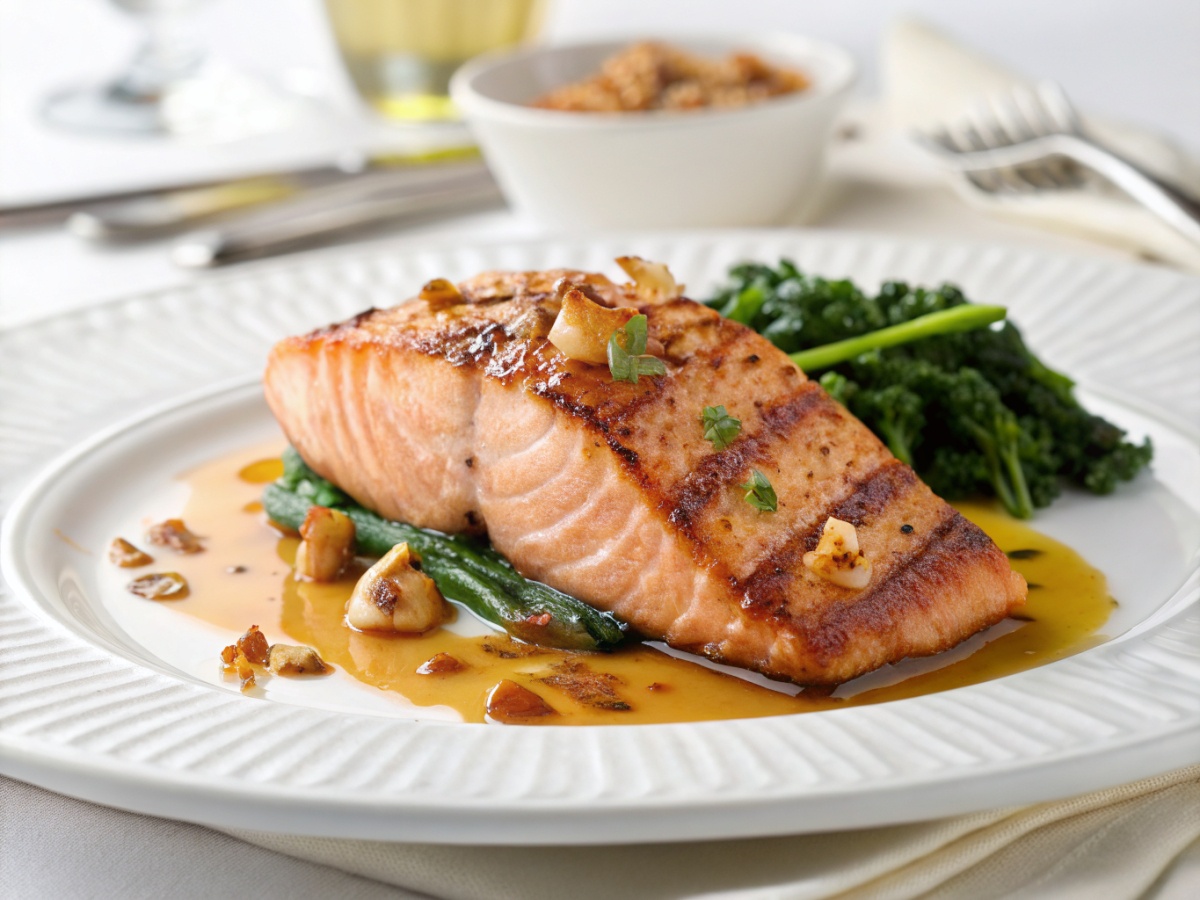
Honey Garlic Salmon No Soy Sauce Everyone Will Ask You To Make Again
Ingredients
Method
- Pat the salmon fillets dry with paper towels and season both sides with salt and black pepper. Set aside at room temperature while you prepare the sauce.
- In a small bowl, whisk together the honey, minced garlic, lemon juice, and Dijon mustard until well combined. Set aside.
- Heat 2 tablespoons of butter in a large skillet over medium-high heat. Once the butter is melted and bubbling, add the salmon fillets skin-side up. Cook for 4-5 minutes until golden brown on the bottom.
- Carefully flip the salmon fillets over and reduce heat to medium. Pour the honey garlic sauce over and around the salmon. Add the remaining 1 tablespoon of butter to the pan.
- Continue cooking for 4-5 minutes, spooning the sauce over the salmon frequently, until the salmon is cooked through and flakes easily with a fork. The internal temperature should reach 145 degrees Fahrenheit.
- Remove from heat and let the salmon rest for 2 minutes. The sauce will thicken slightly as it cools. Spoon extra sauce over the salmon, garnish with fresh chopped parsley, and serve immediately.
Nutrition
Notes
Tried this recipe?
Let us know how it was!Honey Garlic Salmon No Soy Sauce: 5 Easy Tips for Perfect Results
Creating restaurant-quality salmon at home doesn’t require complicated ingredients or techniques. This recipe relies on the natural sweetness of honey balanced with aromatic garlic and a touch of acidity. The result is a beautifully glazed fillet that’s crispy on the outside and flaky inside.
The secret to success lies in controlling your heat and timing. Too high, and your honey will burn before the salmon cooks through. Too low, and you’ll miss that gorgeous caramelization that makes this dish so irresistible.
Many traditional honey garlic salmon recipes call for soy sauce as a salty component, but we’ve found better alternatives. Using quality sea salt and a splash of vinegar creates depth without the soy. This approach also makes the recipe suitable for those with soy allergies or sensitivities.
Why You’ll Love This Honey Garlic Salmon No Soy Sauce
This recipe comes together in under 25 minutes from start to finish, making it perfect for busy weeknights. The ingredient list is refreshingly short, with items you likely already have in your kitchen. There’s no need for specialty Asian sauces or hard-to-find ingredients.
The flavor profile appeals to both adults and children, which makes meal planning significantly easier. The natural sweetness from honey balances beautifully with savory garlic without being overpowering. Even picky eaters who typically avoid fish find this preparation approachable and delicious.
From a health perspective, salmon provides exceptional nutritional value with high-quality protein and omega-3 fatty acids. This preparation method doesn’t rely on heavy creams or excessive fats. You get all the benefits of this superfood fish in a preparation that tastes indulgent without the guilt.
The versatility of this dish makes it suitable for various occasions, from casual family dinners to impressive date nights. You can easily scale the recipe up for entertaining or meal prep for the week ahead. The glaze reheats beautifully, maintaining its flavor and texture even after refrigeration.
Core Ingredients for Honey Garlic Salmon No Soy Sauce
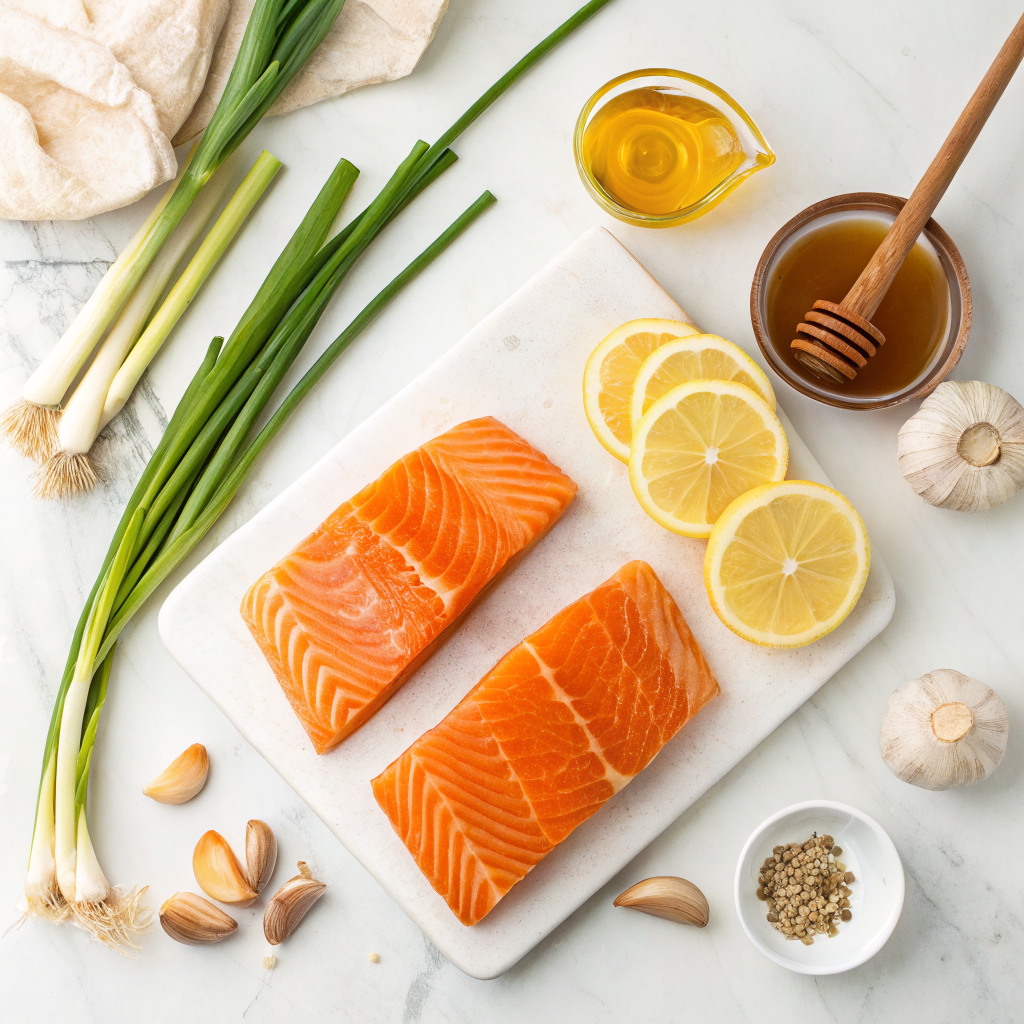
The foundation of this recipe starts with fresh salmon fillets, preferably wild-caught for superior flavor and nutrition. Look for fillets that are firm to the touch with vibrant color and no fishy odor. Skin-on or skinless both work well, though skin-on provides extra protection against overcooking.
High-quality honey serves as the star sweetener and creates that signature glaze. Raw or pure honey works best, as processed versions may contain additives that affect caramelization. The honey also acts as a natural thickener for the sauce, eliminating the need for cornstarch or other binders.
Fresh garlic cloves provide the aromatic backbone of this dish and should never be substituted with powder. Minced finely, the garlic infuses the honey with deep, savory notes. Plan on using at least four to six cloves for proper flavor intensity.
Apple cider vinegar or white wine vinegar adds the necessary acidity to balance the sweetness. This component also helps tenderize the fish slightly while adding complexity to the glaze. Just a tablespoon or two makes a significant difference in the final flavor profile.
Sea salt and freshly cracked black pepper are essential for seasoning both the salmon and the glaze. These simple seasonings enhance rather than mask the natural flavors. Quality matters here—coarse sea salt and freshly ground pepper provide superior taste compared to table salt.
Olive oil or avocado oil serves as the cooking fat, chosen for its high smoke point and neutral flavor. You’ll need just enough to coat the pan and prevent sticking. These healthy fats also help achieve that beautiful golden crust on the salmon.
Optional additions include fresh lemon juice for brightness and red pepper flakes for heat. A pat of butter at the end adds luxurious richness if desired. Fresh herbs like parsley or thyme make excellent garnishes that complement the honey garlic flavors.
How to Make Honey Garlic Salmon No Soy Sauce: Step-by-Step
Begin by removing your salmon from the refrigerator about 15 minutes before cooking to bring it to room temperature. Pat the fillets completely dry with paper towels, as moisture prevents proper browning. Season both sides generously with sea salt and black pepper.
In a small bowl, whisk together the honey, minced garlic, and vinegar until well combined. Taste and adjust the balance—you want sweetness with a subtle tang. Set this glaze aside while you prepare the pan.
Heat a large skillet over medium-high heat and add your cooking oil. The pan is ready when the oil shimmers but doesn’t smoke. This temperature ensures proper searing without burning the delicate honey glaze.
Place the salmon fillets skin-side up in the hot pan, leaving space between each piece. Resist the urge to move them—let them sear undisturbed for 4-5 minutes. You’ll know they’re ready to flip when the edges turn opaque and they release easily from the pan.
Carefully flip each fillet using a fish spatula or thin metal turner. Immediately pour the honey garlic mixture over and around the salmon. The liquid will bubble vigorously as it hits the hot pan, which is exactly what you want.
Reduce the heat to medium and continue cooking for another 4-6 minutes, depending on thickness. Spoon the glaze over the fillets every minute or so to build up layers of flavor. The sauce will thicken and become glossy as it reduces.
Check for doneness by gently pressing the thickest part of the fillet—it should feel firm but still have some give. The internal temperature should reach 145°F for food safety, though many prefer salmon slightly under at 135°F. The fish will continue cooking from residual heat after you remove it from the pan.
Transfer the salmon to serving plates and spoon extra glaze from the pan over the top. Let it rest for 2-3 minutes before serving to allow the juices to redistribute. Garnish with fresh herbs and lemon wedges if desired.
Pro Tip: If your glaze starts to darken too quickly, reduce the heat immediately and add a splash of water to thin it out. The honey can go from perfectly caramelized to burnt in seconds, so watch it carefully during the final minutes of cooking.
Nutrition & Health Benefits
Salmon ranks among the most nutritious proteins available, packed with omega-3 fatty acids that support heart and brain health. A single serving provides over 20 grams of high-quality protein with all essential amino acids. These nutrients support muscle maintenance, immune function, and cellular repair throughout your body.
The omega-3 content in salmon, particularly EPA and DHA, has been extensively studied for cardiovascular benefits. Regular consumption may help reduce inflammation, lower blood pressure, and improve cholesterol profiles. These fatty acids also support cognitive function and may reduce the risk of age-related mental decline.
Wild-caught salmon contains significant amounts of vitamin D, a nutrient many people lack in sufficient quantities. This vitamin plays crucial roles in bone health, immune function, and mood regulation. Just one serving can provide your entire daily requirement of this essential nutrient.
Salmon also delivers impressive amounts of B vitamins, particularly B12, niacin, and B6. These vitamins are essential for energy metabolism and nervous system function. The selenium content supports thyroid health and acts as a powerful antioxidant in the body.
While honey adds natural sugars to this recipe, it also provides antioxidants and trace minerals. Unlike refined sugar, raw honey contains beneficial compounds that may support immune health. The amount used per serving is moderate, keeping the overall sugar content reasonable.
Garlic contributes its own health benefits, including compounds that may support cardiovascular health and immune function. Studies suggest garlic consumption may help regulate blood pressure and cholesterol levels. The combination of garlic and salmon creates a nutritional powerhouse on your plate.
This preparation method uses minimal added fats compared to deep-fried or heavily breaded fish preparations. The cooking technique preserves the delicate omega-3 fatty acids that can be damaged by excessive heat. You’re getting maximum nutritional value with exceptional flavor, which is found in many high-protein recipes that prioritize both health and taste.
Variations & Substitutions
For those following a strict paleo or Whole30 diet, substitute coconut aminos for the vinegar to add umami depth. This swap maintains the soy-free nature while introducing subtle complexity. The coconut aminos blend seamlessly with honey and garlic without overpowering the dish.
If you prefer a spicier version, add sriracha or sambal oelek to the glaze mixture. Start with just a teaspoon and adjust to your heat preference. The spice cuts through the sweetness beautifully and adds an exciting dimension to the flavor profile.
Maple syrup makes an excellent honey substitute for those who prefer its distinct flavor. Use the same quantity and expect a slightly earthier sweetness. This variation works particularly well in fall and winter when you’re craving those warming, cozy flavors.
Fresh ginger adds a bright, zingy element that pairs wonderfully with both honey and garlic. Grate about a tablespoon of fresh ginger into your glaze mixture. This Asian-inspired twist creates complexity without adding soy sauce to the equation.
For a citrus variation, add orange or lime zest to the glaze along with a squeeze of fresh juice. The citrus brightness complements the rich salmon while cutting through the honey’s sweetness. This version feels lighter and works beautifully for spring and summer meals.
Different fish species can replace salmon if you prefer or need alternatives. Arctic char, steelhead trout, or even thick white fish like halibut work with this glaze. Adjust cooking times based on the thickness and fat content of your chosen fish.
For a lower-sugar option, reduce the honey by half and increase the vinegar slightly. Add a pinch of coconut sugar or a few drops of liquid stevia to maintain sweetness. The glaze won’t be quite as thick, but the flavor remains delicious and balanced.
Serving Suggestions
This salmon pairs beautifully with simple roasted vegetables that won’t compete with the bold glaze. Asparagus, green beans, or broccolini work particularly well, especially when roasted with olive oil and garlic. The vegetables can cook in the oven while you prepare the salmon on the stovetop.
Fluffy white rice or cauliflower rice makes an excellent base for soaking up the extra glaze. The neutral flavor lets the salmon shine while adding substance to the meal. For added nutrition, try brown rice or a blend of wild and white rice varieties.
A fresh salad with mixed greens, cucumber, and a light vinaigrette provides refreshing contrast. The crisp, cool vegetables balance the rich, warm salmon perfectly. Keep the dressing simple so it doesn’t clash with the honey garlic flavors.
Roasted sweet potatoes complement the honey’s sweetness while adding fiber and complex carbohydrates. Cut them into cubes and roast until caramelized for the best texture. The earthiness of sweet potatoes grounds the dish and makes it more satisfying.
For a low-carb option, serve over zucchini noodles or spaghetti squash tossed with a bit of olive oil. These vegetable bases add volume without heaviness. They also absorb the glaze beautifully, ensuring no flavor goes to waste.
Quinoa or farro provides nutty, hearty grains that stand up well to the robust salmon. These ancient grains add protein and fiber to round out the meal. Prepare them with vegetable or chicken broth for extra flavor depth.
Consider this recipe when planning your weekly dinner recipes, as it’s impressive enough for guests but simple enough for regular rotation. The presentation is naturally beautiful with the glossy glaze catching the light. A sprinkle of sesame seeds and chopped scallions adds visual appeal and textural contrast.
Common Mistakes to Avoid
The most frequent error is cooking salmon straight from the refrigerator without allowing it to come to room temperature. Cold fish cooks unevenly, with the exterior overcooking before the center reaches the proper temperature. Always let your salmon sit out for 15-20 minutes before cooking.
Using too much heat is another common pitfall that leads to burnt honey and raw fish. The natural sugars in honey caramelize quickly and can turn bitter if the temperature is too high. Medium to medium-high heat provides the sweet spot for proper cooking and glazing.
Overcrowding the pan prevents proper searing and creates steam instead of a beautiful crust. Leave at least an inch between fillets to allow heat circulation. If cooking for a crowd, work in batches rather than cramming everything into one pan.
Flipping the salmon too early or too often disrupts the searing process and can cause the fish to stick. Wait until the fillet releases naturally from the pan before attempting to flip. This patience rewards you with perfectly golden, intact pieces rather than torn, stuck fish.
Adding the glaze too early in the cooking process almost guarantees burnt honey. The glaze should go in only after you’ve flipped the salmon and reduced the heat. This timing ensures it thickens and caramelizes without burning.
Overcooking is perhaps the biggest crime against salmon, turning tender fish into dry, chalky protein. Remember that salmon continues cooking after you remove it from heat. Slightly underdone is always better than overdone when it comes to this delicate fish.
Using pre-minced garlic from a jar sacrifices significant flavor compared to fresh cloves. The jarred versions often taste harsh or metallic and lack the aromatic oils of fresh garlic. Take the extra minute to peel and mince fresh cloves for superior results.
Storage & Meal Prep Tips
Cooked honey garlic salmon stores well in an airtight container in the refrigerator for up to three days. Allow it to cool completely before storing to prevent condensation. The glaze may solidify when cold but will loosen again when reheated gently.
For reheating, use low heat in a covered skillet with a splash of water to create steam. The microwave works in a pinch but can overcook the edges quickly. Aim to just warm the salmon through rather than cooking it further.
You can prepare the honey garlic glaze up to three days in advance and store it in the refrigerator. This makes weeknight cooking even faster—just sear the salmon and add the pre-made glaze. Bring the glaze to room temperature before using for best results.
Raw salmon should be cooked within two days of purchase for optimal freshness and safety. If you can’t cook it immediately, freeze it in its original packaging or wrapped tightly in plastic wrap. Frozen salmon keeps for up to three months when stored properly at 0°F or below.
To freeze cooked salmon, wrap individual portions tightly in plastic wrap, then place in freezer bags. Remove as much air as possible to prevent freezer burn. Label with the date and use within two months for best quality.
Thaw frozen cooked salmon overnight in the refrigerator rather than at room temperature. This slow thawing preserves texture and prevents bacterial growth. Never refreeze previously frozen salmon that has been thawed, as this significantly degrades quality.
For meal prep, consider cooking the salmon and sides separately to maintain optimal texture. Store components in separate containers and assemble when ready to eat. This approach works perfectly for those looking for quick easy meals throughout the busy week.
Final Thoughts on Honey Garlic Salmon No Soy Sauce
This Honey Garlic Salmon No Soy Sauce proves that simple ingredients can create extraordinary results when treated with care. The recipe demonstrates that you don’t need a long list of specialty items to achieve restaurant-quality flavor. With just honey, garlic, and a few pantry staples, you can transform basic salmon into something truly special.
The beauty of this dish lies in its versatility and accessibility for cooks of all skill levels. Whether you’re cooking for one or feeding a family, the recipe scales effortlessly. The techniques you learn here apply to countless other preparations, making you a more confident cook overall.
From a practical standpoint, having a reliable salmon recipe in your repertoire elevates your weeknight cooking game. This Honey Garlic Salmon No Soy Sauce delivers nutrition, flavor, and satisfaction without requiring hours in the kitchen. It’s the kind of recipe you’ll return to again and again, tweaking and personalizing as you go.
The soy-free nature of this recipe makes it inclusive for those with allergies or dietary preferences. You’re not sacrificing flavor or complexity by omitting soy sauce—in fact, many find this version cleaner and more balanced. The natural ingredients let the quality of your salmon shine through rather than masking it with heavy sauces.
Frequently Asked Questions
Can I use frozen salmon for this recipe?
Yes, frozen salmon works perfectly well for Honey Garlic Salmon No Soy Sauce as long as you thaw it properly first. Place the frozen fillets in the refrigerator overnight for slow, even thawing. Pat the thawed salmon very dry with paper towels before cooking, as frozen fish releases more moisture than fresh.
What can I use instead of honey if I’m avoiding sugar?
For a sugar-free version of this recipe, try using a monk fruit sweetener or erythritol-based honey substitute. You can also use a small amount of unsweetened applesauce combined with liquid stevia for sweetness. The texture won’t be quite as thick and glossy, but the flavor profile of your Honey Garlic Salmon No Soy Sauce will remain delicious and balanced.
How do I know when my salmon is perfectly cooked?
Perfectly cooked salmon should flake easily with a fork but still appear slightly translucent in the very center. The internal temperature should reach 125-135°F for medium-rare or 145°F for fully cooked according to FDA guidelines. The fish will feel firm but still have a slight give when pressed gently, and the color will have changed from translucent to opaque throughout most of the fillet.
Can I make this recipe in the oven instead of on the stovetop?
Absolutely! Bake the seasoned salmon at 400°F for 12-15 minutes, then brush with the honey garlic glaze and broil for 2-3 minutes until caramelized. This method works wonderfully when preparing multiple servings of Honey Garlic Salmon No Soy Sauce at once. Watch carefully during broiling as the honey can burn quickly under direct heat.
For more culinary inspiration, visit AllRecipes.
