
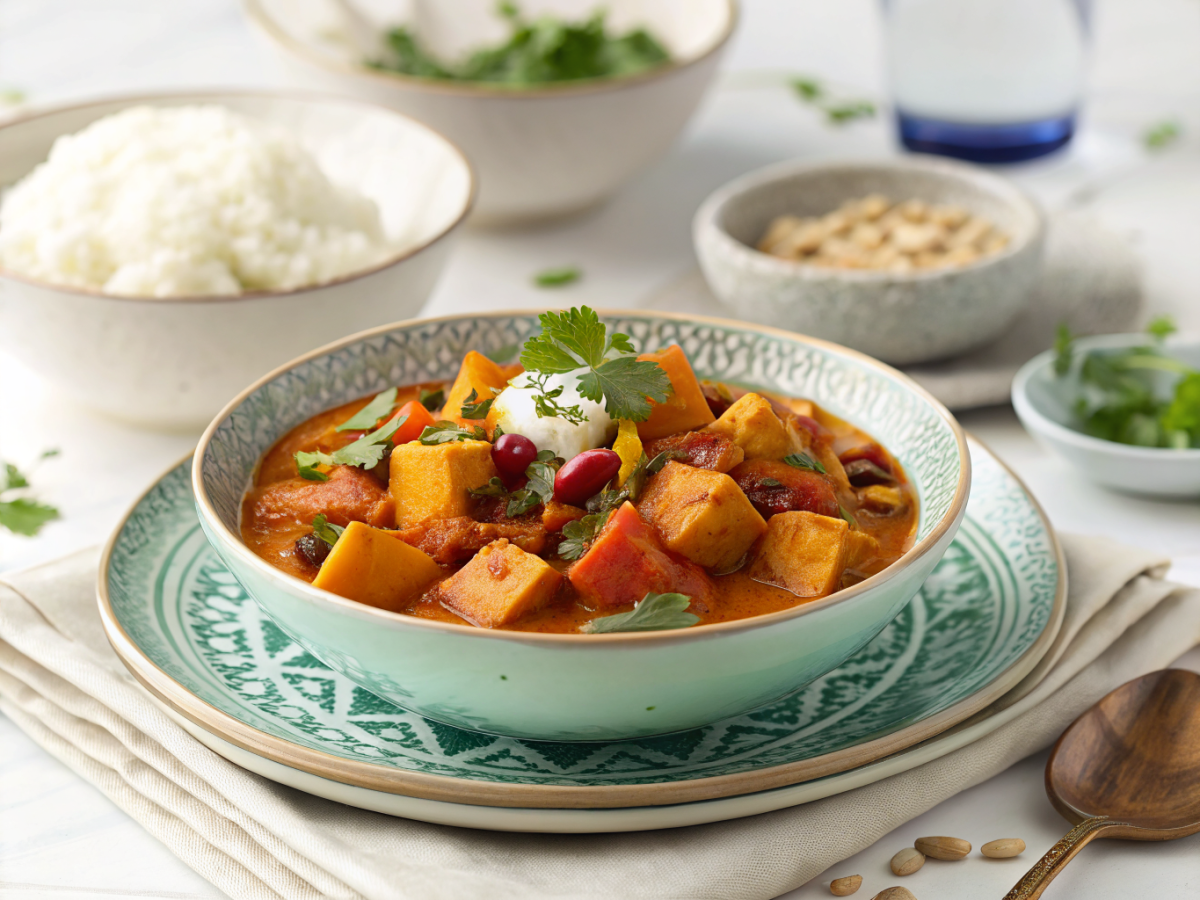
The Secret to Perfect Sweet Potato Curry
Ingredients
Method
- Peel and cube the sweet potatoes into 1-inch pieces. Dice the onion and mince the garlic and ginger.
- Heat olive oil in a large pot over medium heat. Add the diced onion and cook for 5 minutes until softened. Add garlic and ginger, cooking for another minute until fragrant.
- Stir in the curry powder and cook for 30 seconds to toast the spices, stirring constantly to prevent burning.
- Add the cubed sweet potatoes, coconut milk, and vegetable broth to the pot. Stir well to combine and bring to a boil.
- Reduce heat to low, cover, and simmer for 20-25 minutes until sweet potatoes are tender when pierced with a fork.
- Season with salt to taste. For a thicker curry, mash some of the sweet potatoes against the side of the pot and stir.
- Serve hot over rice or with naan bread. Garnish with fresh cilantro if desired.
Nutrition
Notes
Tried this recipe?
Let us know how it was!Sweet Potato Curry: 5 Easy Tips for Perfect Results
Creating the perfect sweet potato curry starts with understanding a few key techniques that elevate this dish from good to extraordinary. The first tip is to cube your sweet potatoes uniformly, ensuring they cook evenly and maintain their shape without turning mushy. Aim for 1-inch cubes that will hold up beautifully in the rich curry sauce.
The second essential tip involves toasting your spices before adding liquids. This technique, known as blooming, releases the aromatic oils in cumin, coriander, and turmeric, creating a depth of flavor that simply can’t be achieved by adding spices directly to liquid. Heat them in oil for 30-60 seconds until fragrant, watching carefully to prevent burning.
Third, don’t rush the cooking process. Allow your sweet potatoes to simmer gently in the coconut milk mixture for at least 15-20 minutes. This slow cooking allows the flavors to meld together while the sweet potatoes absorb the aromatic curry sauce, creating that melt-in-your-mouth texture we’re after.
The fourth tip is to layer your flavors by adding fresh ingredients at different stages. Start with aromatics like onions and garlic, add your spices mid-way, and finish with fresh herbs like cilantro or Thai basil. This creates complexity and keeps some flavors bright and fresh while others develop deep, caramelized notes.
Finally, balance is everything. Sweet potatoes bring natural sweetness, so balance this with a squeeze of lime juice, a splash of tamari or soy sauce for umami, and a pinch of salt to enhance all the flavors. Taste and adjust seasoning before serving for the best results every time.
Why You’ll Love This Sweet Potato Curry
This curry checks all the boxes for a perfect weeknight meal: it’s nutritious, budget-friendly, and incredibly satisfying. The natural creaminess of sweet potatoes combined with coconut milk creates a luxurious texture without heavy cream or dairy. It’s naturally vegan and gluten-free, making it accessible for various dietary preferences.
The flavor profile is wonderfully complex yet not overwhelming. Warm spices like cumin, coriander, and turmeric create an aromatic base, while ginger and garlic add brightness and depth. The coconut milk provides richness and a subtle sweetness that complements the sweet potatoes perfectly, creating a harmonious blend that appeals to both curry enthusiasts and newcomers alike.
From a practical standpoint, this recipe is incredibly forgiving and adaptable. You can prepare it in under 40 minutes from start to finish, making it ideal for busy weeknights. It also scales beautifully for meal prep, tasting even better the next day as the flavors continue to develop and meld together in the refrigerator.
The nutritional benefits are impressive too. Sweet potatoes are packed with vitamin A, fiber, and antioxidants, while the spices offer anti-inflammatory properties. This makes it a meal you can feel genuinely good about serving to your family, knowing it’s both delicious and nourishing for their bodies.
Another reason to love this curry is its versatility in serving options. Serve it over fluffy basmati rice, with warm naan bread, over quinoa for extra protein, or even with cauliflower rice for a low-carb option. It works beautifully as a standalone dish or as part of a larger spread for entertaining guests.
Core Ingredients for Sweet Potato Curry
The foundation of any great curry starts with quality ingredients. For this recipe, you’ll need 2-3 medium sweet potatoes (about 1.5 pounds), peeled and cut into uniform 1-inch cubes. Choose firm sweet potatoes with smooth skin and no soft spots for the best texture and flavor in your finished dish.
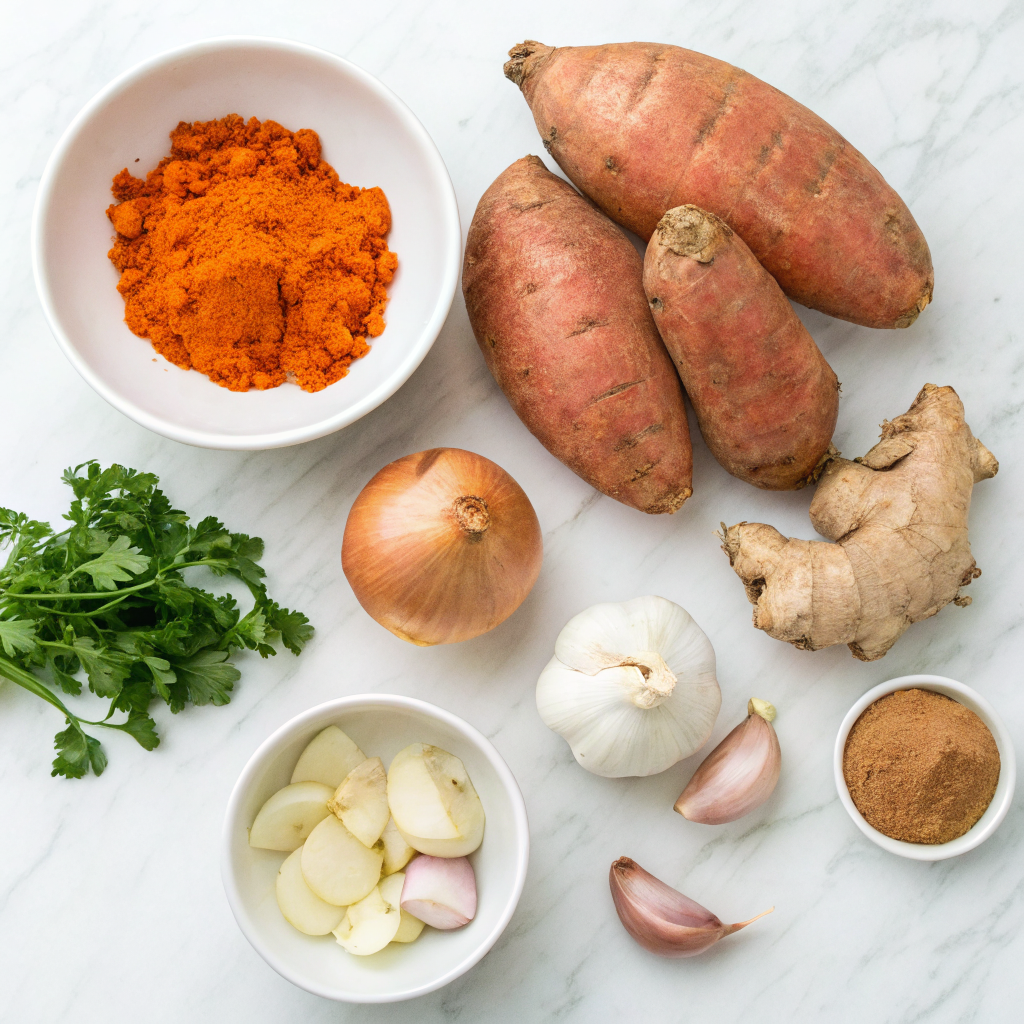
The aromatic base consists of one large yellow onion (diced), four cloves of fresh garlic (minced), and a 2-inch piece of fresh ginger (grated or minced). These three ingredients form the flavor foundation that supports all the other components. Fresh garlic and ginger are essential here—dried versions simply won’t provide the same vibrant, aromatic quality.
For the spice blend, you’ll need 2 teaspoons ground cumin, 2 teaspoons ground coriander, 1.5 teaspoons turmeric, 1 teaspoon garam masala, and 1/2 teaspoon cayenne pepper (adjust to your heat preference). If you’re looking for more dinner recipe inspiration, these same spices work beautifully in various other dishes as well.
The liquid components include one 14-ounce can of full-fat coconut milk (shake well before opening), 1 cup vegetable broth, and one 14-ounce can of diced tomatoes with their juices. The full-fat coconut milk is crucial for achieving that creamy, luxurious texture—light versions will result in a thinner, less satisfying sauce.
Additional ingredients include 2 tablespoons neutral cooking oil (coconut, avocado, or vegetable oil), 1 tablespoon tomato paste for depth, 2 teaspoons maple syrup or brown sugar to balance acidity, salt and black pepper to taste, and fresh cilantro for garnish. A lime wedge for serving adds that perfect bright, acidic finish that brings everything together.
Optional additions that enhance the dish include 1 cup chickpeas for protein, a handful of baby spinach stirred in at the end, or 1/2 cup frozen peas for color and nutrition. These additions make the curry even more substantial without compromising the star ingredient—the sweet potatoes themselves.
Quality Matters
When selecting sweet potatoes, look for varieties with deep orange flesh, as these contain higher levels of beta-carotene and have a naturally sweeter, creamier texture. Avoid sweet potatoes with green patches, which can taste bitter, or those with numerous eyes and sprouts, indicating age.
For coconut milk, choose brands that list coconut and water as the only ingredients, avoiding those with thickeners or stabilizers when possible. Thai Kitchen and Native Forest are reliable brands that consistently deliver rich, creamy coconut milk perfect for curries and other quick and easy meals.
Fresh spices make a tremendous difference in flavor intensity. If your ground spices have been sitting in the pantry for over a year, consider replacing them. The aromatic oils that give spices their flavor dissipate over time, resulting in flat, lackluster curries that don’t do justice to your efforts.
How to Make Sweet Potato Curry: Step-by-Step
Begin by preparing all your ingredients—this French cooking technique called “mise en place” makes the cooking process smooth and stress-free. Peel and cube your sweet potatoes, dice your onion, mince your garlic, and grate your ginger. Measure out all your spices into a small bowl so they’re ready to add at the right moment.
Heat 2 tablespoons of oil in a large, deep skillet or Dutch oven over medium heat. Once the oil shimmers, add the diced onion and cook for 5-6 minutes, stirring occasionally, until softened and beginning to turn golden at the edges. This caramelization adds a subtle sweetness and depth that forms the flavor foundation of your curry.
Add the minced garlic and grated ginger to the pan, stirring constantly for about 60 seconds until fragrant. Be careful not to let them burn, as this will create a bitter flavor. If you notice any browning, reduce the heat slightly and keep stirring to prevent sticking.
Now it’s time to bloom your spices. Add the cumin, coriander, turmeric, garam masala, and cayenne to the aromatic base. Stir constantly for 30-60 seconds, allowing the spices to toast and release their essential oils. You’ll notice the aroma intensifying—this is exactly what you want to achieve for maximum flavor impact.
Stir in the tomato paste and cook for another minute, allowing it to caramelize slightly and deepen in color. This step concentrates the tomato flavor and adds an extra layer of umami richness to your curry sauce. The paste should darken slightly and become fragrant.
Add the cubed sweet potatoes to the pan, stirring to coat them evenly with the spiced onion mixture. Let them cook for 2-3 minutes, allowing the exterior to absorb some of the aromatic flavors. This initial coating helps the sweet potatoes develop more complex flavor throughout the cooking process.
Pour in the coconut milk, vegetable broth, and diced tomatoes with their juices. Stir in the maple syrup or brown sugar, along with 1 teaspoon of salt and 1/2 teaspoon of black pepper. Bring the mixture to a gentle boil, then reduce heat to maintain a steady simmer.
Cover the pan partially and simmer for 20-25 minutes, stirring occasionally, until the sweet potatoes are tender when pierced with a fork but still hold their shape. The sauce should thicken slightly as the sweet potatoes release their natural starches. If the sauce seems too thin, simmer uncovered for an additional 5 minutes to reduce and concentrate the flavors.
Taste and adjust the seasoning as needed. This is your opportunity to balance the flavors—add more salt if needed, a squeeze of lime juice for brightness, or a pinch of sugar if the tomatoes are too acidic. The curry should taste rich, aromatic, and well-balanced with layers of flavor.
If you’re adding optional ingredients like chickpeas or spinach, stir them in during the last 3-4 minutes of cooking. Chickpeas just need to heat through, while spinach will wilt quickly in the hot curry. These additions boost the nutritional profile and make the dish even more substantial and satisfying.
Remove from heat and let the curry rest for 5 minutes before serving. This resting period allows the flavors to settle and the sauce to thicken slightly. Garnish generously with fresh cilantro and serve with lime wedges on the side for guests to add according to their preference.
Pro Cooking Tips
For an even richer curry, try roasting your sweet potato cubes in the oven at 400°F for 15 minutes before adding them to the curry. This caramelizes their natural sugars and adds an extra dimension of flavor. The roasted cubes will also hold their shape better during simmering.
If you prefer a thicker, more stew-like consistency, mash a few of the cooked sweet potato cubes against the side of the pan with your spoon. This releases their starch into the sauce, creating a naturally thickened, creamy texture without any additional thickeners or cornstarch.
For a restaurant-style presentation, drizzle a swirl of coconut cream on top just before serving. Simply scoop the thick cream from the top of a chilled can of coconut milk and drizzle it decoratively over each serving for an elegant finishing touch.
Nutrition & Health Benefits
Sweet potatoes are nutritional powerhouses, packed with vitamin A in the form of beta-carotene, which supports eye health, immune function, and skin health. A single serving of this curry provides over 200% of your daily vitamin A needs, making it an excellent choice for maintaining optimal health through delicious, whole-food ingredients.
The fiber content in sweet potatoes supports digestive health and helps maintain stable blood sugar levels despite their natural sweetness. Combined with the protein from chickpeas (if added) and the healthy fats from coconut milk, this curry provides a well-balanced macronutrient profile that keeps you satisfied for hours after eating.
The spices in this curry aren’t just for flavor—they offer significant health benefits too. Turmeric contains curcumin, a powerful anti-inflammatory compound that has been studied extensively for its potential health benefits. Cumin aids digestion, while coriander provides antioxidants that support overall wellness. For more information on the health benefits of curry spices, research shows that combining turmeric with black pepper increases absorption.
Coconut milk provides medium-chain triglycerides (MCTs), a type of fat that’s easily digested and can provide quick energy. While coconut milk is calorie-dense, these fats can support metabolism and provide satiety. The key is portion control—a serving of this curry provides healthy fats without being excessive.
One serving of this curry (approximately 1.5 cups) contains roughly 320-380 calories, 15g fat, 45g carbohydrates, 8g fiber, and 6g protein (without chickpeas). Adding chickpeas increases the protein to approximately 12g per serving, making it a more complete meal that satisfies both hunger and nutritional needs.
This dish is naturally free from common allergens like dairy, eggs, and gluten, making it suitable for various dietary restrictions. It’s also vegan-friendly and can easily fit into plant-based eating patterns while providing substantial nutrition. The combination of vegetables, healthy fats, and spices makes it a nourishing choice for anyone seeking wholesome, flavorful meals.
Dietary Considerations
For those following a low-carb or keto diet, this curry can be modified by replacing sweet potatoes with cauliflower or turnips, though the flavor profile will change significantly. The sweet potatoes are the star ingredient, so consider this dish more suitable for moderate-carb or carb-cycling approaches to eating.
If you’re watching sodium intake, use low-sodium vegetable broth and add salt gradually to taste rather than following the suggested amount. Canned tomatoes and coconut milk can also contain added sodium, so check labels and choose low-sodium varieties when available for better control over your intake.
For those with coconut allergies or sensitivities, you can substitute cashew cream or a combination of vegetable broth and a small amount of tahini for creaminess. The flavor will be different but still delicious, and the dish will remain dairy-free and plant-based.
Variations & Substitutions
This curry is wonderfully adaptable to whatever ingredients you have on hand. For a protein boost, add cubed firm tofu, tempeh, or cooked chicken during the last 10 minutes of cooking. Chickpeas, as mentioned earlier, are an excellent addition that adds both protein and texture while keeping the dish vegetarian.
Vegetable variations work beautifully in this curry base. Try adding cauliflower florets, diced bell peppers, green beans, or butternut squash alongside or in place of some sweet potatoes. Each vegetable brings its own unique texture and flavor while absorbing the delicious curry sauce. Leafy greens like kale or Swiss chard can be stirred in at the end for added nutrition.
For spice level adjustments, reduce or omit the cayenne pepper for a milder curry, or increase it to 1 teaspoon for more heat. You can also add fresh sliced jalapeños or serrano peppers with the aromatics, or finish with a drizzle of sriracha or chili oil for those who prefer extra kick.
If you don’t have all the individual spices, you can substitute 2-3 tablespoons of a good-quality curry powder for the cumin, coriander, turmeric, and garam masala. While the flavor won’t be quite as nuanced, it’s a convenient shortcut that still produces delicious results when you’re short on time or pantry staples.
The coconut milk can be replaced with cashew cream for a different flavor profile that’s equally creamy. To make cashew cream, blend 1 cup raw cashews with 1 cup water until completely smooth. This substitution works well for those who don’t enjoy coconut flavor or have coconut sensitivities.
For a Thai-inspired twist, add 2 tablespoons of Thai red curry paste instead of the individual spices, use Thai basil instead of cilantro, and add a splash of fish sauce (or soy sauce for vegan) for umami depth. This variation transforms the dish into a Thai-style curry with minimal effort.
Seasonal Adaptations
In summer, lighten the curry by adding fresh summer squash, zucchini, and cherry tomatoes. These vegetables cook quickly, so add them during the last 10 minutes of cooking. The result is a brighter, lighter version perfect for warmer weather while still maintaining that comforting curry essence.
During fall and winter, embrace heartier additions like cubed butternut squash, diced carrots, or even Brussels sprouts halved and added at the beginning. These cold-weather vegetables stand up well to longer cooking times and create an even more substantial, warming meal perfect for chilly evenings.
Spring brings fresh peas, asparagus, and baby spinach that can brighten this curry beautifully. Add these delicate vegetables during the last 5 minutes of cooking to maintain their vibrant color and crisp-tender texture, creating a lighter, more seasonal version of the classic recipe.
Serving Suggestions
The most traditional way to serve this curry is over a bed of fluffy basmati rice, which absorbs the flavorful sauce beautifully. Cook your rice with a cinnamon stick and a few cardamom pods for an aromatic complement to the curry. Jasmine rice or brown rice are also excellent choices that provide slightly different textures and nutritional profiles.
For a low-carb option, serve over cauliflower rice or shirataki rice, which soak up the curry sauce while keeping the meal lighter. You can also serve it with zucchini noodles or spaghetti squash for a vegetable-forward base that lets the curry shine as the star of the dish.
Bread options are equally delicious—warm naan, roti, or pita bread are perfect for scooping up every last bit of sauce. For a gluten-free option, serve with papadums or rice crackers. If you enjoy baking, pair it with homemade flatbread or check out these breads and baked goods recipes for inspiration.
Create a complete Indian-inspired meal by serving the curry alongside cooling raita (yogurt with cucumber and mint), mango chutney for sweetness, and lime pickle for a tangy, spicy kick. These condiments provide contrasting flavors and temperatures that make the meal more interesting and authentic.
For a grain bowl approach, serve the curry over quinoa or farro with a handful of fresh greens, sliced avocado, and a sprinkle of toasted coconut flakes and crushed peanuts. This modern presentation transforms the traditional curry into a trendy, Instagram-worthy bowl that’s packed with nutrition and texture.
Don’t forget garnishes—they’re not just decorative but add important flavor and textural contrasts. Fresh cilantro, thinly sliced green onions, toasted cashews or almonds, a dollop of coconut yogurt, and lime wedges all enhance the eating experience. A sprinkle of red pepper flakes adds visual appeal and optional heat.
Beverage Pairings
This curry pairs beautifully with a crisp, slightly off-dry white wine like Riesling or Gewürztraminer, which complement the spices without overwhelming them. The subtle sweetness in these wines balances the curry’s heat and richness. For red wine lovers, a light-bodied Pinot Noir with good acidity can also work well.
For non-alcoholic options, try a mango lassi, coconut water, or sparkling water with lime and mint. These refreshing beverages cleanse the palate between bites and provide cooling contrast to the warm spices. Iced chai tea is another excellent pairing that echoes some of the curry’s aromatic spices.
Beer enthusiasts should reach for a wheat beer, Belgian-style witbier, or a light IPA. These styles have enough character to stand up to the curry’s bold flavors without being too heavy or bitter. The carbonation also helps refresh your palate with each sip.
Common Mistakes to Avoid
One of the most common mistakes is cutting sweet potato cubes too small or unevenly. Pieces smaller than 3/4-inch will break down and become mushy, while uneven sizes result in some pieces being overcooked while others remain undercooked. Take the extra time to cut uniform 1-inch cubes for the best texture in your finished curry.
Another frequent error is adding spices directly to liquids without blooming them first in oil. This results in flat, one-dimensional flavor because the aromatic compounds in spices need heat and fat to fully release. Always toast your spices in oil for at least 30 seconds before adding liquids for maximum flavor impact.
Using light coconut milk instead of full-fat is a mistake that significantly impacts the curry’s richness and mouthfeel. The full-fat version provides the creamy, luxurious texture that makes this curry so satisfying. If you’re concerned about calories, simply reduce your portion size rather than compromising on the quality of ingredients.
Overcooking the sweet potatoes until they completely fall apart is another common pitfall. While some breaking down is fine and even desirable for thickening the sauce, you want most cubes to maintain their shape. Test with a fork at the 20-minute mark—they should be tender but not mushy.
Skipping the final seasoning adjustment is a mistake that results in bland curry. Always taste before serving and adjust salt, acid (lime juice), and sweetness as needed. This final balancing act is what separates good curry from great curry, so don’t skip this crucial step.
Adding fresh herbs like cilantro too early causes them to wilt and lose their vibrant flavor. Always add delicate fresh herbs at the very end or as a garnish to maintain their bright, fresh taste and visual appeal. This small detail makes a significant difference in the final presentation and flavor.
Troubleshooting
If your curry turns out too thin, simmer it uncovered for an additional 5-10 minutes to reduce and thicken the sauce. Alternatively, mash some of the sweet potato cubes against the side of the pan to release their starch, which naturally thickens the sauce without changing the flavor profile.
If the curry is too thick, simply thin it with additional vegetable broth or coconut milk, adding a few tablespoons at a time until you reach your desired consistency. Remember that the curry will thicken slightly as it cools, so err on the side of slightly thinner when it’s hot.
If you accidentally make it too spicy, balance the heat with additional coconut milk, a spoonful of sugar or honey, or a squeeze of lime juice. You can also serve it with cooling raita or coconut yogurt, which helps temper the spiciness while adding creamy contrast.
Storage & Meal Prep Tips
This curry is an excellent candidate for meal prep, as the flavors actually improve after a day or two in the refrigerator. Store cooled curry in airtight containers in the refrigerator for up to 5 days. The sweet potatoes will continue to absorb the flavors, resulting in an even more delicious meal when reheated.
